

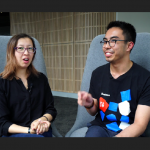
Dr Amanda White and Caster

Award-winning Accounting academic, Dr Amanda White, and fourth-year Bachelor of Business/Bachelor of Arts in International Studies student and President of the UTS Business Society, Caster Calma, discuss the answers to our most frequently asked questions from commencing students in our Bachelor programs.

This series of videos covers everything from whether you need a Mac or Windows computer, to how our exams work, how you go about getting a student card, and even the big issues like where the best coffee is on campus. 

The Basics
WZEooYm1cX8

Transcript

So, we have two student centres located in Building 10 and Building 5, but you can find all that online if you just type "UTS Student Centre" into Google. You can email them, call them, or visit them in person.

That's the place for everything to do with student admin—subject enrolments, changing majors, changing degrees—all of that happens through the Student Centre.

There are two main sorts of fees that you'll end up paying at university. You'll pay your fees for individual subjects—your tuition fees—which, depending on whether you're a domestic or international student, may or may not have loans available. Some students pay upfront, and some pay in a deferred manner.

The other area where you have fees is a Student Services and Amenities Fee, which everybody has to pay at the start of semester. That fee mainly funds all the extra services UTS provides, like legal services, counsellors, doctors, psychologists, and other medical staff. It's roughly $100 or so, depending on the year or semester, and that's what that fund contributes to. You can defer it, but most people just pay it off.

It's a good thing to pay upfront because things like cafes on campus, medical services, and student support are funded through those programs.

There are other things you may choose to pay a fee for, like joining the UTS Activate Gym or clubs and societies, but those are optional and have small fees attached. None of that's compulsory. That Student Services fee is the only one you really need to make sure you pay before you start university.

When it comes to tuition costs, check the UTS website for fees, as they vary depending on your course and subjects. Some subjects have higher tuition fees than others, and fees change from year to year.

Mac or Windows? Ooh, that's such a good question. What do you use?

I personally use a Mac, just because it's easy to use and I understand the keyboard shortcuts, which are very handy.

It doesn't really matter, though. I'm a Mac user as well because I have an iPhone and iPad. Microsoft Surface is also really popular, and I've seen a lot of iPad Pros with keyboards and pens.

Whatever you've got, UTS is not device-specific, so you don't need a particular device. If you don't have a device, talk to UTS Student Services—there are ways to borrow a device for the entire semester.

All the software UTS provides is compatible with Windows and Mac. You'll never have to buy software to complete assessments; it's available on UTS computers or you can download a student licence onto your own machine. Just log in with your student credentials.

If you're sick or something happens, I don't usually expect students to write to me if they're missing a lecture, especially if there's a recording. But it's always nice to give your tutor a heads-up if you're going to be away, or if you're going to be sick, just in case there's something you miss. Sometimes it's good to talk to your academics about any chance to catch up on work.

Eating in class—while I'm teaching, I'm not eating, because I don't think you'd like the sound of me talking and eating at the same time. I don't mind if students eat. Some rooms will say "no food or drink" outside the door, but most of the time, as long as we're being mature and not leaving rubbish behind, you can eat and drink in class—unless it's something stinky.

Yes, I definitely eat in class—little things like chips or biscuits that you can easily put in your mouth. I don't bring a whole dish with rice or noodles because I have to be considerate of other people and the smell. Please don't open a durian or tuna in the classroom. No tuna, no durian.

Most students will bring a coffee into class—that's pretty common.

We don't mind if you're a few minutes late to the tute or have to leave a few minutes early because you've gone out to get food or whatever. Leaving the classroom is not an issue. This isn't high school where you need to ask permission.

It's the same with using the bathroom—if you need to go, you just go. The tutor won't sign your diary or anything like that. You can just walk off and leave.

I call my academics, teachers, or tutors by their first names, and that's what most people are happy with. It's actually a bit weird if you call them Miss, Sir, or Mrs and their last name, like in high school. Please call them by their first names. If someone wants you to use their title, like Doctor or Professor, they'll let you know. Otherwise, we're just normal people—calling us by our first names is fine.

Not many students actually drive to university. Because we're in such a central location, most people catch public transport. If you can afford to drive, expect to pay a lot for parking—it's $17 to $20 a day, and you're not guaranteed a spot. You could look on Gumtree to lease a spot from someone in a nearby apartment building, but otherwise, I wouldn't recommend driving. Traffic around UTS at peak hour is really busy, with small one-way lanes. As a staff member, I catch public transport and only drive if I absolutely need to.

If I'm here late at night for classes or events and don't feel safe walking to my car, I can call UTS security and someone can escort me from wherever I am on campus to my vehicle within a reasonable distance.

UTS is now really a "sticky" campus—once classes officially end at 9pm, you'll still see people everywhere during semester. It's pretty safe to walk to Central Station or the bus stops at 9pm.

Once it gets late, access to university is via your staff or student card—you'll need to swipe in and out so random people can't just walk around.

If you get tired and need a nap during the day, the library has sleep pods. In Building 2, we've seen people nap on benches—always lie on your bag, so put your valuables in your bag and then lie on top of it. Or nap with your group of friends so they can watch your belongings—unless they're the ones stealing them!

If you feel unwell on campus, go straight to Building 1, Level 6—there's a medical facility there. Usually it's by appointment, but if you're urgently unwell, they will see you as a walk-in straight away.

It's a bit different from high school—there's no bell between classes. Classes can run from one hour up to four hours, and they start and stop at different times, so not everyone moves at the same time.

Your subject teacher—whether lecturer or tutor—should finish class 10 minutes before its official end time. So a 1.5-hour class should go for 1 hour 20, then wrap up, and you'll have five to seven minutes to walk to your next room, which should start on time.

If you have to go from Building 2 to another side of campus, your lecturers and tutors will take that into account, but don't dawdle—don't stop for a kebab on the way. If you do, nominate one person to get food and send everyone else to class, because often your teachers are also walking between rooms.

Because UTS buildings are spread out, make sure you're wearing comfortable attire. Don't wear heels unless you're good at walking in them. Just wear runners if you like. People turn up to class in trackies in winter—there's no dress code or uniform. Just be comfortable.

It's not a fashion show, though there is a UTS fashion Instagram account that captures great campus fashion. If you come straight from work in a business suit and tie, that's fine. In summer, if it's really hot, T-shirts, shorts, and thongs are fine too.

If you ever lose anything on campus—a jumper, laptop, phone—if your name's on it, that's good. Staff are trained to hand everything they find to UTS security. If something's left in a classroom, security will leave it there until the end of the day so you can go back for it. If it's not there, check with the closest security office. The main security office is in Building 1.

There are probably 15,000 to 20,000 students on campus each day, and IT says there are more than 40,000 devices connected to the Wi-Fi daily. If you need to connect more than one device—like your phone, tablet, and laptop—you can. It's the same login you use for student admin, UTS Online, and your student email.

I recommend checking your student email at least every couple of days—don't leave it to once a week, because it's the official communication channel.

Content includes:

  • Where is the student centre?
  • How do fees work? (0:32)
  • Do I need Mac or Windows? (2.23)
  • What happens if I miss a class? (3:35)
  • Am I allowed to eat in class? (4:02)
  • What do I call my lecturers/tutors? (5:23)
  • Can I drive to uni? (6:13)
  • How safe is it on campus? (7:31)
  • Is there anywhere to nap on campus? (8:02)
  • What happens if I feel sick at uni? (8:41)
  • How do I move from class to class? (9:00)
  • What do I wear to uni? (10:09)
  • What happens if I lose something at uni? (10:52)
  • Is there wifi at UTS? (11.29)
  • How often should I check my student email? (12:00)

What does learning look like at UTS?
o0Fa0asmxEA

Transcript

So, we have two Student Centres located in Building 10 and Building 5, but you can find all that information online if you just type "UTS Student Centre" into Google. You can email them, call them, or visit them in person. That's the place for everything to do with student admin—subject enrolments, changing majors, changing degrees—all of that happens through the Student Centre.

There are two main sorts of fees you'll pay at university. You'll pay your tuition fees for individual subjects, which may have loans available depending on whether you're a domestic or international student. Some students pay up front, others pay in a deferred manner. The other area is the Student Services and Amenities Fee, which everyone has to pay at the start of semester. That fee mainly funds all the extra services UTS provides, like legal services, counsellors, doctors, psychologists, and other medical staff. It's roughly $100 or so, but it can vary each year or semester. You can defer it, but most people just pay it off. It's good to pay up front because services like cafes, medical services, and student support are funded through these programs.

There are other optional fees, like joining the UTS Activate Gym or joining clubs and societies, which have small fees attached, but none of those are compulsory. The Student Services fee is the only one you really need to pay before starting university.

When it comes to tuition costs, check the UTS website for fees, as they vary depending on your course and subjects. Some subjects have higher tuition fees than others, and fees can change from year to year, so always check.

Mac or Windows? That's a good question. I personally use a Mac because it's easy to use and I understand the keyboard shortcuts, which are handy. It doesn't really matter, though. UTS is not device-specific, so you don't need a particular device. Many students use Microsoft Surface devices or iPad Pros with keyboards and pens. If you don't have a device, talk to UTS Student Services—there are ways to borrow a device for the semester.

All UTS software is compatible with Windows and Mac, and you'll never have to buy software to complete assessments. It's available on UTS computers or you can download a student licence to your own machine and log in with your student credentials.

If you're sick or something happens, you don't usually need to write to your lecturer if you miss a lecture, especially if there's a recording. But it's nice to give your tutor a heads-up if you're going to be away, or if you're sick, just in case you miss something. Sometimes it's good to talk to your academics about catching up on work.

Eating in class—while teaching, I don't eat, but I don't mind if students do. Some rooms have "no food or drink" signs, but most of the time, as long as you're mature about it and don't leave rubbish behind, you can eat and drink in class—unless it's something stinky like durian or tuna. Most students bring coffee into class, that's common.

We don't mind if you're a few minutes late to a tutorial or have to leave early to get food. Leaving the classroom isn't an issue—it's not high school, so you don't need permission. Same with using the bathroom—just go, no need for a pass or diary sign-in.

I call my academics, teachers, or tutors by their first names, and that's what most people prefer. It's a bit weird to call them Miss, Sir, or Mrs like in high school. If someone wants you to use their title, they'll tell you, but otherwise, first names are fine.

Not many students drive to university because UTS is centrally located—most catch public transport. If you drive, expect to pay a lot for parking, and you're not guaranteed a spot. You might find a spot to lease nearby on Gumtree, but generally, driving isn't recommended. Traffic is busy, especially at peak hour. If you're on campus late and don't feel safe walking to your car, you can call UTS Security for an escort.

UTS is a "sticky" campus—after 9pm, when classes end, there are still people around, so it's pretty safe to walk to Central Station or bus stops at night. After hours, access is via your staff or student card. If you get tired during the day, the library has sleep pods, and you might see people napping on benches—always lie on your bag to keep your valuables safe, or nap with friends. If you feel unwell on campus, go to Building 1, Level 6, where the medical facility is—usually by appointment, but if it's urgent, they'll see you straight away.

It's different from high school—there's no bell between classes. Classes can run for one to four hours and start and end at different times. Your teacher should finish class 10 minutes early to give you time to walk to your next room. If you have to cross campus, your lecturers and tutors will take that into account, but don't dawdle—if you stop for food, nominate one person to get it while others go to class.

UTS buildings are spread out, so wear comfortable attire—runners are fine, and there's no dress code or uniform. People wear trackies in winter, and business attire is fine if you're coming from work. In summer, T-shirts and shorts are fine.

If you lose something on campus, staff are trained to hand it in to UTS Security. Security will leave lost items in classrooms until the end of the day, so check the room first, then the nearest security office. The main security office is in Building 1.

There are 15,000–20,000 students on campus daily, and over 40,000 devices connect to Wi-Fi each day. You can connect multiple devices using your student login—the same one for admin, UTS Online, and student email. Check your email at least every couple of days, as it's the official communication channel.

Content includes:

  • How do lectures and tutorials work?
  • How do assessments work? (3:40)
  • What happens with exams? (5:23)
  • How much time should I spend studying? (11:19)
  • What support is on offer to help me with my studies? (13:06)
  • How do you gain work experience while at uni? (15:46)

The social side of uni
flaZFPwx_oM

Transcript

So, we have two student centres located in Building 10 and Building 5, but you can find all that information online if you just type "UTS Student Centre" into Google. You can email them, call them, or visit them in person. That's the place for everything to do with student admin—subject enrolments, changing majors, changing degrees—all of that happens through the student centre.

There are two main sorts of fees you'll pay at university. You'll pay tuition fees for your individual subjects, and depending on whether you're a domestic or international student, there may or may not be loans available for those. Some students will pay upfront and some will pay in a deferred manner. The other fee is the Student Services and Amenities Fee, which everyone has to pay at the start of semester. That fee mainly funds all the extra services UTS provides you. Many students don't realise we have legal services, counsellors, doctors, psychologists, and medical staff. It's roughly $100 or so, but it depends on the year and semester. That fee contributes to those services. You can defer it, but most people just pay it upfront. It's a good idea to pay it because things like cafes on campus, medical services, and student support are funded through these programs.

There are other optional fees, like if you join the UTS Activate Gym or any clubs and societies—these have small fees attached, but you don't have to join. None of those are compulsory. The Student Services fee is the only one you really need to pay before you start university.

When it comes to tuition costs, check the UTS website for fees, as they vary depending on your course and subjects. Some subjects have higher tuition fees than others, and fees change from year to year.

The other thing to think about while you're at university is the social side, because university isn't just about study. We want you to grow personally and develop new skills in leadership, empathy, and teamwork. When you're applying for jobs, employers will look at what you've done at university as well. Wherever you graduate in Australia, you'll get a good degree, but how will you stand out from someone who's done a Bachelor of Business elsewhere?

Graduate recruiters look for academics, leadership in university clubs or societies, relevant work experience, and other types of experience—like leading a sporting group, church, or charity. Clubs and societies at UTS are a great way to meet people. For example, the UTS Business Society, known as BSoc, is run by business students for business students. Academics have nothing to do with BSoc. They run social events with food and alcohol, and it's a great opportunity to meet people from different business disciplines and unwind from class. BSoc is a good way to make friends. They run events throughout the year, and it's not just parties—they provide academic help too, like exam workshops, review notes, and skill workshops (e.g., Excel, Xero).

There are many other clubs and societies—like Quidditch, diving, Frisbee, Food Society, Dog Society, Photographic Society, and language societies. Clubs Day during Orientation is a great time to check them all out. Don't sign up to all—pick two or three that interest you. When you're involved in a club, it's not just about attending events, but also about giving back to your club and other students. You never know where it might lead—one student joined BSoc in first year and eventually became president.

If you're interested in joining BSoc, you can find them on Facebook, join at Clubs Day, and there's also a camp for first-year students. The camp usually costs a little over $200, including food, accommodation, and alcohol. It's run by students, not academics, and is a great way to make friends. There are other events like Peer Networkers and TalkFest, where the university supplies pizza on Fridays. TalkFest is great for developing English language skills, and you can volunteer as a conversation starter or attend as a student.

Making friends is important at university, and it helps with the learning curve. It's a valuable skill for your degree and your business career.

Where do you go for coffee on campus? Chambers Coffee near Haymarket offers a 10% discount for UTS students. There are many cafes on campus, like the Universal Cafeteria in Building 6, Cafe 80 in Building 8, and a cafe in Building 2. If you're after a cheap coffee, 7-Eleven does $1 coffee. It's not fabulous, but it does the job if you need caffeine.

Where do you get a drink on campus? There's The Underground bar, which does happy hour (around 3 to 6 pm). It's a student hangout, not for staff. The Loft is another bar on campus, more like a cocktail bar and outdoors. Nearby, there's Bar Broadway and The Old Clare, and Fratelli Fresh is popular for $10 pasta on Mondays and happy hour.

There are plenty of places to eat and unwind at UTS. The new food court in UTS Central (Building 2) is plastic-free and has a range of options like PappaRich, Chatime (bubble tea), Uni Bros (kebabs), Mad Mex, and Japanese food. Across the street is Central Park shopping centre with Din Tai Fung and more food places. Near Haymarket is Market City and Chinatown, which has many cheap dumpling places—a must-do for UTS students. The cheapest lunch is the $2 sandwich at 7-Eleven. There are supermarkets nearby, so you can buy things like roast chicken and salad for lunch. Popular snacks include chicken chippies and cheese and bacon rolls from Woolies.

If you bring lunch from home, there are no fridge facilities but there are microwaves and hot water on campus for things like two-minute noodles. You can hire a locker to store snacks, a spare jumper, or other items. If you run out of places to eat at UTS, there's something wrong—there are so many options.

There is no swimming pool on campus, but there's an aquatic centre nearby. The UTS gym has reasonable rates and offers classes. Sometimes orientation packs include a free trial for the gym.

Mac or Windows? It doesn't really matter—UTS is not device-specific. Most software is compatible with both, and you can borrow a device from UTS Student Services if needed. All required software is available on UTS computers or as a student licence for your own machine. You never have to buy software for assessments—just log in with your student credentials.

If you're sick or something happens, you don't usually need to email your lecturer if you miss a lecture (especially if it's recorded), but it's nice to let your tutor know if you'll be away. Talk to academics if you need to catch up on work.

Eating in class is generally fine unless the room says no food or drink. Just be mature, don't leave rubbish, and avoid smelly foods like durian or tuna. Most students bring coffee to class. It's okay to be a few minutes late or leave early for food or other reasons. You don't need permission to leave the classroom or use the bathroom.

At UTS, you call academics by their first names. It's unusual to use titles like Miss, Sir, or Dr unless they specifically ask. Most staff prefer to be called by their first names.

Not many students drive to university since UTS is centrally located. Most catch public transport. Parking is expensive ($17–$20 per day) and not guaranteed. You might find a spot to lease nearby via Gumtree, but driving is not recommended. Traffic is busy, especially at peak times.

If you don't feel safe walking to your car at night, you can call UTS security for an escort. After 9 pm, campus is still busy, but access is by staff card to keep it secure.

If you need a nap during the day, the library has sleep pods, or you can nap on a bench—just lie on your bag to keep your valuables safe, or nap with friends. If you feel unwell on campus, go to the medical facility in Building 1, Level 6—usually by appointment, but walk-ins are accepted if urgent.

Unlike high school, there's no bell between classes. Classes can run for varying lengths and start/finish at different times. Teachers should finish class 10 minutes early so you have time to get to your next room. If you have to cross campus, staff will take that into account, but don't dawdle—send one person to get food if needed.

UTS buildings are spread out, so wear comfortable clothes and shoes—no dress code or uniform. People wear trackies in winter or business attire if coming from work. In summer, T-shirts and shorts are fine.

If you lose something on campus, staff are trained to hand it to UTS security. Security will leave items in classrooms until the end of the day, so check the room first, then the nearest security office. The main security office is in Building 1.

There are 15,000–20,000 students on campus daily and over 40,000 devices connected to Wi-Fi. You can connect multiple devices using your student login, which is the same for OneStop admin, UTS Online, and student email. Check your student email at least every couple of days, as it's the official communication channel.

Content includes:

  • What are the benefits of getting involved in the social side of uni?
  • How do clubs and societies work? (2:37)
  • How do I join the Business Society? (4:13)
  • How else can I make friends? (5:41)
  • Where's the best coffee on campus? (6:47)
  • Are there uni bars? (7:45)
  • Where can I go to eat? (9:08)
  • Is there a gym available? (12:05)

Demystifying uni jargon

WZNm5FFc3_4

Transcript

So we have two student centres located in Building 10 and Building 5, but you can find all that information online if you just type "UTS Student Centre" into Google. You can email them, call them, or visit them in person. That's the place for everything to do with student admin—subject enrolments, changing majors, changing degrees—all of that happens through the student centre.

There are two main sorts of fees that you'll end up paying at university. You'll pay your fees for individual subjects—your tuition fees. Depending on whether you're a domestic or international student, there may or may not be loans available for those, so some students will pay up front, and some will pay in a deferred manner.

The other area where you have fees is the Student Services and Amenities Fee, which everybody has to pay at the start of semester. That fee mainly funds all the extra services that UTS provides you. A lot of students don't realise we have legal services, counsellors, doctors, psychologists, and medical staff. I think it's roughly $100 or so, but it depends on the year and semester. That's what that fund contributes to. You can defer it, but most people just pay it off. It's a good thing to pay up front because things like cafes on campus, medical services, and student support get funded through those programs.

There are other things you may choose to pay a fee for, like joining the UTS Activate Gym or clubs and societies, but those are optional. The Student Services fee is the only one you really need to pay before you start university.

When it comes to tuition costs, check the UTS website for fees because they vary depending on your course and subjects. Some subjects have higher tuition fees than others, and fees change from year to year.

Mac or Windows? That's a good question. I personally use a Mac because it's easy to use and I understand the keyboard shortcuts, which are very handy. I'm a Mac user as well because I have an iPhone and iPad. Microsoft Surface is also really popular, and I've seen a lot of iPad Pros with keyboards and pens. Whatever you've got, UTS is not device-specific. You don't need a specific device. If you don't have a device, talk to UTS Student Services—there are ways to borrow a device for the semester.

All the software UTS provides is compatible with Windows and Mac. You'll never have to buy software to complete assessments; it's available on UTS computers or you can download a student licence onto your own machine and log in with your student credentials.

If you're sick or something happens, I don't usually expect students to write to me if they're missing a lecture, especially if there's a recording. But it's always nice to give your tutor a heads up if you're going to be away beforehand or if you're sick. Just in case there's something you miss, it's good to talk to your academics about catching up on work.

Eating in class—while I'm teaching, I'm not eating because you probably wouldn't like the sound of me talking and eating at the same time. I don't mind if students eat. Some rooms will say no food or drink outside the door, but most of the time, as long as we're mature and don't leave rubbish behind, you can eat and drink in class—unless it's something stinky. I definitely eat in class—little things like chips or biscuits that you can easily eat. But I don't bring a whole dish with rice or noodles because I need to be considerate of others and the smell. Please don't open a durian or tuna in the classroom. Most students bring a coffee into class; that's pretty common.

We don't mind if you're a few minutes late to a tutorial or need to leave a few minutes early because you've gone out to get food or whatever. Leaving the classroom is not an issue—this isn't high school where you need to ask permission. It's the same with using the bathroom; if you need to go, just go. The tutor won't sign your diary or anything like that.

I call my academics, teachers, or tutors by their first names, and that's what most people are happy with. It's actually kind of weird if you call them "Miss," "Sir," or "Mrs" and their last name, like in high school. Please call them by their first names. If someone wants you to use their title, like Doctor or Professor, they'll let you know. Otherwise, you can assume we're just normal people and calling us by our first names is fine.

Not many students drive to university because we're in a central location. Most people catch public transport. If you can afford to drive, expect to pay a lot for parking. There are some student parking facilities at different lots around, but it's essentially a retail rate for the day—anywhere between $17 and $20 a day—and you're not guaranteed a spot. If you want a definite spot, looking on places like Gumtree to hire or lease a spot off someone in a nearby apartment building can be useful. Otherwise, I wouldn't recommend driving. Traffic around UTS at peak hour is really busy. As a staff member, I catch public transport and would only drive if I absolutely needed to, even when I'm here late at night.

If I have classes or events that run till late and I don't feel safe walking to my car, I can call UTS security and someone can escort me from wherever I am on campus to my vehicle within a reasonable distance.

UTS is a "sticky campus"—once classes officially end at 9pm, you'll still see people everywhere when semester is on. It's pretty safe to walk to Central Station or the bus stops at 9pm. Once it gets late, access to university is via your staff card, so you'll need that to swipe in and out to make sure only authorised people are around.

If you get tired and need a nap during the day, the library has sleep pods. In Building 2, we've seen people napping on benches—always lie on your bag, put your valuables in your bag, and lie on top of it. If you want to nap, maybe be with your group of friends so they can watch your belongings—unless they're the ones stealing your stuff! But if you're worried, try to be with friends.

If you feel unwell on campus, head straight to Building 1, Level 6—there's a medical facility there. Usually it's by appointment, but if you're urgently unwell, they'll see you as a walk-in.

It's different from high school—there's no bell. Classes can run for one, one and a half, two, three, or four hours, and start and stop at different times. What your subject teacher should do is finish class ten minutes before its official end time, so a 90-minute class should go for 80 minutes, then wrap up. You'll have five to seven minutes to walk to your next room, and it should start on time.

If you're in Building 2 and need to go to a lecture theatre on the other side of campus, lecturers and tutors will take that into account. But don't dawdle—don't stop for a kebab on the way. Or if you do, nominate one person to get the food and send everyone else to class, because your teachers are also walking between rooms.

Because UTS buildings are all over the place, make sure you're wearing comfortable attire—don't wear heels unless you're good at walking in them. Just wear runners. People turn up to class in trackies in winter. There's no dress code or uniform—just be comfortable. It's not a fashion show, though there is a UTS fashion Instagram account that captures great fashion on campus. It's really relaxed. If you come straight from work in a business suit and tie, that's fine. In summer, if it's really hot, t-shirts and shorts are fine.

If you lose anything on campus—a jumper, laptop, phone—if your name's on it, that's good. If you lose something, staff are trained to hand everything they find into UTS security. Security will leave items in classrooms until the end of the day so you can go back and get them. If it's not there, check with the security office closest to you. The main security office is in Building 1.

There are probably 15,000 to 20,000 students on campus every day, and IT says there are more than 40,000 devices connected to the Wi-Fi daily. If you need to connect more than one device, that's fine—I often have my phone, tablet, and laptop all connected. It's the same login as your student admin, UTS Online, and student email. I recommend checking your student email at least every couple of days—don't leave it to once a week, as it's the official communication channel.

[Visual description: Two presenters, a staff member and a student, are seated in a UTS classroom, speaking directly to camera. Text overlays highlight key points such as "Student Centre", "Student Services Fee", "No dress code", and "Security". Cutaways show campus buildings, students walking, and facilities like the library sleep pods and medical centre. When discussing food in class, images of students with coffee cups and small snacks are shown. When discussing lost property, a staff member is shown handing a jumper to security. For technology, close-ups of laptops, tablets, and Surface devices are shown. When talking about safety at night, footage shows students walking in groups to Central Station and a security officer escorting a student. When discussing attire, students are shown in casual clothes, business attire, and summer outfits. Light background music plays throughout. Occasional on-screen text reinforces key information. The end frame displays the UTS logo and website URL for further information.]

Content includes:

  • Session v Semester
  • GPA and WAM (0:36)
  • Majors and Sub-majors (1:57)

Prepping for week 1
gdEJsr5oqbU

Transcript

So we have two student centres located in Building 10 and Building 5, but you can find all of that online if you just type "UTS Student Centre" into Google. You can email them, call them, or visit them in person. That's the place for everything to do with student admin—subject enrolments, changing majors, changing degrees—all of that happens through the Student Centre.

Now you're probably thinking, "I'm coming up to week one, what on earth do I need to do to get prepared?" Carston, what's the first thing students should do? Enrol in your subjects. Yes, please enrol. A lot of students think you enrol in your subjects and that's it, but you actually have to put your timetable in your classes as well, and they fill up extremely fast. So you go into your One Stop Student Admin, you'll be able to see the subjects that you're enrolled in, and you need to pick your lecture and tutorial times.

If the tutorial time you want is full, just keep checking. The system shows live vacancies, so if someone drops out, it frees up immediately and you can jump on. A pro tip: a lot of people drop out a week or two before session starts, so that's a prime time to check the timetable. Or even in the first week—you can chop and change tutorials for the first few weeks. Academics expect this as students realise a subject isn't for them or it doesn't work with their timetable.

It's really important to know exactly which tutorials you're in, especially the number, because there might be more than one tutorial at the same time. Don't just say, "Let's enrol in the four o'clock one," because you might be in different rooms at four o'clock. Check the actual number. When you're looking at your timetable, it'll give you room numbers. How do you read room numbers? UTS structures room locations by building number, level in that building, and then the room number. There's a lot of signage at UTS. In my first year, I just followed the herd of people going to that classroom for the core subjects.

At the entrance of most UTS lectures or tutorials, there's a TV screen that says what the subject is, the activity number, and you can check if you're in the right classroom. I was a real nerd—I went and found all my rooms during Orientation so I knew where to go. That's always a good thing to do if you're feeling nerdy. There's also an app—if you go to wayfinding.uts.edu.au, you can type in the room number and it'll show you exactly where it is. UTS isn't a building with straight hallways; there are lots of curves and weird angles, so check the app if you're stuck.

UTS Online is where all your learning materials are stored for your different subjects. You can go in ahead of time and look at what you need to do for week one—there might be a video to watch from your coordinator with hints and tips.

Make sure you're familiar with the document called your Subject Outline. This is very important—it's basically your bible for the subject. You get one for each subject, and it goes through staff contacts, teaching staff, the 12 or 13 weeks of content, and assessment details. Subject Outlines have the due dates for your assessments. If you want to get a move on your assessments, write out on your calendar when stuff is due. Also, information about your textbook and maybe where to find it. It's only about 10 or 12 pages—definitely worth reading. It's your contract with the academic and sets out your responsibilities.

Some classes might require you to hand in something each week, some might have nothing at all, and sometimes homework has to be handwritten depending on the coordinator. They'll talk about this in your first weeks of class, but it's good to have read it before week one.

Textbooks are interesting now because we no longer have a co-op bookshop on campus. Check your subject outlines for the best place to buy the book. Most of the time, you can purchase from the co-op bookshop online, or go to individual publishers—often with a discount code from your coordinator. You can also try Book Depository, Fishpond, Textbook Exchange, or Facebook groups for second-hand textbooks—a great way to save money. Textbooks are expensive and go out of date quickly. Check the edition number, because if you buy the wrong edition, you might not get the right homework questions or be able to use it in an open book exam. If you bring the wrong edition to an exam, the supervisor might take it away.

One key thing you'll need everywhere at UTS is your student ID card. It's your lifeline—how you prove who you are, gain access to the library, and enter exams. Make sure you've uploaded your photo ahead of time—there are instructions online. It needs to meet passport requirements: take your glasses off, minimal makeup, neutral expression. No one looks glamorous in their student or staff ID photo—everyone looks a bit like a mugshot.

Bring your ID with you, because after hours, security staff will ask to see it, and you'll need it for exams. You also need your ID every time you use your concession Opal card—the grey one. Transit officers will check and ask for your ID. You don't want to get a $200 fine. To get a concession card, you have to apply after you've done your enrolments through One Stop Admin. The form is self-explanatory and comes within two weeks. The sooner you apply, the better, so you don't have to pay adult fares.

We recommend attending from week one. Don't think nothing happens in week one—students start learning content and skills from the very first week. If you turn up late, you miss out on forming groups, getting to know people, and learning the basics.

What do you need to bring to uni? I usually just have my computer, a pen and paper, and a jumper, because lecture rooms and corridors are always cold. Also, bring water. Bring a water bottle—make sure it's plastic-free if possible. UTS has lots of water refill stations, and if you have a keep cup for coffee, you can rinse it out in one of the kitchens. Carry your student ID card everywhere you go. Some students come without a pen—always bring at least one pen and a bit of paper. You might need to share details with group members. I wouldn't always bring textbooks to uni—they can be heavy. You might choose to buy electronic textbooks or rent them, which is another way to save money.

One thing you need is your tax file number (TFN). If you're deferring your fees, you must have a TFN. You can apply for one through the ATO website (ato.gov.au). If you've had a part-time job before, it'll be the same number. Submit your TFN with your HECS form, as that's how they identify you. You might also need your TFN for internships, so it's good to have it handy—either memorised or written somewhere safe.

Be open to changes and opportunities at UTS. There are lots of things you can do, so keep an open mind and embrace change. My tip is to be open to saying "yes" to opportunities—you never know where it might take your career.

If you have further questions, contact one of our UTS Student Centres—online, by email, in person, or over the phone. Otherwise, we'll see you at one of our UTS Welcomes as part of orientation.

There are two main sorts of fees at university: tuition fees (which depend on whether you're a domestic or international student, and may be paid up front or deferred), and the student services and amenities fee, which everyone pays at the start of semester. That fee funds extra services UTS provides, like legal services, counselling, doctors, psychologists, and medical staff. It's roughly $100, but varies each year. You can defer it, but most people pay it up front. It funds things like cafes on campus, medical services, and student support. Other optional fees include joining the UTS Activate Gym or clubs and societies, but those are not compulsory. The student services fee is the only one you really need to pay before you start university.

For tuition fees, check the UTS website as fees vary depending on your course and subjects. Some subjects have higher fees than others, and fees change year to year.

Mac or Windows? Ooh, that's a good question. What do you use? I personally use a Mac because it's easy to use and I know the keyboard shortcuts, which are handy. I'm a Mac user as well, but Microsoft Surface is also popular, and I've seen a lot of iPad Pros with keyboards and pens. UTS is not device-specific—you don't need a particular device. If you don't have a device, talk to UTS Student Services; you can borrow one for the semester. All UTS software is compatible with Windows and Mac, and you'll never have to buy software to complete assessments. It's available on UTS computers or via a student licence for your own machine. Just log in with your student credentials.

If you're sick or something happens, you don't usually need to write to your lecturer if you're missing a lecture, especially if there's a recording. But it's nice to give your tutor a heads up if you'll be away or sick. Sometimes it's good to talk to your academics about catching up on work if you miss something.

Eating in class—while teaching, I don't eat, but I don't mind if students do. Some rooms say no food or drink, but most of the time, as long as you're mature and don't leave rubbish, you can eat and drink in class. Unless it's something stinky—please don't open a durian or tuna in the classroom. Most students bring a coffee into class—that's common.

We don't mind if you're a few minutes late or have to leave early for food. Leaving the classroom isn't an issue—this isn't high school where you need permission. Same for the bathroom—just go, you don't need a pass.

I call my academics or tutors by their first names, and that's what most people prefer. It's weird to call them "Miss" or "Sir" like in high school. If someone wants you to use their title, like "Doctor" or "Professor", they'll tell you. Otherwise, first names are fine.

Not many students drive to university because we're in a central location. Most people catch public transport. If you drive, expect to pay a lot for parking—between $17 and $20 a day, and you're not guaranteed a spot. You might find a spot to lease on Gumtree from someone in a nearby apartment building, but otherwise, I wouldn't recommend driving. Traffic around UTS at peak hour is busy.

As a staff member, I catch public transport and would only drive if I absolutely needed to, even when here late at night. If I don't feel safe walking to my car, I can call UTS security and someone will escort me from anywhere on campus to my vehicle within a reasonable distance.

UTS is a "sticky" campus—after 9pm, when classes end, you'll still see people everywhere. It's pretty safe to walk to Central Station or bus stops at 9pm. Once it gets late, university access is via your staff or student card to swipe in and out, so random people aren't walking around.

If you get tired and need a nap during the day, the library has sleep pods. In Building 2, people sometimes nap on benches—always lie on your bag to protect your valuables, or nap with friends.

If you're unwell on campus, head to Building 1, Level 6—there's a medical facility. It's usually by appointment, but if you're urgently unwell, they'll see you as a walk-in.

There's no bell at university—classes run for different lengths and start and stop at different times. Your teacher should finish class ten minutes early so you have time to get to your next room. If you have to go from Building 2 to another lecture theatre, your lecturers and tutors will take that into account, but don't dawdle—don't stop for a kebab on the way! Or nominate one person to get food while others go to class.

UTS buildings are spread out, so wear comfortable attire—runners are good. There's no dress code or uniform; just be comfortable.

If you lose something on campus, staff hand it in to UTS security. Security will leave items in classrooms until the end of the day, so check the room you lost it in first, then the nearest security office (main office is in Building 1).

There are about 15,000 to 20,000 students on campus each day, and over 40,000 devices connected to Wi-Fi daily. You can connect multiple devices using your student login. Check your student email at least every couple of days—it's the official communication channel.

Content includes:

  • How do I enrol in subjects?
  • How do I find my classrooms? (1:30)
  • Where do I go for subject information? (2:53)
  • What's a subject outline? (3:13)
  • Where do I get my textbooks? (4:33)
  • How do I get my student card? (6:07)
  • Do I need to attend class in Week 1? (8:08)
  • What do I need to bring to uni? (8:32)
  • Do I need a tax file number? (10:14)
  • What's your top tip for starting uni? (11:45)

Need more information?

Starting at UTS

Orientation and session start times

Manage your UTS Business School course 

Manage university

Start your journey with UTS Business