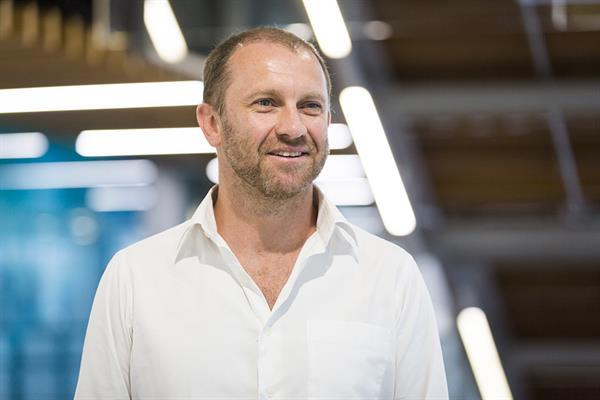
As Australia faces a housing crisis and rapid technological change, Professor Anthony Burke shares why architects have never been more vital, and how their creative skills can help reimagine the way we live.

There’s been a lot of talk recently about the future of various professions in the age of AI, and architecture is included. For students thinking about the future, that can sound worrying. But I want to make the case that right now, and for the next generation, architects have never been more necessary. Around us, Australia’s cities and homes are facing challenges that demand creative solutions – and architects are uniquely positioned to help.

The challenge we face

That need for creative solutions becomes clear when you look at one of the biggest challenges shaping our lives today – housing. Every day, news stories highlight the rising cost of living, the environmental impacts of our homes, and the health issues tied to how we design and live in them. The crisis has been evolving for decades and, in different ways, touches us all. 

We are at a point where almost every aspect of life in Australia, our cities, suburbs and homes are under review and in desperate need of an upgrade. Some architects even say, “Our castles are killing us.” Homes are not just shelters; they shape our wellbeing, communities and values. 

Why architects are crucial

Amid these pressures lies an opportunity for real change, and this is where architects come in. Their integrative skill set allows them to address technical, social and environmental dimensions simultaneously. We are entering an era of innovation that must go beyond treating the housing crisis as merely a productivity issue. Architects are needed to reimagine what home in Australia could mean:

  • Homes that reflect our nation’s diversity
  • Homes that harmonise with the natural environment
  • Homes that foster social connection and psychological wellbeing

It’s a complex challenge. Architects won’t solve the housing crisis alone, but their ability to integrate multiple perspectives and respond creatively is exactly what is required.

The real architect

To meet this challenge, we need to rethink not only what architects do, but who we imagine them to be.

The architect I’m talking about isn’t the lone heroic moody and artistic one you might imagine. It’s not the star-chitect with egocentric flair. It’s the everyday architect who works on projects that affect real people’s lives – someone who considers how communities interact with the built environment and helps reimagine how we live together, in this beautiful and sometimes brutal country.

In this sense, the role of the architect is changing in the public imagination. It’s less conspicuous, but much more impactful, deeply ingrained in the everyday spaces we inhabit.

What this means for students

For students entering the field, this shift reshapes what it means to study architecture today. It’s both a challenge and an opportunity. The pressures shaping Australia’s housing and urban environments demand creative, practical responses, and architects will be central to finding them. Studying architecture now means engaging with real-world needs, thinking critically, collaborating widely and designing with purpose.

The future requires architects to:

  • Learn broadly: use digital design tools, AI, environmental innovations and develop strong communication and problem-solving skills.
  • Collaborate widely: work with landscape architects, planners, project managers, builders of all scales, economists, environmental scientists, material scientists, roboticists and programmers.
  • Design for impact: focus on socially inclusive, environmentally responsible projects rather than ego-driven designs.
  • Reimagine ‘home’: help create spaces that are affordable, inclusive, sustainable and supportive of community wellbeing.
  • Be part of the change: entering the field at a transformative moment, shaping how Australians live for decades to come.

Looking forward

The housing crisis has sparked action, but real change is just beginning. We need new ideas and creative thinkers – a generation ready to innovate. The goal isn’t simply to fix houses; it’s to redefine what home in Australia can be.

Architecture today shapes not only the buildings we live in but the way we live together. For students and future architects, this is a unique opportunity to help design homes, neighbourhoods and cities that improve connection, inclusion and quality of life for all Australians.

Share

Written by

Professor Anthony Burke

Anthony Burke

Professor of Architecture and television and radio host

Anthony Burke Curiosities episode thumbnail

Want to hear more from Professor Anthony Burke?

Check out our Curiosities episode where he answers your questions about design, technology and the future of the spaces we live in.

Want to hear more from Professor Anthony Burke? transcript

00:00:00:00 - 00:00:25:15 
Anthony Burke 
Hello curious people. I'm Anthony Burke, a professor of architecture, television presenter and academic at UTS, and I'm here to answer your curious questions about design, technology and the future of the spaces we live in. This is Design Curious. 
 
00:00:25:17 - 00:00:48:12 
Anthony Burke 
Our UTS community have sent in some thought provoking questions. So let's get started. How is new technology changing the way homes are designed and built? An excellent question, and one that architecture is very invested in. All sorts of new technologies are making their way into the houses that we build, the buildings that we put together, and interestingly, it's not just the new tech, but a lot of old tech that's coming back to the table. 
 
00:00:48:15 - 00:01:10:13 
Anthony Burke 
Things like rammed earth or pisé on these kinds of very old, traditional ways of building are making a comeback for sustainability reasons. On the other hand, we've got everything from AI helping us to design the the floor plans of the future, if you like, and streamline the production process to 3D printed houses. We've even got houses built these days out of mushrooms. 
 
00:01:10:13 - 00:01:30:05 
Anthony Burke 
Yep, mushrooms. So we're exploring all sorts of amazing new materials in architecture these days with the idea of bringing down costs, bringing down the carbon footprint of all the houses that we build and improving the way architecture is improving our lives. What do you think homes will look like in 5, 10 or 20 years? Oh, that's a hard one. 
 
00:01:30:07 - 00:01:50:14 
Anthony Burke 
I don't think houses are going to look a great deal different, maybe a little more streamlined, if you like, but they'll be organised very differently. Things like our work from home environment these days, it's changing what we want from our houses. So things like an office where everyone can get their own, you know, professional space is a really important thing these days. 
 
00:01:50:16 - 00:02:10:19 
Anthony Burke 
Also, the materials we use and the amount of space that we're building that will sort of come down by shrinking the size of our houses. Australia has some of the largest houses in the world right now, and that's not a good thing. So we're looking at actually being more efficient in the way that we design our homes. I think, though, most importantly, we're coming back to the idea of what is home to everybody. 
 
00:02:10:23 - 00:02:27:13 
Anthony Burke 
So how do we have a family? How do we create memories? How do we find a place in this crazy world that we live in, where we can have a moment of joy, a moment of happiness? Those are the things that are driving architecture for so many of us. How can smart design make small spaces feel bigger and more livable? 
 
00:02:27:15 - 00:02:44:23 
Anthony Burke 
That's a really good question. It's one that actually most people can make an immediate change in their environments by doing something small to somewhere in their home. The thing to think about here is how can you double time different spaces in the home? What I mean by that is, rather than thinking a bedroom is just a bedroom or a hallway, it's just a hallway. 
 
00:02:45:02 - 00:03:01:07 
Anthony Burke 
How can we add new uses to those spaces to make them more efficient and make them a little bit different as well? More interesting as you walk through the home. So something like a hallway is a really good example. A hallway is a perfect spot if it's wide enough to accommodate a long desk perhaps, or a library or something like that. 
 
00:03:01:10 - 00:03:30:12 
Anthony Burke 
That would be perfect for a work from home situation or the after school homework. Those kinds of ideas are what's changing. I really like the idea of trying to find a moment in the home that is just about taking a step out of time, a moment of rest and repose. So a beautiful little window seat that overlooks a garden, or has a little bit of sunlight coming through a place where you'd pull up with a cup of coffee and a book and spend maybe 20 minutes a day just being at home and, you know, calming down after a busy life. 
 
00:03:30:18 - 00:04:04:07 
Anthony Burke 
Those are the kinds of spaces that really do make a huge difference to how we feel about our houses and our homes, and they're the things where design is making a big impact. It's about thoughtful and intentional design, and that's where the architecture comes in, because most people will think a design is just a floor plan. What we architects look for is a way to maximise the experience of all of those spaces that's in the home, as well as in your office downtown, or anywhere with cost of living pressures and Australia's housing crisis, how is the Australian dream changing, especially for young people? 
 
00:04:04:09 - 00:04:27:09 
Anthony Burke 
This is the question of the moment. It's a difficult situation. 70% of people under the age of 35 don't believe they're going to own a home in their lifetime. That is a huge generational change from what's come before. So we in Australia right now are facing a real crisis where home ownership is no longer the game. Most people are imagining. 
 
00:04:27:11 - 00:04:50:01 
Anthony Burke 
Again, those under 35 are imagining I'm going to have to do something else. So we're looking at shared accommodation, long term rentals, sort of communal living, different ideas about maximising space for more people in higher density or slightly higher density sort of situations. And that's a real challenge to the idea of the traditional Australian home or the Australian dream, as it was sort of given to us in the 1950s. 
 
00:04:50:03 - 00:05:06:15 
Anthony Burke 
So with that on the cards, we're looking at architecture to do a lot more work to make those kinds of situations work for the people who are living there. What I mean by that is things like privacy, things like communal spaces. How do you get that balance? Right? Everyone needs their privacy. But people want to be together. 
 
00:05:06:15 - 00:05:26:21 
Anthony Burke 
People want to share a laundry, maybe share a kitchen. Certainly share a garden. These are great ideas. And it's those kinds of ideas that are reshaping the Australian home for tomorrow. Where did the housing crisis come from and what kind of crisis is it? Well, it depends who you ask. A lot of people would understand the housing crisis as a crisis of affordability. 
 
00:05:27:01 - 00:05:52:03 
Anthony Burke 
This is an issue that really sort of took off, if you like, in 2000, when things like capital gains tax and negative gearing landed in the laps of Australians. And that really changed the Australian home from a place where we grow up, we raise kids, we create our memories to a financial asset, and the home was now the best financial investment one could make to secure your retirement or grow wealth into the future. 
 
00:05:52:05 - 00:06:12:12 
Anthony Burke 
At that moment, that was 25 years ago. So for 25 years, we've seen housing prices rise through the roof, but our wages haven't kept up with that kind of change in the house price. So the multiple of our, our wages to housing prices was back then somewhere like about 3 to 1. The house price was three times our wage. 
 
00:06:12:16 - 00:06:32:24 
Anthony Burke 
Now it's about 9 or 10 times to one. So that difference is the affordability issue. That's the affordability gap if you like. And that's not changing. Nothing is changing in that space any time soon, which is a real problem for us. So that's one version of the crisis. But I also think there's another version, which is we tend to think of the Australian home as a very singular kind of thing. 
 
00:06:32:24 - 00:07:00:09 
Anthony Burke 
We don't have a lot of diversity in our housing stock, which means when we understand a house in Australia, we're probably thinking about a three bedroom, two bathroom carport out the front kind of house on a suburban lot somewhere in the suburbs of a major metropolitan center. But our demographics outside of the makeup of the Australian population has changed so much since the 1950s, when that sort of idea was sort of first born that those kinds of houses no longer suit us. 
 
00:07:00:11 - 00:07:16:21 
Anthony Burke 
So for me, there's a real crisis between what we need and what will suit our current lifestyles and our family makeups today versus what we're building, which are the houses that were really meant for a family of the 1950s. Can design help make homes more affordable? The short answer is 
 
00:07:16:21 - 00:07:18:18 
Anthony Burke 
absolutely yes. 100%. 
 
00:07:18:18 - 00:07:30:22 
Anthony Burke 
The way I think about it is if you get the right advice up front, you're actually designing in the efficiencies and the affordability of the life of the home, which is going to be something like 40 years or so. 
 
00:07:30:24 - 00:07:51:20 
Anthony Burke 
So when you think about that, what does that mean? It means designing a smaller home, one that works better for the family, even though it's a bit smaller in its size, one that's more sustainable, more energy efficient. Those kinds of ideas are where design steps in at the very beginning of a project. Choosing better materials that are more robust, that don't need so much maintenance, for example. 
 
00:07:51:24 - 00:08:08:18 
Anthony Burke 
This is all part of the spatial and the design parameters of a new home, for example. And it's that information, that sort of intelligence upfront which saves you money in the very long term. So you might spend a little bit more on architect's fees but the balance, the payoff is that you will have a much better home for much longer 
 
00:08:08:19 - 00:08:32:01 
Anthony Burke 
and that's where you get the affordability. Are new types of homes emerging to respond to these challenges? Absolutely. What we're seeing now is a real commitment to medium density dwelling and even new types of apartment design. For Australians, living in an apartment is something that you think, wow, that's only a step towards a house. But for many people, an apartment is going to be their reality as they kind of live their lives in Australia. 
 
00:08:32:07 - 00:09:03:02 
Anthony Burke 
And as a consequence, apartment design is changing quite fundamentally. It's going from those investment properties that you see sort of sprouting up around major capital cities to apartment sizes which are bigger, allow more space, are more flexible, can accommodate different generations across one family, for example, and allow you to sort of stay in an apartment and use all the benefits of of a group of people living together in an apartment block, things like the gym, the pool, the garden, the laundry, those sorts of ideas where actually you're getting immense benefit out of those. 
 
00:09:03:02 - 00:09:21:19 
Anthony Burke 
So the idea of designing better apartments is very much on the table right now. The other thing that's changing right now is the multigenerational house and what that means is we're designing houses that are just slightly bigger to accommodate Mum and Dad, Grandma and Grandpa, as well as the kids who are staying home longer, maybe not even ever leaving home at all. 
 
00:09:21:21 - 00:09:40:13 
Anthony Burke 
That's the reality of the future of the housing crisis in Australia. So we might have three generations living under one roof. That requires a very different kind of mindset for how do you design a house that accommodates all of those different people, bodies, social relationships, moving around on a daily basis without getting annoyed at each other, without falling over each other? 
 
00:09:40:15 - 00:10:05:07 
Anthony Burke 
So there's some really interesting work going on now in the multigenerational housing space in Australia as a response directly to the housing crisis. Is it still possible to design a beautiful, functional home without spending a fortune? Absolutely. Although it does depend on what your idea of beautiful is. If beautiful to you means really expensive materials and sort of lots and lots of space and all those important things from all around the world. 
 
00:10:05:07 - 00:10:26:01 
Anthony Burke 
Then you're going to spend a fortune to make that happen. But good and beautiful design to me isn't that at all. What I think of when I think of beauty is the idea of feeling really good about being in a space, about wanting to invite my family and my friends to be with me in that place. It's the idea that beauty is the way we live in a house, rather than how the house looks. 
 
00:10:26:07 - 00:10:47:07 
Anthony Burke 
So beauty in that sense doesn't have to be expensive at all. It's really about finding those moments through design, when you can celebrate life in its everyday kind of dimensions and that's where design can make really small but really meaningful differences to anyone's house. How do culture and climate influence the way homes are designed? They are the two big drivers, if I had to say it. 
 
00:10:47:12 - 00:11:06:09 
Anthony Burke 
Money, surprisingly isn't as much of a driver as those two things culture and climate. Culture we understand because it's who we are as a nation. That's how we live in Australia. So that's pretty straightforward. But the environmental or the climate response is something that we're kind of having to update our ideas around quite fundamentally. We are in a climate crisis. 
 
00:11:06:11 - 00:11:35:00 
Anthony Burke 
The temperatures are rising. Things like floods and bushfires are happening more often. So we're changing the way that we think about our houses as a way to respond to those kinds of natural disasters or natural situations much more effectively than we have in the past. The other side of that is we're using materials now, which are really conscious decisions about designing with materials that are sustainable, which means we can not only build our houses with them, but we can also dismantle our houses and reuse those materials. 
 
00:11:35:05 - 00:11:52:23 
Anthony Burke 
It means that those materials don't require us to put a lot of energy into the house to heat or cool the house, during the summer or winter. So clever design really does get inside that idea of climate change and climate as a whole. And it's so important, especially in a country like Australia, to respond to our climate. 
 
00:11:52:23 - 00:12:14:04 
Anthony Burke 
It's pretty extreme if you're living in Tassie, it's below zero. If you're living in the far north of Queensland, it's hot all the time and very humid. So we've got a lot of environmental extremes to cope with. And in that sense, our houses should be really different from the north of Queensland to the south of Tasmania. Which sustainable design features make the biggest difference to running a home efficiently? 
 
00:12:14:09 - 00:12:32:19 
Anthony Burke 
This is a really good question because there are some very basic and simple things you can do to make your home more sustainable and more efficient. And the first one is it's going to sound really naff, but the first one is plug up the holes, all those little gaps under the door, all those gaps around the windows, those kinds of things where air is escaping and moving in and out. 
 
00:12:33:00 - 00:12:47:18 
Anthony Burke 
That's where we're losing all of the heat, or all of the cool that we're spending a lot of energy to generate in a home in summer or winter. So if you can kind of plug up those holes, which you can do very, very simply, actually, that's going to save you a lot of money in a very short and very easy way. 
 
00:12:47:20 - 00:13:07:23 
Anthony Burke 
The next thing to do is really think about things like the materials that you're using and I'm using as an example here, something like double glazing, for example. Most all homes have just a single pane of glass in the windows, but double glazing uses two panes of glass. And in doing that, it means that the heat or the cold transfer between the inside and the outside is much less because of that double glazing. 
 
00:13:07:23 - 00:13:28:08 
Anthony Burke 
What that really means is that when we create a temperature inside by heating the house, for example, it'll stay that temperature inside. So double glazing is one of those upgrades that many people could do again, quite easily, but not without a cost. Probably, the third thing I'd saying, probably the most important thing is when you're designing a home, we don't need houses as big as the ones that we're designing. 
 
00:13:28:11 - 00:13:47:08 
Anthony Burke 
So the most fundamental thing we can do about creating a more sustainable house is to reduce the footprint of the houses that we live in altogether. How can homes be designed to grow and change as families do? I think this is a really great question because the way I think of houses is a bit more like I think of tuning an instrument. 
 
00:13:47:13 - 00:14:04:02 
Anthony Burke 
Whenever you have a violin, you've got to occasionally retune the strings to get it to sound just right, and your home is very much the same from time to time through, you know, the life of a home. As people grow up, as families change, you've got to re tune the house to get it to fit right, to sound right for the life you're living. 
 
00:14:04:05 - 00:14:18:00 
Anthony Burke 
So we tend to think, if I just build my house in it's set and forget as soon as I move in, I'm done. But actually, I think that's the wrong way of looking at it. The best way is to think that on occasion, I'm going to be doing small increments to upgrade the kind of situation that I'm sort of moving in. 
 
00:14:18:02 - 00:14:34:03 
Anthony Burke 
Maybe that means getting a little bit bigger, or maybe even a little bit smaller, if people are moving out, that kind of stuff. So both ways. But to design a house that accommodates, that requires some careful thinking so that you're not doing that and making a big mess of things, you can very easily add or subtract from the kind of the house itself. 
 
00:14:34:08 - 00:14:53:10 
Anthony Burke 
So that's something that architects are really on top of, really looking at the idea of both the circular economy, that is, how do we use materials effectively and reuse materials, as well as things like how do we accommodate the different the changing demographics of Australian society, where, again, kids are staying home longer, Grandparents are moving back in with the family. 
 
00:14:53:10 - 00:15:11:22 
Anthony Burke 
Those kinds of things require us to have a much more flexible idea about how a home can work. What's one idea that could really change how we live at home? I think the one thing that I would say is that we need to make a decision to live intentionally. And when you think about that, it's like, I'm making a decision. 
 
00:15:11:22 - 00:15:27:21 
Anthony Burke 
I'm designing my life at home. We tend not to do that. We kind of just move into the house and live our lives and create our habits and go about business every day. But if you think about it, you can actually design the way you live at home on a day to day kind of basis. And I think of that as living intentionally. 
 
00:15:28:02 - 00:15:46:19 
Anthony Burke 
So if your family really loves the idea of having a coffee together on a Saturday morning as a way to start the weekend, where's the space that you can create for that to happen in the most beautiful way possible? Where can we create those opportunities for little rituals of everyday life to be played out, you know, over and over and over again? 
 
00:15:46:23 - 00:16:09:22 
Anthony Burke 
And they are the kinds of things that create a beautiful life, a beautiful set of relationships with those around you who you love. And that's how architecture can support the best kind of living altogether. That was all the questions for today, and I hope you learned something new. Until next time, stay curious. 

Discover the UTS experience

Explore the opportunities that are waiting for you.

Student stories and news

Webpage

Want your ideas to make an impact? Dr Joshua Pate reveals why communication is key and how to get better at it.
Webpage

Mentorships and cross-disciplinary collaboration are helping fashion design student Alex Maccoll find her perfect career path.

Webpage

Tom's efforts have seen him share in the glory of four consecutive premiership victories.

Webpage

We have the tips you need to navigate the early stages, from founders who've been there.