


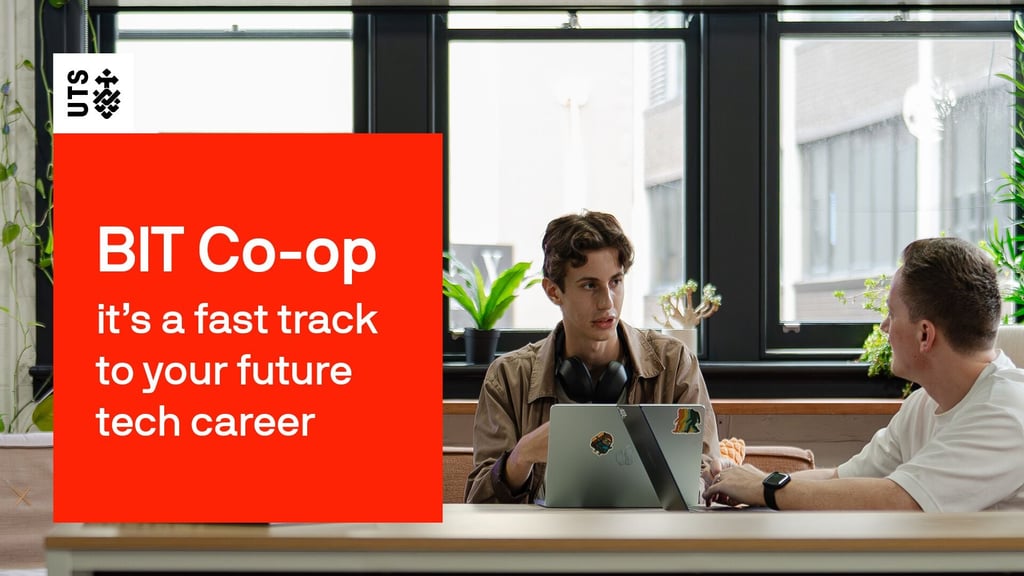
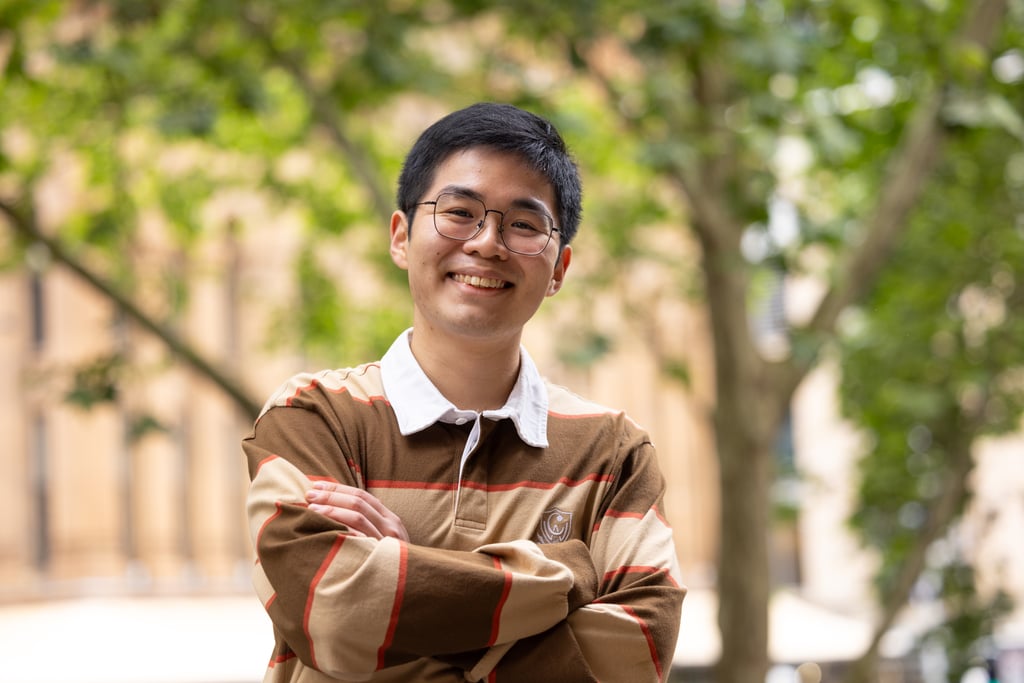
Guided by curiosity, Finn Randell followed his interest in technology and is now building real products in industry, with a job in his field secured before graduation.
Finn Randell always knew his future career lay in technology, but the details of what that future might look like were unclear.
“I never really knew exactly what I wanted to do, but technology stood out to me as the thing I was most interested in,” he says.
Now in his second year of the Bachelor of Information Technology (BIT) (Co-op) at the University of Technology Sydney (UTS), Finn has already completed a full‑time industry placement, built production software for a Sydney startup and secured a junior software engineer role well before graduation.
“It sort of blows my mind when I stop and think about it,” he says.
“I certainly didn't imagine I’d be working at a company, building really cool products and being able to help people.”
Choosing UTS for industry connections
Finn grew up in Dubbo and had been drawn to programming from a young age. In primary school, he travelled to Sydney for a coding challenge, where he built games using an Arduino system and presented his work to the NSW Premier.
“That sparked my interest in pursuing programming and technology,” he says.
But with no formal programming subject offered at his high school, Finn continued to teach himself outside the classroom.
“I sort of kept that interest on the side and was always working on projects like that,” he says.
When it came time to choose a degree, it was the structure of the BIT (Co-op) program that stood out.
“The most exciting thing about the degree was definitely the industry experience,” he says.
“It’s super valuable. Not only do you learn a lot, but it looks great on a resume and will help you get a job straight out of uni.”
The BIT (Co-op) combines academic study with extended, full-time industry placements and scholarship support. This gives students long periods working in professional roles while earning credit towards their degree.
Instead of finding internships on their own, students are introduced early on to organisations that partner with UTS exclusively for this degree. Finn and his cohort visited 13 companies, learning about their work and the kinds of projects they might get involved in.
Students then ranked their preferences, and course coordinators matched each person to a placement.
“That’s how I ended up at Updoc,” Finn says.
“We all preferenced the companies we wanted to work for, and I was lucky enough to get placed there.”
Support in the classroom
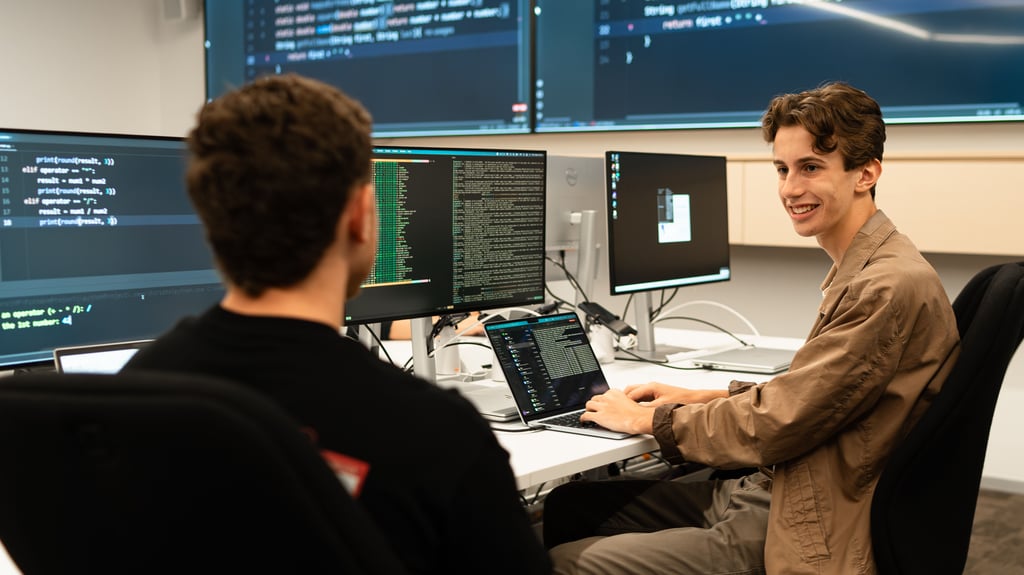
Before stepping into full-time industry work, Finn spent his first semester building technical foundations on campus.
“The courses are paced in such a way that you build up your knowledge week by week, and all the lecturers and tutors are very supportive” he says.
Smaller class sizes in his second semester, particularly in networking and database subjects, meant more opportunities for one-on-one help.
One early assignment left a lasting impression. In a subject focused on designing solutions for communities, Finn’s group explored how to improve emergency distress signalling for a remote Pacific island.
“I wasn’t expecting an assignment like that going into a technology course,” he says.
“It was unique, creative and grounded in real-world thinking.”
The project also strengthened his collaboration skills and showed him how to apply what he was learning to real problems.
It really changed how I think about building solutions. You have to think about the end user and how it would work in practice, not just in theory – it was a real shift in perspective.
From placement to real responsibility
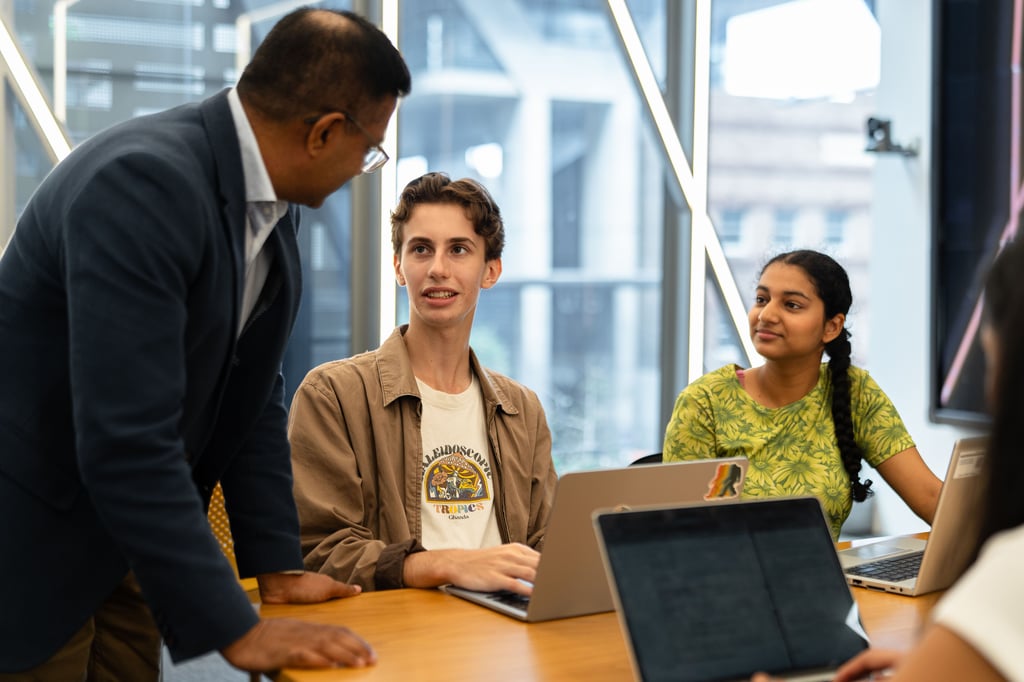
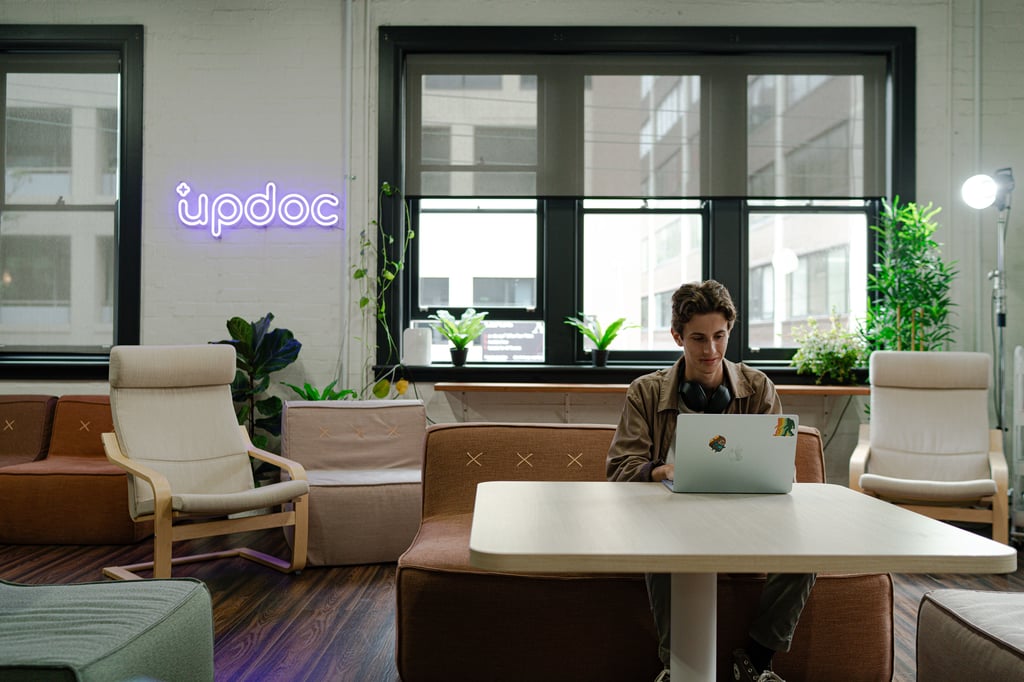
Second semester of his first year brought another major shift. Because the industry placement counts as two subjects, Finn studied two classes while working full-time at Updoc, an Australian digital health platform that connects patients with doctors online.
“I went from a pretty relaxed first semester to nine-to-five, Monday to Friday,” he says.
“But I wanted to immerse myself in it.”
Because Updoc is a startup, Finn says he was given a level of responsibility he might not have experienced so early on in a larger organisation.
“I’ve been lucky enough to be afforded a lot of liberty with the projects I’m working on,” he says.
“At a bigger company, an intern probably wouldn’t get so many important things to contribute to.”
That freedom allowed him to take ownership of key projects, such as automating email responses and building internal infrastructure, which accelerated his learning.
Finn began in customer experience, handling support tickets and gaining insight into recurring user problems. When he rotated into the product team, he moved into building software to address those issues.
“It gave me insight into what issues customers were dealing with,” he says.
“Then I could actually build software to fix things.”
His proudest achievement was an automated email response agent – nicknamed Monica – designed to classify enquiries and streamline replies.
“It’s already had a marked impact on the number of tickets we’re receiving,” Finn says.
“And I think it’s going to continue to have a positive impact on the people who are using our product.”
The experience reshaped how he approaches both study and work.
“Being able to plan out and structure your thinking so you can deliver something effective, efficient and on time is super important,” he says.
“That hands-on experience has been really formative.”
At the end of his placement, Finn was offered a junior software engineer role with the company.

Finding community at UTS
Moving from regional NSW to Sydney was another adjustment.
“The biggest transition was that you don’t know literally anyone,” Finn says.
“You have to put yourself out there.”
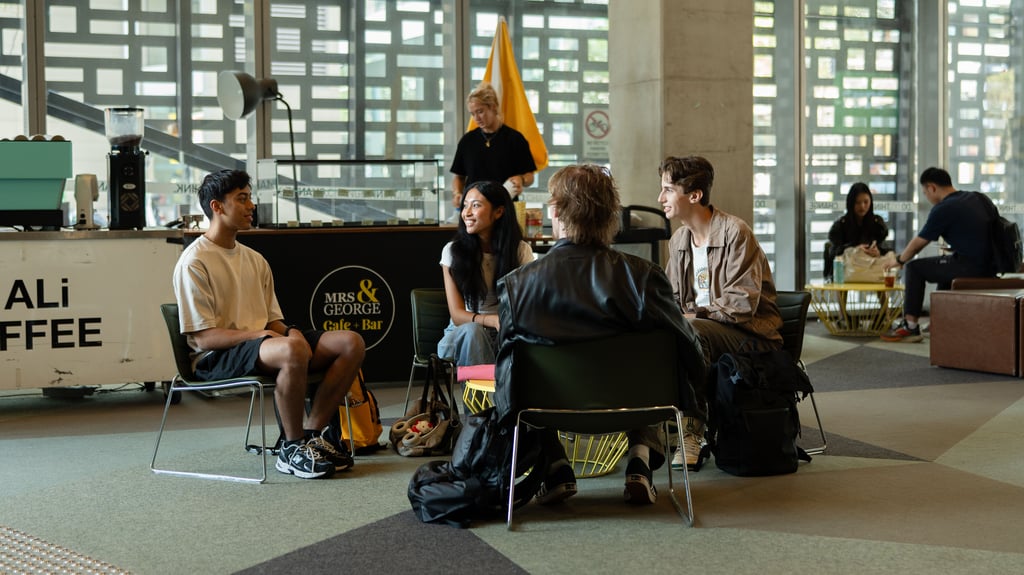
He found support through the BIT (Co-op) cohort.
“There are 12 of us in the Co-op group, and we try to line up our classes. We swap stories about our internships and hang out after lectures,” he says.
Finn also joined the Ultimate Frisbee Society, continuing a sport he loved back home.
“That helped me meet people straight away”.
And when he needs a break from being social or a quiet place to study, Finn heads to the top level of the UTS Library.
“I like the views up there,” he says.
“You don’t get those in Dubbo.”
Looking ahead
Working inside a startup has reshaped how Finn thinks about what a career in technology could become.
Before his work experience, he imagined himself working as a programmer inside a large organisation. Spending time at Updoc – surrounded by founders, engineers and people focused on building new products – opened his eyes to a different side of the industry.
“I used to imagine just being a programmer at a big company,” he says.
“Now I realise you can be a programmer and an innovator. A programmer and an entrepreneur.”
That shift in perspective has gone hand in hand with growing confidence. When Finn first arrived at UTS, he worried that others might be far more advanced technically.
“I thought everyone else would be super into programming and I wouldn’t be able to break in,” he says.
“But everyone was so kind and open. We were all kind of in the same boat.”
Learning alongside peers and upskilling through his classes and industry experience helped reassure him.
“You don’t have to be the most technical person coming into the program,” he says.
“You can learn those skills quite easily, and we all learn together.”
Webpage
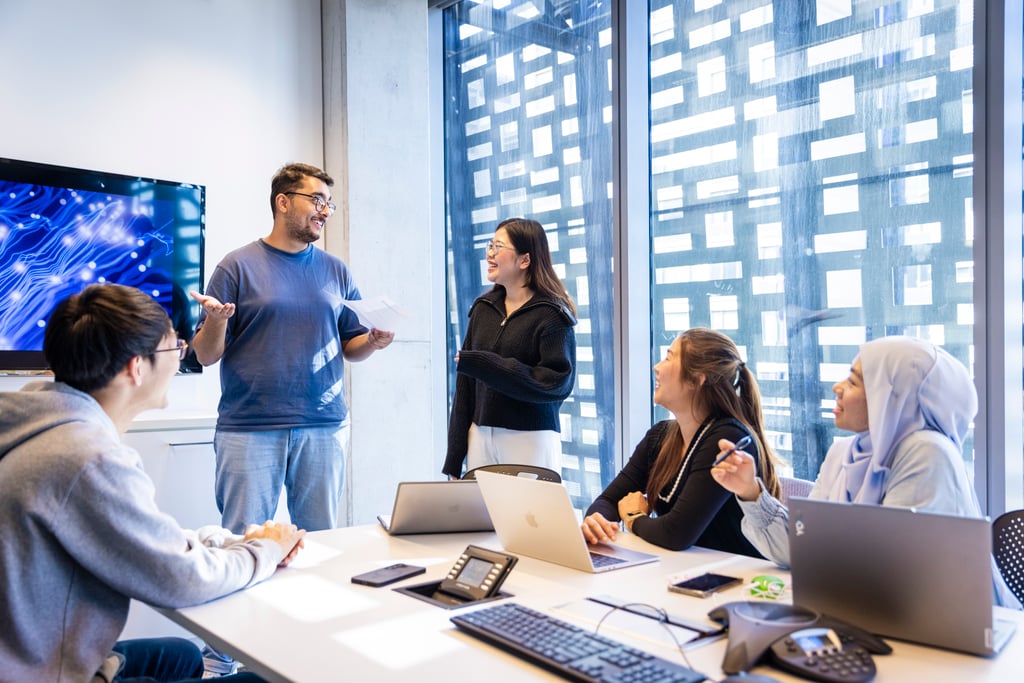
Why communication matters and simple ways to get better at it
Want your ideas to make an impact? Dr Joshua Pate reveals why communication is key and how to get better at it.
Webpage
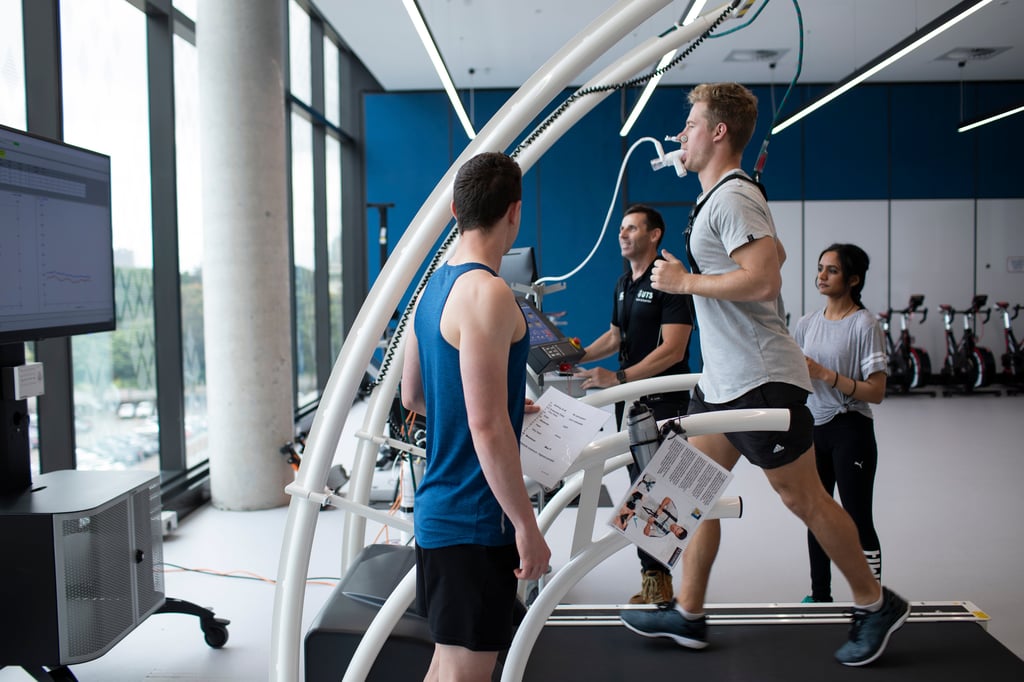
What it’s really like to be a sports scientist
Associate Professor Blake McLean shares what sports scientists do, where they work and the skills it takes to help athletes perform at their best.
Webpage
How to study like an elite athlete
Associate Professor Blake McLean, sports scientist and Director of the High Performance Sport program at UTS, shares five lessons students can learn from elite...
Webpage
Making the most of university... one yes at a time
When Leon arrived at UTS, he didn't have a detailed career plan. What he did have was curiosity, an open mind and a willingness to say yes to opportunities.
Webpage
Why communication matters and simple ways to get better at it
Want your ideas to make an impact? Dr Joshua Pate reveals why communication is key and how to get better at it.
Webpage
What it’s really like to be a sports scientist
Associate Professor Blake McLean shares what sports scientists do, where they work and the skills it takes to help athletes perform at their best.
Webpage
How to study like an elite athlete
Associate Professor Blake McLean, sports scientist and Director of the High Performance Sport program at UTS, shares five lessons students can learn from elite...
Webpage
Making the most of university... one yes at a time
When Leon arrived at UTS, he didn't have a detailed career plan. What he did have was curiosity, an open mind and a willingness to say yes to opportunities.