


Forensic scientist and PhD student Bridget Thurn is untangling the mysteries of life, death and what it means to be human.
When Bridget Thurn is working at the Australian Facility for Taphonomic Experimental Research (AFTER), better known as the first ‘body farm’ in the southern hemisphere, she’s not thinking about death.
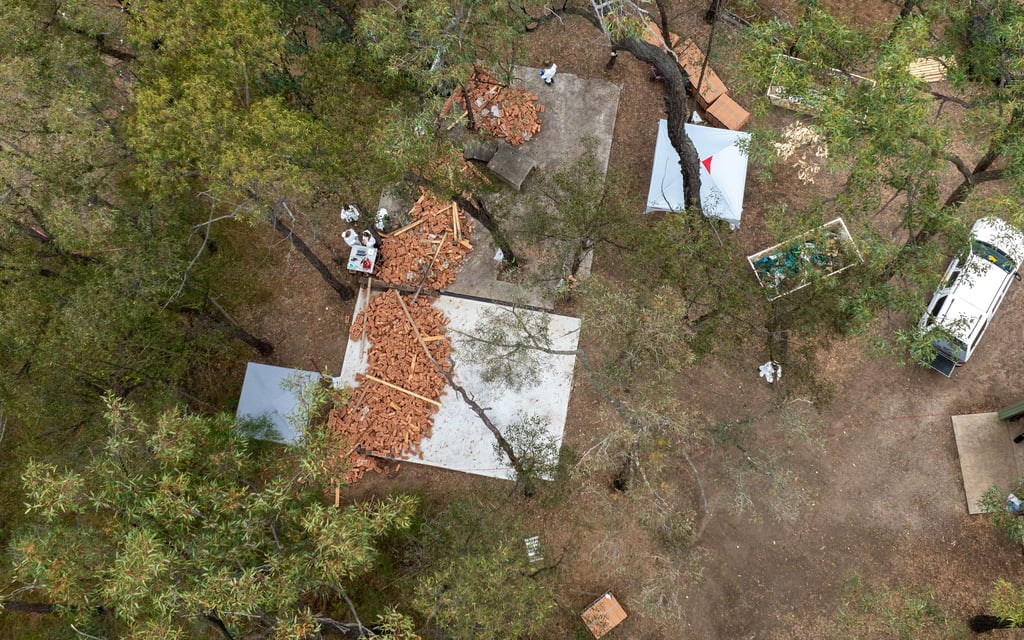
A world-class forensic taphonomy facility, AFTER is largely dedicated to the study of human remains and what happens to our bodies in the various post-mortem stages. But for Bridget, a graduate of the UTS Bachelor of Forensic Science and now a PhD student, this secluded corner of north-western Sydney is full of life.
“People think of body farms as very macabre and scary places, but AFTER is in the middle of the forest. There’s birdsong, there’s the wind blowing through the trees. It’s such a peaceful environment,” she says.
For Bridget, life and death go hand in hand. Working at the point at which they meet is the privilege of a career in forensic science.
On the shoulders of giants
Bridget’s journey into the profession was inspired by a bunch of remarkable women: criminologist Clarice Starling, hero of Silence of the Lambs; forensic pathologist Dana Scully of the X-Files; and, most importantly, her mum.
“My mum is a mathematician, so growing up, science and maths were always on the table as a future career,” says Bridget.
“But I also really loved the X-Files, and Silence of the Lambs is my favourite movie. Seeing women in STEM like that was definitely a big influence in me going into forensics.”
A university degree was the crucial first step into the profession. UTS, home to Australia’s first Bachelor of Forensic Science, was on the top of her list.
Bridget was entranced by the hands-on curriculum, which included human cadaver labs, analytical chemistry labs, and a crime scene suite that transformed forensic science theory into practical action. But she was also inspired by the women leading the program.
Among them is AFTER Director Associate Professor Maiken Ueland, who first became Bridget’s honours supervisor and is now overseeing her PhD. Maiken is a living example of what women can achieve in the forensic science field: she’s ranked among the world’s top 2% of scientists and is one of fewer than 10 researchers globally to head up a facility like AFTER.
She’s also an endlessly supportive colleague who is now supporting Bridget to follow in her footsteps.
“If there's a scholarship or award to apply for, she's sending it your way. I've had so many unique, irreplaceable experiences because of her generosity,” Bridget says.
“Her unwavering optimism is continuously inspiring. When there’s an insurmountable task, she has a unique talent of carving steps into the mountain, showing you a path to the solution but letting you walk it yourself.”
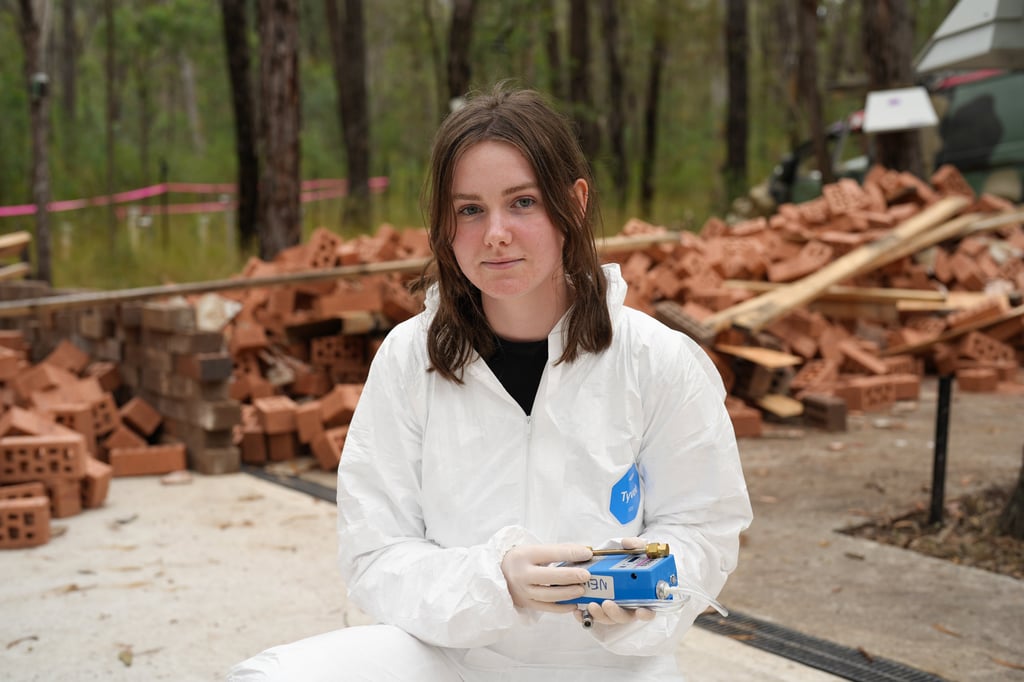
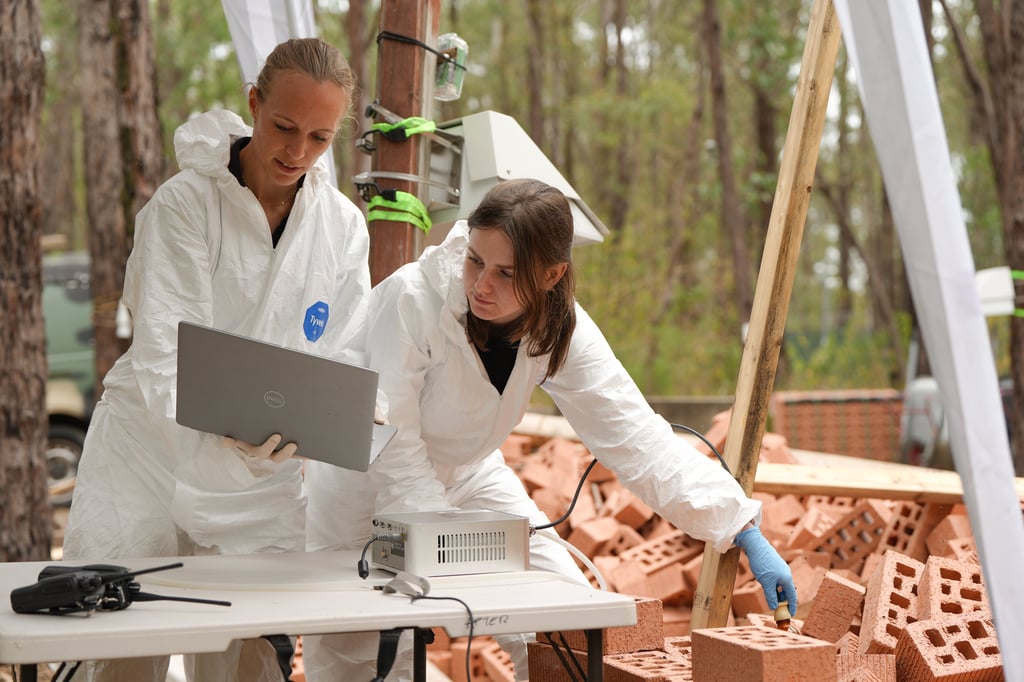
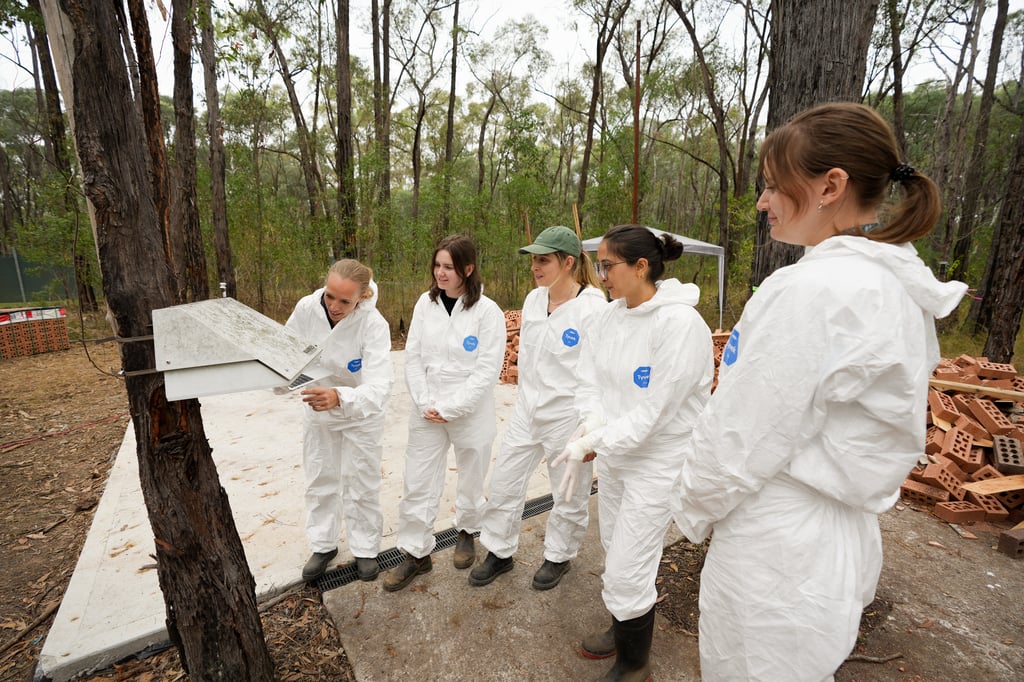
Together, Maiken and Bridget are developing and testing an electronic nose that uses odour sensing to help locate people, living and deceased, in the aftermath of disaster events.
“All odour is a unique combination of different compounds. So, vanilla smells like it does because of the compound vanillin, and cinnamon smells like it does because of the compound cinnamaldehyde,” Bridget says.
“My PhD is figuring out the compounds that humans release as a core human scent, separating that from the changes that occur when someone passes away, and then optimising the sensors in the electronic nose to better detect and distinguish between them.”
This research will one day be vital to saving lives during disaster scenarios, such as helping search and rescue teams find people trapped under rubble. It will also provide families with certainty about what happened to their loved ones by enabling the location and return of their remains.

A gift that keeps on giving
Now a tutor in the Bachelor of Forensic Science herself, Bridget is becoming the type of role model that once inspired her. As a teacher, she’s helping to shape the next generation of students, many of them young women (today, forensic science is one of the few STEM professions in which women outnumber men).
Even outside UTS, the allure of her profession makes her an intriguing figure. After talking about her work at a recent dinner party, she was pulled aside by one of the guests, a teenaged girl who previously hadn’t said a single word.
“At the end of the dinner, she came up to me and said, ‘Please tell me more about your research. How can I be like you?’” Bridget says.
“That was a really touching moment, but anyone can do this. Science isn’t something that’s limited to getting a really high ATAR or coming from a STEM background.
If you’re interested in science, all you need is curiosity.
That curiosity is what keeps bringing Bridget back to AFTER and to the work of her PhD. Early results from the project show that the electronic nose is at least as effective as trained dogs in detecting people and bodies in the aftermath of disaster.
But as she collects the ante- and post-mortem odour samples that sit at the foundation of her research, Bridget isn’t just furthering the forensic science field. She’s also slowly untangling the component parts of what it means to be human.
And she’s not doing it alone: AFTER’s work, and therefore Bridget’s, is only made possible by donors who gift their bodies to the facility to support future forensic taphonomy research. It’s an act of generosity that exemplifies the role of the dead in building a brighter future for the living.
“That’s what the donors are doing. They’re giving themselves to science, and they won’t see any of the results or outcomes of that. It’s such a selfless act,” she says.
“It’s a privilege to be able to work with them and honour their wishes as best we can.”
Science that matters
Bridget might have come into forensic science seeking an experience she’d seen on TV, but what she’s found in reality is something even more satisfying: the chance to make a real difference.
She’s also found a physical place that keeps her connected to simple pleasures, like the sun on her face, birdsong in her ears, and some of science’s greatest mysteries at her fingertips.
“Every time I’m at AFTER, I feel so lucky to be able to work and study there,” she says.

“I really love science, I really love research, and I love being able to go outside and be in nature. I think as long as I’m able to do that, I’ll be happy.”
Bridget Thurn
At UTS, Bridget Thurn is solving the mysteries of life and death.
Because it’s not just a university, it’s where big questions find answers.
What can we be for you?
Explore

A taste of community
In a city where food often means fine dining, Shaun Christie-David serves something deeper: dignity, connection and second chances.

Shooting for the moon
For Dr Clyde Webster, Earth is the perfect place to test people-first robotics that will prepare humankind for the final frontier: space.

Putting inclusivity on centre stage
Children’s entertainer Dr Emma Watkins is passionate about three things: dance, film and Auslan. Now, in her show Emma Memma, she’s introducing children across...

All stories, every screen
Sam Reilly is passionate about telling stories of diversity. Now, as a graduate of the UTS Master of Animation and Visualisation, they want to bring those...
A taste of community
In a city where food often means fine dining, Shaun Christie-David serves something deeper: dignity, connection and second chances.
Shooting for the moon
For Dr Clyde Webster, Earth is the perfect place to test people-first robotics that will prepare humankind for the final frontier: space.
Putting inclusivity on centre stage
Children’s entertainer Dr Emma Watkins is passionate about three things: dance, film and Auslan. Now, in her show Emma Memma, she’s introducing children across...
All stories, every screen
Sam Reilly is passionate about telling stories of diversity. Now, as a graduate of the UTS Master of Animation and Visualisation, they want to bring those...