


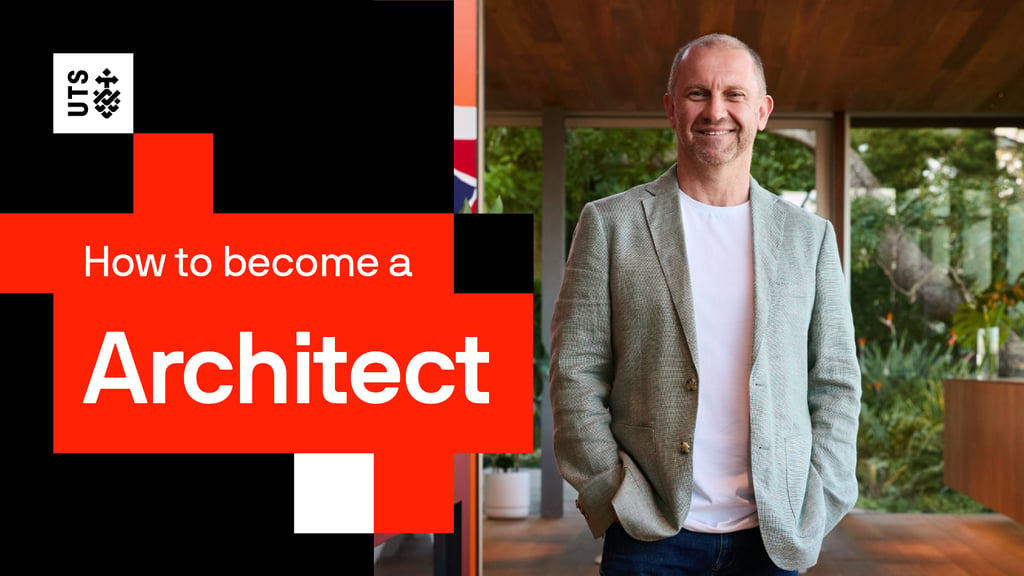
Professor Anthony Burke shares what studying architecture involves, the different paths graduates can take and what really shapes working life in the profession.
Architecture is often associated with striking buildings and sketchbooks. But for Anthony Burke, a Professor of Architecture at the University of Technology Sydney, the field is defined by collaboration, creative problem-solving and constant engagement with the world around us.
“It’s that understanding and translation of the world around you into a proposal for something that will hopefully improve someone’s life,” he says.
What is architecture and what do architects do?
Architecture centres on the design of buildings and spaces, but the work extends far beyond drawing plans.
According to Burke, architects operate across a wide range of scales, from furniture and small interior projects to houses, large buildings, public spaces and urban planning.
In practice, the role is highly collaborative. Architects spend much of their time working with clients, councils, engineers, builders and consultants to bring projects to life.
While design is essential, it forms only a small part of the average day.
“I’d say probably about 10 to 15 per cent of your day would be just doing design work,” Burke explains.
The rest is devoted to liaising with clients and stakeholders and collaborating with the project team to coordinate technical inputs and produce drawings and documents for different audiences. According to Burke, this doesn’t mean design disappears – even at this stage, it remains central to the work.
“You’re always thinking as you draw,” he says. “If you love design, that drawing is not a task to do. It’s the way you turn design ideas into reality.”
What do you need to study to become an architect?
In Australia, becoming an architect requires completing an accredited architecture pathway at a university. This involves:
- a three-year bachelor's degree
- followed by a two-year master’s degree
- then industry experience before registration
“It's a long program, because of the emphasis on studio learning,” Burke says.
“You’re spending a lot of time actually designing. Talking about your designs with your tutors, with your peers, with your professors.”
Architecture is not built around traditional lecture theatres or written exams. Students learn through drawing, model making and developing projects, while also building technical knowledge and studying architectural history.
It is also an intensely social way to study.
“You really are socialising your learning and your knowledge,” Burke says.
“Students learn by discussing ideas and seeing how others work.”
Where do architects work?
Architects work across a wide range of settings and project types. Many are based in studios, which Burke describes as open, creative environments where people talk through projects with colleagues and collaborators. Even when workloads are heavy, he says the atmosphere is usually social. But the work itself spans far beyond commercial offices.
Architects may design:
- people’s homes and renovations
- apartment buildings
- commercial developments
- furniture or small-scale interiors
- large urban planning projects
- public spaces and infrastructure
“Any job that comes into an architect’s office might have a relationship to any of those scales,” he says.
From private residential clients to councils and major public bodies, architects often shift between very different types of projects, sometimes from one week to the next.
What career paths can architecture lead to?
While some graduates become practising architects who run studios and design buildings, Burke emphasises that architecture can lead to many directions.
Architects may work in:
- policy and town-planning advisory roles
- writing or advocacy around the built environment
- academia and teaching
- allied design disciplines like Landscape Architecture, product design and urban design
- construction and project management
“There’s a really broad set of ideas about how one can be an architect today which is a sign that the profession is evolving,” he says.
Skills that matter in architecture
Many people assume that strong drawing ability or mathematical skill are the defining traits of architects.
Burke agrees these skills are important – but emphasises they can be developed through study and practice.
“You can learn to draw and you can definitely learn the maths,” he says.
What truly sets great architects apart, he explains, is how they apply those technical skills and build relationships with people and place. He highlights two core traits in particular: curiosity and empathy.
Empathy helps architects listen closely to clients and understand how people experience spaces. Curiosity keeps them engaged in a profession shaped by constant change.
“If you’re both curious and empathetic, you will be a good architect,” Burke says.
Architecture, he adds, is a fast‑moving discipline, and staying open to new ideas, technologies and global conversations is essential.
What challenges do architects face?
One of the major challenges of architectural practice is the shifting nature of work.
From week to week, projects may move between residential buildings, public commissions and large‑scale government developments. Architects need to move confidently across these contexts, and that adaptability comes from staying engaged and continually upgrading their skills.
“If you see yourself as always upgrading your skills,” Burke says, “you stay connected to what’s happening in the profession.”
Advice for future architects
For students considering architecture, Burke offers one clear piece of guidance: experience buildings and good design in person.
“Don’t just sit at home behind your computer looking at stuff on the screen,” he says
Instead, he encourages future architects to walk through well-designed spaces, paying attention to materials, spatial effects and how people move through them.
By doing this, he explains, you start to see buildings more carefully, follow emerging ideas and think about how those observations could shape your own designs.
“Being out in the world like this is how you start to understand what architecture is really about, and learning to read architecture in real life is what helps a design mindset develop.”
Contributor
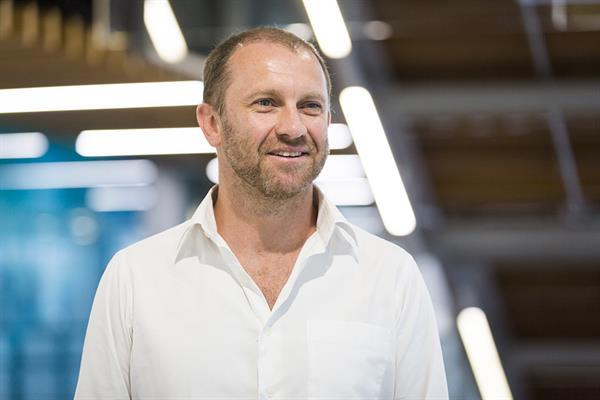
Professor, Faculty of Design and Society
Webpage
Repurposing a career to pursue a passion
Safwan is proof that your first career doesn’t need to be your only career.

Webpage
6 careers that will be crucial for addressing climate change
UTS’s Professor Chris Turney shares his thoughts on the careers and job titles that have the most potential to act on climate change now and into the future.

Webpage
Careers in fashion that aren’t being a designer
Want to work in fashion but don’t see yourself as a designer? The industry is full of exciting, essential roles beyond the sketchpad.

Webpage
The future of film in Australia
The screen industry is evolving fast, driven by new technologies and fresh storytelling formats. Associate Professor Alex Munt from UTS breaks down the key...
Webpage
Repurposing a career to pursue a passion
Safwan is proof that your first career doesn’t need to be your only career.
Webpage
6 careers that will be crucial for addressing climate change
UTS’s Professor Chris Turney shares his thoughts on the careers and job titles that have the most potential to act on climate change now and into the future.
Webpage
Careers in fashion that aren’t being a designer
Want to work in fashion but don’t see yourself as a designer? The industry is full of exciting, essential roles beyond the sketchpad.
Webpage
The future of film in Australia
The screen industry is evolving fast, driven by new technologies and fresh storytelling formats. Associate Professor Alex Munt from UTS breaks down the key...