


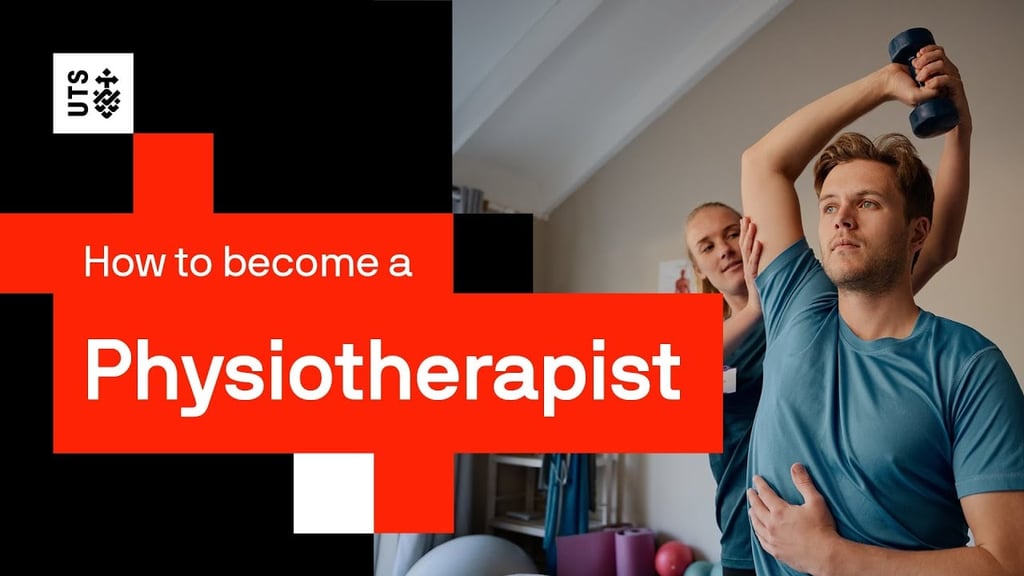
Dr Joshua Pate shares the skills, challenges and rewards of becoming a physiotherapist.
Physiotherapists help people move better, manage pain and get back to the activities that matter to them. But what does the role actually involve?
Dr Joshua Pate, physiotherapist, senior lecturer and researcher in paediatric pain science, shares what it really takes to be a physiotherapist, from the skills that matter most to the realities of the role.
What is a physiotherapist and what do they do?
A physiotherapist is a health professional who works with people to improve movement, function and quality of life. They assess health, support recovery and help patients manage injuries, pain and other health conditions.
The day-to-day work of a physiotherapist varies depending on the setting. Some work in hospitals, seeing numerous patients throughout the day. Others work in private clinics, pain clinics, community settings, patients’ homes or on the sporting field. Some work with groups, while others focus on longer, more complex assessments.
Physiotherapists can also work beyond direct patient care. There are opportunities in policy, administration, management, teaching and research. While many students are drawn to physiotherapy for its clinical pathways, the profession also offers a wide range of career options.
A physiotherapist’s responsibilities can include:
- Assessing movement, pain and physical function
- Helping patients recover from injury or illness
- Supporting people to return to daily activities, work or sport
- Running individual or group therapy sessions
- Adapting care to different settings, from hospitals to sporting environments
- Working with other health professionals as part of a team
What do you need to study to become a physiotherapist?
Pate explains that the pathway depends on the institution. At UTS, students typically first complete an undergraduate degree such as a Bachelor of Sport and Exercise Science before going on to do a two-year postgraduate Master of Physiotherapy. This undergraduate pathway can be a genuine stepping-stone into a physiotherapy career.
He says this model works well because it gives students time to grow and develop as health professionals before moving into the practical and clinical components of the degree. Students then complete a range of placements and graduate feeling well prepared for practice.
A profession with many different paths
Many people picture physiotherapists on the sideline at major sporting events, but that is only one part of a much broader profession.
While many enter the field with a focus on clinical work, careers can evolve in different directions over time. Physiotherapists might move into specialised areas such as pain management, neurological rehabilitation or women’s health, or explore roles in education, research, policy or leadership.
This flexibility allows practitioners to shape a career that reflects their interests and strengths.
Challenges and rewards
The reality of clinical work is often complex and, at times, challenging. In private practice, there may be pressure to see a high number of patients. In some settings, patients may have different levels of motivation, which can be difficult to navigate. In other areas, such as end-of-life care, the emotional demands can be significant. Working across teams and settings can also bring its own complexities.
At the same time, the work is highly rewarding. Pate says one of the most fulfilling aspects is seeing long-term outcomes, when a person can look back and recognise that physiotherapy helped them return to the activities they love. He also finds it rewarding to see students have those moments of understanding that shape how they care for patients in the future.
Advice for future physiotherapists
His top advice for anyone considering physiotherapy is not to underestimate the importance of communication. Building skills such as listening, empathy and clear communication early through part-time work, clinic shadowing or team-based experiences can make a real difference.
He also encourages students to be clear on why they want to enter the profession. A strong sense of purpose helps maintain motivation and stay on track over time as they work towards a career in physiotherapy.
So how can you build these skills? Pate shares eight practical strategies to strengthen your communication.
Contributor

Associate Professor, Faculty of Health

Webpage
Driving on-field success through science
Tom's efforts have seen him share in the glory of four consecutive premiership victories.

Webpage
6 careers that will be crucial for addressing climate change
UTS’s Professor Chris Turney shares his thoughts on the careers and job titles that have the most potential to act on climate change now and into the future.

Webpage
Careers in fashion that aren’t being a designer
Want to work in fashion but don’t see yourself as a designer? The industry is full of exciting, essential roles beyond the sketchpad.
Webpage
Thinking about a career in health?
Passionate about helping people live better, healthier lives? As an allied health professional, you can make a real difference to the way your patients...
Webpage
Driving on-field success through science
Tom's efforts have seen him share in the glory of four consecutive premiership victories.
Webpage
6 careers that will be crucial for addressing climate change
UTS’s Professor Chris Turney shares his thoughts on the careers and job titles that have the most potential to act on climate change now and into the future.
Webpage
Careers in fashion that aren’t being a designer
Want to work in fashion but don’t see yourself as a designer? The industry is full of exciting, essential roles beyond the sketchpad.