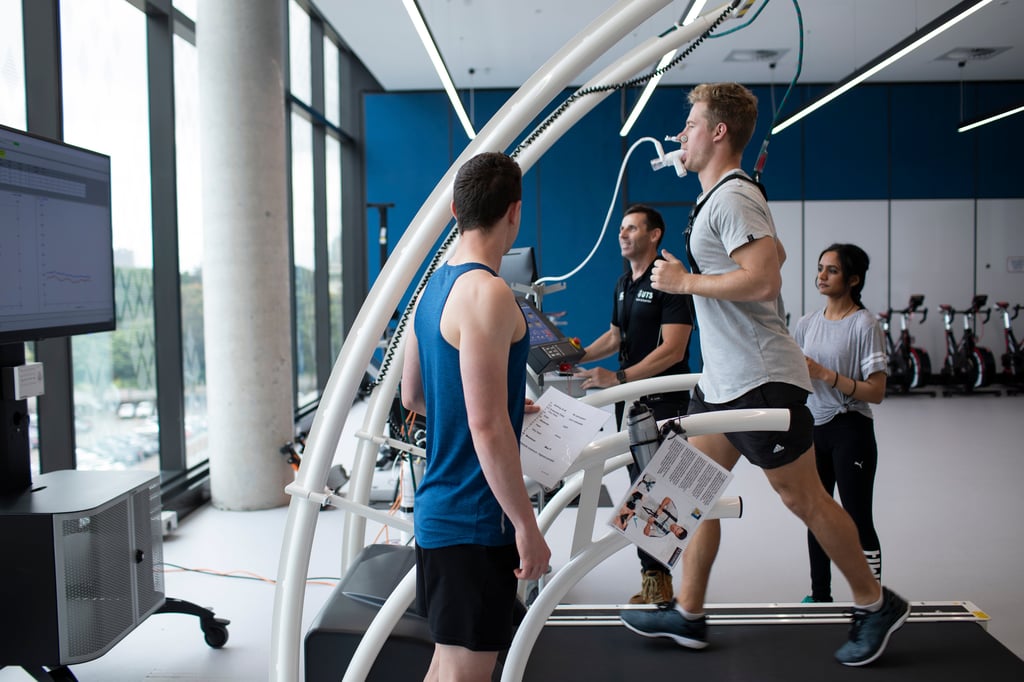
Want your ideas to make an impact? Dr Joshua Pate reveals why communication is key and how to get better at it.

Ideas, discoveries and insights are everywhere, but they can only reach their full potential when they’re communicated clearly. Breakthrough research can sit unpublished, its ability to improve lives left unrealised. A promising idea may fail in the boardroom simply because it wasn’t explained well. In healthcare, missed details can delay care.

These scenarios share the same root cause: communication that falls short.

Communication isn’t just a “soft skill.” It’s the foundation that turns knowledge into action. Whether in healthcare, research, education or any other field, the ability to communicate clearly often matters more than technical expertise alone.

We spoke with Dr Joshua Pate, senior lecturer in physiotherapy at University of Technology Sydney (UTS), pain scientist and children’s book author, about why effective communication is essential and how to improve your skills. 

The foundation for everything else 

In healthcare, communication can make a tangible difference. When a physiotherapist cannot clearly convey assessment findings, crucial information may be lost. A patient might disclose trauma during a physical exam, but if that information does not reach the psychologist, the patient could miss out on comprehensive care. 

“Communication skills are the foundation for everything else,” says Pate. 

“They are not an extra, they are what everything else is built upon.” 

This principle extends beyond clinics. Communication holds teams together. It enables clear referrals, effective handovers and meaningful family meetings. Without it, teamwork falters or even fails. 

In research, poor communication is a key reason for the 17-year lag between discoveries and real-world implementation.

Brilliant research happens every day, but without clear communication, those ideas may never leave the lab.

Dr Joshua Pate, pain scientist and senior lecturer in physiotherapy

Bridging the gap from discovery to impact

The solution is strategic communication. Researchers must translate complex findings into stories that resonate with different audiences. 

“It’s not about dumbing things down,” explains Pate. 

“It is about asking where someone is starting from, what they already know and building on that.” 

Consider health messaging. The “10,000 steps a day” guideline, while well-intentioned, set unrealistic expectations for many. Research now shows that for sedentary individuals, even a 20% increase in daily steps, perhaps just 400 additional steps, can substantially improve health. By starting where someone is at, this nuanced message empowers rather than overwhelms. 

Relatable communication often relies on storytelling. For Pate’s research on understanding the science of chronic pain, children’s books provide a powerful model. Reading together sparks dialogue: “What do you think about what happened to this character?” In his studies, families explore complex ideas through conversation, repetition and multimedia. 

The same principle likely extends everywhere. Whether giving a TEDx talk, writing a paper or having a workplace conversation, the goal is the same: create meaningful connections that lead to understanding and action. 

Practical strategies to improve your communication skills

So how can you build these skills? Pate offers 8 practical strategies to strengthen your communication.

1

Practice like an athlete

Communication is a skill that improves with repetition. Volunteer for presentations, engage in meetings, or explain complex concepts to friends. Each interaction builds confidence and competence. 

"Communication is like any skill," says Pate. 

"Practice regularly and you improve. Avoid it, and you only get better at not speaking up."

2

Know your audience

Consider where your audience is starting from, what they already know, and which examples may resonate. Provide the right amount of information and allow people time to construct understanding. 

"It’s the idea of constructivism. People make sense of new information based on what they already know," explains Pate. 

"Your job is to give them space to build that understanding."

3

Focus on behaviour change

Effective communication inspires action. Identify the behaviours you want to encourage, then craft messages that make them feel achievable and relevant.

4

Embrace different formats

Modern communication requires platform flexibility. A research finding might need to be shared through academic papers, social media posts, children's books, video content and face-to-face presentations. Each format serves different audiences and purposes, but the core message remains consistent.

5

Practice under pressure

Rehearsing quietly alone is very different from performing when your heart races and palms sweat. Seek opportunities to practise in realistic conditions. If presenting via video call, run through the session with the technology. If performing on stage, rehearse in similar spaces with lights and microphones. 

6

Give and receive feedback

Learning to give and receive feedback is essential for communication growth. When giving feedback, try the "sandwich" method: acknowledge what’s working well, provide specific suggestions for improvement, then reinforce the positives. This approach encourages growth while maintaining confidence.

Technology now offers new ways to practise and improve communication. AI tools can provide feedback on tone and pacing, while features like PowerPoint’s rehearsal mode analyses speaking speed and identifies filler words. Some people even practise radio interviews or presentations and receive feedback from ChatGPT on their communication style. 

7

Listen actively

Don’t forget that communication is bidirectional. Active listening means truly understanding others, not just waiting to speak. 

"Being truly heard is powerful," says Pate. 

"It matters at the dinner table, it matters in a health clinic, and it matters in a research lab."

8

Create supportive environments

Skill development thrives in supportive spaces. Take group presentation opportunities, join writing groups and find professional communities to practise and learn collaboratively. 

Moving forward

Communication skills compound over time. Every conversation, presentation or written piece strengthens your capabilities for the next. Focus on steady improvement and building genuine connection with others. 

Start where you are, and use the tools and people around you. Whether sharing research findings, leading a team or having dinner table conversations, clear communication is the foundation that makes everything else possible. 

Countless discoveries, innovations and insights are waiting to make an impact – but only when communicated effectively. These are skills worth developing. 
Curiosities Joshua Pate thumbnail

Want to hear more from Dr Joshua Pate?

Check out our Curiosities episode where he answers questions about why people experience pain differently, how biological, psychological and social factors influence pain, and what health professionals can do to help.

Want to hear more from Dr Joshua Pate? transcript

00:00:00:00 - 00:00:25:11
 
Hello curious people. I'm Dr Joshua Pate, a pain scientist, physiotherapist and an academic at UTS. I'm here to answer your curious questions about pain, how it works, how it's treated, and how we can help people to live better lives. This is health curious. 
 
00:00:25:13 - 00:00:47:13
 
Our UTS community has sent in some thought provoking questions to tackle. So let's get started. Why does pain sometimes continue even after an injury has healed? Pain can last a long time for a whole variety of reasons, and ultimately it comes down to safety and whether or not overall safety is required. Because pain's a really good feeling for us to be kept safe. 
 
00:00:47:19 - 00:01:05:21
 
You might think about putting your hand on a hot plate, and you would never do that again because it hurts so much. That kind of process happens over and over and again, but in chronic pain, it's really complex because often people are told the tissues are all healed, the body parts are all better. So why do I still have pain? 
 
00:01:05:22 - 00:01:27:16 

And pain is incredibly complex. We could look in, zoom in on peripheral sensitisation of no receptors at the biologic level, or we could zoom right out to all the different social factors that are influencing our day to day pain. It is a really, really complex feeling and there's so much to say about this topic. Why do different people feel pain in different ways? 
 
00:01:27:18 - 00:01:47:01 
 
People feel pain in many different ways, even from the same stimulus. Like in a lab setting. If everyone had the same stimulus, like something hot put on their arm.  
 
Studies showed that some people would feel close to a zero out of ten, and for other people, that's a ten out of ten and it's the same temperature, same everything, but different people. 
 
00:01:47:03 - 00:02:14:22 
 
And that's not to say that it's just your genetics or just your expectations or your memories or childhood experiences. I think it's a combination of all of these different factors adding up to contribute to why you feel a certain amount of pain at a certain time. How do emotions like fear or anxiety make pain worse? This is a big question because anxiety and depression are really, really common, occurring alongside when someone has chronic pain. 
 
00:02:15:01 - 00:02:31:16 
 
And it makes a lot of sense that when you have pain for a long period of time, it's horrible. But do those things actually cause the pain or how does that work? There's a lot of research being conducted in this space, and in one hand, it's just like more fear leads to more pain, which leads to more fear, which leads to more pain. 
 
00:02:31:16 - 00:02:50:04  
 
And it goes around and around. But I think this idea of worrying about that is also kind of part of the picture too. So it is a bit of a complex mix and again, it comes back to everyone feeling pain very differently. And so it's not like they'll ever be a one size fits all magic solution for someone's chronic pain. 
 
00:02:50:06 - 00:03:09:01 
 
What are some practical things I can do each day to reduce or manage pain? In the day to day there are a whole range of different strategies that are being tested in the research. And so one person heat might help someone for a small amount of time and for other people, ice packs are better. But I think this is a very individualised thing. 
 
00:03:09:01 - 00:03:37:14 
 
And and that whole idea of like day to day pain flare up management is very different to long term strategies that are going to help you get back to doing more of what you love. And so I think this is a toss up of do I want something to help me now? Or do I want to feel better in the long term and getting a multi-disciplinary assessment from health professionals is a really good starting point, because I can tailor the strategies just right for you in today's situation. 
 
 
00:03:37:16 - 00:03:58:10 
 
So what makes pain in children different from pain in adults? Pain in children is complex because the role of a parent is uniquely different in different age ranges. Like if you think about a teenager's response to pain and even response to their parents is very different to how an adult responds compared to those who they live within their household. 
 
00:03:58:16 - 00:04:19:08 
 
And so the influence of parents is one part of the picture. But a child is developing physically and socially, emotionally all at the same time. And so these different variables can also impact on their experience, not only previous experience, but what they observe if they see their parents manage pain in a certain way. What strategies are they going to choose? 
 
00:04:19:10 - 00:04:47:10 
 
Most likely, they'll see and copy whatever they observe. Why is it important for kids to learn about pain early on? Now, I don't think we want to dwell on a negative topic like this really, really early in a child's development. We want to focus on them developing and growing and engaging in meaningful activities. But by learning about pain and even some of the neuroscience behind it, that can give kids the confidence to be able to articulate what's going on in their experiences. 
 
00:04:47:10 - 00:05:10:02 
 
And we can see in the research that this end helps a family to manage pain a lot better. What can a physiotherapist do to help with pain? A physiotherapist is equipped in many ways to help with both acute pain and chronic pain, and there are a whole range of strategies. And you might be thinking, oh, I don't want to do more exercise or I don't need to do these sorts of strategies, whatever it is. 
 
00:05:10:04 - 00:05:28:09 

And I think it just depends on your goals and getting back to the things that you want to do, because that's probably where the physio is best equipped to help. For someone who wants to run a marathon, that's very different than someone who wants to just walk out to the mailbox, for instance. And so your goals factor into the strategies that are used. 
 
00:05:28:11 - 00:05:55:21 
 
What's really exciting about the latest neuroscience, though, is that our bodies are much more resilient and adaptable than we used to think. And so 50 years ago, people were told to lay down and rest. Whereas now the evidence is much more in favor of things like motion is lotion and getting moving again. And so I do encourage people listening to, to go and get an assessment by a physiotherapist to kind of assess what is possible at this stage of your pain journey. 
 
00:05:55:23 - 00:06:21:23 
 
Can talking to a psychologist or counsellor help with pain? I reckon a decade ago I would have been skeptical to say yes. Whereas now I have this overwhelming sense of how helpful a psychologist or counselor can be. And I think that's because I now understand the neuroscience of pain a lot more, and that pain is affected by biological and structural physical factors, but psychological factors, as well as social factors. 
 
00:06:22:04 - 00:06:48:09 
 
And having a support network around you makes such a difference. The really exciting thing that a psychologist and a counselor can do is provide really practical strategies, from things like breathing strategies through to anxiety management, through goal setting, problem solving. I've worked in multidisciplinary pain programs, and honestly, the psychologist has so much to offer and I just wish everyone access them earlier. 
 
00:06:48:11 - 00:07:08:18  
 
What are the treatment options available for people dealing with chronic pain? A lot of our health system is kind of set up for chronic pain management to be kind of a siloed approach. And what I mean by that is if you have a car accident, you go down this pathway and have worker's compensation and you do these strategies, and if that doesn't work, then you go to the next thing. 
 
00:07:08:20 - 00:07:31:06 
 
And some of that is really fixated on the body part that's hurting. And I don't want to say that that's not the problem. But often the problem becomes much more complex than that over time. And so in the short term, there are some really helpful strategies and systems for someone. But once we call it chronic pain, that means the pain's lasting longer than the healing time. 
 
00:07:31:08 - 00:07:56:17 
 
And that's where this complex web of factors needs to be addressed. And so I think seeing what we call multidisciplinary care, which is a pain specialist, a physiotherapist, a clinical psychologist, and often others too, like an OT, social worker, nurse. and there's a lot of people in these teams now in public hospitals. It's a freely available service in Australia, and I think it's really worth considering if you want to get back to doing the stuff that you love doing. 
 
00:07:56:19 - 00:08:20:15  
 
How can a better understanding of pain improve care from future health professionals? I think ultimately some of the research now is showing that the latest neuroscience has given us more reasons to be optimistic than we've ever had before. Because if someone understands what's going on in the biology and psychology and social parts of their pain experience, they can be more confident to try different strategies. 
 
00:08:20:17 - 00:08:44:03 
 
And I think that links with empathy, that links with that ability to kind of care better. So for health professionals in training, by learning the latest neuroscience, they can be better at caring because they understand confidently what's going on inside, rather than it being this black box mystery of what is pain and what's going on here. We now equipped so that we can confidently say this strategy will help 
 
00:08:44:05 - 00:09:12:01 
 
and there's data to back that up. What challenges to health professionals and patients face when communicating about pain? For me, I think the big one I've observed is misunderstandings because everyone has slightly different understandings of what pain is and how we deal with it. What happens for a patient is that the health professionals might be using jargon, and the spouse, or the siblings, or the kids or the adults, or whoever it is, is using a different understanding. 
 
00:09:12:01 - 00:09:34:17 
 
And so if one person around the patient is telling them to behave in a certain way, it can really cause a lot of conflict. And so I think the challenge is having a common understanding. And the latest neuroscience can allow for that and I think that's a really exciting finding of recent studies. How might emerging technologies like AI or virtual reality improve our understanding and treatment of pain? 
 
00:09:34:19 - 00:09:58:17 
 
In terms of understanding, I think these technologies could help, particularly with AI, a lot of discoveries and new emerging kind of scientific proofs of what's going on under the surface. But in terms of treatments, I think these technologies are allowing new things like monitoring exercise programs, taking notes, all sorts of positive things. But there's also different risks as well. 
 
00:09:58:17 - 00:10:17:19 
 
And we want to weigh up whether or not it's worth like sharing data or not. And I don't think the policies are in place yet to have a really firm answer. But it's certainly something that we need to be thinking about in society. Why is it so important to show empathy and acknowledge someone's pain, even when it can't be seen? 
 
00:10:17:22 - 00:10:45:09 
 
I recently did a TedX talk, and in this talk I said there is no way I could ever fully understand what someone with chronic pain has gone through, like the complexity of all their experiences. And after the talk, I had people coming up to me in tears saying that they felt heard. And afterwards, I've been thinking about this a lot because I think what they saying is they feel like the misunderstandings have been acknowledged by what I said because I wasn't hearing them. 
 
00:10:45:11 - 00:11:07:20 
 
I was just acknowledging the fact that they've been misunderstood. And so this is a huge issue. If someone doesn't feel understood, they're not going to engage in the recommendations that the other person provides. And so a lot of my research work is on providing that common understanding. And I think it starts with stuff like a common language and a common understanding of what's going on with the problem. 
 
00:11:07:22 - 00:11:24:00 
 
And so there is a bit of work to be done. It's not as simple as a one size fits all magical cure. Quick fix. I think there is an element of we need to work together and have people around that are the support network, and that's what makes good sense to me. That was all the questions for today. 
 
00:11:24:00 - 00:11:41:08 
 
I hope you learned something new. If you'd like to learn more about my research on the science of pain, scroll down and check out the link in the description below. Until next time, stay curious. 
 

Share

Contributor

Joshua Pate

Senior Lecturer, Faculty of Health

Discover the UTS experience

Explore the opportunities that are waiting for you.

Student stories and news

Webpage

Mentorships and cross-disciplinary collaboration are helping fashion design student Alex Maccoll find her perfect career path.

Webpage

Tom's efforts have seen him share in the glory of four consecutive premiership victories.

Webpage

We have the tips you need to navigate the early stages, from founders who've been there.

Webpage

Professor Sarath Kodagoda, Director of the UTS Robotics Institute, sheds light on the top three professions impacted by AI.