


Mentorships and cross-disciplinary collaboration are helping fashion design student Alex MacColl find her perfect career path.
A career in a creative industry was always Alex’s plan, but the details of what this looked like started off a bit unclear.
“I was really interested in visual arts in high school and started thinking how I can apply that practically,” she says.
She initially considered graphic design and went back and forth between a few other options, but fashion design always called to her. Alex decided to give it a go and apply to the University of Technology Sydney’s (UTS) fashion design program.
She is currently in her second year pursuing a double degree: the Bachelor of Design in Fashion and Textiles and Bachelor of Creative Intelligence and Innovation (BCII). Together, these programs are helping her explore new ways of thinking about a career in fashion, as well as connecting her with the people and skills she needs to achieve success.
Building new strengths
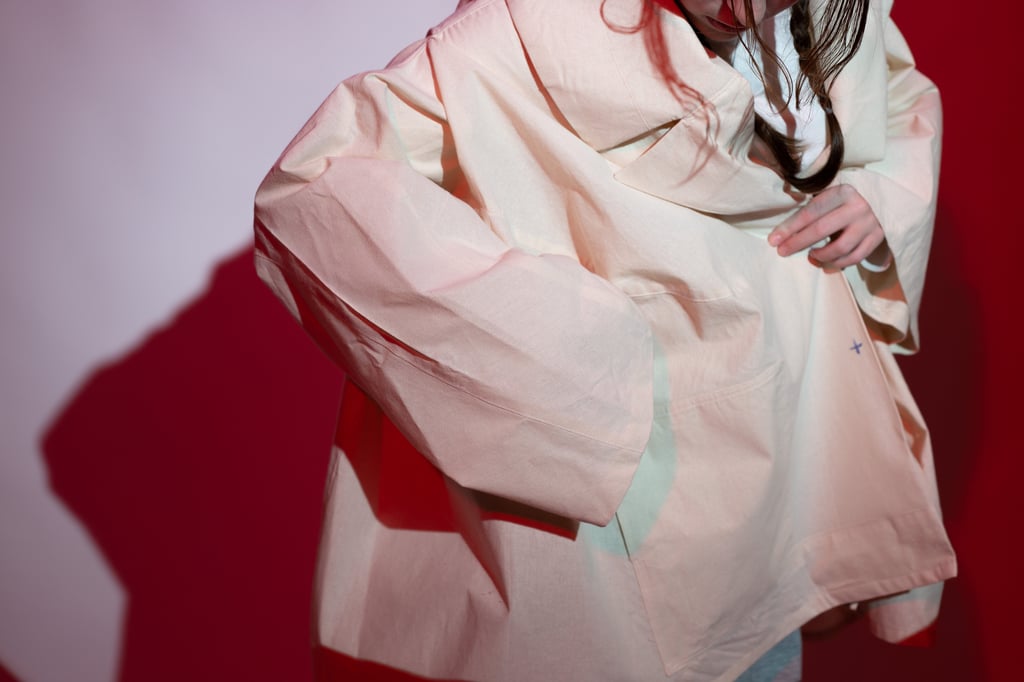
Her current strengths lie in the design side of fashion, so Alex says she’s conscious of not just reinforcing these skills during her studies but also gaining new ones in areas that she hasn’t developed yet – for example, business and commercial knowledge. To this end, she’s focused on gaining industry experience as a way to explore new areas and learn from established players what skills are really necessary to make it in fashion.
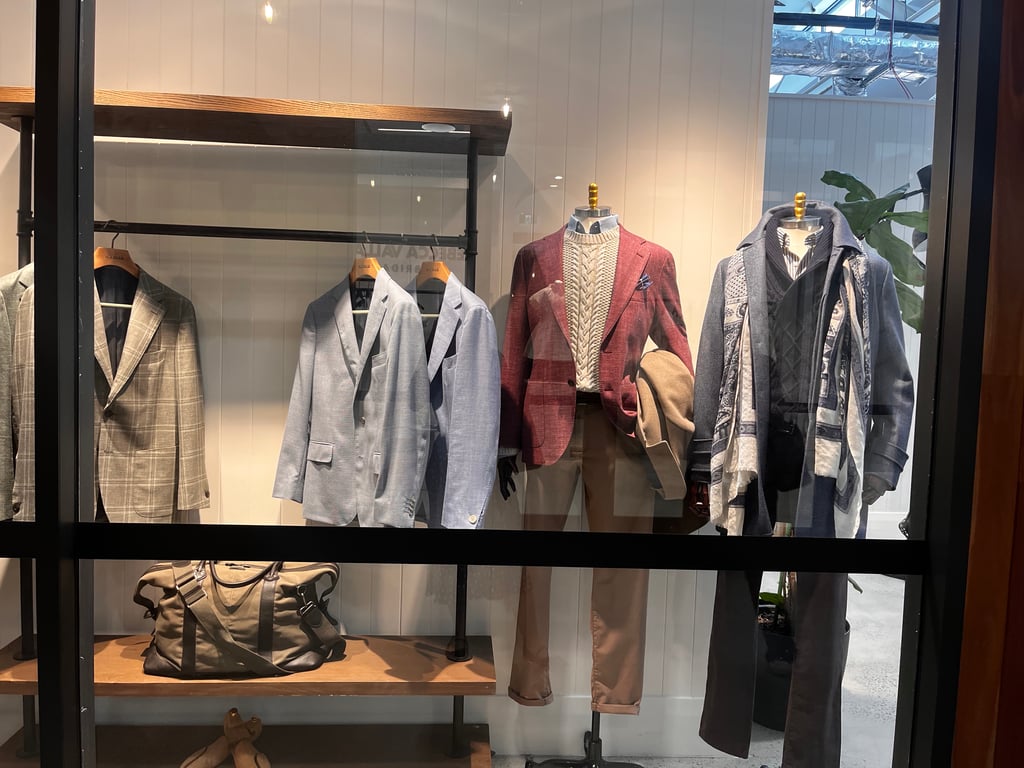
She’s well on her way in this regard after earning a coveted mentorship with Australian men’s fashion label MJ Bale. The opportunity came about thanks to a partnership between UTS and the label that provides fashion students with real challenges to solve as part of their studies.
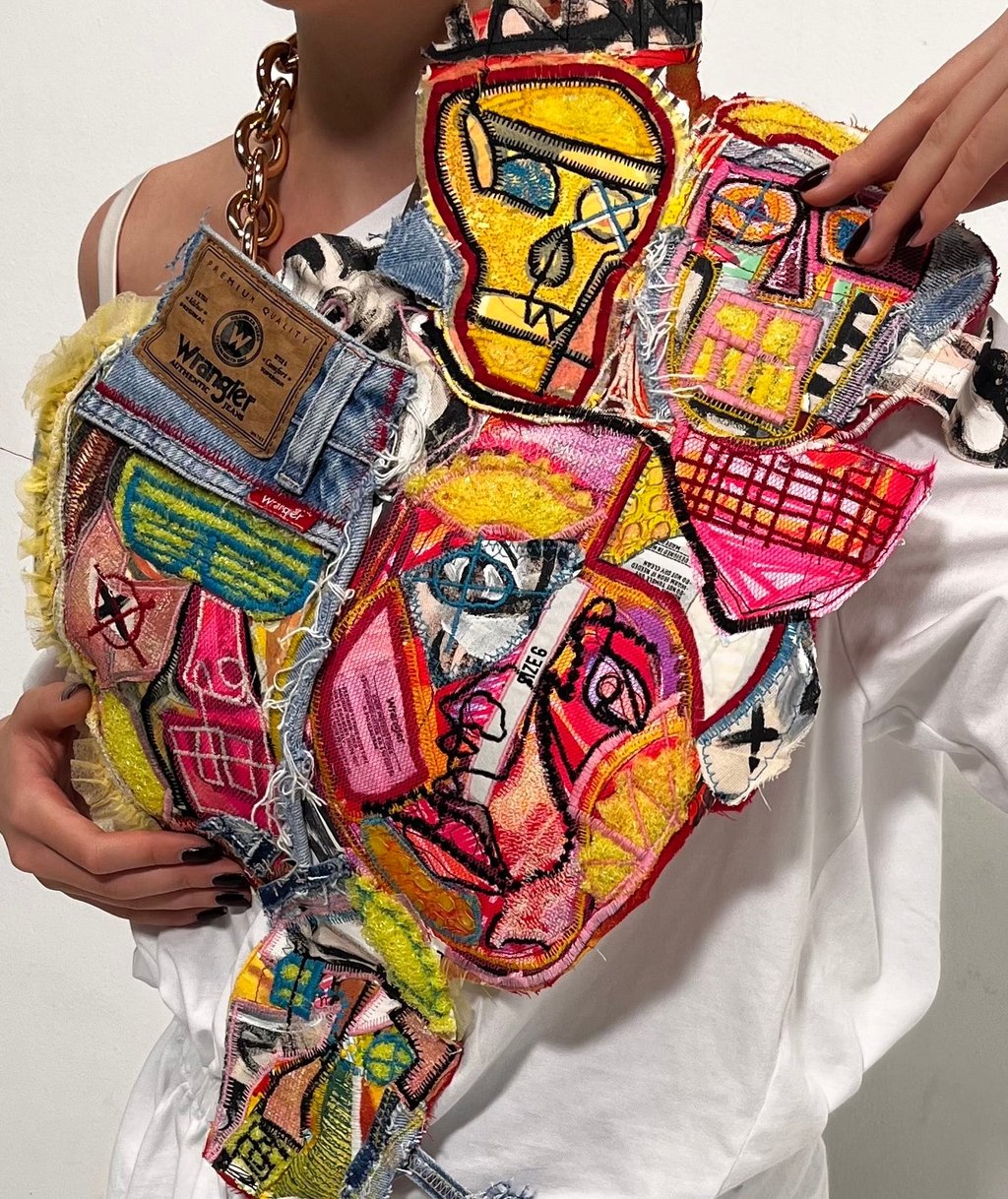
MJ Bale tasked students with deconstructing collared shirts and fashioning them into a new design. The goal was to find clever ways to give deadstock a second life. The students’ work was shared as part of an exhibition and Alex’s designs stood out to the judging panel, which earned her one of the two mentorship spots.
She turned up to the mentorship unsure about what to expect but says the experience opened her mind to what was possible with a career in fashion. In addition to site tours, design discussions and speaking with MJ Bale team members about their career trajectories, Alex says she found it most helpful to learn how the business approached strategy and product decisions.
“There was a really valuable discussion about business strategies and how they position different product lines for different markets, and that’s something I hadn’t covered in my degree yet,” she says.
“This experience was a positive reality check in terms of how designers and creatives need to work in tandem with business principles to actually be successful. Speaking with the Creative Director at MJ Bale and learning how they balance pure creation with the business needs and what consumers actually want was fascinating.”
Sharpening her focus
Although she’s still early in her studies, Alex says she’s enjoying the combination of both practical and theoretical work that’s built into the degree.
“We learn a lot of the practical, essential skills that a designer needs to know, but there’s also this theoretical work – for example around the importance of sustainability in the industry – that’s so valuable in tandem with the skills that we learn,” she says.
Incorporating sustainable fashion practices is something Alex is especially concerned with, and she sees this as being a major focus of her work as a student and as a designer in the future. The upcycling challenge from MJ Bale was a great opportunity for her to tap into this desire and test how sustainability might play out in a real fashion context.
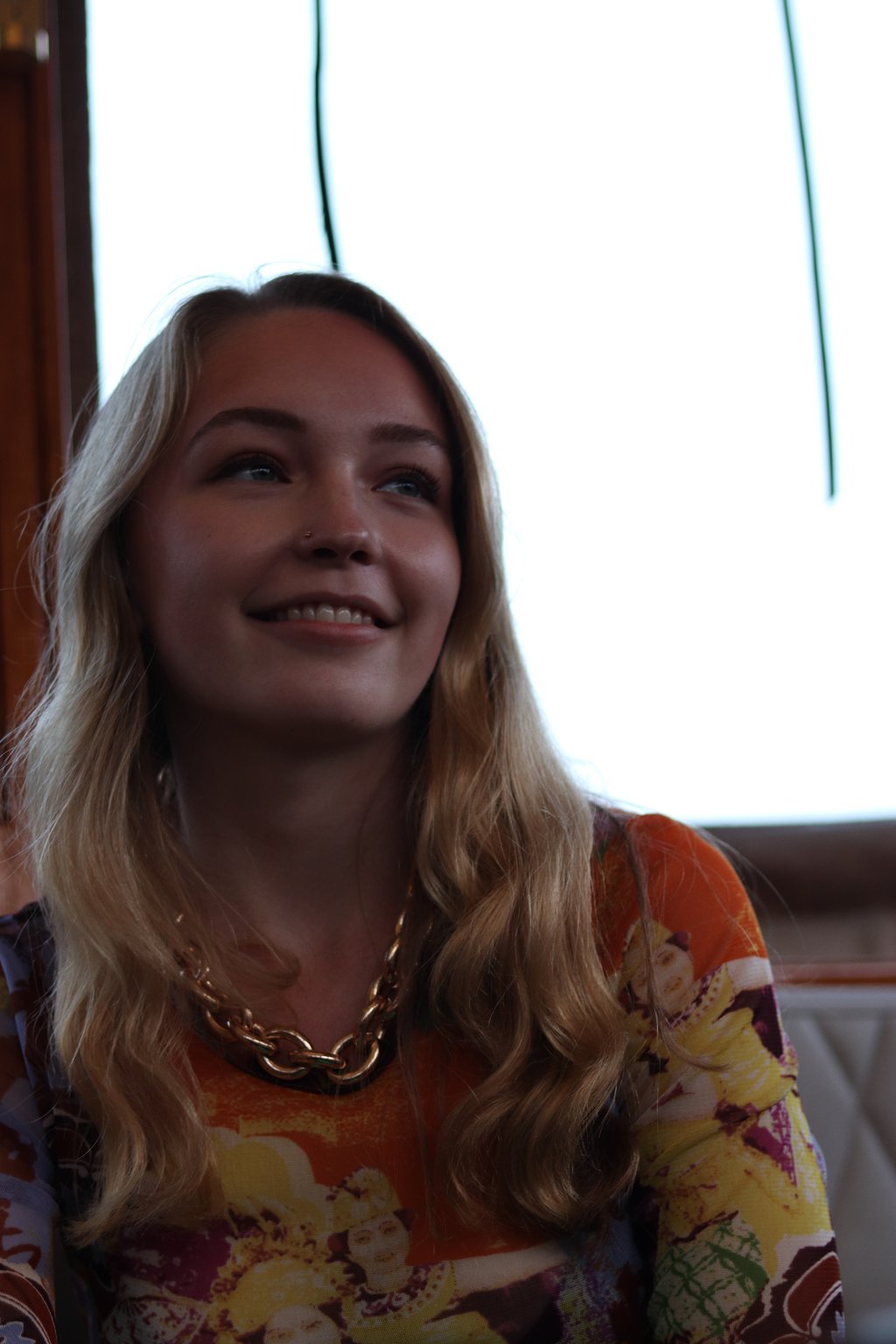
“I want my career in fashion to have a positive effect and not reinforce some of the unsustainable practices we see with fast fashion.”
As she’s still in the early stages of her degree, Alex is taking her time to decide what area of fashion design she would like to pursue. She’ll have a chance to explore this in more depth once she starts her studio subjects. However, the experience with MJ Bale has her leaning towards men’s fashion, particularly as it presents a unique creative challenge.
“Menswear feels more untapped, and I’m really excited to see how I approach it,” she says.
“It’s a chance to think about creating clothing in an area that I don’t wear myself, or even just creating pieces that are gender neutral would be really interesting.”
Whatever direction she decides to take her career, Alex plans to pursue more mentorship and internship opportunities during her time at university.
“Networking and getting experience – whether it’s an internship or a job – is so essential to being successful in fashion,” she says.
“It’s something that was reinforced during the mentorship, and so I want to make the most of those chances and start to build those connections.”
Doubling the value
While the Bachelor of Design in Fashion and Textiles will give her the practical and theoretical skills she needs for a career in the industry, Alex says the option of pairing the BCII with her fashion design degree is already providing an advantage.
“The intensive transdisciplinary group work and applying the skills that I learn in fashion into a broader context definitely gives me an edge,” she says.
As one of the only fashion students in her BCII subjects, Alex says it’s a chance for her to learn from other areas and incorporate these insights into her work. She’s in classes with students studying business, product design, media and more.
“They approach things so differently and we’re all able to tackle different aspects of a problem and use different techniques to solve problems,” she says.
“It’s really great to bounce ideas off each other and use our different strengths to fill gaps.
“There’s lots of problem solving, which I think will be useful for me to have in an industry that does have a lot of challenges – especially around sustainability – that need to be worked on.”
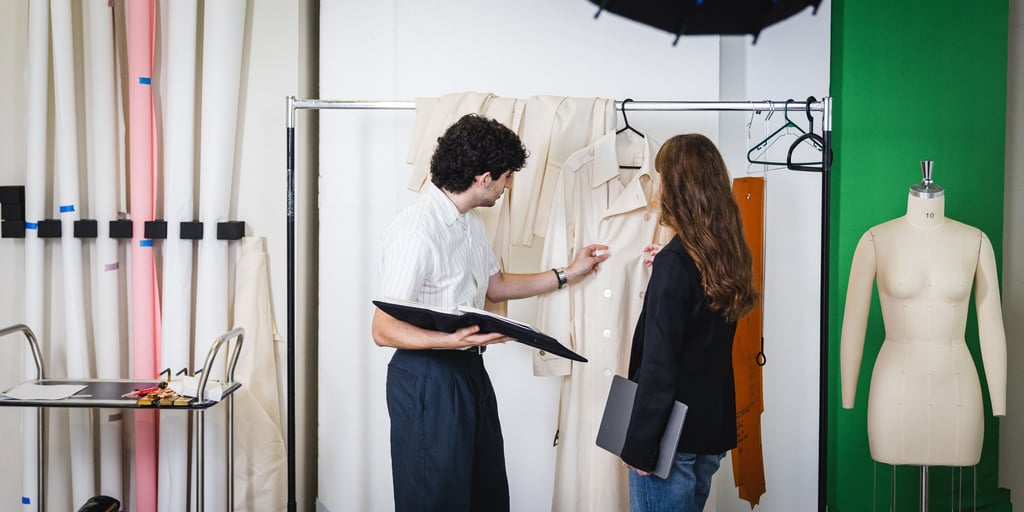
What’s the Difference Between Fashion Business and Fashion & Textiles?
Thinking about studying fashion? Compare the Bachelor of Fashion Business and Bachelor of Design in Fashion and Textiles at UTS, including what you’ll learn,...
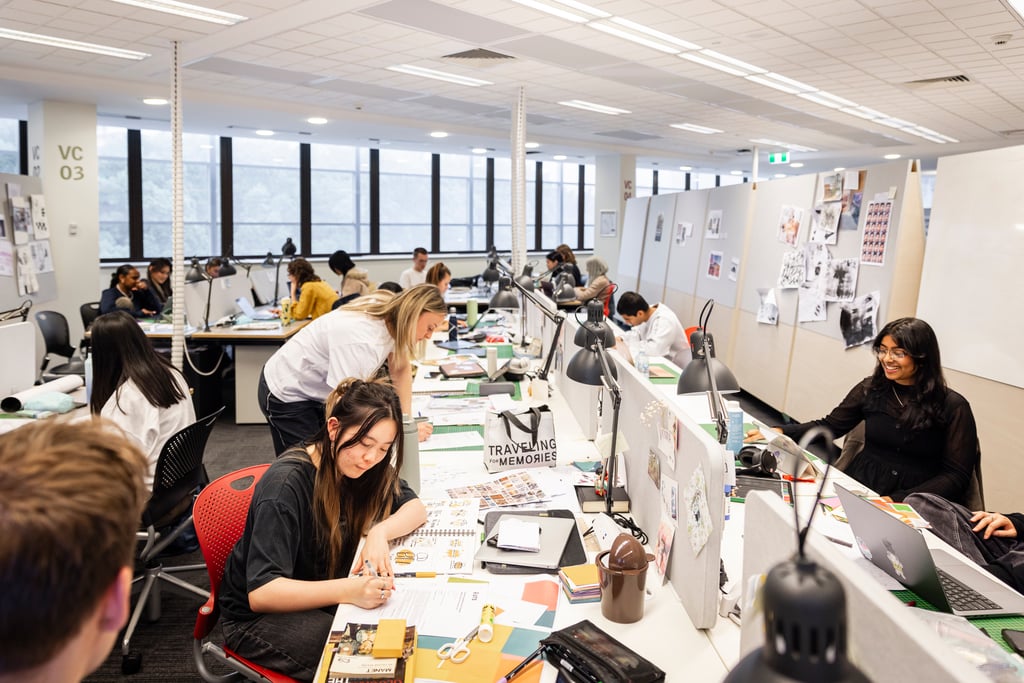
Why study Visual Communication at UTS?
If a career in design sounds appealing but there is more than one area of creative practice that interests you, Visual Communication could be worth exploring.
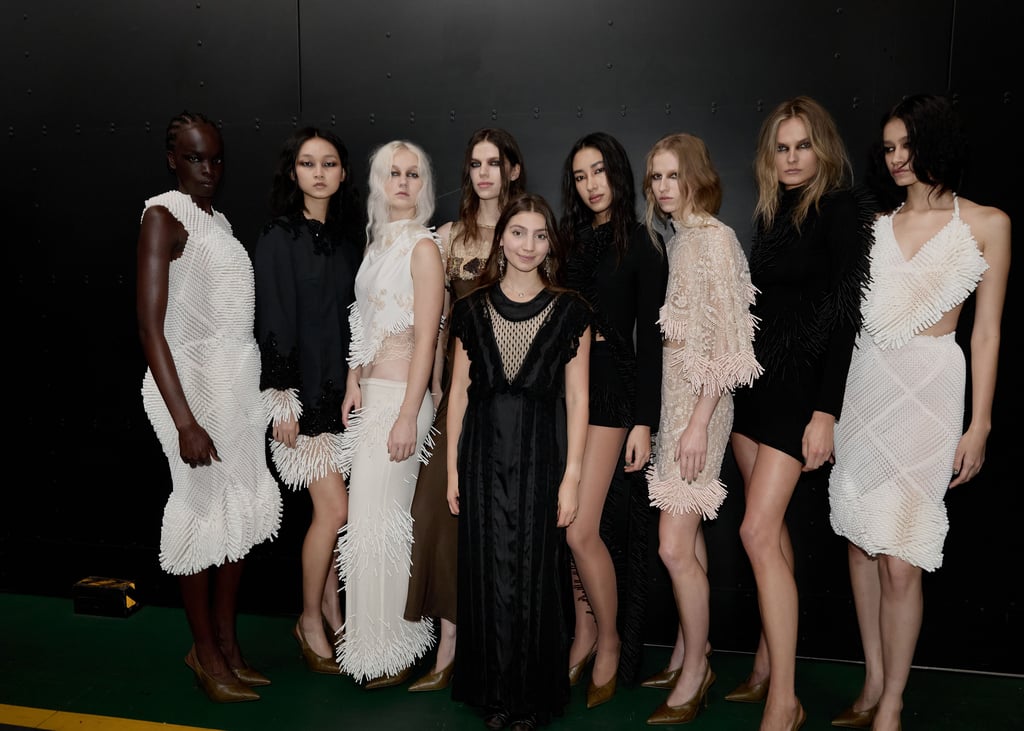
From Fashion and Textiles Design to Australian Fashion Week: Rose Guiffre's UTS journey
For Rose Guiffre, fashion has always been a way to explore how things work.

From childhood knitting to Australian Fashion Week: Alberta Bucciarelli Stournaras’ UTS journey
Discover how University of Technology Sydney (UTS) graduate Alberta Bucciarelli Stournaras transformed a lifelong passion for knitwear into an innovative...
What’s the Difference Between Fashion Business and Fashion & Textiles?
Thinking about studying fashion? Compare the Bachelor of Fashion Business and Bachelor of Design in Fashion and Textiles at UTS, including what you’ll learn,...
Why study Visual Communication at UTS?
If a career in design sounds appealing but there is more than one area of creative practice that interests you, Visual Communication could be worth exploring.
From Fashion and Textiles Design to Australian Fashion Week: Rose Guiffre's UTS journey
For Rose Guiffre, fashion has always been a way to explore how things work.
From childhood knitting to Australian Fashion Week: Alberta Bucciarelli Stournaras’ UTS journey
Discover how University of Technology Sydney (UTS) graduate Alberta Bucciarelli Stournaras transformed a lifelong passion for knitwear into an innovative...