

Investigating innovative energy technologies, business models, strategies, and policies to enhance benefits for customers and communities.
This area of our expertise is concerned with the way distributed/consumer energy resources and their enablers (such as PV, batteries, EVs, microgrids, Urban REZ, HEMs, HVAC, flexible demand, and more) are being integrated within our homes, communities, businesses, precincts, towns, cities, and the grid.
Our transdisciplinary approach means we can apply our technical, commercial, policy, social, behavioural, stakeholder, systems, and market expertise to help those we work with tackle their most complex of energy challenges.
Our work here responds to such questions as:
- How can we ensure our homes, communities, and energy infrastructure is resilient amidst a changing climate of more frequent extremes?
- What are the customer/user behaviours that can affect the successful integration of distributed energy technologies and how can they be positively influenced?
- What business models are needed to ensure positive consumer, community, and sustainability outcomes?
- Who are the correct stakeholders to engage with and how best can we work with them for positive outcomes?
- What distributed energy technologies are needed to meet current and future distribution system challenges and how do they compare against each other?
- What are the levers to maximise the full potential for distributed energy solutions to contribute to decarbonisation, reliability, resiliency, equity, and affordability goals?

International EV Policy Research
A synthesis of global EV policy lessons across six key domains to inform Australia’s next phase of electric vehicle market growth.

Hot water pathways for social housing
Housing providers need clearer guidance to make hot water systems more efficient and flexible.
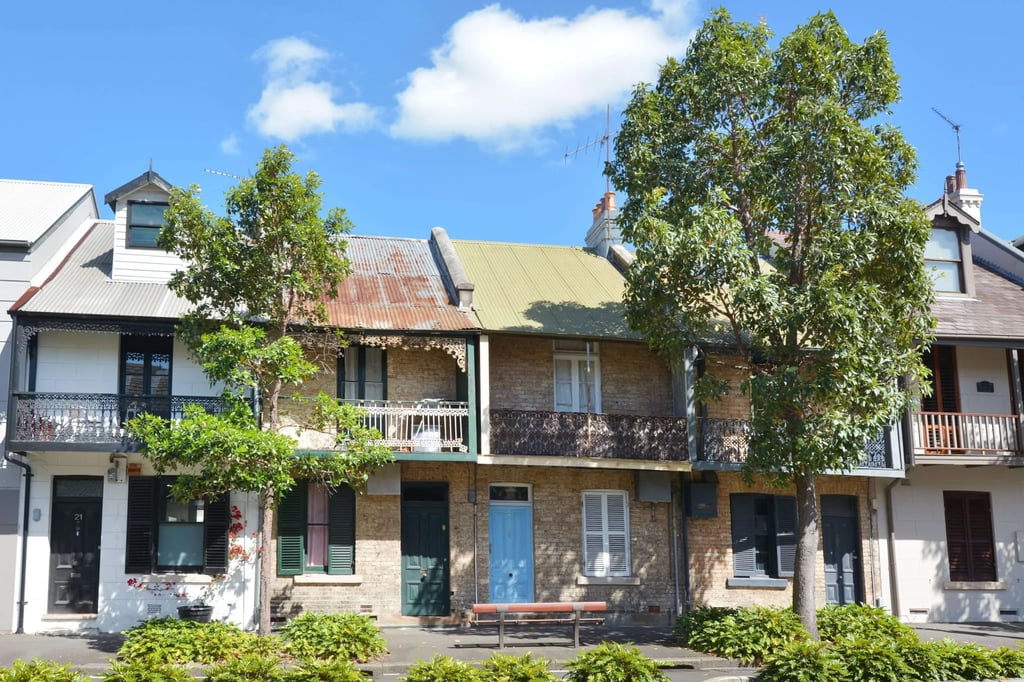
Glebe Energy Transitions: a place-based upgrade model for social housing
National and state governments have adopted a target of achieving net zero emissions by 2050, with NSW committed to an interim goal of 50% emissions reduction...
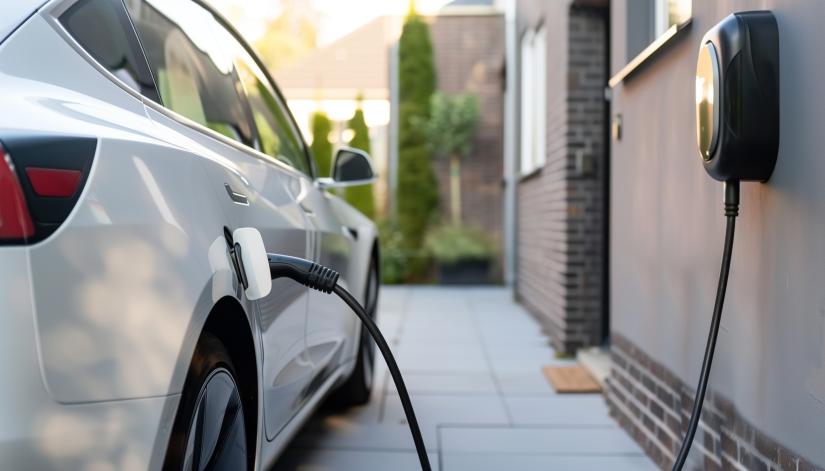
Leading the charge on bidirectional charging
A new project delivered by ISF and the NRMA explores the potential benefits of bidirectional charging for Australia's electricity grid and its consumers. The...
View more projects
Reimagining network utilisation in the era of consumer energy resources
PROJECT | 2023-2024
How we measure the value we get from our electricity poles and wires infrastructure was designed in the 1950s – it’s time for a rethink. ISF was awarded a grant by Energy Consumers Australia to develop new metrics to update 'network utilisation' as a means to measure and improve electricity network productivity.
MyTown Microgrid in Heyfield Victoria
PROJECT | 2020-2023
More and more communities are looking to make energy work better for them, spurred by a desire to use their local resources more sustainably for the greater benefit of those who live there.
Lithgow's electric car parks
PROJECT | 2023
In 2022, ISF undertook research and review of the sustainability positioning and journey of a large Australian corporation on behalf of a group of responsible investors.
The Green Wave: anchoring economic recovery through net zero strategies
PROJECT | 2020-ongoing
With funding from the RACE for 2030 Cooperative Research Centre, ISF is leading a project to identify how net zero energy and decarbonisation strategies can more deeply engage community and business partnerships to deliver greater trust, legitimacy and social value.
More for less: how businesses can flex their energy to get more from a Renewable PPA
PROJECT | 2020-2021
New research shows that understanding their energy use is key to businesses taking full advantage of renewable energy power purchase agreements.
Emergency smart grids
PROJECT | 2020
ISF was commissioned by the Victorian Government to find international examples of regions developing knowledge and expertise that would be relevant for an ‘Emergency Smart Grid’ concept. This concept was proposed by a community group (Voices of the Valley) following the extreme impacts of the bushfires on the Gippsland region and addresses energy resiliency, among other issues.
ISF undertook stakeholder mapping, a domestic current state assessment, an international market scan, and deep-dive case studies to determine the competitive advantage that the Gippsland region may have in the field of Emergency Smart Grids and to support the development of a proof-of-concept pilot project.
Client: Latrobe Valley Authority (LVA)
Researchers: Scott Dwyer, Dani Alexander, Sarah Niklas
Distributed energy resources customer insights
PROJECT | 2019-2020
Gathering crucial information about consumers' perceptions, habits and needs will inform the way forward for distributed energy resources.
Social Access Solar Gardens
PROJECT | 2018-2019
Study shows solar gardens can offer every home access to affordable solar power
Electric Vehicle charging strategy and business model for Lake Macquarie City Council
PROJECT | 2019
ISF delivers award-winning Electric Vehicle (EV) charging infrastructure support for local government.
Network Opportunity Maps
PROJECT | 2014-ongoing
Meeting the information needs of a new era of decentralised energy.
UTS races towards more sustainable energy
NEWS | MAR 2020
ISF is involved in RACE for 2030 - a super-charged research partnership that will power new technologies to reduce emissions, improve reliability and reduce energy bills for Australian households and businesses.
Solar optimisation upgrades for Victoria's commercial and industrial sector
PROJECT | 2019
This is the first evaluation of the potential for ‘Solar Optimisation Upgrades’ (SOUs) to reduce grid electricity demand across the Victorian commercial and industrial sector. SOUs refer to the use of demand management and energy storage to increase onsite utilisation of solar photovoltaics in order to:
• maximise self-consumption and avoid higher cost grid energy
• reduce business energy bills by reducing network demand charges that typically account for a large proportion of commercial and industrial sector electricity bills
• reduce network costs, including reduced infrastructure investment by lowering both demand and export peaks, and
• maximise renewables integration and output, with minimal curtailment, to reduce greenhouse emissions.
Client: "Department of Environment, Land, Water & Planning, Victoria"
Researchers: Joe Wyndham, Chris Briggs, Dani Alexander, Kristian Maras, Tom Morris, Chris Dunstan
Research outputs
Solar Optimisation Upgrades in the Victorian Commercial and Industrial Sector (2019) (Report)
Renewable energy and energy efficiency in Victorian Energy Upgrades (2019) (Fact sheet)
Solar panels shine in smart grid management
IMPACT STORY
Australia’s electricity network is changing at rapid pace with more than 2 million properties now fitted with solar, and the UTS Institute for Sustainable Futures is leading the way in stabilising the grid by making customer-owned solar set ups part of the solution.
Managing the renewables load: why flexibility is the key
IMPACT STORY
This research examines how the balance between renewables supply and demand via load flexibility can bring significant benefits to both Australian businesses and the grid. One of the greatest challenges, however, is the lack of commercial incentives.
New study shows businesses how to maximise value from solar
NEWS | FEBRUARY 2019
Feasibility studies at some of Australia’s largest businesses have shown simple investments in existing storage options like cold water tanks can increase the value from on-site solar power – and deliver low-cost flexibility to help energy markets and networks integrate higher levels of renewable energy.
Networks Renewed
PROJECT | 2016-2019
There is an emerging perception that solar PV is troublesome for the performance of Australian electricity networks by potentially increasing voltage variability. The Networks Renewed trial aimed to address that perception by clearly demonstrating how solar PV and batteries can instead be a valuable resource for the businesses who manage electricity networks; changing the problem into a solution.
Demand management incentives review
PROJECT | 2016-2017
Assessing the financial barriers to electricity demand management created by economic incentives for distribution network businesses.
Facilitating Local Network Charges and Local Electricity Trading
PROJECT | 2015-2016
Levelling the playing field for local energy, delivering better value for all electricity consumers.
National Community Energy Strategy and Congress
PROJECT | 2013-2015
The Community Energy Congress was organised by ISF and seven other organisations keenly involved in the community energy sector as an opportunity to assist these pioneering projects with successful models, technical skills and training plus valuable networking with partners, regulators and suppliers. Delegates at the Congress were given the chance to provide input into a draft National Community Energy Strategy.
Led by ISF and based on a significant body of research tapping into 38 projects across Australia, the strategy proposed a series of objectives and priority initiatives to grow the community energy sector and ensure successful models are replicated in communities across Australia.
The Coalition for Community Energy (C4CE) also launched at the Congress. ISF is a founding member of C4CE, which is an umbrella coalition for organisations with a common commitment to proactively collaborating to grow a vibrant community energy sector in Australia.
Client: Australian Renewable Energy Agency (ARENA)