

- Posted on 4 Sep 2024
- Updated on 4 Sep 2024
- 4-minute read
A new project delivered by ISF and the NRMA explores the potential benefits of bidirectional charging for Australia's electricity grid and its consumers. The future looks bright.
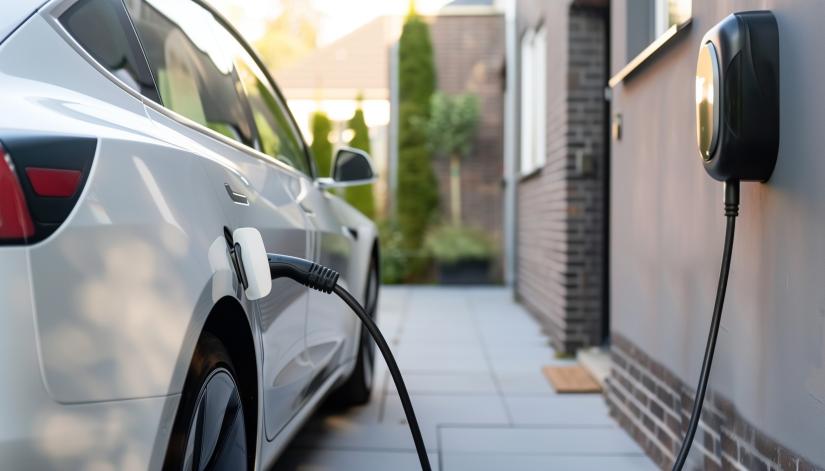
The transport sector is set to become the highest source of emissions in NSW and Australia by the end of the decade. Meanwhile, buildings account for 40% of emissions. Renewable energy and the use of electric vehicles (EVs) offer potential to tackle both these major emission sources.
Governments have started devising strategies to promote and adjust to prepare for this seismic shift from liquid fuels to electricity for road transport. This shift brings new challenges of increasing electricity demand while ensuring this demand matches the rapid growth in supply from variable renewable energy sources.
Bidirectional EV charging or Vehicle-to-Everything (V2X) can help address this challenge, provided technologies, systems and appropriate incentives are in place. The potential usable storage in the EV fleet in Australia is nearly four times larger than the total storage in the National Electricity Market (NEM) currently (according to recent research published by enX on behalf of ARENA). Even the equivalent of today’s relatively small EV fleet is around 13.5 GWh or 70-times the capacity of Tesla’s Hornsdale Power Reserve.
V2X can enable greater penetration of renewables in the grid, supporting the move to net zero in NSW and nationally. It can achieve this through EV charging in the middle of the day when cheap solar is abundant, and discharging at other times as needed. Both private passenger vehicles and the electricity grid are underutilised assets. Integrating them will improve their utilisation and support a move to net zero emissions through decarbonisation of the grid, households and transport.
However, V2X is still nascent around the world and there is little real-world experience with the new CCS2 charging standard that is set to replacing CHAdeMO as the dominant V2X standard. More needs to be done to understand how the technology works, what the technical integration challenges are, what consumer attitudes are and how we influence their behaviours, and what policy and regulatory levers need to be pulled to facilitate the transition.
This project will fill an important gap in the Australian energy transition landscape and enable the NRMA to contribute to Australia’s preparedness for V2G/V2X. The key objectives for this project to help unlock V2G/V2X potential in Australia are to:
- understand the current state-of-the-art and consumer/NRMA member attitudes to V2G/V2X
- build the necessary capacity, consensus, and collaboration amongst stakeholders
- scope and initiate a demonstration project that tests and validates the value of V2G/V2X while adding to the existing knowledge base and current state-of-the-art
- identify the role NRMA could play in the V2G/V2X ecosystem, including advocating for progressive policy positions to support this technology
- produce a roadmap that articulates the steps needed to scale V2G/V2X from its current state.
Ultimately, this project will position Australia for a world-leading role in V2G/V2X deployment and provide additional value for NRMA members, energy consumers, the electricity grid, and Australia’s economy.
Learn more about V2G charging and its benefits
RESEARCH OUTPUTS
Leading the Charge in Bidirectional Charging | Being a V2G Trailblazer: Lessons for Mass Market Adoption (2025) (Report)
NRMA Survey Overview Infographic (2025) (Infographic)
MEDIA
'A house battery you can drive around’: how some Australians are selling power from their cars back to the grid – The Guardian, February 2025
'It’s a house battery you can drive around’ – how a handful of Australians are selling power back to the grid from their cars – The Conversation, February 2025
Researchers




- Emmanuel Josserand - Industry Fellow
Funder
- iMOVE CRC
SDGs
This project is working towards UN Sustainable Development Goals 7, 9 and 11.
Energy; Institute for Sustainable Futures
Research Centre
Years
- 2024-2026
Client
- National Roads and Motorists Association (NRMA)
| Sustainability |