

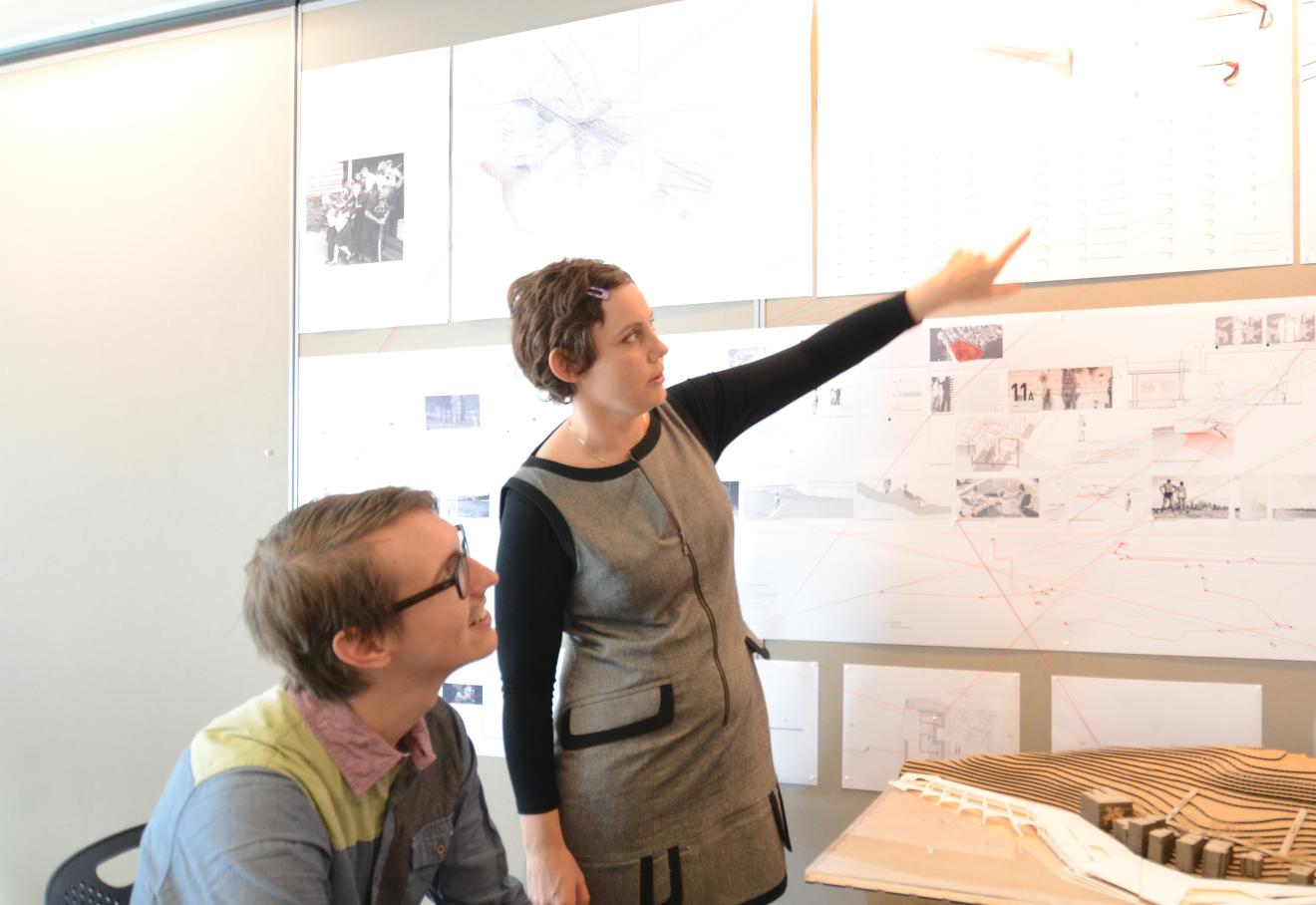
Peer-tutoring in Architecture (Photo by: Fiona Livy)
Lecturer: Faculty: Project: Keywords: | Reflective of the Learning2014 ethos, the peer-tutoring in Architecture (PTA) program is being further expanded and formalised to incorporate peer-tutor feedback, development and mentor training. What the project is aboutThe peer-tutoring program is a successful and established technique in the undergraduate Architecture and Design course to improve students' understanding and response to feedback. In light of the program's success, and to further improve it, Ms Kinniburgh is evaluating and updating the student peer-tutors’ support, training and mentoring. Why the project is being introducedSome Architecture and Design students were struggling with being required to rapidly master a diverse skill set, cope with heavy workloads and deal with confrontational formative feedback. To address these issues, the PTA program is modeled to:
As well as helping students in the classroom, the program also develops students' skills for a global workplace, as peer-tutoring facilitates interaction with, and support for, students from diverse backgrounds. This enables peer-tutors and students to develop skills for negotiating diverse relationships. This aspect of the program has been seen to improve international students' retention and satisfaction with the course. How the project is being implementedIn a learning-through-teaching framework, selected exemplary senior students are trained to act as peer-tutors to junior students in the design studio on a regular basis, supporting them in specific critical aspects of the studio culture. There are 80 volunteer peer-tutors in 43 tutorial classes supporting 280 students in their core design subjects. Peer tutors follow two mandates in helping students. These are:
The peer-tutors work in collaborative groups, determining what skills and training they feel would benefit them and the program. These include:
PTA addresses all of the architecture graduate attributes with one exception: written communication skills. This is being addressed by embedding feedback mechanisms, likely to contain written components.
| |