

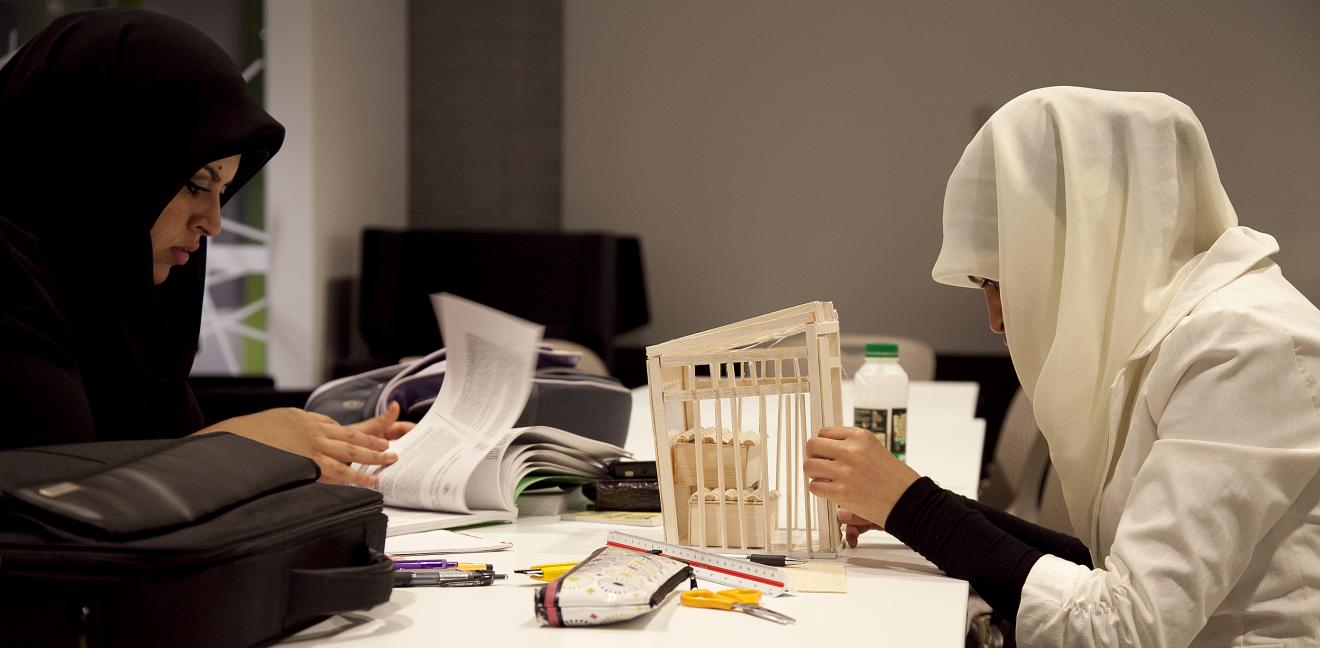
Architecture students working on a project (Photo by Anna Zhu)
Lecturer: Faculty: Project: Keywords: | Associate Professor Shankar Sankaran is moving Architecture, Engineering & Construction (AEC) students towards collaborative working practices as they happen in the construction industry. What the project is aboutAssociate Professor Sankaran wants to provide his students with more aligned graduate attributes, so he is evaluating the effectiveness of flipped and blended learning in the new subject Integrated Project Delivery (IPD) Management. The classes are now held in UTS’s new learning spaces to provide AEC students with a collaborative educational environment similar to a professional setting. Why the project is being introducedThese changes are being introduced as Associate Professor Sankaran and his team want tertiary education to match the construction industry’s collaborative working practices worldwide, aided by Building Information Model (BIM) tools and processes. This is the first time a fully multi-disciplinary AEC course at the Masters level has been offered in Australia, and it allows UTS to maintain pace with leading institutions overseas, such as Penn State and Salford Universities. How the project is being implementedPreviously taught in two two-day workshops in traditional classrooms, the subject’s second workshop now takes place in one of the new collaborative spaces in Building 6. To introduce flipped learning to his class, Associate Professor Sankaran’s students are asked to research IPD concepts before working on a real construction project in class. Working in groups in pods and using interactive whiteboards in class, students interview tenderers, evaluate submitted bids and make recommendations. Using the plan-act-observe-reflect cycle, data is collected through workshops, student feedback and reflection reports, and SPARKplus evaluation. This feedback will be used to create best practice teaching approaches and materials to be applied in post-graduate multidisciplinary courses across AEC and UTS as a whole. Exploring further Penn State University BIM Curriculum
Macdonald, J. (2012). A framework for collaborative BIM education across the AEC disciplines. UTS.
| |