For a career as unique as you

Find out how UTS can help you succeed with personalised career support, hands-on learning and countless opportunities to connect with industry.

  • trophy

    TOP-RANKING

    #7 in Australia

    Recognised in Australia for excellence in teaching, research impact, industry engagement and international outlook.

    Times Higher Education University Rankings 2026

  • workspace_premium

    INTERNATIONALLY RECOGNISED

    Top 100 worldwide

    Ranked #96 globally, UTS stands among the world's leading universities, recognised for academic excellence and industry impact.

    QS World University Rankings 2026

  • payments

    GRADUATE OUTCOMES

    93.3% employed

    Measured three years post-graduation, reflecting strong career readiness and employer demand for UTS graduates.

    2024 Graduate Outcomes Survey – Longitudinal

Abstract decorative image.

UTS Careers is your launchpad for future success. From day one, you’ll gain access to personalised career support, a resume review service, group career coaching, a live internships and jobs board.

Whether you want to pick up in-demand skills or launch your own venture, UTS Startups has supported more than 1000 students to learn entrepreneurial thinking and apply it to real-world problems.

Our UTS alumni community is a diverse and inspiring global network of creative and innovative people. Tap into a worldwide community of more than 280,000 graduates to unlock doors and make things happen.

Resources and support

Why go it alone? Get personalised guidance with these services.

Looking for free career tools, guides, and support? Access a wide variety of resources anywhere and anytime on UTS CareerHub.

Not sure where to start or need help exploring your options? Book an express appointment.

UTS Careers offers support to help you develop your employability skills and navigate the workforce.
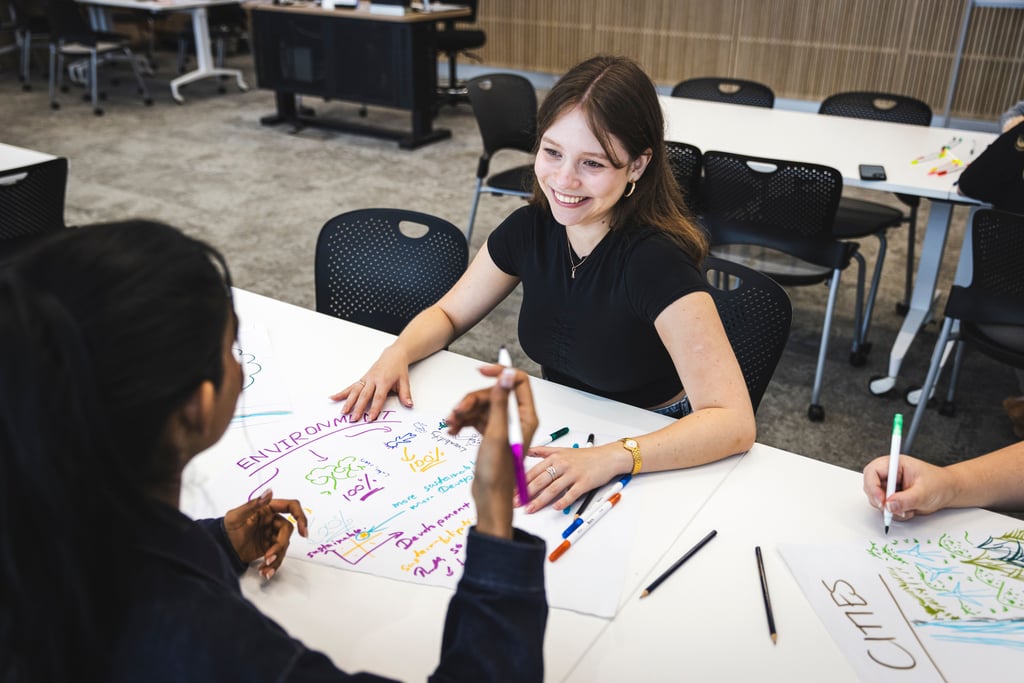
Career insights

Tips and advice for improving your skills, future-proofing your career, and balancing work and study.

Postgrad life is busy. Here’s how two students made it work, and their top tips for you.

Want your ideas to make an impact? Dr Joshua Pate reveals why communication is key and how to get better at it.

Want to work in fashion but don’t see yourself as a designer? The industry is full of exciting, essential roles beyond the sketchpad.

UTS’s Professor Chris Turney shares his thoughts on the careers and job titles that have the most potential to act on climate change now and into the future.

Curious about different careers?

Explore what they’re really like through insights from our experts in our new How do I become a… series.
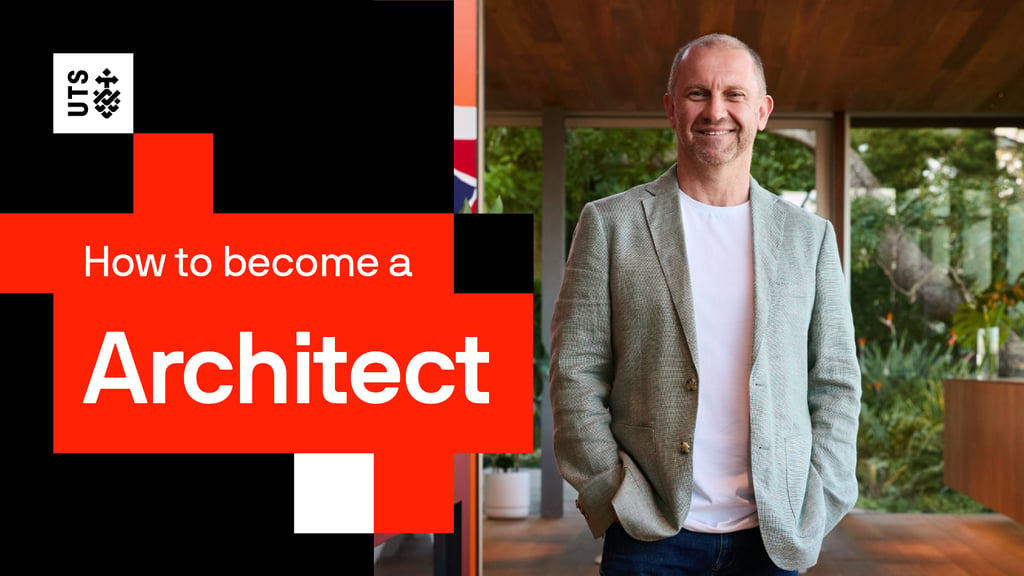
how to become an architect video thumbnail

Professor Anthony Burke on becoming an architect

From what architects actually do, to how to get started, where the role can take you and what makes the work so rewarding.

Professor Anthony Burke on becoming an architect transcript

How to become a…. 
Architect 
With Professor Anthony Burke 
 
Duration 6min 33sec 
 
00:00:00:00 - 00:00:20:00 
Anthony Burke 
 
Hello, I'm Anthony Burke, a professor of architecture, a television presenter and academic at UTS. Have you ever wondered what it takes to be an architect? Today I'll be answering your questions. Let's get started. What do I need to study to become an architect? Well, the main thing is that you enroll in an architecture degree, and that's quite a long degree. 
 
00:00:20:00 - 00:00:37:23 
Anthony Burke 
 
It takes about five years. A three year bachelor's and a two year master's before you can then leave and go and work in industry and then finally become registered as an architect. It takes a long time because it's a lot of studio work, which is the best part of it. So it's not a typical kind of degree where you're sitting in lecture theaters all the time or doing written exams. 
 
00:00:37:23 - 00:00:57:02 
Anthony Burke 
 
You're spending a lot of time actually designing. Talking about your designs with your tutors, with your peers, with your professors. And you're really hands on with making and drawing and doing those kinds of things. So studying architecture is a very different kind of degree. It's very creative. There's a lot of history and technical background to on board as well. 
 
00:00:57:04 - 00:01:14:17 
Anthony Burke 
 
But most importantly, it's a very social degree. You really are kind of socialising, your learning and your knowledge. As you get more and more proficient at architecture as you go up sort of through the year groups. So doing an architecture degree is the way to become an architect. You have to do that in Australia and you have to do that if you're going to work overseas as an architect as well. 
 
00:01:14:19 - 00:01:32:06 
Anthony Burke 
 
 
What different roles are there in architecture? This is a great question because there are many ways that you can be an architect or start with architecture and then move on to into a different kind of career path. So within architecture itself, yes, there is that practicing architect who runs a practice and designs houses and buildings for the people. 
 
00:01:32:08 - 00:01:51:21 
Anthony Burke 
 
There are also architects who move into academia like myself, who do the work to set up things like policy advice or to set up things like, town planning advisories and those kinds of things. There are those kinds of architects who don't design so much that might be maybe writing or advocating for certain kinds of positions about the built environment as a whole. 
 
00:01:51:23 - 00:02:10:03 
Anthony Burke 
 
So there's a really broad sort of, swathe of ideas about how one can be an architect today. What kinds of workplaces do architects work in, and what kinds of projects do they work on? Most architects work in a studio, and it's a different kind of situation to the normal office space. So a studio isn't just cubicles with a computer. 
 
00:02:10:08 - 00:02:29:05 
Anthony Burke 
 
Usually studios are open. They're generally creative spaces. It's spaces where you can talk with your peers and your colleagues about the kinds of projects you're working on. And even though you might be working very hard and doing long hours, you're still in a very social kind of situation in the architecture studio. The other thing about some what kinds of projects do you work on, really, 
 
00:02:29:10 - 00:02:47:06 
Anthony Burke 
 
As an architect, you can work on any kind of build project from furniture design, really, or small scale design to very large scale urban planning. So within that spectrum, any job that comes into an architect's office might have a relationship to any of those scales. So what does an architect do in their day to day work? Well, you might think it's all design. 
 
00:02:47:06 - 00:03:08:04 
Anthony Burke 
 
Actually, that's not the case. I'd say probably about 10 to 15% of your day would be just doing design work. A lot of the time that an architect spends is spent in client and people management. So you're really trying to listen to the clients, to the councils, to the builders, to the engineers, to all the consultants that you'd be talking to in any given day to make a project come to life. 
 
00:03:08:06 - 00:03:26:21 
Anthony Burke 
 
Another thing is to sort of organising the work flow, because there's a lot of work to get done, even in a simple design. Everything from the engineering and the landscape to the actual building fabric itself requires different types of outputs for different types of people. So there's quite a lot of production work that's required. But the thing that's nice about that is the drawing and the representation that goes on. 
 
00:03:26:24 - 00:03:43:00 
Anthony Burke 
 
There's a lot of design work that just happens naturally through that kind of process. You're always thinking as you draw. So if you're like me and you love design, then that drawing is not a task to do. It's a real joy to kind of keep thinking about how do I design and keep designing, even as I'm working on just the next set of floor plans, for example. 
 
00:03:43:02 - 00:04:02:24 
Anthony Burke 
 
What skills are important for an architect to have? You might think here that I would say drawing and maths. That's what most people think of when I think of what an architect does. I think actually not so at all. You can learn to draw and you can definitely learn the mass, so that's not a problem. But I think the real things you have to have as an architect is you have to have curiosity and you have to have empathy. 
 
00:04:03:01 - 00:04:28:07 
Anthony Burke 
 
Those two traits together, if you're both curious and empathetic, you will be a great architect because you're listening to what the clients want, your understanding what's happening around you. You can put yourself in someone else's situation and design something fantastic for them. I think the curiosity is something as well because architecture is a very fast moving discipline. Things are changing all the time and you've got to be curious enough to chase those changes and be interested in what's happening around the world. 
 
00:04:28:09 - 00:04:46:18 
Anthony Burke 
 
What challenges do architects usually face in their work? This is a really interesting question. I think one of the hardest things to appreciate about an architectural practices that it's quite responsive to, where is the work coming from. So on one week it might be residential work, the next week it might be small scale public work, or the next week it might be government scaled work. 
 
00:04:46:24 - 00:05:05:11 
Anthony Burke 
 
Being an architect means you need to be able to move fairly efficiently across all of those spaces, and that's something that's a bit challenging for people to get their head around. But I think being an architect that's interested, that's curious, that sees themselves is always upgrading their skills, which is something that we all do, means that you're tapped into those conversations all the time. 
 
00:05:05:11 - 00:05:25:11 
Anthony Burke 
 
So it's actually not as hard as you think. If you're the kind of person that's happy to lean forward into the conversation and get involved. What do you love most about being an architect? The thing that I love the most is the idea that you are always on guard for where things are happening, where the new design ideas are coming from, where new examples are for fabulous buildings to go and visit. 
 
00:05:25:13 - 00:05:44:20 
Anthony Burke 
 
It's that translation of the world around you into a proposal for something that will hopefully make someone's life fabulous. That's the part I love the most about, you know, being involved with architecture. What's your top tip or best piece of advice for someone who wants to become an architect? I think the best thing you do if you want to be an architect is go and visit some architecture. 
 
00:05:44:22 - 00:06:08:06 
Anthony Burke 
 
What I mean is, don't just sit at home behind your computer looking at stuff on the screen. Don't just spend your time with the online magazines. Go and actually walk around in really good architecture and there is tons around to see. So being amongst it, sort of learning how to read the architecture as you walk through it and understand the materials and the spatial effects and all of those things, how people use the spaces that are designed for them. 
 
00:06:08:08 - 00:06:29:19 
Anthony Burke 
 
That's how you sort of tune in to what architecture is all about, and that'll be the best thing you can do, because that'll set you up to ask the right questions, and you'll already start your design brain ticking over. That's the best thing you can do to get to architecture. I think that's all the questions for today. If this got you interested, checking out the UTS website and search architecture to learn more about working in this field.

Find your niche

Explore our course areas and learn more about how our degrees can support your future career choices.

Inspiring stories

Find out how practical experience at university helped these students build professional skills and achieve their career goals.
Webpage

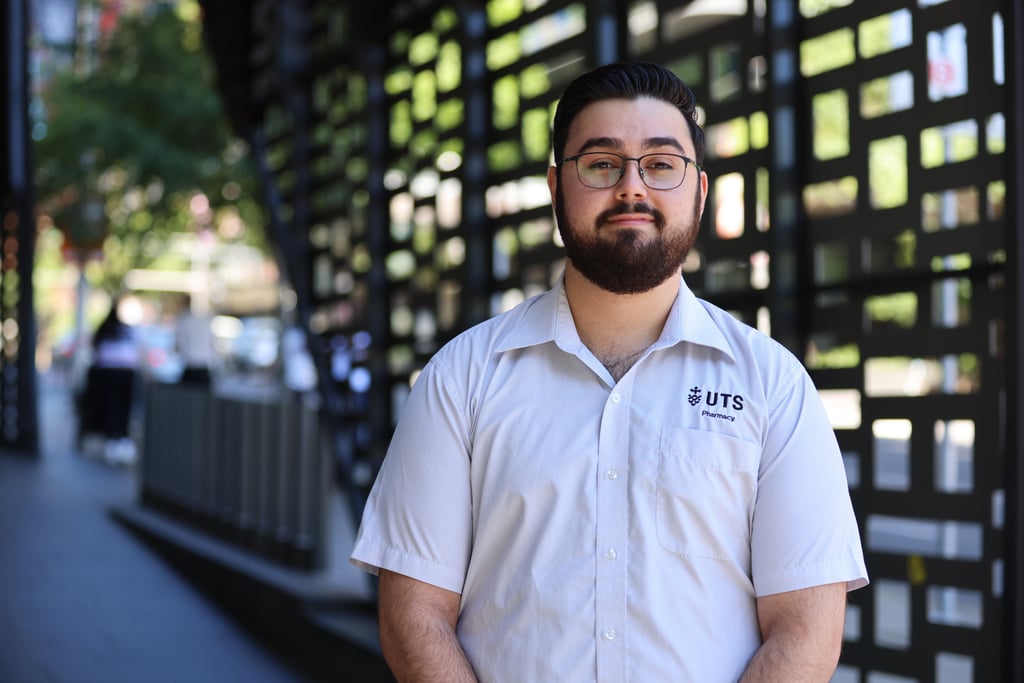
With hands-on experience and a genuine passion for helping people, Daniel Issa is building his career in hospital pharmacy – even before he graduates.

Webpage

It took just a few weeks for Arya to realise that her IT degree wasn’t what she was expecting. When she took the leap in a new professional direction, everything fell into place.

Webpage

Mentorships and cross-disciplinary collaboration are helping fashion design student Alex Maccoll find her perfect career path.

Webpage

Moving countries meant adapting to a whole new legal system. Here’s how Quentin turned that challenge into a thriving career in Australian IP law.
Webpage

Associate Professor Timo Rissanen explores what you study in fashion, the careers it can lead to and what designers really do in practice.

Webpage

Mentorships and cross-disciplinary collaboration are helping fashion design student Alex Maccoll find her perfect career path.

Webpage

With hands-on experience and a genuine passion for helping people, Daniel Issa is building his career in hospital pharmacy – even before he graduates.

Webpage

Moving countries meant adapting to a whole new legal system. Here’s how Quentin turned that challenge into a thriving career in Australian IP law.

Webpage

It took just a few weeks for Arya to realise that her IT degree wasn’t what she was expecting. When she took the leap in a new professional direction, everything fell into place.

Webpage

Associate Professor Timo Rissanen explores what you study in fashion, the careers it can lead to and what designers really do in practice.

Make an enquiry

Considering studying at UTS? Connect with our team to explore your study options, the application process, and discuss any other questions you may have.


If you are an international student, get in touch by completing the

international student enquiry form .

The information you provide in this form will be used to respond to your enquiry. Your information may also be used to provide you with general information about the university. Please refer to our privacy policies for details.

Fields marked with an asterisk (*) are required.


If you know your UTS Student number or Application Number please include it in your enquiry


Contact us

Call us

Get in touch with our friendly, knowledgeable Student Centre team.

1300 ASK UTS (1300 275 887) 

+61 2 9514 1222 (outside Australia)


International enquiries

Chat with our international future students team.

+61 2 8806 0230