


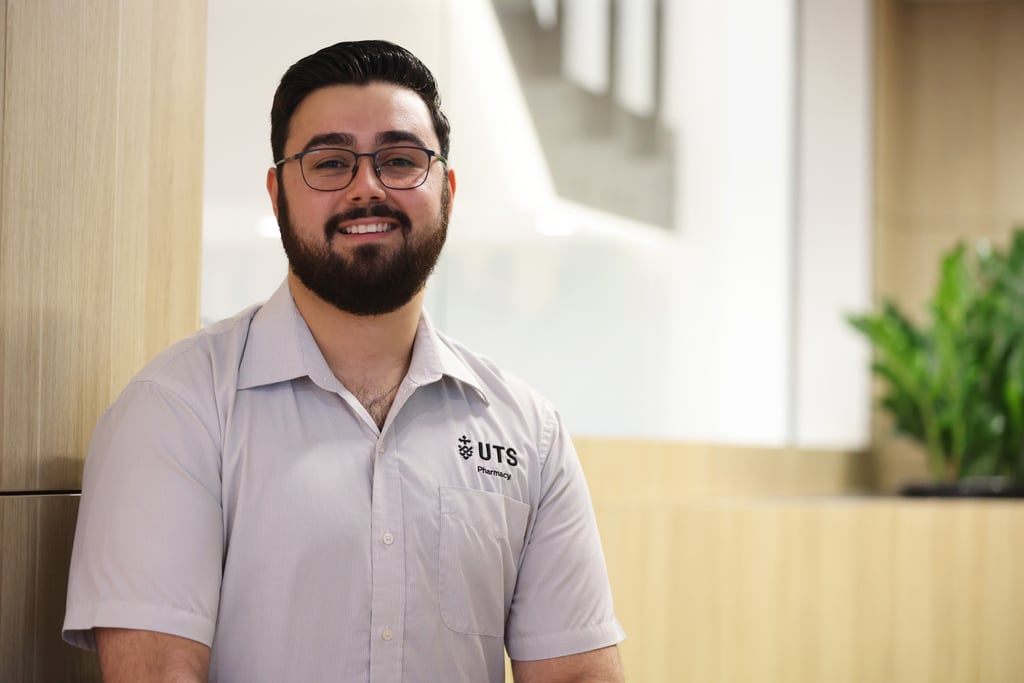
With hands-on experience and a genuine passion for helping people, Daniel Issa is building his career in hospital pharmacy – even before he graduates.
Daniel Issa's passion for pharmacy started long before he set foot in a lecture theatre. Watching his father navigate frequent hospital visits, he noticed the pharmacists who were always there, knowledgeable, calm and reassuring.
“My dad was always in and out of hospitals, and I saw the pharmacist. They were so smart and did so much work in both hospital and community settings. I wanted to be that helping hand for someone in the future,” he recalls.
Inspired by these experiences and his interest in science, Daniel completed a bachelor’s degree in biomedical science with a pharmacology major, building a strong theoretical foundation for his future in pharmacy.
Already holding this degree, Daniel knew he wanted to build a career where he could make a tangible difference in people's lives. He wanted to turn his academic knowledge into practical skills that could help others. This led him to pursue a Master of Pharmacy. When choosing where to study, he looked for culture, community and hands-on learning: qualities that made UTS stand out.
Real-world learning from day one
From the very first semester, Daniel experienced the hands-on learning that had drawn him to UTS. Classes connected theory directly to practice, often through role-playing scenarios where students alternated as pharmacists and patients, simulating real-life interactions.
“UTS has been really good in the practical sense of everything. Pretty much every class has some form of role-playing or scenario work where one person is the pharmacist and one is the patient, it runs right through the degree,” Daniel shares.
These practical exercises challenged him to step out of his comfort zone and build confidence in real situations. Assessments mirrored workplace realities, with mid-semester and final exams conducted orally, requiring students to think on their feet and communicate clearly.
“You go into practice, and you literally just know the skills already: what to say and how to approach patients,” he says.
Daniel also learned practical skills using industry-standard dispensing software.
“We practised on simulated software like FRED to handle scripts, identify legal issues and fix them before dispensing. It's a controlled environment where you can take your time learning, because real-world dispensing can be complicated,” he says.
Discovering hospital pharmacy
Daniel's hands-on approach to learning quickly paid off. His first-year placement at a community pharmacy not only gave him practical experience but also led directly to a job offer.
“After finishing the placement in October, they called me in January to offer me a job. I still work there now,” he says.
The combination of university learning and real-world experience creates a powerful feedback loop.
“It's funny, I'll learn something at uni and then that night someone will come in with the exact same scenario. That constant back and forth really cements your learning.”
But it was during the Advanced Clinical Practice unit, which involved weekly sessions at Westmead Hospital's emergency department that Daniel's interest in hospital pharmacy deepened. There, he gained insight into the collaborative, high-stakes environment of hospital care, working closely with healthcare teams.
“Hospital pharmacists do so much behind the scenes to keep patients safe,” he explains.
“During placements, I learned how crucial it is to review and reconcile patient medications carefully. Even small discrepancies can have serious consequences, so attention to detail and clinical knowledge make a real difference in patient care.”
Determined to pursue this path, he later secured a hospital pharmacy role at Shoalhaven Hospital, giving him direct experience in the field he wants to work in before graduating.
“I applied, interviewed and now I have experience in hospital pharmacy, the area I want to build my career in,” he explains.
Support beyond the classroom
The degree’s in-person learning created opportunities for meaningful relationships with teaching staff. Professors know students individually and provide support well beyond lectures.
“The lecturers go above and beyond, answering questions about intern applications, connecting us with recent graduates who secured hospital roles, and even offering interview and resume guidance,” says Daniel.
He values learning from educators with diverse professional backgrounds. Some have international pharmacy experience, while others specialise in areas such as hospital or military pharmacy. Many are also engaged in research or completing advanced degrees, bringing fresh insights that make the program both engaging and relevant.
Guest lecturers from industry further enrich the learning experience. Daniel remembers sessions with the Pharmaceutical Society of Australia discussing the expanding scope of pharmacy, and a specialist from La Roche-Posay explaining how their products help people with cancer manage dermatological side effects from chemotherapy.
“It went way beyond just acne care,” he says.
Looking ahead
Once shy and reserved, Daniel has grown in confidence through collaboration and camaraderie with his cohort.
The structured timetable has helped foster strong bonds among students, who freely share resources, answer questions and celebrate successes together.
“Everyone in the cohort is friends. We have multiple group chats, and if you ask a question, you get 20 responses.”
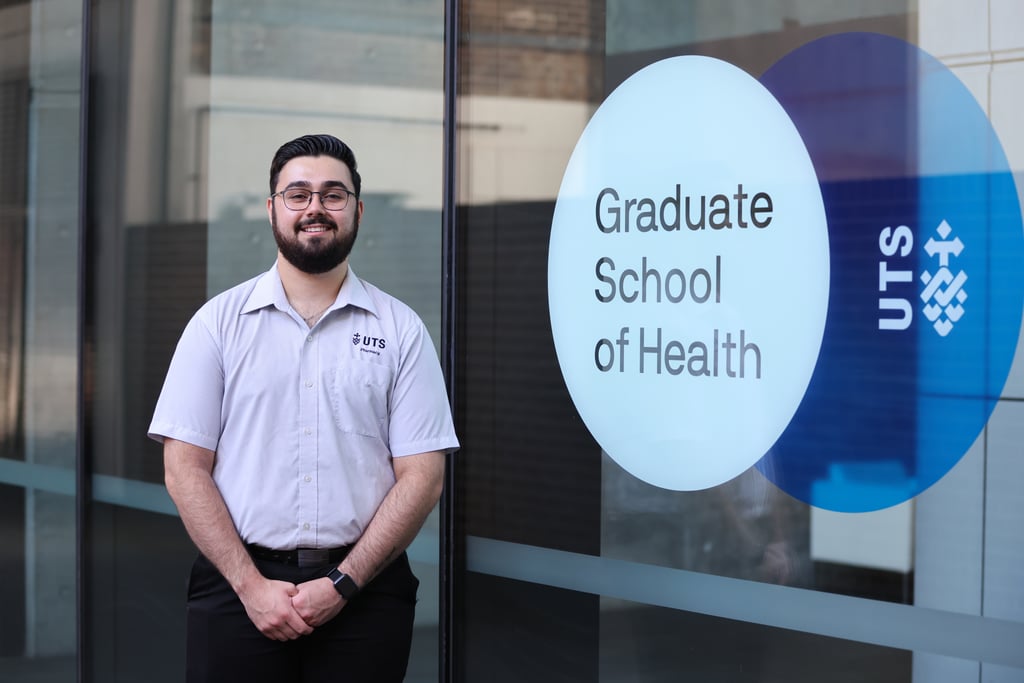
As he prepares for graduation and a career in hospital pharmacy, Daniel reflects on how UTS has equipped him for the next stage of his professional journey. From building practical skills to developing confidence with peers and patients, the degree has given him the chance to apply what he’s learned in meaningful ways.
“You can actually make a difference as a student,” he says.
“I’ve already had moments where I’ve helped patients because of what I’ve learned here. That’s what I’ve enjoyed most about it.”

Webpage
Five tips to land a job before you graduate
What if your career could start before you finish your degree? UTS graduate Akshaya Parthasarathy shares the five tips that helped her turn university...
Webpage
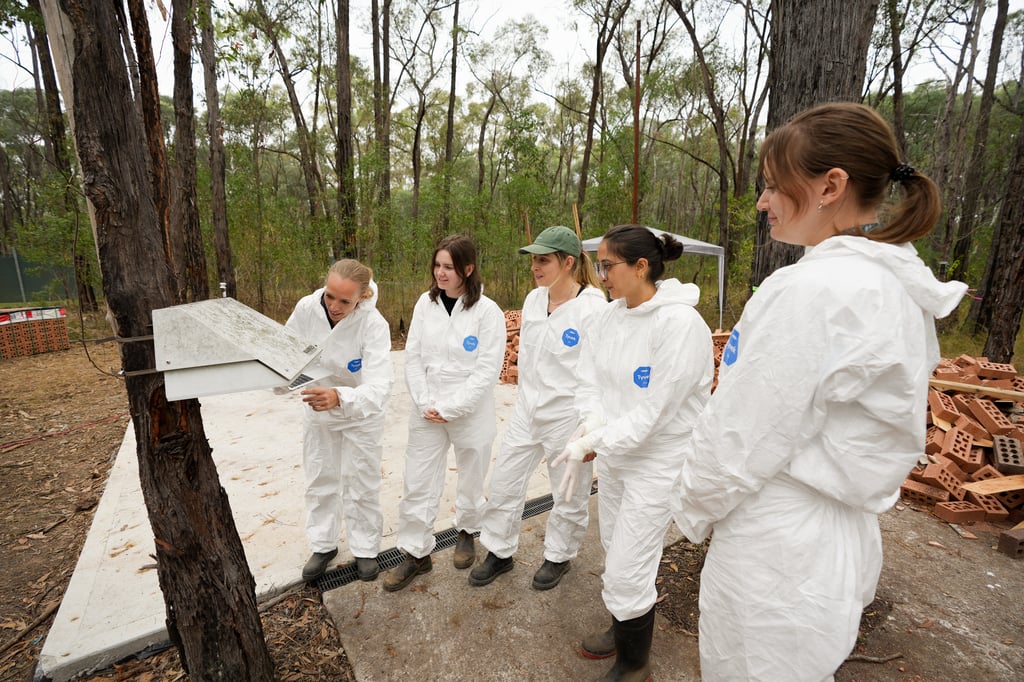
How UTS research students are advancing forensic science
At a research facility in the outskirts of Sydney, UTS students are studying what happens to the human body after death – and applying that knowledge to some...

Webpage
Here's why supply chain analysts have never been more critical
Associate Professor Sanjoy Paul tells us what’s changed in global supply chains – and why analysts now play a critical role.

Webpage
Climate solutions need diverse skills. Here’s what matters most.
Solving climate challenges needs more than technical expertise. Sustainability researcher Alex Baumber shares the 6 core skills you need to shape climate work.
Webpage
Five tips to land a job before you graduate
What if your career could start before you finish your degree? UTS graduate Akshaya Parthasarathy shares the five tips that helped her turn university...
Webpage
How UTS research students are advancing forensic science
At a research facility in the outskirts of Sydney, UTS students are studying what happens to the human body after death – and applying that knowledge to some...
Webpage
Here's why supply chain analysts have never been more critical
Associate Professor Sanjoy Paul tells us what’s changed in global supply chains – and why analysts now play a critical role.
Webpage
Climate solutions need diverse skills. Here’s what matters most.
Solving climate challenges needs more than technical expertise. Sustainability researcher Alex Baumber shares the 6 core skills you need to shape climate work.