Contact:madeline.h.combe@student.uts.edu.au
Entered PhD Program: August 2022
Principal Supervisor:Deborah Cotton
Co-supervisor:Kathy Walsh, Scott Matter, Megan Evans (external)
- Biodiversity Finance
- Nature-related Risk Management
- Transition Governance
- System Change
Academic Background and Work Experience:
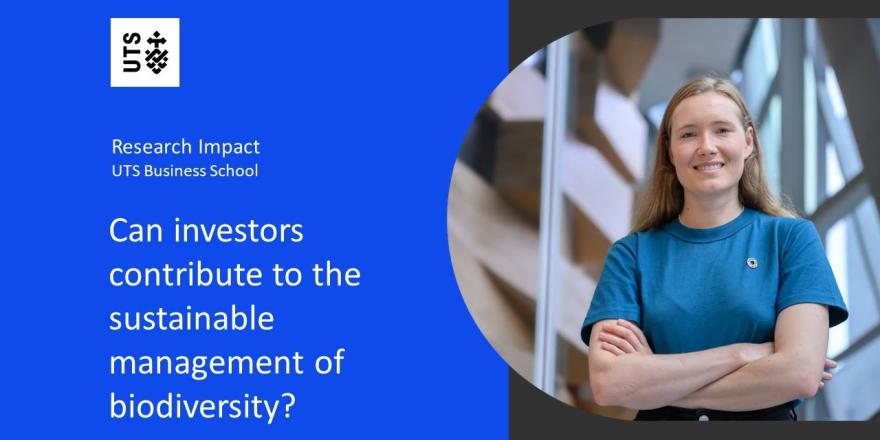
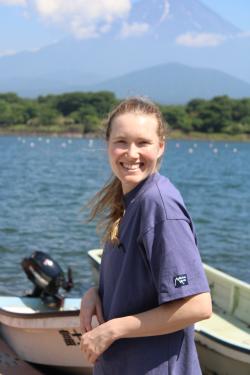
Graduating with a Bachelor of Science in Marine Biology from the University of Technology Sydney and a Masters of Sustainability from Sydney University, Madeline has spent the last decade working across diverse sustainability functions. These include marine and terrestrial wildlife conservation, corporate sustainability, design and innovation, disability & social impact, and sustainable finance. At present, she collaborates with investment stakeholders on nature-related issues in the finance industry as both a consultant and as a volunteer for a not for profit, Altiorem, whom she represents on Australia’s largest Investor led working group on nature. To support the sustainable finance community to navigate the nature crisis, in 2022 Madeline began pursuing a PhD through which she is exploring challenges and opportunities to influence the transition to a biodiversity positive funds management system in Australia.
Combe, M. et al., 2022, Risky business: How Australia’s banks and super funds are responding to the nature crisis, Australian Conservation Foundation.
Combe, M. et al., 2023, Losing the natural world comes with major risks for your super fund and bank, The Conversation.
Combe, M. et al, 2024, "Nature Investor Toolkit: Understanding nature-related risks and opportunities and supporting investors to assess, engage and take action", Responsible Investment Association Australasia.
Combe, M., Brown, A. and Wheatley, M., 2024, "State of Nature Related Disclosures: Assessing TNFD Alignment of Nature-Related Disclosures by Firms in High-Risk Sectors", Report, First Sentier MUFG Sustainable Investment Institute.
Van Herwaarden, A. and Combe, M., 2024, "Risky Business 2.0: How Australian financial institutions are managing nature-related risks; and opportunities", 2024 Progress Report, Australian Conservation Foundation.