

Water

Water is essential to healthy communities, thriving ecosystems and a sustainable future. UTS works to reduce water consumption, improve water efficiency, reuse water where practical and support research, education and partnerships that contribute to water security and sustainable water management. Through responsible campus operations and sustainability-focused research and education, UTS aims to contribute to a more water-resilient future.

Water consumption & tracking

UTS monitors and reports water consumption across its campuses to better understand performance, identify opportunities for improvement and support evidence-based decision making. Reducing water use forms part of UTS's broader commitment to sustainable operations and continual improvement in environmental performance.

UTS’s potable water reduction strategies include water efficient fixtures and fittings, leak detection and the use of non-potable water supplies such as recycled water from Central Park and rainwater for irrigation and toilet flushing.  

Monitoring systems help inform decision making, support operational initiatives and measure progress over time. The UTS Sustainability Strategy includes the implementation of a Water Efficiency Plan and ongoing reporting of water use performance.  
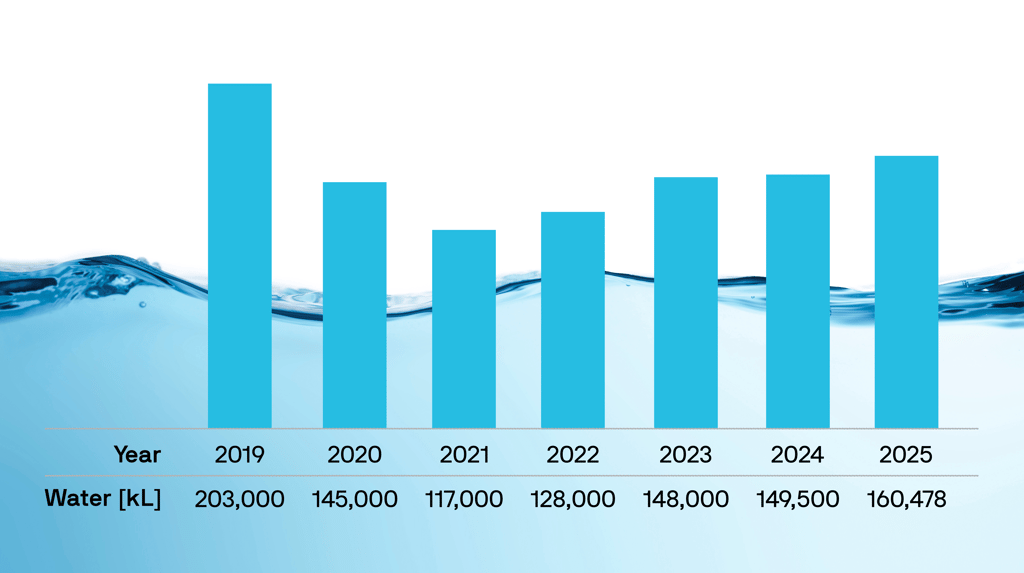
Bar chart showing annual water use from 2019 to 2025. Water use fell from 203,000 kL in 2019 to 117,000 kL in 2021, then increased to 160,478 kL in 2025.

Water consumption performance

UTS also monitors water consumption intensity. The table below tracks water consumption against campus population. 

YEAR WATER USE (kL) CAMPUS POPULATION KILOLITRE PER PERSON
2021 117,000 38,201 3.06 kL
2022 128,000  37,182  3.44 kL
2023 148,000  39,776  3.72 kL
2024 149,500  43,277  3.45 kL
2025 160,478  46,210  3.47 kL

Water usage and care  

UTS seeks to minimise potable water use through efficient infrastructure, sustainable operations and responsible campus management. Water considerations are integrated into campus planning, building projects and everyday operations to improve efficiency and reduce environmental impacts. 

Waste water treatment  

UTS has established systems to capture, treat and reuse water across campus. 

Stormwater Recycling 

Rainwater is captured from building roof tops, stored in tanks and treated using ultraviolet light irradiation (UV) and reused for toilet flushing and landscape irrigation. These systems operate in the Dr Chau Chak Wing building (Building 8), the Faculty of Engineering and IT building (Building 11), the Ross Milbourne Sports Hall (in Building 4) and underneath Alumni Green (serving the Vicki Sara building; Building 7). The UTS Haberfield Rowing Club has a wastewater recycling system where stormwater is collected from the roof, stored in a tank, treated and re-used, mostly for washing down boats. Water is also reused from the cooling tower bleed (waste) water in Buildings 1 and 11.  

Recycled water meters have been installed to the stormwater tanks in Buildings 7 and 8 to measure recycled water use. These meters can be viewed centrally on the campus-wide EMS (Energy Management System). UTS, as a member of the City of Sydney Council’s Better Buildings Partnership (BBP), contributed to the development of BBP Connection Guidelines for Recycled Water. 

Cooling Tower Water Reuse  

At the top of the UTS tower building are two of Sydney’s largest air-conditioning cooling towers, consuming approximately 32 million litres of water annually. The water needs to be constantly replenished to avoid becoming too salty and until 2006 was flushed down the drain. Following a series of special projects from 2007 five large, recycled water tanks were installed on level 28. The water is now used to flush the toilets throughout the tower, saving millions of litres per year.

Water from building 11 is also recovered and reused.   

Phosphorus recovery urine diversion technology 

Building 11 urinals have been developed with urine diversion technology to in order to Demonstrate the application of plant nutrients reclaimed from urine streams diverted at the source and processed into safe, effective fertilisers tailored for Australian conditions. Working with industry regulators to approve and use the fertiliser on turf, in parks and gardens, agriculture, horticulture and indoor/outdoor green walls. 
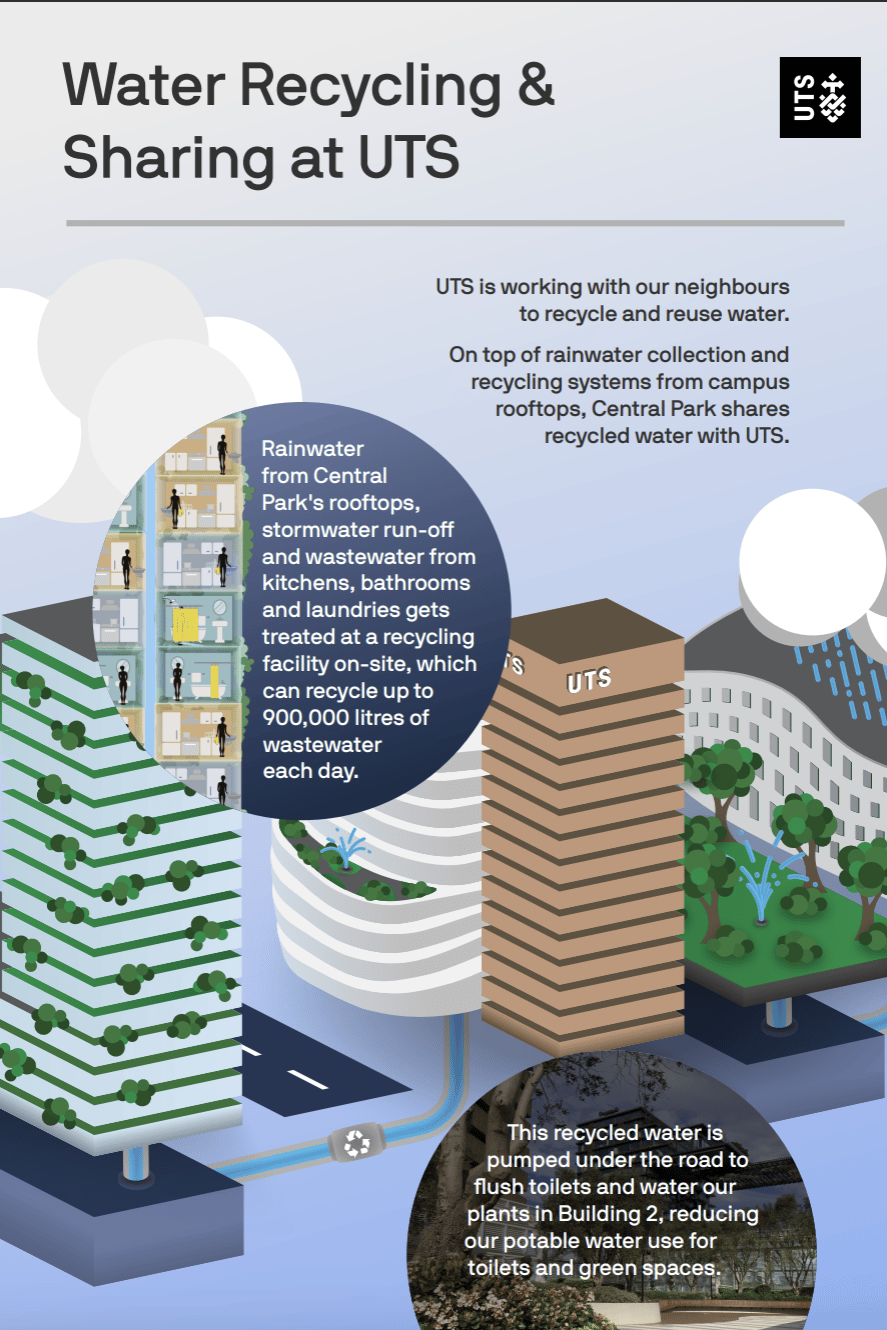
Illustration showing UTS and Central Park buildings connected by a recycled water system, with rainwater and wastewater treated on-site and reused for flushing toilets and watering plants.

Project Spotlight: Precinct recycled water 

UTS collaborates with neighbouring organisations on infrastructure initiatives that improve resource efficiency.

This includes participation in the Australian-first precinct recycled water agreement with Central Park and precinct-scale cooling infrastructure that supports more sustainable campus operations.  

Preventing water pollution  

UTS seeks to protect waterways through responsible stormwater and wastewater management and has processes in place to prevent polluted water from entering the water system.  

Green roofs and terraces on Buildings 2, 7, 10 and the Alumni Green capture rainwater, filter it and slow its release into the city’s stormwater system, resulting in improved water quality and a cleaner discharge to natural waterways. 

UTS has strict systems and procedures in place for the safe collection and disposal of hazardous waste, including processes to prevent pollution caused by accidents and incidents from entering waterways. Contractors complete induction training prior to commencing work on campus and major projects submit an Environmental Management Plan which outlines how pollution of the water system from soil run-off and hazardous materials will be prevented. 

Conscious water use on campus 

UTS promotes conscious water use on campus in several ways including: 

  • Our Green Campus Tours run throughout the year and highlight the great work being done on campus and through our research to conserve water such as capturing rainwater, installing green roofs and monitoring water use
  • We educate the community on sustainable water practices at our ‘Chats for the Goals’ sessions during Global Goals Month in September
  • Our Sustainability team meet new students at Orientation and let them know about the water refilling stations found across campus whilst providing a free UTS water bottle for signing up to the Sustainability newsletter 
  • Free water refilling stations can be found across campus  
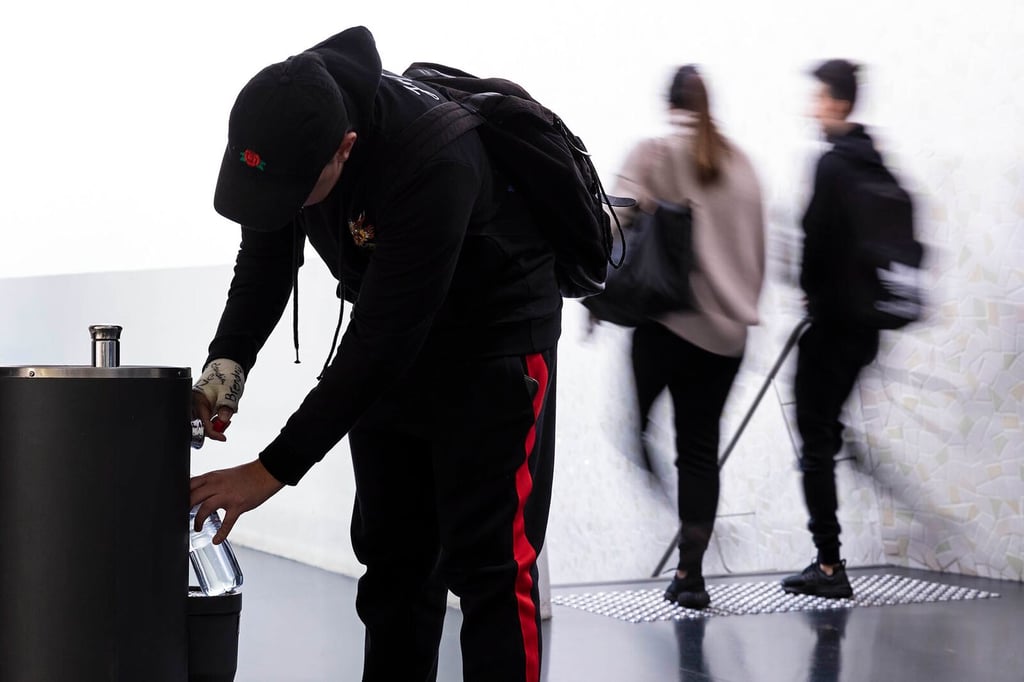
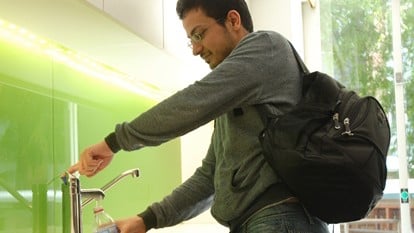
Person refilling a reusable bottle at a water station, with two people walking past in the background

Water refilling stations 

Free drinking water stations are available throughout UTS campuses, helping students, staff and visitors stay hydrated while reducing reliance on single-use plastic bottles.

Many stations also provide bottle refill facilities to support reusable water bottles. 

Bring your own bottle and refill at the places around campus listed below. 

Water-conscious building standards and design  

UTS seeks to reduce potable water consumption through sustainable building design, efficient infrastructure and continual improvement across campus operations. New buildings and major refurbishments support the university's sustainability commitments, including the UTS Design Guidelines and Green Star-certified outcomes and resource-efficient design. In addition, all UTS buildings plumbing and water reticulation must meet the requirements of the Plumbing Code of Australia as detailed by AS/NSZ 3500 series managed by Standards Australia.  

Water-efficient design requirements include: 

  • Use of AAA-rated water efficient fixtures and fittings 
  • Water metering and monitoring systems 
  • Leak detection systems 
  • Water-efficient irrigation controls 
  • Green roofs that reduce peak stormwater runoff 
  • Landscape features that support infiltration and groundwater recharge 
  • Drought tolerant planting and landscaping designed to minimise water use 
  • Integration of recycled water where feasible 
  • Rainwater harvesting, storage and reuse 
  • Water-sensitive urban design measures 
  • Smart building management systems 

This approach helps reduce pressure on potable water supplies while supporting environmental outcomes across campus and the surrounding precinct. 

Sustainable water extraction on campus 

UTS does not extract any water from aquifers, lakes or rivers as this can have negative environmental impacts. Instead, UTS has a supply agreement with a Wastewater Recycling plant on an adjacent property off campus where recycled water (from stormwater and sewer mining) is extracted and supplied to UTS for landscape irrigation and flushing.  

Water in the community 

As a university, UTS's greatest contribution to sustainable water management extends beyond campus operations. Through research, education and partnerships, UTS helps develop and share knowledge that addresses water challenges locally, nationally and globally.  

Project Spotlight: Turning wastewater into a valuable resource 

How can we recover valuable nutrients from wastewater and turn them into a resource for agriculture? At UTS, researchers are exploring innovative ways to recover nutrients such as phosphorus from human urine and transforming them into a valuable input for food production.  
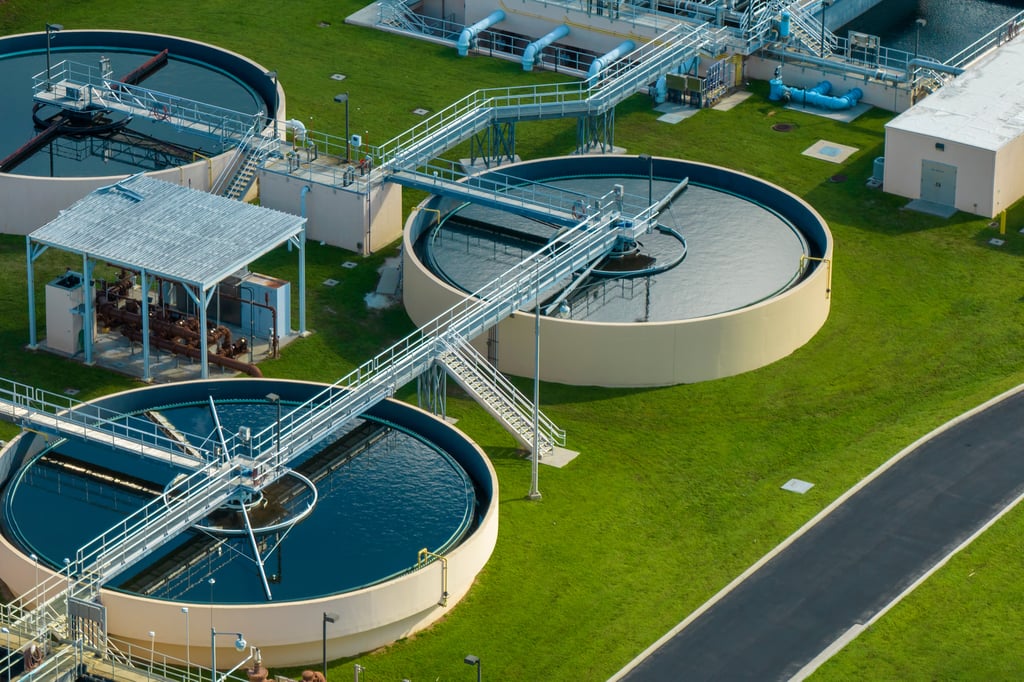
Aerial view of a water treatment facility with large circular treatment tanks, connecting walkways, pipes and surrounding grass.

The Nutrients in a Circular Economy (NiCE) Research Hub, led by Professor Shon, is developing technologies that recover nutrients before they become pollutants in waterways. By creating sustainable alternatives to conventional fertilisers, the project aims to improve resource efficiency, reduce environmental impacts and support a more circular economy.  

Potential benefits include: 

  • Reducing nutrient pollution entering waterways 
  • Recovering valuable resources that would otherwise be lost through wastewater systems 
  • Supporting more sustainable food and agricultural production and reducing reliance on finite phosphorus reserves and synthetic fertilisers 
  • Lowering greenhouse gas emissions associated with conventional fertiliser production 

Watch: Chats for the Goals – Toilet to table

At the 2025 Global Goals Month community event, From Toilet to Table, Professor Shon shared how nutrient recovery technologies can help address global water and wastewater challenges while creating opportunities for circular resource use and improved environmental outcomes.  
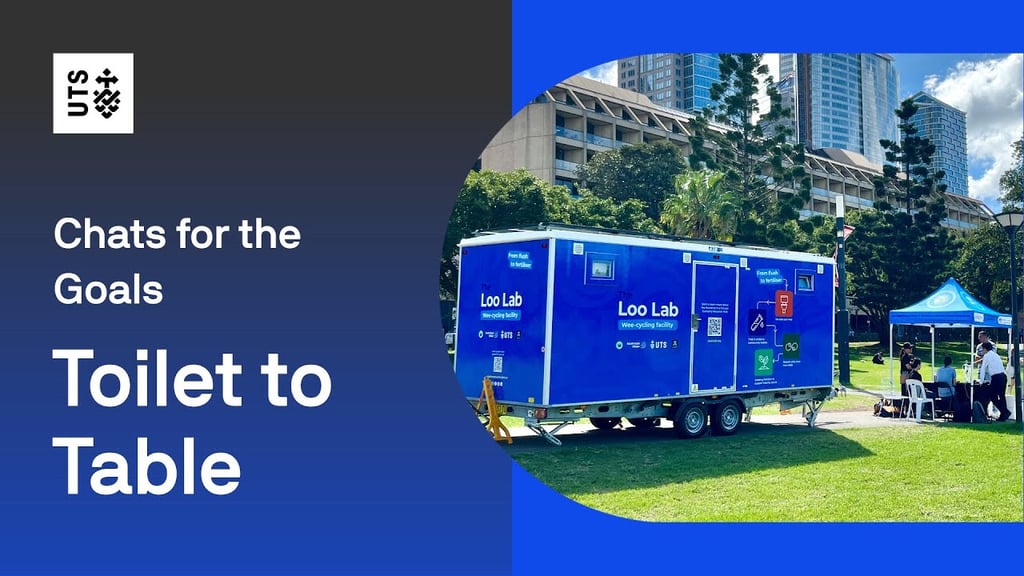
UTS “Toilet to Table” graphic featuring the Loo Lab mobile wee-cycling facility on a university campus as part of the “Chats for the Goals” initiative.

Good afternoon, everybody. So today. Yeah, this is my great honor to be part of the Global Goals Month.

Was, my pleasure to introduce the our research activities.

Toilet to table for a Nutrient Circular Economy.

So before I start, I just a little bit of, a survey. So how many people from our university student we have here?

Okay. So almost 30%. So we have, professional staff member, postdoctoral research fellow, and then we have a industry partner here.

Hopefully after this presentation, we can see some of the good agreement to make a translation of the this research.

I like to thank you for Alex and then Danielle to organize the this fantastic event.

So every year, you know, they have a lot of effort to produce this quality of the Global Goals Month.

So it's good timing to promote the our research at UTS and I just want to
also thank you for our coauthors; Sherub Phuntsho, Ibrahim El-Saliby, Leonard Tijing, Weonjung, Andrea, Amir, Cindy, Pema, Jerry Jade, Umakant, Abdul, Hao, and Federica.

Also, Andrea is here and he has been working with us as a postdoctoral research fellow and a little bit of history of the this research. So this is the seven years, our research activity.

So initially, in 2018. So we applied for international research collaboration funding. And we developed, new technology. And 2019 I joined the a conference and I met the one researcher from University of Queensland, and then he worked the same research area.

That's the reason why we discuss about how we can make a bigger opportunity and research project.

So we apply research half ASC research half for nutrient in a circular economy in 2020.

So you remember 2020. What happened? So it was pandemic period.
So a lot of, difficulty to attract the industry cash contribution, in-kind contribution.

But yeah, we made it. And then we got the successful outcome 2021 after that.

Yeah, a lot of industry withdrew because, they changed because of this pandemic situation.

But luckily we organized the new industry partners to make this project happen.

And since 2022. So we have operate this project with, eight industry partners. Sorry. Sorry, seven universities and 22 industry partners.

So we have, working this one how to translate it. Our research activity.
So today, the contents are, very simple. I don't want to give too much technical information. So this is more about the visuals, the presentation, a lot of photos and concept, how we can try to achieve
and at the end of the presentation, I have a prepared a gift to for you.

So thank you for coming. So I have six gifts from the, some of the
our UTS produced fertilizer. Also, we have, some towels and, t-shirts,
our NiCE Hub T-shirts, but it's not free. So I will give you a quiz.
Then you have to get the right answer. So if you focus on this presentation, you can get the correct answer. Okay. So, please,
join the, this presentation.

So today, we live in linear economy for nutrients. So simply, we just to produce fertilizer and produce food and consume, and we just discharge.

So all the nutrients goes to the waterways, which goes to the CO2 and N2O. So this is very linear economy. So we try to make this one to circular economy. So if you look at the this nitrogen production as a fertilizer. So how about this process. So 2% of the global greenhouse emissions because so we have a lot of, nitrogen in the air. So we just capture this air combined with the hydrogen and pressurize the 300 to power and 500 degree.

So high pressure, high temperature. You need to spend a lot of energy.
So CO2 produce a lot from the ammonia production of fertilizer. Also phosphorus is the one of the major fertilizer component. So this is very limited reserve. So it is running out almost in 180 years. So we have to find out some alternative fertilizer, otherwise nobody can get the food.
So that's the reason why we like to have, how we can make a sustainable nutrient recovery system.

So after we produced, this fertilizer and we have a food and we consume
and you every day, you eat a lot of food nutrient and goes to toilet and discharge.

So if you discharge toilet at UTS, so it goes to the sewer pipeline at Underground and Malabar wastewater treatment plant and treat and discharge to the ocean. So that's the how it works. So every day we discharge a lot of nitrogen, phosphorus, potassium and nutrients, huge amount of fertilizer.

And what happen is that the waterways. So if you discharge the nutrient what would happen is that algal blooming nowadays the South Australia in problem of our algal blooming.

So this is all from the our nutrient because algae’s, very much easily grow and then they like the food waste the high temperature. And then we created this algal blooming so we can try to minimize the discharge of the this, nutrient, also CO2 and N2O. We need to remove the, this nutrient in a wastewater treatment plan.

So we try to utilize the a lot of, biological treatment plant processes
in wastewater treatment plant, and then they produce a lot of CO2 and N2O, which are the very serious, greenhouse gas, components.

So how we can make sure this kind of environment, to make this linear economy to circular economy.

So let's look at, fertilizer market. So Australia is, very much reliant on the agriculture sectors.

So how much fertilizer we are utilizing every day. So where is this fertilizer from? So most of the more than 90% of the fertilizer come from
overseas. So they produced, this, fertilizer. And then we import because, it's a cheap.

So this is all from the overseas fertilizer global market is, last year to $200 billion. And they keep increasing around 4% every year. In Australia, we have, $1.6 billion market. And then this 2030, so $1.8 billion. So I chose to keep increasing.

So if we can save, some of the fertilizer, we can also contribute a lot of,
imported, fertilizer as well as our agriculture sectors.
So where is the nutrient? So you discharge your nutrient to the wastewater treatment plant.

So it goes to the one of the wastewater treatment plants to remove the nitrogen, phosphorus, potassium, because it's, very much harmful for environment. So we utilize the biological treatment process.

So if you look at the nutrient in urine and wastewater, wastewater in general, 40 milligram/l of nitrogen and 7 milligram/l of phosphorus, also micro pollutants, which are pharmaceutical compounds or medicine or so some people take any drugs.

So it goes to the wastewater treatment plant we have to remove but the inside the urine. So almost 80% of nitrogen comes from our urine and Phosphorous 65%. micropollutants 50%. So we capture this urine from our daily toilet life and we can save a lot of nitrogen, phosphorus, even potassium, calcium, magnesium they are all good fertilizer component. So we can also utilize the this fertilizer.

So that's the reason why we try to source separated unit to collect at the upstream of the wastewater treatment plant and then convert to fertilizer.

So urine diversion can enhance the food security by, recovering nitrogen phosphorus reduce the energy associated with the fertilizer production, Haber-Bosch process and nutrient removal from wastewater. So this is the nitrification. You need a lot of aeration to let the microorganisms survive. So wee wastewater treatment plant, consumed more than 60% of energy to remove the this nitrogen and phosphorus. So huge amount of energy is consumed because of, removal of, nitrogen phosphorus in a wastewater treatment plant. Also, we can reduce the water by reducing flushing and improve the overall water quality.

So why not, we can make this, linear economy to circular economy from the our waste. That's the reason why we have a contribute this research. And in terms of, United Nations Sustainable Development Goals, we could contribute 11 Sustainable Cities, 13 Climate Action, Life Below Water, Responsible Consumption and Production, Clean Water and Sanitation, as well as Zero Hunger.

So that's the we are driving this research to make this, UN SDG Goals.
So first of all, just very simple, you know our human body mechanisms, how we produce the urine. Every day you produce around 1.5l of the urine.

So you drink water, even food, and digest it in a stomach.
And then small intestine absorb a lot of nutrient nitrogen, phosphorus, potassium. And then this is the ammonia component. So ammonia is very toxic in our body. So our liver change ammonia to urea. So this urea is easily moved around in our body and then supply the our nutrient in our body system and finally leads to the kidneys. And then all the nutrients and some of the harmful compound discharged to the our breath.

And finally we discharge this urine. So this is the our daily, you know, human mechanism.

We produce a lot of urine and there are many nutrients, we are just discharging every day. So what is inside. You can see the 99% is water
very pure water and nutrient nitrogen, phosphorus, potassium,
calcium, magnesium, sulfur, iron, manganese and copper. Also some people take some different nutrient and then it comes out to the urine.
So if we collect, this kind of, nutrient so we can have a very good fertilizer, it’s all combined.

We don't have to separate ammonia, nitrogen, phosphorus, calcium, magnesium, different fertilizer. You don't have to keep mixing separately. Just our urine contains all the fertilizer component to grow our food. So the problem is, Some are organics, micropollutants, and pathogens.
Major problem. So we need to remove this one to secure our food production. So our technology, we like to target this, component to removed all the pathogen, virus, and then micropollutants.

And how we can extract only fertilizer, NPK and other components.
So that's the reason why we have developed this technology. So look at the urine initially, the fresh urine we discharge. So a lot of people are questioning why the urine is yellow. Because of vitamins some people say oh I take a vitamin, looks like my urine is much more yellow than, you know, normal time. So some people say vitamin, yes it’s true vitamins
affect the urine, but if you don't take any vitamins. So still, your urine is, yellow because your red blood cell will be degraded and then oxidize
and change to the bilirubin component.

So this is the, the yellow color, yellow pigment, so that, this is how our blood is continuously, divide and then survive and then generate again.
So all the cell of the red blood cell will be degradable.

And then it change to the, bilirubin compound. And then finally, you just discharge this compound. So this is the component of the our blood cell. So when you discharge this fresh urine, mostly urea, not ammonia, not, any of the components. So urea compound, we have.

And then if you just live around one day or two days, so you hydrolyzed your urine, so urea tries to change to the, ammonia. So this ammonia easily evaporates, and then pH increases the initially your pH of the urine is neutral like a tap water pH 7.

But when you have a hydrolysed urine and this will convert to the high
pH because of alkalinity. So look at the seawater. You know, seawater.
There are many, like, some crabs or, coral reefs because they produce a lot of, CO2 from the air teacher in the seawater, because seawater pH is 8 and then a lot of coral and crabs and lobsters can be produced using calcium carbonate.

So pH increases a lot. And you can see the in the bottom.

So this is the Struvite. So we have this kind of powder will be precipitate from the urine because this compound is high pH and then easily precipitates as a crystal form. So you can see the magnesium ammonia
phosphate is the good fertilizer. So we can see the this is the crystal fertilizer we produce the from the human urine without doing any things.

And then we have hydrolysed urine, urea to ammonia. So ammonia is a good fertilizer solution also biologically, the microorganisms continuously growing inside this urine because a lot of nutrients are there.
So we have, a lot of, biological processes producing. So if you see the little bit of chemistry. So initially when you discharge the our urine.
So urea is there, and easily discharged from the our body and then convert to ammonia and ammonium ions and nitrite nitrate.

So ammonia and nitrate NH4, NO3, cation and anions are very good fertilizer. So we target to this urine fertilizer to change to the ammonia and nitrate, which is a very stable condition in this, fertilizer.

So this is the, we produce the fertilizer as a diluted form. So we can easily spray it. This fertilizer produced from the our university student in building one. So you dilute almost to five times so you can easily apply
for your plant.

So this is the way we have, production of the, our fertilizer solution. So we need, urine diversion toilet, how to effectively collect, urine only. The other solid goes to the another pipeline, and then urine can be collected from male urinal. So male urinal is, very common in our university.
The building 11 even this building. So I'm sure that, you have used every day without any water just to.


Yeah, you pee and then collect the urine. So our building 11, the Faculty of Engineering and IT. So we have installed this, male urinal and we collect the every floor. So we have, 12 floors. So every day we produce around 1000 Litres of urine, very fresh urine.

And this is the pedestal toilet, the first generation. You can see the hole at the front. And then the other solid goes to the this plumbing system. And this is the new generation of the toilet. So you can see the yellow urine goes to the this front side.

And due to the surface tension. So urine is going to the front plumbing system and fresh water. Water. And then the other solid and goes to this, plumbing side.

So that's the already commercially available and that we can easily install and separate the urine.

And then the other solid so we can capturing the this, urine divergence system.

So based on the, this, urine. So we have developed the membrane bioreactor. So this is membrane. Looks like a hair. Yeah. And then there are, point 01 micrometer pores size inside. This, hollow fiber membrane.
And we just sucked, this, water, and you just penetrate your fertilizer only. So we remove the virus and we remove the pathogens, also we remove the some of the micropollutants.

So we have developed, this, membrane bioreactor. So just to put it into the your urine tank and then continuously we can produce the fertilizer. So what's the odor? Organics. And then ammonia. And what's the concentrated, urine. Because the urine concentration is around 5g/l, relatively low. So how we can make, little bit concentrate fertilizer, almost 300 gram per litter. So 20 times, concentrated.

So we can easily transport. We can easily containerise and supply to the farmers even we can have, more convenient utilization. So how much concentration we can achieve.

So we have tested the, what's the, growing performance lettuce and pak choi. So I want to share the some of the, our results. So this is the building 11. So we have, a lot of urine diversion toilets.

So we collect, at the basement so you can see the this building and basement, and we have, membrane bioreactor to remove the organic smell, mainly.

And then ammonia to nitrate, stable fertilizer condition and concentrate
to remove the more pathogen and viruses and concentrate the our, fertilizer. So we produced, this, fertilizer and tested, our hydroponic system. So this is the concentrated data. So we concentrate as much as we can.

So this is the initial urine, yellow color, concentrate urine and permeate.
So concentrate urine. When you continuously concentrate, water is, evaporate. So your fertilizer is dense. And then you create a lot of, scale, like a similar to struvite or, calcium carbonate. Calcium phosphate.

A lot of crystal will be produced. So we try to maximize almost 80% of, concentrate will be the optimum to utilize concentrated fertilizer. So based on this result, we tested with the Royal Botanical Garden in Sydney. And then this is the result we have.

We compare with the chemical fertilizer and the commercial fertilizer and our fertilizer.
So we found out, very much similar performance to grow lettuce and pak choi and we think about how to scale okay. The performance it looks like a very promising and how we can scale up to produce, more fertilizer from the our university basement. And this is the initial 20 liter of our lab scale and pilot scale now is, we have, manufactured full scale membrane bioreactor.

Looks like a refrigerator. So we put into it all the different sensors
controlling system pumping and reactor inside, and then try to produce the our fertilizer in scale. So this is the performance we have.

So, Andrea, he made, this experiment and so we compare different fertilizer, commercially available.

So this is the one of the commercially available fertilizers, Powerfeed.
So it's almost $30 of one liter.

And you can see the commercial and Urval, our fertilizer, yellow color and control is a black color.

Also we have a different, performance of the commercial fertilizer.
So after one week and then four weeks. So we found out, our fertilizer to grow the grasses.

And then compared to the this, commercial fertilizer, the performance is, comparable or better because, urine has a lot of different bio stimulant component with, special fertilizer compound so that we found out, better, result compared to the commercially available fertilizer. So that's the we like to expand our opportunity to translate this research and then building level we already demonstrated.

So NiCE Loo. So a lot of, festivals and events. So they need, more portable toilets. So we develop this, NiCE Loo and mobile toilet system.
So we just installed the male toilet with, urine diversion toilet and female at, right side, and the in the middle.

So we installed the, our refrigerator type of membrane bioreactor. And continuously we produced at the festival music festival event. Also we can just collect, people's urine and then we can convert to fertilizer.

Building 11, also public toilet. So parklands was, many places they have public toilet. So we also tried to install this, technology at the behind to convert, urine to fertilizer. So these are the typical nutrient, so commercial fertilizer, so hydroponic NPK ratio is a 10 to 3 to 7.

So our our fertilizer 10 to 1.5 to 3.5. So NPK ratio very much suitable. Also we have more compound different sulphate, iron, and some of the useful, fertilizer inside our Urval fertilizer. So we have tested many different plants.

Viola, so flowers, so botanical garden, they have a lot of flowers. So we can utilize the this, fertilizer and Gerbera, and Rhipsalis, and some of the basil and coriander, and parsley, and spearmint. So we found that, most of, plants are growing very well with, combined, human waste. Fertilizer.

So now is, we, later we scale out further. What we are doing is, produced, this, fertilizer from the full scale. So this is the tank at the basement of the, our building 11. So this is 10,000 liter. So we produce every day around 1000l of fertilizer.

So we install together with, this, urine. And then we continuously produce every day huge amount of, fertilizer already. Everybody knows, UTS has a lot of green walls, in the building one, building ten, building 11. So we have around seven green wall systems.

Also, we have a rooftop, the green wall system. So we have a collaboration with the City Forest.

So now it's we are continuously providing our fertilizer to the City Forest
to utilize the green wall with our fertilizer. So building ten and building 11.
So if you have opportunity to visit there. So this, green wall fertilizer is from the, our university student fertilizer. So you can smell, as well as you can touch it. And this is, what we have, progress so far.
So we would like to have a more green wall and more fertilizer. More application can be contributed for the this nutrient, circular economy system. So, here's Chris, from the City Forest.

He's in charge of the, our Greener UTS  campus. So we have collaborated with him. And then just to interview him, how our fertilizer is performing

Okay. Great. My name is Chris from City Forest. Nice to see, Shon and I are working together on incorporating his urine based fertilizer into green assets on buildings.

We've been doing trials here at UTS. We look after the green assets on the buildings here, and there are some select great walls that we have been running trials on with these fertilizers and the results today, have been wonderful. We had noticed some deficiencies prior to utilizing these and allowed those to occur a little just to see what would happen.

And then straight away noticed a huge improvement of Shon’s urine based fertilizer system into the assets on the building. As you can see here, the plants here are thriving, they are under fairly low light level conditions.

They’re in a, hardware system that helps, encapsulate the plant's roots and spread that moisture and fertilizer evenly over the whole surface area, it’s a bioactive green wall system. That we have developed, over time and specifically for the improvement of efficiency and sustainability on buildings for both water usage, plant health, reducing maintenance and, the costs to stakeholders on those buildings over time, and with the partnership that we've formed so far with Shon, we can see that this is going to help achieve, great cost savings for some of these buildings going into the future. And it will allow our a little bit more confidence
from specifiers and designers of these tools to incorporate more green assets and biomass onto the infrastructure.

So overall, to just summarize what he's talking about, he is very happy to utilize our urine fertilizer because this green water is much greener than the before. Also, they have very good fertilizer supply from the produced from the, our university fertilizer.

So we like to have, more environmentally friendly with nutrient circular economy, collaboration with City Forest and continue to look at, expanding the our the application of, this, green wall and fertilizer. So even though I mentioned about only urine. So, it could, expand our opportunity to different, nutrient rich wastewater from our urban area, industrial lifestyle.

Also, another big bioreactor contain very high concentration of fertilizer. So we can also collect, this wastewater to convert to fertilizer. And then we can apply for edible crops, non-edible crops, so that we can achieve the, this nutrient circular economy. So this is the overall conceptualized video produced from the UTS media team Human urines contain everything which is useful for our food production.

Nitrogen, phosphorus, potassium, as well as micronutrients. The biggest challenge is “How do we collect it in a in a cost effective way, and convert it into a form that farmers can use effectively?” The NiCE Hub aims to collect, recover and recycle nutrients from waste and convert them into useful fertilizer.

So we use more energy to produce nitrogen for agriculture than all the planes burning aviation fuel globally. It makes sense that we do something to change them. Together with Southeast Water, we have developed the NiCE Lab, which is the, mobile trailer system. We collect the urine at the behind the tank, and then we just to feed our urine to this membrane bioreactor system that we have, also pumping system and then pipeline.

So finally we produced, fertilizer from this pipeline and that we can apply directly for cultivation. The next step is basically moving forward to apply that fertilizer. So now we are testing more and more how we can use this one in a city environment. We've been working with the NiCE project team since 2019 on testing that end product, the bit that literally gets flushed down the drain and turned into a fertilizer product
to deploy in our industrial operations, millions of people across the globe that just flushing urine down the toilets every day means that we've got this continual, sustainable, replaceable source of fertilizers that, if it can be harvested and concentrated, means we've got really access to a wonderful source of fertilizer that can be used to growing plants
currently, waste management principles. It's just treats the waste and you dispose it if we can do the separation of the urine and it removes the nitrogen load. We obviously lower the greenhouse gas emission.
It really transforms the way we treat our wastes. 

One of the key research priorities for the southeast water is about transforming the water utility with a circular economy principles.
So that's a reason we have established our partnership with UTS. We have, initially developed a small scale bioreactor. 

And then based on our promising results, we have developed, full scale UTS is only one university. We have a urine diversion system in Australia.
Social science, plant science, environmental engineering, hydraulics. There's so many different disciplines that are working as a one unit
to produce something, which I think it's very important for the future. We can contribute a lot of, environmental, economic and climate change actions. That's the big picture of our nutrient technology.

So, take home messages. Yeah. Nutritent circular economy is becoming more important so we can contribute. So collect your urine and then give it to me. I can convert and then give it back to you. And urine is liquid gold. Urine diversion can do food security, energy reduction, water reduction.

Also benefit to the climate change, circular economy, nutrient resource recovery, eutrophication, waste water infrastructure.

Also, urine has a very unique fertilizer. Bio stimulant can play important roles to boost, urine derived, fertilizer. Also social, technical, environmental, economic issues.

We are currently also deliver. And then public education and feedback and advocacy are very important to get your perception changed.
So that's todays talk. Now is little bit of a quiz.

Thank you everybody.

Advancing water security  

UTS has internationally recognised expertise in water and sustainability research through organisations including the Institute for Sustainable Futures and the Centre for Technology in Water and Wastewater.

Researchers work with communities, industry partners and governments at local, regional, national and at an international level to advance sustainable water management and strengthen water security outcomes.  
Explore the UTS story: Not just a pipe dream

Student filling water bottle Blg 5 student lounge

How you can help

  • Only run the dishwasher when its full 
  • Don’t rinse dishes before putting them in the dishwasher, and if necessary do it in a plugged sink 
  • Report leaking taps, toilets, urinals and any other leaks to Building Services. 
  • Limit showers to four minutes or less 
  • Never leave taps running 
  • Carry a reusable water bottle and use campus refill stations. 

Advice and resources

Refer to the following useful links for more advice and information on water savings.

Your Home

Your Home is an award guide, published by ISF in collaboration with the Commonwealth Government and provides lots of great advice on sustainable housing to householders and building professionals including water use.

Sydney Water

Water saving tips and advice on how use less water at home and at work.

Water Efficient Labelling and Standards (WELS)

This scheme helps Australians compare the water efficiency on a range of appliances and fixtures.

Rainwater tanks

Rainwater tank advice from Sydney Water provides information about installing a rainwater tank and what you need to consider.