


JUMP TO
What is a circular economy?
A circular economy is an alternative to the traditional “take, make, dispose” model of consumption. It aims to prevent waste and pollution, keep products and materials in use for as long as possible through reuse, repair, repurposing and recycling, and support the regeneration of natural systems.
By using resources more efficiently, a circular economy can reduce waste, lower carbon emissions and create environmental, social and economic benefits.
UTS is exploring how circular economy principles can be applied across teaching, research, procurement and campus operations to support a more sustainable future.
How is UTS supporting a circular economy?
UTS is working to embed circular economy principles across its operations, teaching, research and partnerships.
Circular economy activities build on the University's commitment to sustainability and responsible resource use, helping to reduce waste, lower emissions and maximise the value of materials and products.
UTS is currently developing a Circular Economy Plan, with publication anticipated in late 2026. The plan will provide a coordinated roadmap for advancing circular economy practices across the university.
Current areas of focus include:
-
Reducing waste and improving recycling through waste audits, resource recovery initiatives, improved recycling systems and efforts to divert more material from landfill.
-
Supporting reuse and sharing of resources, equipment and materials to extend product life and reduce unnecessary consumption.
-
Embedding sustainability into procurement decisions by encouraging responsible purchasing practices and considering whole-of-life environmental and social impacts.
-
Advancing teaching and research that develops circular economy knowledge, skills and innovative solutions for industry and the community
-
Engaging students, staff and partners to support behaviour change and build a culture of circularity across the university community.
UTS’s long-term vision is for circular economy principles to become part of everyday practice across the university, creating positive environmental, social and economic outcomes while contributing to a more sustainable and resilient future.
Waste and recycling
UTS strives to minimise waste sent to landfill by reducing waste generation, increasing reuse and recycling, and improving resource recovery across its campuses.
UTS tracks the amount of waste generated across the University including recycling rates and waste disposal to landfill. Waste streams measured and reported include co-mingled recycling, office paper, cardboard, food organics, e-waste and waste to landfill. The University reports these annually to TEFMA (Tertiary Education Facilities Management Association).
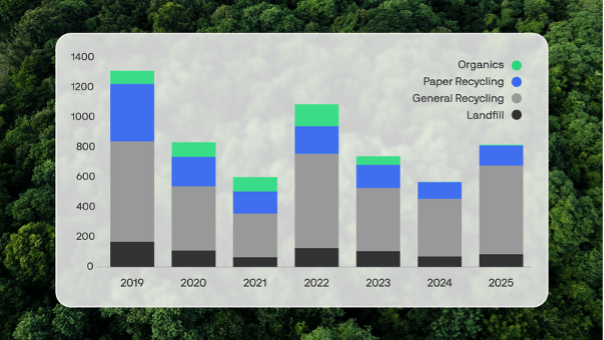
Our annual waste generation from 2019 to 2025 is summarised in the graphic.
Waste performance over time
In 2025, UTS generated more than 817 tonnes of waste including 674.9 tonnes of general waste and 133 tonnes of paper and cardboard, with 732 tonnes diverted from landfill through recycling and resource recovery initiatives. Around 85 tonnes of waste were sent to landfill, resulting in an overall landfill diversion rate of approximately 90 per cent.
UTS strives to minimise waste sent to landfill by reducing waste generation, increasing reuse and recycling, and improving resource recovery across its campuses. Through waste audits, improved recycling systems, behaviour change initiatives and targeted waste reduction programs, we are working to keep valuable materials in use for longer and support a more circular approach to resource management. UTS monitors waste generation and diversion rates to identify opportunities for continuous improvement and reduce the environmental impacts associated with waste.
UTS also works with retailers, contractors and service providers operating on campus to support waste reduction and resource recovery outcomes. From 1 July 2026, the NSW Environment Protection Authority requires universities to comply with a new statewide mandate for Food Organics and Garden Organics (FOGO) recycling to reduce food waste and to prevent it going into landfill. This includes back of house waste from retailers and service providers on campus.
What waste do we manage?
UTS manages a range of waste streams across its campuses, including:
Our 'co-mingled' general waste bins get sorted off campus and recyclable material such as paper, cardboard, plastic, metals, etc get removed for recycling.
We continue to explore opportunities to increase reuse, improve recycling outcomes and reduce the amount of waste sent to landfill through better resource recovery systems and circular economy initiatives.
Waste minimisation and single-use items
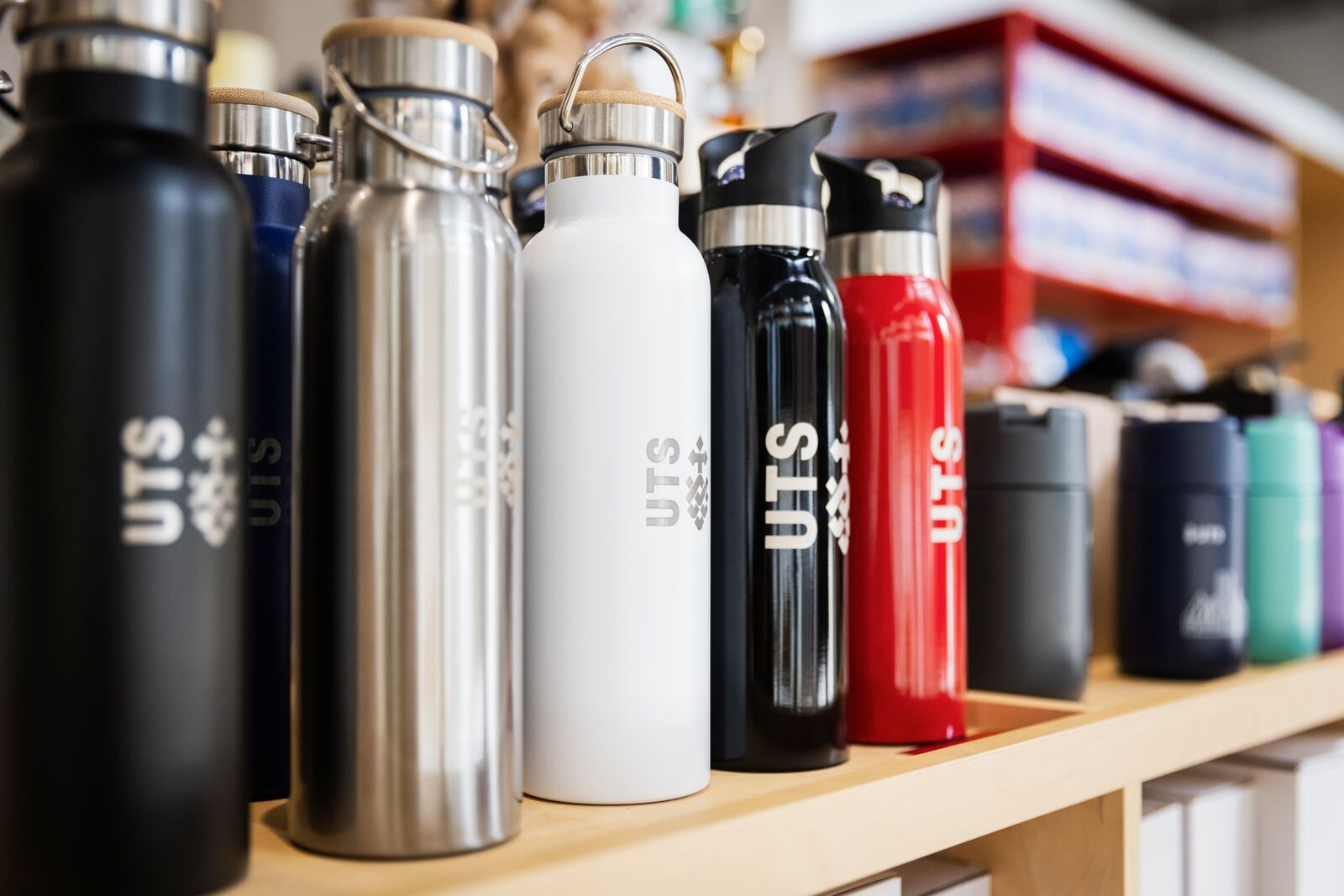
Reducing waste starts with avoiding it in the first place. UTS supports waste minimisation through responsible purchasing, reuse initiatives, recycling programs and resource recovery activities that help reduce the environmental impacts associated with consumption and disposal.
UTS has implemented initiatives to reduce plastic waste and encourage reusable alternatives across campus. Programs such as the Plastic Free Plan support the phase-out of key single-use plastic items and promote more sustainable consumption practices. These initiatives contribute to reducing waste generation while supporting a more circular approach to resource use.
Current initiatives include:
- Reducing reliance on single-use plastics.
- Promoting reusable alternatives where practical.
- Improving recycling and organics collection systems.
- Encouraging behaviour change through education and engagement programs.
- Supporting reuse and resource-sharing opportunities across campus.
- UTS works with suppliers and outsourced service providers to support waste reduction, recycling and responsible resource management across campus operations. Sustainability expectations are reinforced through procurement processes, supplier agreements and the UTS Supplier Code of Conduct.
Related policies and resources
Hazardous materials
UTS manages hazardous materials and hazardous waste to protect the health and safety of students, staff, contractors and visitors, and to minimise environmental impacts. Hazardous materials may include chemical, biological, radiological or physical substances that have the potential to cause harm to people, animals or the environment if not managed appropriately.
The university maintains procedures and controls for the safe handling, storage, use and disposal of hazardous materials generated through teaching, research and operational activities. Hazardous waste streams are managed separately from general waste and recycling streams to support regulatory compliance, environmental protection and workplace safety.
Procurement
Procurement is a key part of UTS's approach to the circular economy. Through responsible purchasing and supplier engagement, we seek to reduce waste, conserve resources and support positive environmental and social outcomes.
Our procurement practices support:
- Ethical sourcing of goods and services.
- Consideration of environmental and social impacts when making purchasing decisions.
- Sustainability considerations in tender evaluations, including environmental impacts, social responsibility, resource efficiency and long-term sustainability outcomes.
- Opportunities to reduce resource consumption, support reuse and recycling, and extend product lifecycles.
- Responsible supply chains that promote safe working conditions, fair labour practices and respect for human rights.
- Identification and management of modern slavery risks within our operations and supply chains.
- Expectations for sustainability, ethical conduct and responsible supply chains extend to suppliers and outsourced service providers through UTS procurement, contracting and supplier management processes. Suppliers are expected to minimise environmental impacts and maintain environmentally responsible practices
By embedding sustainability and ethical sourcing into procurement decisions, UTS supports more responsible consumption and production while contributing to a more circular and equitable economy.
Related policies and resources
How you can help
Everyone at UTS can contribute to a more circular campus. Simple actions taken every day can help reduce waste, conserve resources and keep valuable materials in use for longer.
Circular economy initiatives at UTS rely on the collective efforts of students, staff and partners to drive meaningful change.
Running an event?
Events can generate significant amounts of waste through single-use items, catering, promotional materials and event infrastructure. By making a few simple choices, you can reduce environmental impacts and support UTS's transition to a more circular campus.
Consider:
- Choosing reusable cups, plates, cutlery and serving ware where possible.
- Minimising single-use items and unnecessary packaging.
- Providing clearly labelled recycling and waste stations.
- Ordering catering carefully to reduce food waste.
- Using digital materials instead of printed handouts where appropriate.
- Selecting sustainable products and suppliers when organising an event.
Green event guides
To help plan more sustainable events, UTS has developed practical guidance for event organisers.
These guides provide practical tips for reducing waste, minimising environmental impacts and incorporating sustainability considerations into event planning.