

JUMP TO
Sustainable Campus
UTS is committed to creating a campus that is sustainable, inclusive and the wellbeing of everyone in our UTS Community.
Across our campuses, we are improving the performance of our buildings, supporting active and sustainable transport, providing access to free drinking water, promoting sustainable retail practices, and creating opportunities for students to access affordable food and essential services.
Creating a Sustainable Campus
UTS is embedding sustainability into campus infrastructure, services and daily operations through sustainable building design, active transport, food security initiatives, responsible retail practices and future-focused campus planning.
Our approach is guided by the UTS Sustainability Strategy, UTS Design Guidelines and the Sustainability Vision for the Campus Master Plan.
Sustainable Buildings
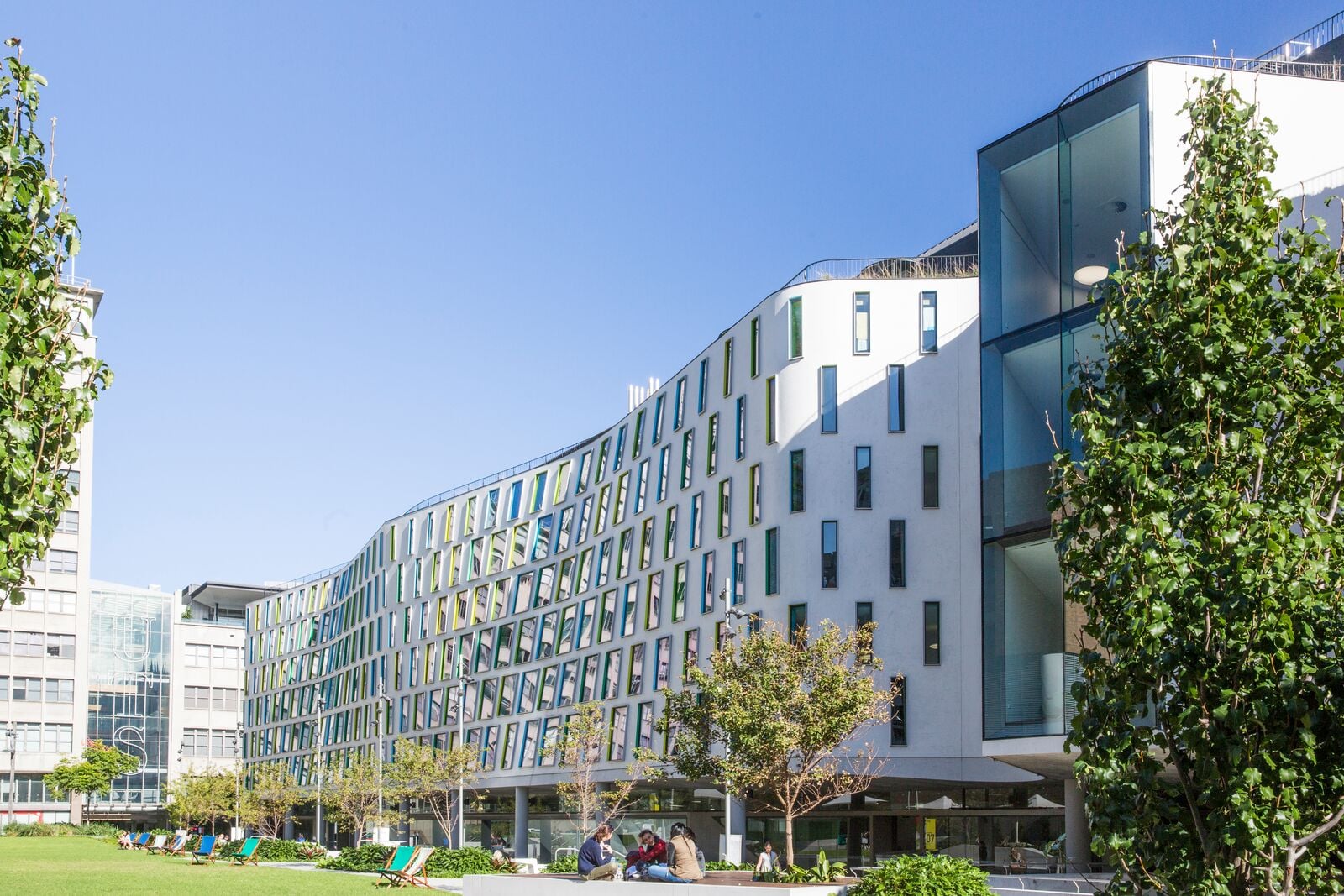
The buildings we design, construct and operate play an important role in reducing environmental impacts while supporting learning, research and wellbeing.
UTS is committed to developing sustainable campus infrastructure that balances environmental performance, social inclusion and long-term resilience. The UTS Sustainability Strategy requires new buildings and substantial refurbishments to achieve a minimum 5 Star Green Star certified rating. Green Star is Australia's leading sustainability rating system for buildings and assesses performance across areas including energy, water, materials, transport and indoor environment quality.
UTS has achieved Green Star certification across several major campus developments, including:
- UTS Central (Building 2)
- Dr Chau Chak Wing Building (Building 8)
- Faculty of Engineering and IT Building (Building 11)
- Vicki Sara Building (Building 7)
These buildings demonstrate UTS's commitment to creating high-performing spaces that support sustainability, health and wellbeing.
Our Green Star certified buildings & landscaping include the following sustainability features:
- Minimum 5-star green star rating for all new buildings
- Water efficiency and use of recycled water
- Renewable energy and advanced energy efficiency
- Cycling facilities to facilitate sustainable transport
- Ambitious recycling targets, including recycling of all demolition and construction waste
- Green roofs and walls, with landscaping using drought tolerant plants to minimise water use.
Alumni Green
Alumni Green is the green heart of the campus with lawn, garden pods and chill out spaces. It’s functionally a green roof sitting on top of the Ross Milbourne Sports Hall and the Library Retrieval System.
The Alumni Green has been landscaped with native drought tolerant plant species and uses on site water capture for irrigation. Stormwater is captured, stored, treated & re-used for irrigating the lawn, landscaping & trees of Alumni Green.
Large stormwater tanks located beneath Alumni Green enable UTS to reduce its potable water consumption, reduce stormwater runoff & pressure on local infrastructure during storm events, & futureproof the University against water restrictions during drought periods.
Other sustainability features include certified sustainable timber for decking and furniture, energy efficient LED lighting, ‘green’ concrete containing recycled material.
Green roofs
Green roofs have multiple benefits including helping the thermal performance of buildings, reducing energy consumption and providing habitat for plants and animals. They also have social sustainability benefits, adding beauty and recreational spaces to the urban landscape. At UTS we have five green roofs on our city campus.
Looking ahead
The Sustainability Vision for the Campus Master Plan continues to embed sustainability principles into future campus development and encourages a campus that is healthier, more resilient and better connected to the surrounding community.
The Sustainability Vision for the Campus Master Plan includes:
- Climate-positive and low-carbon development
- Healthy and inclusive spaces
- Accessible and welcoming public areas
- Biodiversity and green infrastructure
- Buildings designed for resilience and future adaptation
- Enhanced mobility and active transport connections
Related policies and resources
Water refilling stations
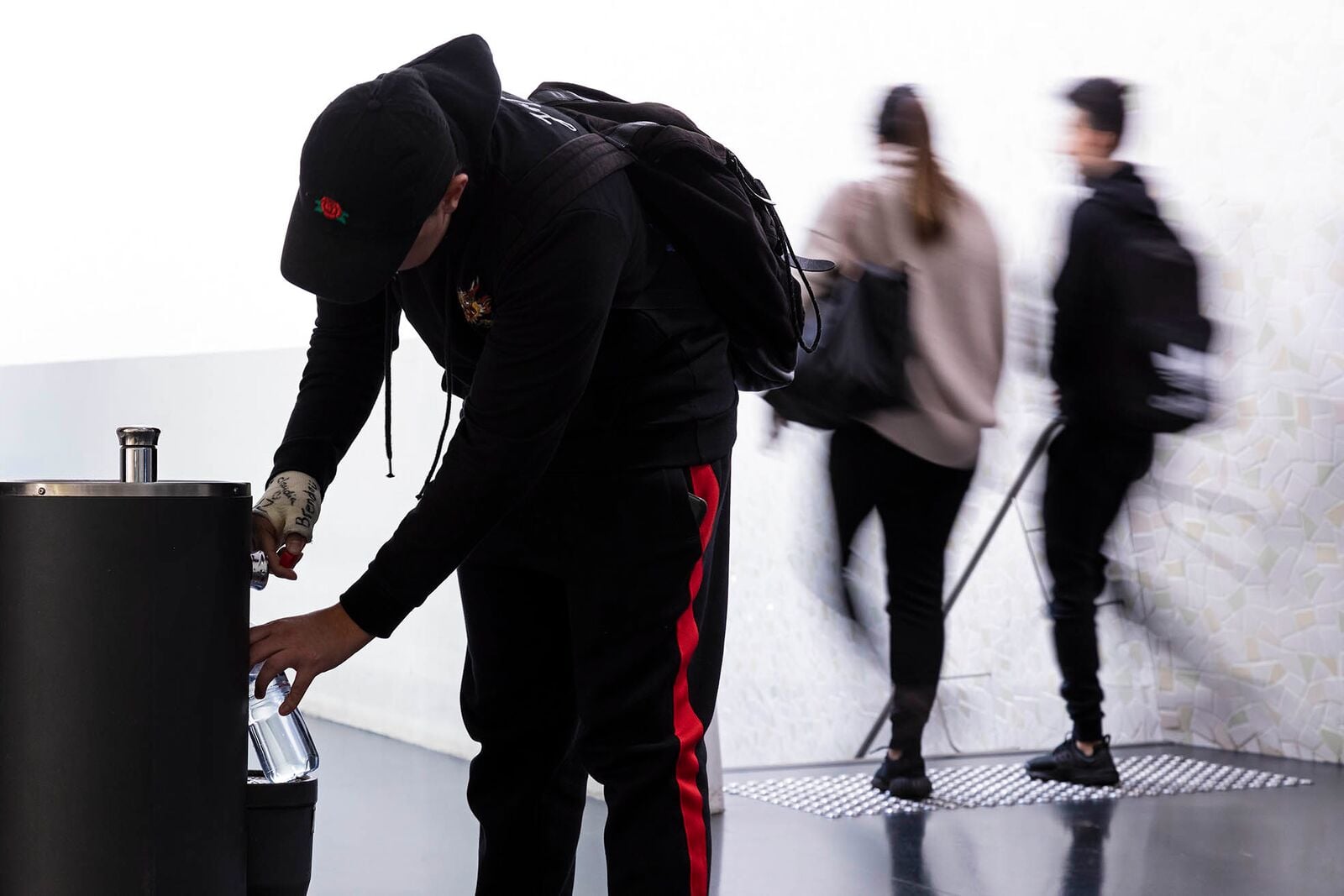
UTS provides free drinking water fountains and bottle refill stations throughout campus to support wellbeing and help reduce the use of single-use plastic bottles.
Providing easy access to drinking water encourages reusable alternatives and supports a more sustainable campus. The Sustainability Vision for the Campus Master Plan identifies universally accessible drinking water fountains and bottle refill facilities as an important component of a sustainable and water-efficient campus.
How you can help
Water refilling stations and drinking fountains have been installed across our campus to make it easy for you to refill your own bottles. By filling your own water bottle you can save money, reduce plastic waste and help reduce oil consumption.
Bring your own bottle and refill at the following places around campus:
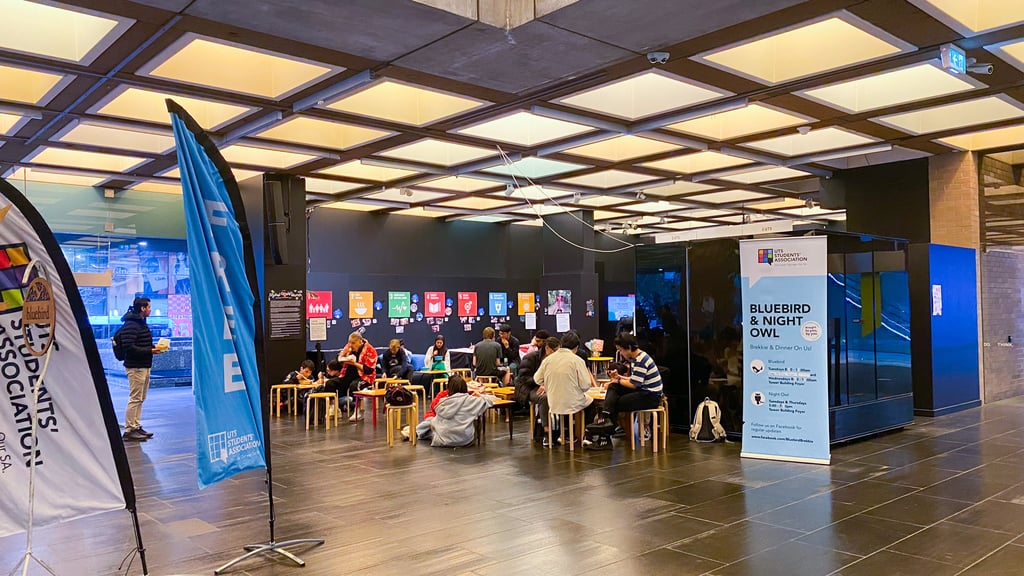
Student food programs and kitchens
UTS and the UTS Students' Association (UTSSA) support a range of programs and facilities that help students access affordable food, reduce waste and stay connected to campus life.
Student kitchens located across campus provide spaces where students can prepare and store food, helping reduce food costs, minimise packaging waste and support healthier eating habits.
UTSSA also provides several initiatives designed to support students experiencing cost-of-living pressures.
-
Bluebird Pantry
Bluebird Pantry helps students access free groceries and essential food items when they need additional support. The service aims to improve food security and reduce financial stress for students.
-
Bluebird Brekkie Bar
Provides free breakfast options to students, helping create opportunities for connection while ensuring students can start their day with access to nutritious food. Bluebird Brekkie Bar was recognised internationally when the initiative received an International Green Gown Award in the Best Student Campaign or Initiative category.
-
Night Noodle Markets
UTSSA's Night Noodle Markets provide opportunities for students to access affordable meals, connect with other members of the UTS community and participate in campus life outside the classroom. Together, these facilities and programs help create a more supportive, inclusive and sustainable campus environment.
How you can help
- Bring reusable containers and drink bottles.
- Use student kitchen facilities where available.
- Support initiatives that reduce food waste.
- Share information about support programs with other students.
Sustainable Retail
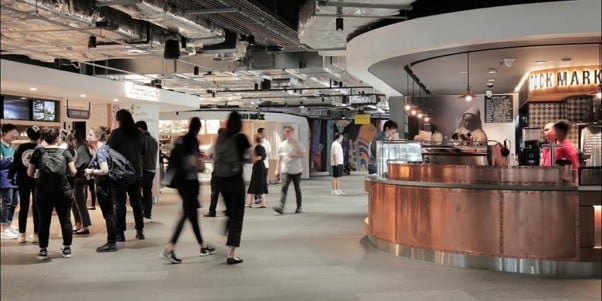
UTS works with retailers and commercial tenants across campus to improve sustainability outcomes and provide a better experience for students, staff and visitors.
The UTS Sustainability Strategy commits to embedding sustainability requirements into commercial and retail leases and improving environmental and social outcomes through campus operations.
Our sustainable retail approach includes:
- Reducing unnecessary single-use items
- Supporting waste separation and recycling
- Promoting responsible sourcing practices
- Encouraging sustainable food and beverage options
- Supporting waste reduction initiatives
Award-winning sustainable retail
UTS Central's plastic-free food court received an International Green Gown Award in recognition of its innovative approach to reducing disposable plastics and improving sustainability outcomes in a busy campus food environment.
What you can do
- Bring your own reusable cup, bottle and containers.
- Choose lower-waste food and beverage options.
- Separate waste correctly.
- Support retailers with sustainable practices.
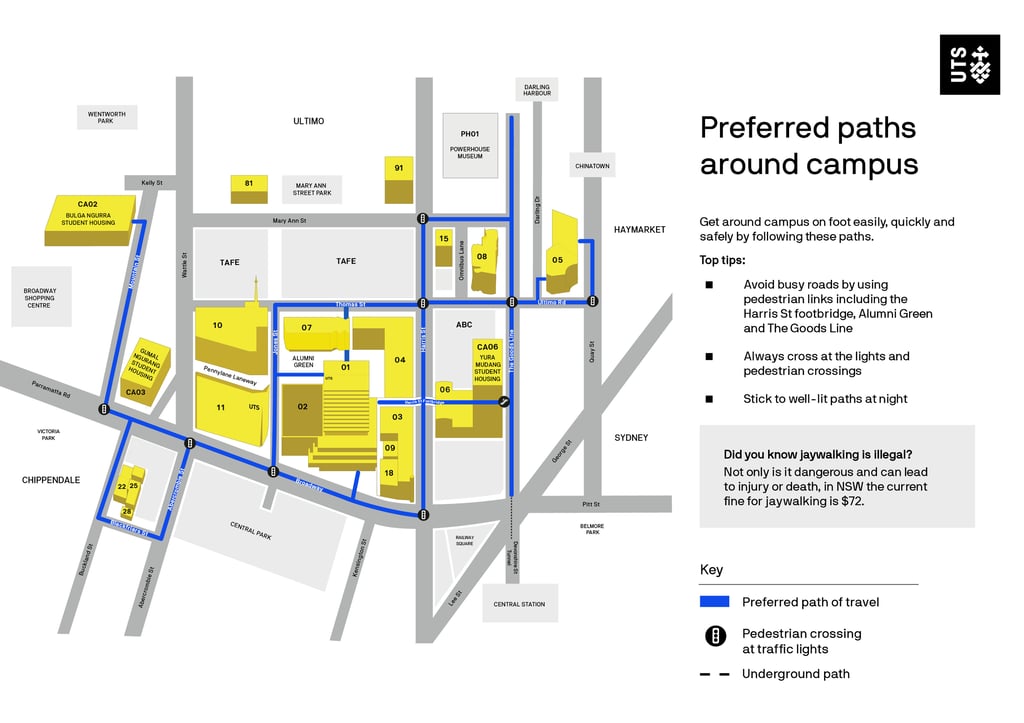
Getting around campus
UTS City Campus is designed to be accessible, well connected and easy to navigate on foot.
Campus buildings are linked through public spaces, pedestrian routes and transport connections that support a vibrant and sustainable university environment. The Sustainability Vision for the Campus Master Plan identifies enhanced mobility, accessible connections and active transport as key priorities for future campus development.
Well-established pedestrian infrastructure and links are provided in and around the UTS City Campus including pedestrian walkways such as the Goods Line and Jones Street which is a designated shared path for pedestrians and cyclists. The Devonshire Street pedestrian tunnel provides connections to and from key public transport facilities as well as between campus buildings. Pedestrian crossings are provided at key intersections.
Sustainable transport
UTS encourages students, staff and visitors to choose sustainable ways of travelling to campus.
Located in the centre of Sydney, UTS is well connected by public transport, walking and cycling routes. Public transport is the key mode of transport to UTS with approximately 83% of students and 72.6% of staff using public transport to travel to the City Campus.
Public transport to UTS is excellent, with the city campus located at Central train and bus interchange, and close to light rail.
UTS has a Sustainable Campus Travel Plan which was informed by a staff and student travel survey in 2023 that measured a number of aspects including commuting modal split. Targets have been set to encourage a shift towards more sustainable and active transport commuting.
Whilst only 12% of staff and 5% of students indicated that they travel to campus by car in the 2023 survey, we have targets to shift towards more sustainable transport modes by improving access, safety, amenity, and convenience for travel to/from and within the UTS campuses and through establishing a culture of active and public transport use. By 2028, we hope to reduce this to 9% of staff and 2% of students.
Car parking at the city campus is very limited and nearby public parking stations are fairly expensive. There are a number of shared pool vehicles for staff use available through Facilities Management.
With approximately 35,000 students and 3000 staff UTS is a major ‘trip generator’ and continually collects and analyses data on travel patterns in an effort to continually improve sustainable transport options for staff, students and visitors.
Supporting sustainable transport helps reduce greenhouse gas emissions, improve wellbeing and create a more people-focused campus environment.
Walking and public transport
Most UTS buildings are within easy walking distance of:
- Central Station
- Haymarket light rail stops
- Major bus routes
- The Goods Line pedestrian corridor
Benefits of sustainable transport:
- Reduce transport emissions
- Improve health and wellbeing
- Save money on commuting costs
- Reduce congestion around campus
Cycling
Cycling is a great way to get to uni! It is healthy, convenient and low-emission way to travel to UTS.
Bike facilities
UTS provides facilities to support staff and students who cycle to campus. Providing quality cycling infrastructure supports active transport and helps make cycling a practical option for travelling to and from campus. There is a maintenance station in the CB10 bike cage.
Facilities include:
- Bicycle parking
- Secure bicycle storage locations
- Showers and change facilities
- Lockers
- End-of-trip facilities in selected buildings
- Access to the secure cage parking and the battery storage cabinets are free for all students and staff. Visit the security office on level 4 of building 1 to activate your student/staff card for access. Also see bike security advice from NSW police.
Before you ride
- Always wear a helmet
- Follow NSW Road rules
- Use lights when riding at night
- Secure your bike with a quality lock
Useful resources