


- Posted on 25 Nov 2025
- 2-minutes read
Representing our excellence in antenna research and design
Dr Lizhao Song of the Global Big Data Technologies Centre (GBDTC) has been awarded a prestigious ARC DECRA grant for 2026 for her project, “Adaptive Multi-Beam Lens Antennas for Future Wireless Communications,” with funding of $505,978. This a clear acknowledgement of her research excellence.
The ARC DECRA scheme delivers focused research support for early researchers, providing an early career researcher with salary and on-costs, as well as project costs of up to $50,000 per year for three years.
The multi-beam antennas in Dr Song’s project play a vital role in providing critical connectivity via mobile networks. Large antenna arrays featuring high gain and multibeam capabilities are essential to meet the demand for faster and more reliable wireless communications. The ability to steer and direct multiple beams is essential to ensure that simultaneous users can access the network efficiently and without interference between users.
Currently, conventional digital methods for generating and steering beams rely heavily on digital signal processing, which requires more power and more costly components. Analogue beam forming is more cost effective and efficient, but these technologies are limited to either generating multiple fixed beams or only one single steerable beam.

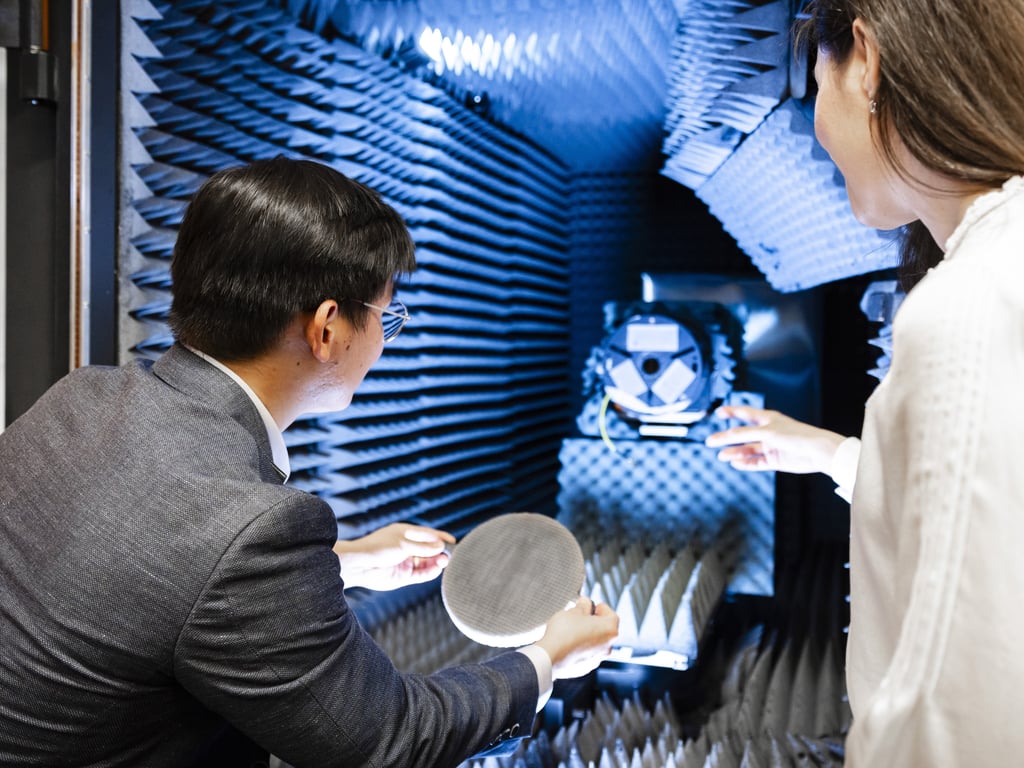
To bridge the technological gap, this project aims to develop an adaptive antenna system which can generate multiple individually steerable, high gain beams to support multiple moving users to receive a reliable mobile signal.
This antenna system is referred to as a low-profile gradient-index (GRIN) lens antenna and by improving the beam shape properties and individual control of the beams, the project aims to create an antenna system with improved speed, capacity and flexibility.
These improvements will unleash the power of 5G and upcoming 6G networks - benefitting industries such as telecommunications, aerospace, and smart cities while improving connectivity in rural and remote areas. The innovation will strengthen Australia’s leadership in wireless technology and drive global advancements in connectivity.
Written by Dr Leesa Smith
Centre Operations Manager, GBDTC

News
Dr Xu Wang recognised at Defence & National Security Workforce Awards 2026
The Global Big Data Technology Centre (GBDTC) recognises the achievement of Dr Xu Wang, who has been named Best Cyber Technician or Specialist Under 35 at the...

News
CASPER AI: the friendly ghost in the machine to keep you safe online
A virtual assistant that applies artificial intelligence to detect, interpret and respond to cybersecurity threats has been publicly unveiled at UTS.
News
The Australian names UTS the country’s top research institution in seven fields
The University of Technology Sydney has been recognised for its leadership in seven research fields of national importance in the 2026 Research magazine...
News
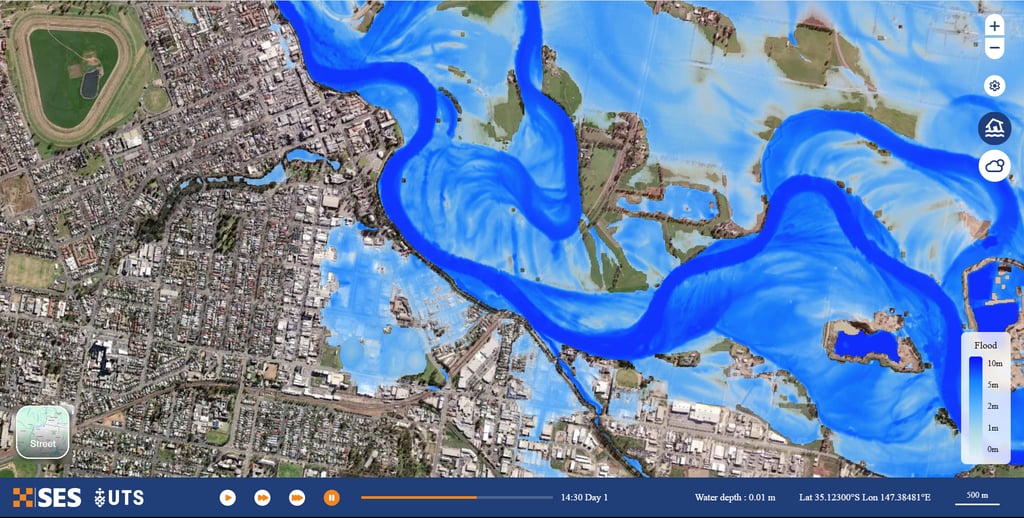
UTS – TPG Telecom Partnership secures $1.3M TDRI Grant
The Digital Twin project, led by GBDTC’s Associate Professor Wenjing Jia, is seeking to develop a cloud-based Disaster Resilience Digital Twin solution for TPG...
News
Dr Xu Wang recognised at Defence & National Security Workforce Awards 2026
The Global Big Data Technology Centre (GBDTC) recognises the achievement of Dr Xu Wang, who has been named Best Cyber Technician or Specialist Under 35 at the...
News
CASPER AI: the friendly ghost in the machine to keep you safe online
A virtual assistant that applies artificial intelligence to detect, interpret and respond to cybersecurity threats has been publicly unveiled at UTS.
News
The Australian names UTS the country’s top research institution in seven fields
The University of Technology Sydney has been recognised for its leadership in seven research fields of national importance in the 2026 Research magazine...
News
UTS – TPG Telecom Partnership secures $1.3M TDRI Grant
The Digital Twin project, led by GBDTC’s Associate Professor Wenjing Jia, is seeking to develop a cloud-based Disaster Resilience Digital Twin solution for TPG...