


- Posted on 19 Nov 2025
- 2-minute read
The University of Technology Sydney has been recognised for its leadership in seven research fields of national importance in the 2026 Research magazine published today in The Australian.
UTS was named as Australia’s top research institution in artificial intelligence, fuzzy systems, multimedia, water supply and treatment, acoustics and sound, electromagnetism and forensic science.
“We welcome this recognition of UTS’s exceptional research and leadership in partnering with industry,” said UTS Vice-Chancellor Professor Andrew Parfitt.
Nine UTS researchers were named as the leaders of their field in the list of Australia’s top 250 researchers in The Australian Research Magazine:
- Economic History – Dr Claire Wright
- Environmental and Geological Engineering – Dr Danial Armaghani
- Multimedia – Professor Min Xu
- Remote Sensing – Distinguished Professor Biswajeet Pradhan
- Water Supply and Treatment – Professor Hokyong Shon
- Alternative and Traditional Medicine – Associate Professor Amie Steel
- Pharmacology and Pharmacy – Associate Professor Kamal Dua
- Atmospheric Sciences – Dr Juergen Knauer
- Electromagnetism – Distinguished Professor Jay Guo
UTS was also ranked one of the top five Australian universities supporting five of the United Nations Sustainable Development Goals: Industry, innovation and infrastructure; Reduced inequalities; Sustainable cities and communities; Responsible consumption and production; and Peace, justice, and strong institutions.
Speaking to Research magazine editor Tim Dodd, Professor Parfitt said it was important that UTS moved beyond just creating the enabling technologies and built networks with the technology users to find solutions.
“UTS is a leader in innovation and partnering with industry to create research with impact for our communities.”
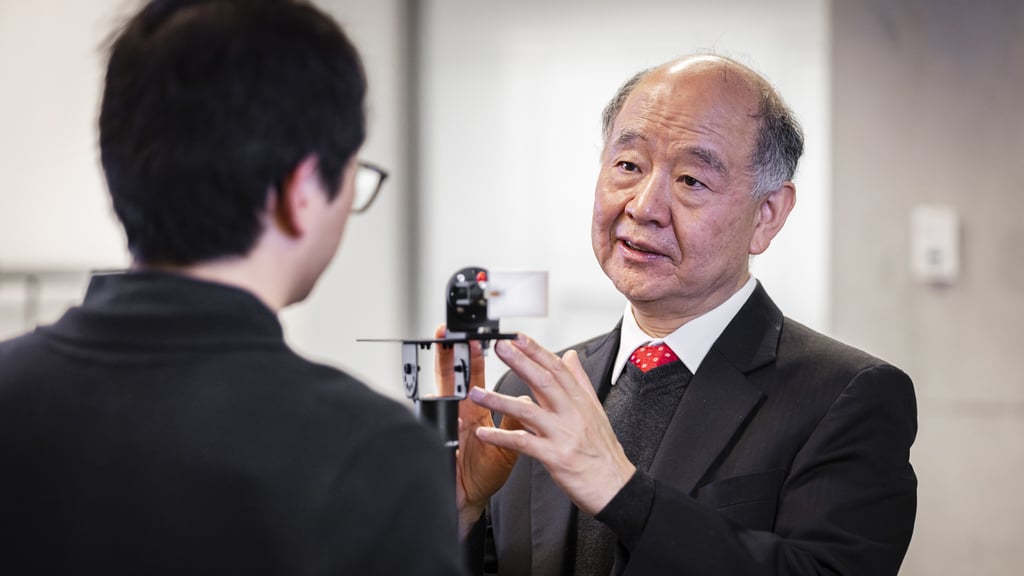
This has been exemplified by the research led by Distinguished Professor Jay Guo to develop an intelligent flood and storm intelligence platform that includes innovative algorithms for rainfall and water level detection. The technology can visualise and predict flooding in a localised and real-time manner.
In an interview for the Research magazine Distinguished Professor Guo said he believed the technology would significantly enhance the resilience of Australia and the world against natural disasters and reduce the economic and societal impacts of climate change.
“In flooding situations, even 10 minutes can mean the difference between life and death as knowing when to evacuate is essential,” he told journalist Carmel Sparke. “Yet the current prediction tools used by SES and other emergency services often lag behind real-time events.”
Distinguished Professor Guo said that in future projects it was planned to enhance the environmental sensing models so the technology would be ready to be used across NSW in the next three to five years.
“Apart from storms and floods, other applications include small traffic management, smart mining, precision agriculture and tsunami,” he said.
This year UTS was first in Australia and 33rd in the world for research citations per faculty in QS World University Rankings and second in Australia and in the top 50 universities in the world for research quality in Times Higher Education World University Rankings.