


Akshaya Parthasarathy’s journey to a thriving career as a data engineer in Sydney shows how bold decisions, practical education and staying true to your passions can transform your future. Her career change began with the Master of Data Science and Innovation (MDSI) at UTS, a program that offered hands-on learning and opened real doors.
Akshaya has always been curious. As a child, her career ambitions changed often, from software engineer to journalist to guitarist. Her mother still laughs about it, but those early shifts revealed something important: she was passionate and determined to follow her dreams.
That curiosity led her to study computer science and engineering, a degree she describes as the gateway to anything in the IT field. In her final-year thesis, she explored data science concepts, learning traditional algorithms by hand and developing a fascination with how data could be used to solve real-world problems.
After graduating, she stepped into a software engineering role in India. It was a natural next step and looked great on paper, but the work didn’t fully engage her. That changed during a company hackathon, where teams were challenged to predict stock price ranges using sample data.
Akshaya, the youngest on her team, naturally took the lead. She explained concepts, guided her teammates and drove the project forward.
“My colleagues noticed I was far more invested in the data work than my usual tasks,” she recalls.
It wasn’t a dramatic turning point, but it was a moment of clarity: “This is the kind of work I really enjoy.”
As time went on, her career began to plateau. She couldn’t see a long-term path that excited her. That realisation prompted her to revisit the field that had once sparked her interest – and take a bold step toward studying data science abroad.
Taking the leap
Akshaya had long dreamed of studying overseas, considering Germany, the US and Australia. However, it was Sydney’s growing reputation as a tech and AI hub, combined with UTS's Master of Data Science and Innovation (MDSI) degree, that made her decision clear.
This was further cemented by the course's alumni: “I was on LinkedIn for maybe a day or two and had already spoken to about three UTS alumni who spoke really highly of the MDSI program,” she says.
The decision to move countries and pursue postgrad study was a big one. It meant abandoning the financial independence and stability she had built in India.
“I was going from being really sorted, with my own place and steady income, to starting from scratch,” she reflects.
“My parents were incredibly supportive, but I definitely had moments of doubt.”
For about a month, she felt “incredibly reckless,” questioning every decision she had made. But as she settled into her studies at UTS, that discomfort transformed into motivation.
Building career-ready skills
The MDSI program quickly lived up to its hype. Classes brought together lecturers actively working in industry and peers with diverse professional experiences. This collaborative environment helped her grow.
“We had lecturers who were still active in their fields, and many students were professionals coming from various walks of life,” says Akshaya.
“We got to collaborate with them and understand the kinds of problems they were working on.”
While technical knowledge was important, the program also developed crucial professional skills.
“Tech skills are always learnable through courses or hands-on experience,” she says.
“But it was my soft skills that really evolved during my time at UTS: project management, people management, critical thinking, being able to present and substantiate my work. These are the skills that help you stand out.”
She gained confidence in her career path and job prospects through the program’s practical focus.
“I was solving actual problems, which meant actual job opportunities when I graduated.”
Real-world impact through iLab
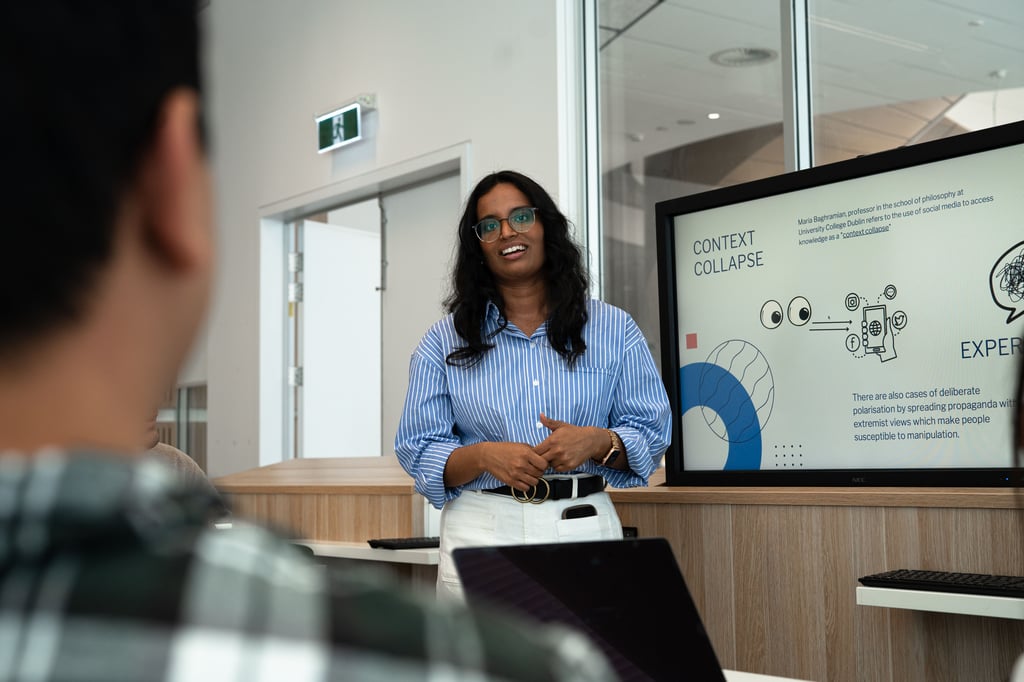
The program's industry-integrated learning component, iLab, gave Akshaya her first taste of meaningful data work. Her team partnered with Australian Payment Plus, an organisation helping people determine if they were receiving correct pay under Australia's complex casual employment regulations.
“It was like an internship within the program, but without having to go through the trials and tribulations of finding one,” she explains.
What started as building a pay calculator evolved into something much bigger.
“Our team was so enthusiastic about it that once we had finished creating the tool, we went on to pitch them an entire marketing campaign for their product. We were taking care of socials, putting together Instagram posts and funny memes on Facebook.”
“By the end of four months, it felt like our baby,” she says.
“The client recognised our effort and awarded us Best Project.”
Outside of iLab, Akshaya also joined a research project at UTS after taking the initiative to share her work on LinkedIn.
“I saw some of my lecturers posting about their projects, so I started sharing my own too,” she says.
“That visibility paid off: I was invited by two of my lecturers to help analyse social media data, looking at how disagreements between experts on issues like masks and vaccinations during COVID influenced public opinion.”
She also participated in the C2 Career Hackathon organised by UTS, where she teamed up with students from other faculties to tackle the challenge of bringing more women into technology. Their winning pitch, MelivaAI, inspired by Salesforce’s EinsteinAI, earned them Best Pitch and an invitation to spend the morning at Salesforce Tower.
“It was incredible – we met inspiring women in solution engineering, saw how people from all walks of life built their careers in tech, and walked away with a real confidence boost,” she says.
“Both of these experiences showed me how much can happen when you step up, share your work and collaborate with others.”

Discovering her true calling
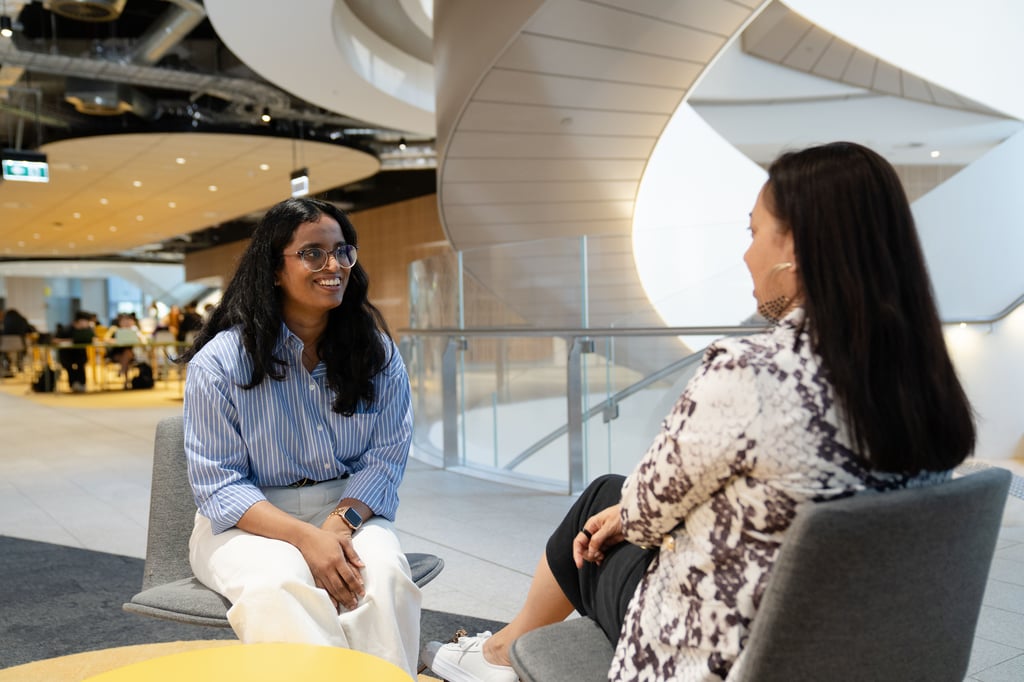
Initially, Akshaya entered the program imagining herself as a data scientist, forecasting market trends and predicting house prices. But one subject changed everything: Data Engineering.
The course showed her that predictive models are only as good as the data behind them.
“We really learnt the meaning of ‘garbage in, garbage out’,” she says.
“We had to work under pressure to solve data problems, and this was before tools like ChatGPT could help.”
“Even through the sleepless nights, the challenge fully activated the problem-solving part of my brain,” she says.
“It made my career goal really specific; this is what I want to be doing. I want to be behind the scenes building pipelines and fixing things.”
She created projects within the subject that still feature in her portfolio and landed a part-time role while studying, which led to full-time work.
Building a career with purpose
Today, Akshaya thrives as a data engineering consultant, working with clients ranging from large corporations to not-for-profit organisations. The variety keeps her engaged, and she explains, “no two data problems are ever the same.”
However, it's the impact of her work that really drives her: “It's good to know that the work you're doing has a ripple effect – it’s data for good.”
“Sometimes I work with not-for-profits where data is critical to their operations. Helping them become more efficient means helping the people they serve.”
Looking ahead, Akshaya aspires to become a solution architect, someone who can assess any data challenge and design the perfect end-to-end solution.
Perhaps most fitting, Akshaya has found a way to incorporate all her childhood dreams into her adult life. Data engineering fills her professional hours, but she co-hosts a podcast exploring early career journeys of women in tech, satisfying that journalistic curiosity that emerged in her teens.
“I guess that's one of the best things about being an adult,” she reflects.
“You can use the time outside your nine-to-five for creative pursuits.”
Akshaya's journey proves that trusting your instincts, taking that risk and betting on yourself can lead to the most rewarding outcomes.

Webpage
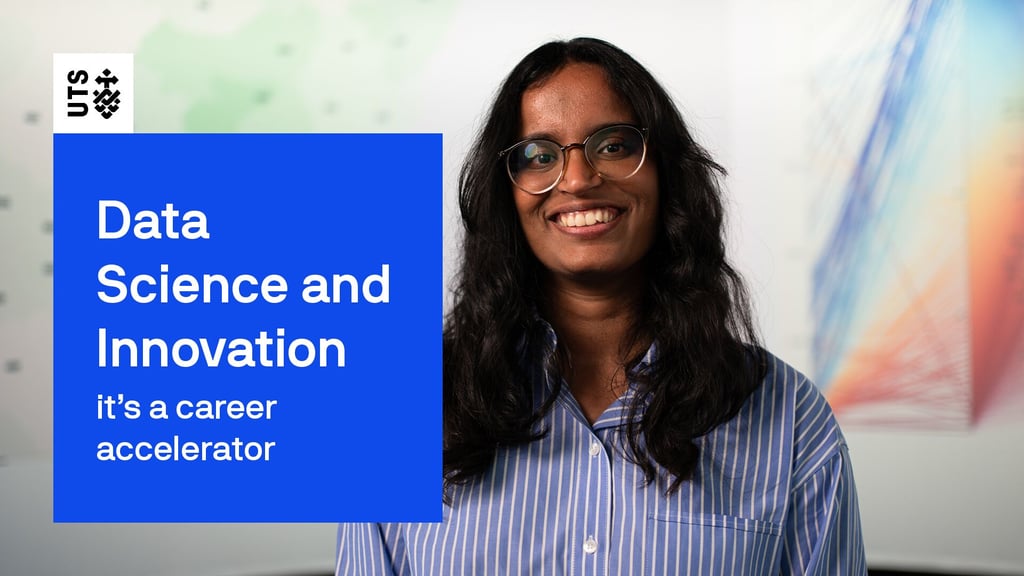
Five tips to land a job before you graduate
What if your career could start before you finish your degree? UTS graduate Akshaya Parthasarathy shares the five tips that helped her turn university...
Webpage
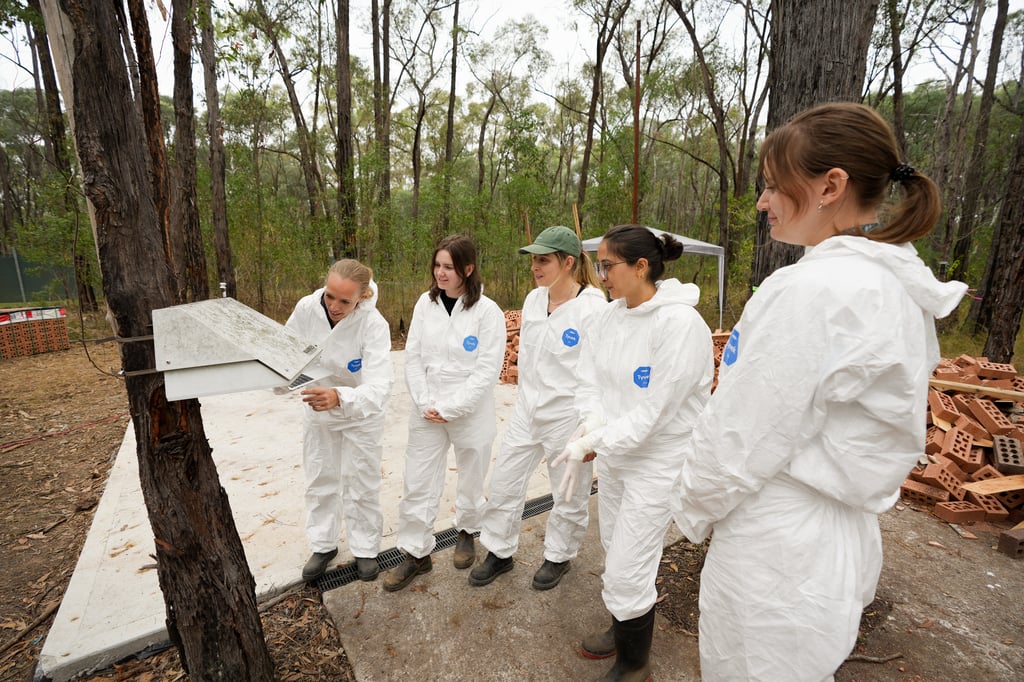
How UTS research students are advancing forensic science
At a research facility in the outskirts of Sydney, UTS students are studying what happens to the human body after death – and applying that knowledge to some...

Webpage
Here's why supply chain analysts have never been more critical
Associate Professor Sanjoy Paul tells us what’s changed in global supply chains – and why analysts now play a critical role.

Webpage
Climate solutions need diverse skills. Here’s what matters most.
Solving climate challenges needs more than technical expertise. Sustainability researcher Alex Baumber shares the 6 core skills you need to shape climate work.
Webpage
Five tips to land a job before you graduate
What if your career could start before you finish your degree? UTS graduate Akshaya Parthasarathy shares the five tips that helped her turn university...
Webpage
How UTS research students are advancing forensic science
At a research facility in the outskirts of Sydney, UTS students are studying what happens to the human body after death – and applying that knowledge to some...
Webpage
Here's why supply chain analysts have never been more critical
Associate Professor Sanjoy Paul tells us what’s changed in global supply chains – and why analysts now play a critical role.
Webpage
Climate solutions need diverse skills. Here’s what matters most.
Solving climate challenges needs more than technical expertise. Sustainability researcher Alex Baumber shares the 6 core skills you need to shape climate work.