


Creative graduates who can thrive within complex and uncertain environments and tackle challenges across disciplines, fields and industries are transforming contemporary workplaces.
Creative intelligence is the ability to reframe and tackle challenges through many disciplinary lenses, explore untapped possibilities and drive positive change.
“It’s about the breadth and depth of creativity across and beyond and between disciplines. It’s not just creativity confined to the arts; it’s a way of seeing and being that becomes transformative for students, and the systems they have impact on,” says Professor Bem Le Hunte, the founding director of the Bachelor of Creative Intelligence and Innovation (BCII) at the University of Technology Sydney (UTS).
Now more than ever, creative intelligence is in demand in workplaces across the globe - according to the World Economic Forum’s Future of Jobs Survey, creative and analytical thinking are a top priority for future talent.
That’s because problems are becoming ever-more complex, meaning they can no longer be solved using traditional methods. Instead, organisations are addressing the questions that impact our lives, from the small issues (such as dysfunction at work) to global challenges in more collaborative and innovative ways.

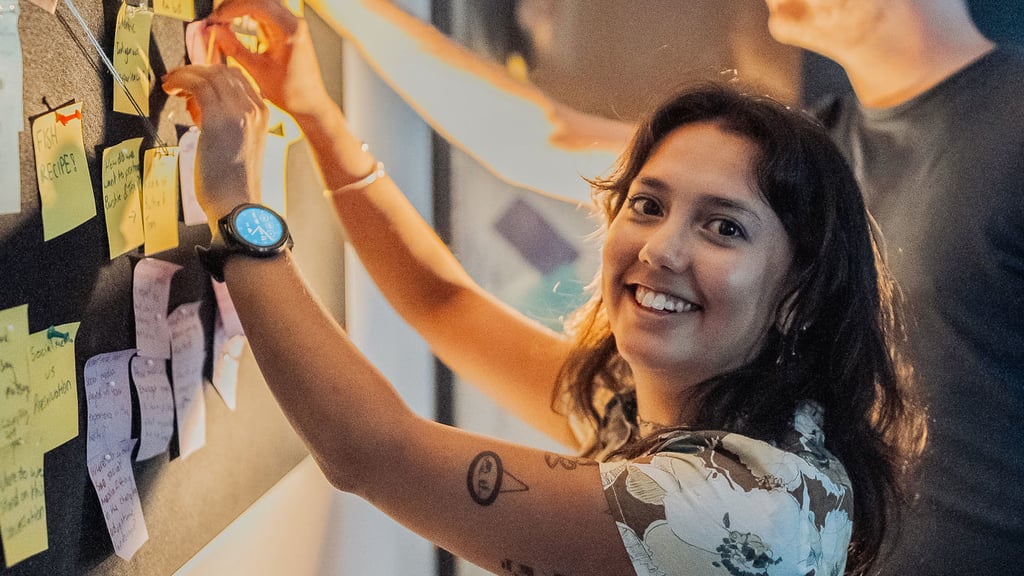
In the degree, as in the real-world, collaboration is key. Students learn to involve diverse stakeholder, industry and disciplinary perspectives. The course brings students together from across 26 different UTS course areas: engineers work with marketers, scientists with journalists, lawyers with designers.
In this way, they learn radical collaboration and the ability to connect with knowledges, perspectives and creative practices of disciplines well beyond their own.
A method to the madness
That’s not to say that creative intelligence is a free-form practice that produces wild, untested solutions. Instead, the BCII is built on a series of verified, multi-award-winning practices that challenge students to examine problems in ways that surface novel possibilities.
Examples include:
- Systems thinking: Looking at the component parts of a system to understand their interactions and relationships as part of a whole.
- Futures thinking: Leveraging foresight methodologies and uncertainty to navigate towards more desirable futures.
- Reframing: Looking at a problem from different perspectives to better define/understand it.
- Sense making: Building a shared understanding of complexity or uncertainty to enable effective decision making.
- Ignorance mapping: Identifying and navigating the potential for discovery according to what is known about an innovation context.
- Entrepreneurial impact: Understanding how change happens in the innovation ecosystem.
A major focus of the course is teaching students to spend time defining and exploring the challenges and contexts they encounter, rather than immediately starting to find solutions.

“It was transformative in helping me identify whether a problem was simple, complicated, complex, chaotic or dysfunctional. Being able to identify the type of problem you’re dealing with can reduce the risks associated with implementing an intervention”
Graduate Emma Moy
Expert Support Consultant at HKA
Creative intelligence in action
Collectively, this industry-integrated learning approach prepares BCII students to apply their creative intelligence capabilities to the sorts of real-world problems they’re likely to encounter in future roles. Creative intelligence isn’t a job but rather a set of skills that can be applied to any role in any industry.
For employers, creative intelligence offers a new way of approaching business, social and other problems that shape their organisations. It’s why industry organisations are flocking to partner with the BCII through live briefs, internships and other engagement opportunities that give them access to students’ skills.
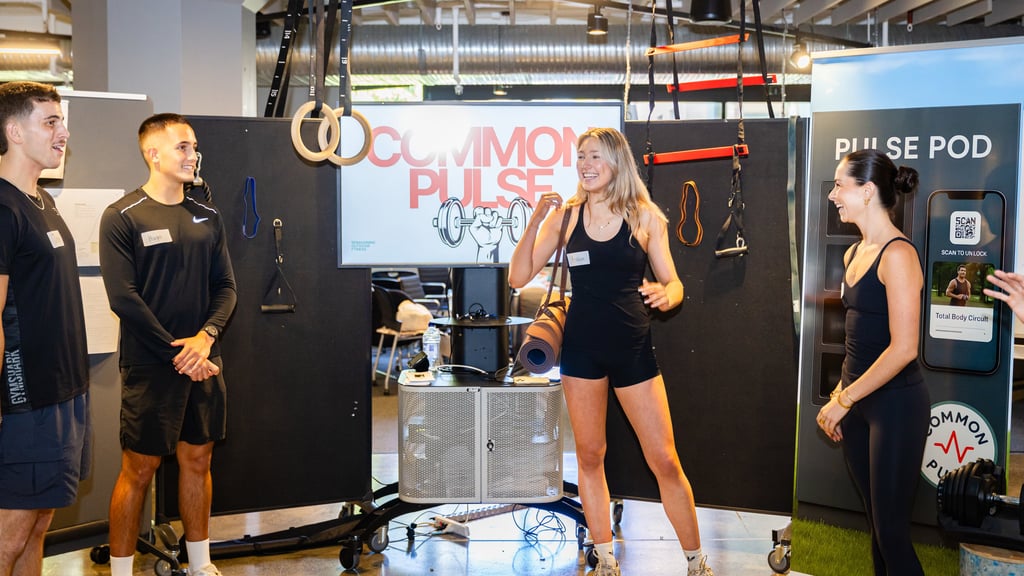
It’s no surprise that BCII graduates have an employability rate of around 95%, among the highest of all UTS degrees. Elsewhere, industry engagement opportunities are a chance for students to learn professional practice skills, but in the BCII, that learning goes both ways.
“Their diverse skillsets enhanced our own approach to problem-solving, generating serious momentum on projects and making a difference in the lives of people who are blind or have low vision,” says Taliah Duggan-Harper, the Access and Technology Advisor for BCII partner Guide Dogs NSW/ACT.
“Our experience has been testament to the value of innovation skills to any discipline or industry.”

Designing a creative urban future
Awkar Ruel has creativity running through his veins. From a young age, he wanted to be an architect, working in a profession where he could bring the drawings...

Innovation for the greater good
Kirah Godsell was always going to change the world, but it wasn’t until she enrolled at the University of Technology Sydney (UTS) that she figured out how.

One degree, multiple paths to a data science career
One of the most valuable aspects of the Master of Data Science and Innovation is that graduates emerge with the skills to work in multiple industries.

Transdisciplinary Learning: Why It Matters in Education and the Future Workforce
Discover what transdisciplinary learning is, why it matters, and how it builds adaptable skills for solving complex real-world challenges.
Designing a creative urban future
Awkar Ruel has creativity running through his veins. From a young age, he wanted to be an architect, working in a profession where he could bring the drawings...
Innovation for the greater good
Kirah Godsell was always going to change the world, but it wasn’t until she enrolled at the University of Technology Sydney (UTS) that she figured out how.
One degree, multiple paths to a data science career
One of the most valuable aspects of the Master of Data Science and Innovation is that graduates emerge with the skills to work in multiple industries.
Transdisciplinary Learning: Why It Matters in Education and the Future Workforce
Discover what transdisciplinary learning is, why it matters, and how it builds adaptable skills for solving complex real-world challenges.