• University of Technology Sydney home
  • Home

    Home
  • For students

  • For industry

  • Research

Explore

  • Courses
  • Events
  • News
  • Stories
  • People

For you

  • Libraryarrow_right_alt
  • Staffarrow_right_alt
  • Alumniarrow_right_alt
  • Current studentsarrow_right_alt
  • Study at UTS

    • arrow_right_alt Find a course
    • arrow_right_alt Course areas
    • arrow_right_alt Undergraduate students
    • arrow_right_alt Postgraduate students
    • arrow_right_alt Research Masters and PhD
    • arrow_right_alt Online study and short courses
  • Student information

    • arrow_right_alt Current students
    • arrow_right_alt New UTS students
    • arrow_right_alt Graduates (Alumni)
    • arrow_right_alt High school students
    • arrow_right_alt Indigenous students
    • arrow_right_alt International students
  • Admissions

    • arrow_right_alt How to apply
    • arrow_right_alt Entry pathways
    • arrow_right_alt Eligibility
arrow_right_altVisit our hub for students

For you

  • Libraryarrow_right_alt
  • Staffarrow_right_alt
  • Alumniarrow_right_alt
  • Current studentsarrow_right_alt

POPULAR LINKS

  • Apply for a coursearrow_right_alt
  • Current studentsarrow_right_alt
  • Scholarshipsarrow_right_alt
  • Featured industries

    • arrow_right_alt Agriculture and food
    • arrow_right_alt Defence and space
    • arrow_right_alt Energy and transport
    • arrow_right_alt Government and policy
    • arrow_right_alt Health and medical
    • arrow_right_alt Corporate training
  • Explore

    • arrow_right_alt Tech Central
    • arrow_right_alt Case studies
    • arrow_right_alt Research
arrow_right_altVisit our hub for industry

For you

  • Libraryarrow_right_alt
  • Staffarrow_right_alt
  • Alumniarrow_right_alt
  • Current studentsarrow_right_alt

POPULAR LINKS

  • Find a UTS expertarrow_right_alt
  • Partner with usarrow_right_alt
  • Explore

    • arrow_right_alt Explore our research
    • arrow_right_alt Research centres and institutes
    • arrow_right_alt Graduate research
    • arrow_right_alt Research partnerships
arrow_right_altVisit our hub for research

For you

  • Libraryarrow_right_alt
  • Staffarrow_right_alt
  • Alumniarrow_right_alt
  • Current studentsarrow_right_alt

POPULAR LINKS

  • Find a UTS expertarrow_right_alt
  • Research centres and institutesarrow_right_alt
  • University of Technology Sydney home
University of Technology Sydney home University of Technology Sydney home
  1. ... About UTS
  2. ... Information on Faculties...
  3. ... UTS Business School
  4. ... Our research
  5. Centre for Climate Risk ...
  6. Publications and case studies

Publications and case studies

explore
  • Our research
    • Centre for Indigenous People and Work (CIPW)
      • arrow_forward Gari Yala (Speak the Truth)
    • Centre for Behavioural Science and Policy Design
      • arrow_forward About the Centre for Behavioural Science and Design Policy
      • arrow_forward Contact the Centre
      • arrow_forward Our research
    • Centre for Business Intelligence and Data Analytics
      • arrow_forward Solutions and capabilities
      • arrow_forward News
      • arrow_forward About us
      • arrow_forward Reports
      • arrow_forward Our research
      • arrow_forward Contact Business Intelligence and Data Analytics Centre
    • Centre for Climate Risk and Resilience
      • arrow_forward About us
      • arrow_forward News and events
      • arrow_forward Publications and case studies
      • arrow_forward Our research
    • Centre for Sport, Business and Society
      • arrow_forward About us
      • arrow_forward Contact us
      • arrow_forward Learning
      • arrow_forward CSBS news and media
      • arrow_forward Solutions and capabilities
      • arrow_forward Our research
    • Change for Good at UTS
      • arrow_forward About us
      • arrow_forward Our people
      • arrow_forward Our research
    • Domestic and family violence impacts
      • arrow_forward The impacts of domestic and family violence
      • arrow_forward Important resources
    • arrow_forward Our research focus
    • Research with impact
      • arrow_forward Big data and better health
      • arrow_forward Helping businesses understand and respect Indigenous rights
      • arrow_forward Hey Siri, how persuasive is AI?
      • arrow_forward Indigenous consumers deserve better from financial services
      • arrow_forward New system could improve school choice
      • arrow_forward Roadmap charts the way to a sustainable future
      • arrow_forward Secretive targets for CEO bonuses signal poor performance
      • arrow_forward Sex, drugs and bitcoin
      • arrow_forward A simple question helps avoid a rash decision
      • arrow_forward Study of entrepreneurs with disability smashes stereotypes
    • UTS Behavioural Lab
      • arrow_forward About the UTS Behavioural Lab
      • arrow_forward Our people
      • arrow_forward Our research
      • arrow_forward Our teaching
    • Economics current PhD students
      • arrow_forward Aleksandra Erakhtina
      • arrow_forward Bowei Shi
      • arrow_forward Carter, Christopher
      • arrow_forward Cong Tao
      • arrow_forward Donglai Luo
      • arrow_forward Gan Xu
      • arrow_forward Hongbo Guo
      • arrow_forward Iñigo De Juan Razquin
      • arrow_forward Jianhua Li
      • arrow_forward Liqing Chen
      • arrow_forward Lucca Buonamano
      • arrow_forward Maruf Ahmed
      • arrow_forward Simin Tao
      • arrow_forward Tan Dat Huynh
      • arrow_forward Tiannan Gao
      • arrow_forward Tsadkan Gebreyesus
      • arrow_forward William Huang
      • arrow_forward Yujiao Li
      • arrow_forward Initial placement of PhD graduates
      • arrow_forward Current Job Market Candidates
    • Accounting current PhD students
      • arrow_forward Accounting PHD graduate stories
    • Finance current PhD students
      • arrow_forward Anurag Soin
      • arrow_forward Atiqur Rahman Rasel
      • arrow_forward Clare Nickson-Havens
      • arrow_forward Connor Arthur
      • arrow_forward Franziska Gmeiner
      • arrow_forward Fredy Pulga
      • arrow_forward Giles Gunesekera OAM
      • arrow_forward Haritha V H
      • arrow_forward Jianxing Ma
      • arrow_forward Khanh Nguyen
      • arrow_forward Luke Johnson
      • arrow_forward Madeline Hamilton Combe
      • arrow_forward Maximilian Brandl
      • arrow_forward Mohammad Hadi Sehatpour
      • arrow_forward Ngoc Phuong Anh Nguyen
      • arrow_forward Nikesh Lalchandani
      • arrow_forward Past students
      • arrow_forward PhD prizes and scholarships
      • arrow_forward PhD publications
      • arrow_forward Staff available to supervise
      • arrow_forward Su (Frances) Liu
      • arrow_forward Tra Nguyen
      • arrow_forward Vladislav Pyzhov
      • arrow_forward Xiaoxi Zhang
      • arrow_forward Yifeng Xu
      • arrow_forward Zechu (Jason) Liu
      • arrow_forward Ziqian (Niki) Li
Hands holding a lit up globe with environmental symbols

At the Centre for Climate Risk and Resilience we provide evidenced-based research to decision-makers to meet the needs of businesses, industry and the government.

Our publications

CCRR working paper series

Constrain equilibrium climate sensitivity via composite likelihood

Li, M., & Cummins, D. (2024). Constrain equilibrium climate sensitivity via composite likelihood. Working Paper No. 2024/1. Centre for Climate Risk and Resilience, UTS Business School. University of Technology, Sydney 

Short- and Long-term effects of key drivers in China’s Natural Gas market

Li, M., Sung, J., Shi, X. & Teske, S. (2024). Short- and Long-term effects of key drivers in China’s Natural Gas market. Working Paper No. 2024/2. Centre for Climate Risk and Resilience, UTS Business School. University of Technology, Sydney

A hybrid SARIMAX-LSTM model optimised by ANN for near-term forecasting: An application to China’s Natural Gas consumption

Li, M., Sung, J  Shi, X  Teske, S. (2025). A hybrid SARIMAX-LSTM model optimised by ANN for near-term forecasting: An application to China’s Natural Gas consumption. Working Paper No. 2025/1. Centre for Climate Risk and Resilience, UTS Business School. University of Technology, Sydney

Our research case studies

Climate Risk Disclosure: Measures for Best Practice

Financial graphs

The financial risks of climate change are becoming of increasing concern to firms, investors and financial markets. 

This project, funded by the Australian Research Council (ARC) Linkage scheme, is a multi-university collaboration in conjunction with the Australian Accounting Standards Board and the Auditing and Assurance Standards Board.

As part of this project, we investigate how firms should disclose the impact of climate-related risk on financial statements, the contribution of their own activities to climate risk and a best practice set of quantifiable metrics that can be assured by auditors.

The project offers insights into current best-practice evidence. Findings will enable firms to have direction in assessing and reporting the risks of climate change, and it will provide direction to accounting and audit professionals in their efforts to verify and assure financial reports.

An ARC Linkage Project

Creating Sustainability-Oriented FinTech Lending Platforms

Women holding credit card and typing details into computer

Our innovative work at the intersection of FinTech (short for ‘financial technology’) and sustainability examines how the best of both worlds can be combined to create sustainability-oriented FinTech lending platforms.

FinTech lending is one of the many areas within FinTech and allows customers to access credit through their computer or smartphone, instead of visiting a bank. 

Lending decisions are facilitated by technology that uses alternative data sources for purposes of screening and monitoring of borrowers.

We investigate how FinTech lending companies can use customers' environmental information to access their creditworthiness, and whether lending decisions based on environmental information can promote pro-environmental behaviour. Project outcomes will provide insights into how the societal transformation towards a low-carbon economy can be supported through technology.

Intersection of financial technology and sustainability

Physical Risks and Transition Risks

Sunset over field with wind turbines and solar panels

CCRR is helping businesses adapt to the physical and transition risk brought on by climate change.

The Task Force on Climate-Related Financial Disclosures (TCFD) identifies physical risks and transition risks as major risk categories resulting from climate change. 

Physical risks result from slow-onset changes (e.g., sea level rise) as well as acute changes due to the increased frequency and/or severity of weather and climate extremes.

Transition risks include risks resulting from the transition to a low-carbon economy and can include the risk of stranded assets.

Our research focuses on understanding how business can adapt to these changes. We evaluate the location-specific impacts of climate change, costs and benefits of adaptation and assess the adaptation and resilience of companies and industries in various sectors. 

We have undertaken work in various sectors, including the energy and agricultural sectors in Australia.

Adapting businesses to these climate changes


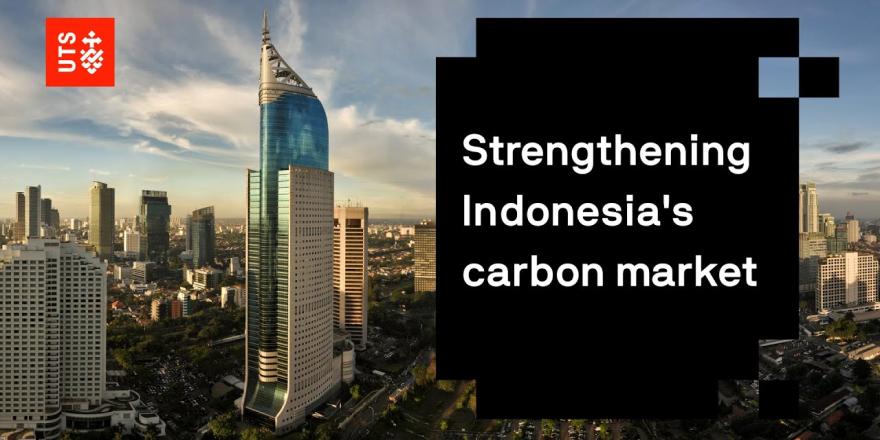
Caption: UTS Business School: Capacity Development for Indonesia’s Carbon Market

Caption: Centre for Climate Risk and Resilience teamed up with the Centre of Accounting and Development at Universitas Indonesia.

Caption: Their goal was to strengthen the development of a carbon market in Indonesia.

Both Australia and Indonesia face very significant challenges around decarbonisation, and both countries are very carbon-intensive. Essentially, both countries need to work out how we can decarbonise - and how we can decarbonise quickly. 

Caption: Central to their strategy is collaborating with local industry and stakeholders.

There are a number of really essential pillars that need to be in place for a successful carbon policy - a successful carbon market to be in place. There needs to be very strong institutional commitment to it; very strong policy commitment. 

What we also really need are localised solutions. And I think this is where, really, this project was so successful, because we were able to directly engage with stakeholders on the ground, who were directly able to talk to market participants and to build those connections - also between academia, industry and policy makers as well - which really showed us, the breadth of the expertise that we've got in place, but also, all the different solutions that we already know about, how they could potentially be implemented.

Caption: Without a decarbonisation plan, businesses face exposure to direct climate risks, transitional risks, and changing consumer expectations.

The project developed information on key mechanisms such as carbon taxation, carbon policy, emissions trading schemes. And these are terms not everyone is automatically familiar with. So what we were trying to do in the first instance is to make sure that, there was sufficient information available for how carbon taxation works - what does that mean for companies? What does that mean for certain industries? How carbon trading products and how companies can trade carbon certificates, for instance, how carbon markets can be designed in a way that this trading mechanism is set up. 

Caption: For further information, contact ccrr@uts.edu.au

This was without a doubt, a fantastic study to be involved with, and it would not have been possible without the support of the Australia Indonesia Institute.

Caption: The Centre for Climate Risk and Resilience at UTS and the Centre of Accounting and Development at Universitas Indonesia acknowledge funding from the Australia-Indonesia Institute. 

Logo and caption: UTS logo © University of Technology Sydney
CRICOS 00099F
TEQSA PRV12060


Our impact case studies

The life journey of an average receipt 

Would you like a receipt? Across the globe this phrase is heard daily, following each purchase no matter how big or small. This research project explores the environmental impact behind this question – comparing the immediate impacts of an average paper receipt versus a digital alternative.

Read more about this case study

Helping small and medium size businesses decarbonise

UTS, in partnership with Unilever, Foodbuy, Scotpac, Origin Zero, ASBFEO, John Holland and AI Group are embarking on an interdisciplinary project to help Australia’s small and medium size businesses decarbonise. 

Read more about this case study

Business cycle and long-run implications of increasing heat stress

What do the increasing temperatures caused by climate change mean for businesses? This research explores the economic cost of heat stress and its impact on labour capacity – aiming to contribute to the design of the best working restriction schedules under heat stress.

Read more about this case study

Assessing the impact of climate policy commitments on global financial markets

As more countries commit to net zero, climate policies are reshaping global financial markets. Our research explores how one nation’s climate action can ripple across borders—helping policymakers and investors navigate the economic risks of the low-carbon transition.

Read more about this case study

Achieving net-zero goals for corporations: Developing an evidenced-based decision-making and benchmarking tool

Australia has established mandatory climate-related financial disclosure standards for companies to align with major international developments. This research supports the development of an innovative decision-making tool to promote the achievement of science-based targets and net-zero goals.

Read more about this case study

CONTACT CCRR

Get in touch to talk with us about our goals and research, partnering with us, working with us and opportunities for collaboration.

Email us at CCRR@uts.edu.au

Acknowledgement of Country

UTS acknowledges the Gadigal people of the Eora Nation, the Boorooberongal people of the Dharug Nation, the Bidiagal people and the Gamaygal people upon whose ancestral lands our university stands. We would also like to pay respect to the Elders both past and present, acknowledging them as the traditional custodians of knowledge for these lands.

University of Technology Sydney

City Campus

15 Broadway, Ultimo, NSW 2007

Get in touch with UTS

Follow us

  • Instagram
  • LinkedIn
  • YouTube
  • TikTok
  • Facebook
  • WeChat

A member of

  • Australian Technology Network
Use arrow keys to navigate within each column of links. Press Tab to move between columns.

Study

  • Find a course
  • Undergraduate
  • Postgraduate
  • How to apply
  • Scholarships and prizes
  • International students
  • Campus maps
  • Accommodation

Engage

  • Find an expert
  • Industry
  • News
  • Events
  • Experience UTS
  • Research
  • Stories
  • Alumni

About

  • Who we are
  • Faculties
  • Learning and teaching
  • Sustainability
  • Initiatives
  • Equity, diversity and inclusion
  • Campus and locations
  • Awards and rankings
  • Leadership and governance

Staff and students

  • Current students
  • Help and support
  • Library
  • Policies
  • StaffConnect
  • Working at UTS
  • UTS Handbook
  • Contact us
  • Copyright © 2025
  • ABN: 77 257 686 961
  • CRICOS provider number: 00099F
  • TEQSA provider number: PRV12060
  • TEQSA category: Australian University
  • Privacy
  • Copyright
  • Disclaimer
  • Accessibility