


Infrastructure robots are poised to help build and maintain our cities. Right now, they're hard at work on construction sites, on top of bridges, and in sewers deep underground.
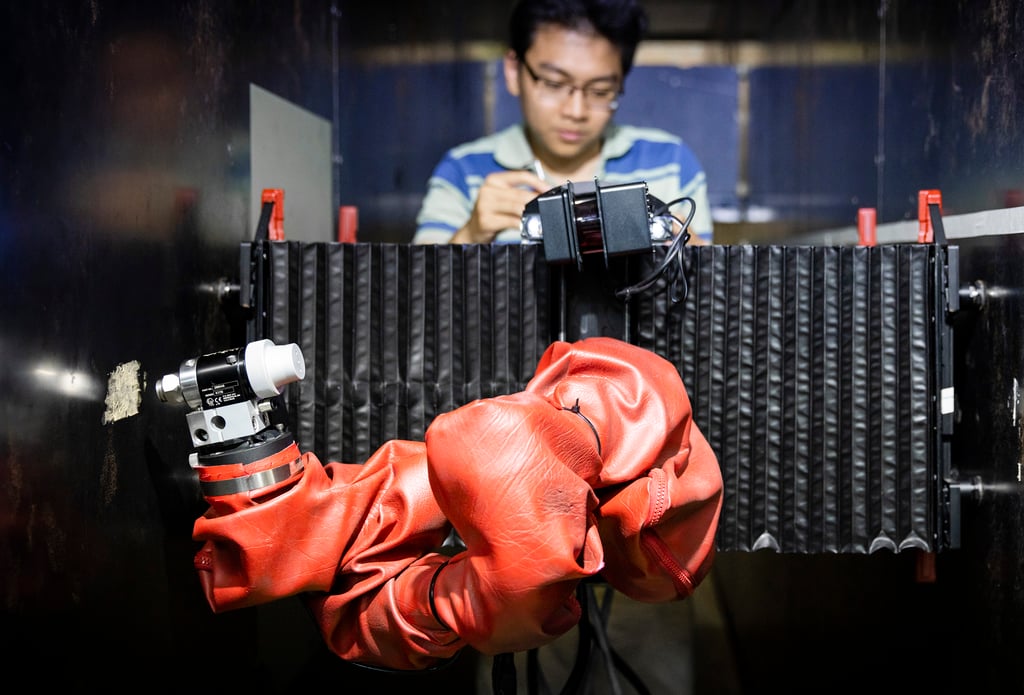
For several years, Rosie and Sandy worked in the maintenance department of the iconic Sydney Harbour Bridge. They took on the hard and dangerous job of blasting old paint and rust off the “coathanger”.
Only the pair aren’t human workers, they’re 25kg autonomous robots developed at the UTS Robotics Institute working in partnership with Transport for NSW.
“Grit blasting in bridge maintenance can be deadly, dangerous and dirty. There’s a lot of lead-based paint that people shouldn’t be inhaling,” said Distinguished Professor Dikai Liu, the mastermind behind the robots.
“Blasting guns are powerful and difficult to hold. When people use them for long periods of time, they often develop back pain. The work is extremely challenging for people.”
Featured researchers

Distinguished Professor Dikai Liu
Strategic Research Director, UTS Robotics Institute
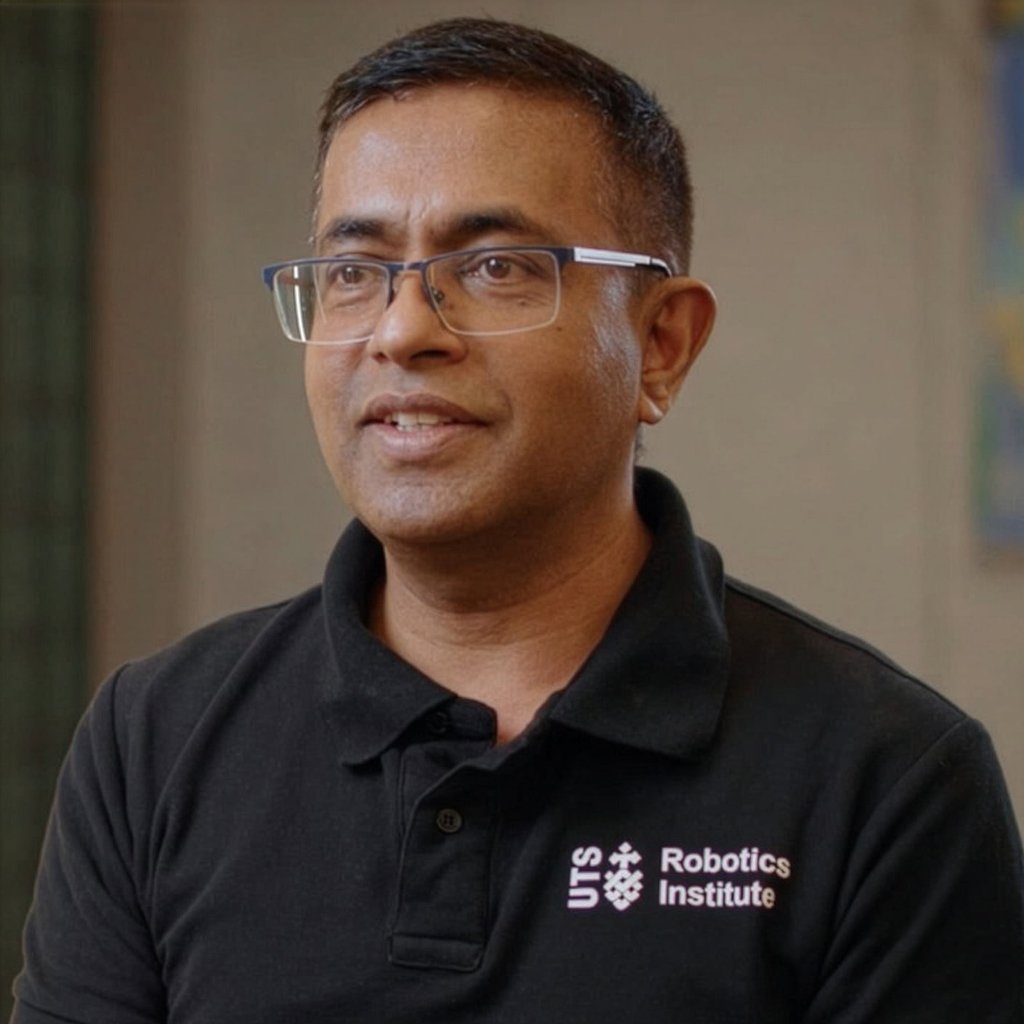
Director, UTS Robotics Institute
Not so for robots. Rosie and Sandy used sensors to navigate the complex bridge structure, created 3D maps of their surroundings, moved into position and then, when a human operator pressed the “blast” button, methodically stripped paint.
Another type of infrastructure robot used on the bridge – the climbing robot caterpillar – was inspired by movement of the inchworm to traverse hard-to-reach spaces and also underwent field trials.
“With Transport for NSW, we built three robots for maintaining the Harbor Bridge. What they were looking for was technology to improve the work condition and improve the safety of their human workers,” Professor Liu says.
The grit-blasting robots we developed for the Sydney Harbour Bridge were the first of their kind in the world. Even though they were deployed more than decade ago, the technology in them is still very advanced.
Distinguished Professor Dikai Liu
These are just one family of robots that have been developed by the pioneering experts at the UTS Robotics Institute.
With more than two decades working at the forefront of the emerging field, Liu wrote the book on infrastructure robotics.
“Infrastructure construction and maintenance can be very expensive and projects can face many obstacles. Labour shortages are a huge issue for the entire industry,” he explains.
“Our industry partners are looking for technology that can improve working conditions and address many the safety issues they face.”
The UTS Robotics Institute has made a name for itself designing robotics – and the advanced artificial intelligence that sits behind them.
These robots operate in complex, extreme environments from the heights of the Harbour Bridge to underwater depths such as to maintain bridges and wharfs.
“We’re one of the top robotics groups in the world. Our approach is human-centred. We design robots that will help people do things better,” says Professor Sarath Kodagoda, who heads up the institute.
Dirty jobs done real deep
Kodagoda and his team have spent the past decade working with Sydney Water to build robots that can potentially inspect hundreds of kilometres of sewers underneath the city.
Sydney Water alone manages more than 500 kilometres of large concrete pipes and 23,000 kilometres of small pipes with a maintenance budget of more than $40 million per year.
“One of the major problems with maintaining sewers is about identifying when, where and how a pipe could break,” he explains.
“At the moment, people go in and spot the issues. But the trouble is sewers are extremely difficult environments. They are humid, they are dark, they are noisy, they are smelly.”
“Our robots can be deployed from a manhole to go into the pipe and identify what we call concrete corrosion. They can do it in a safe and efficient way.”
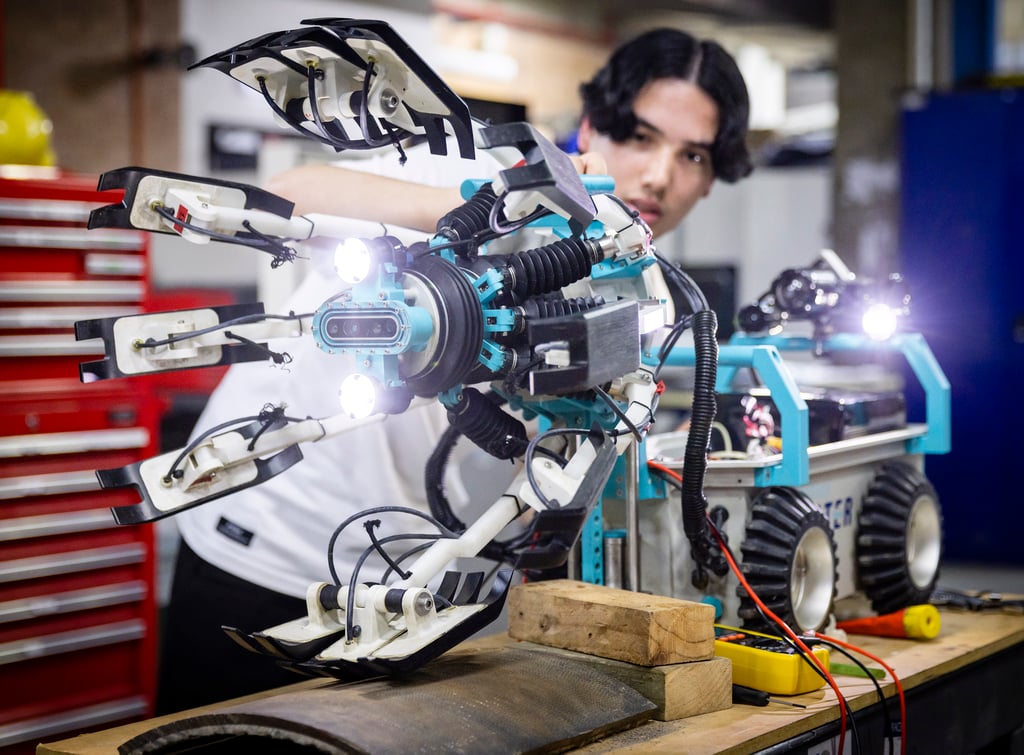
The team has developed four different types of robots that can do this dangerous work in different asset types, travelling through sewers and pipes to detect corrosion and obstructions.
Each robot is a different size – allowing them to access different sized pipes and tunnels – and has visual, three dimensional and radar-based sensing to detect defects and corrosion.
One of these is the large CRAFT robot. It's a floating remote-controlled device that uses ground penetrating radar and a camera system to construct a 3D model of large pipes to screen suspicious areas that need more attention and remediation.
The sewer robots have been deployed many times in the Sydney water network and have proven highly effective in identifying pipes that need repairs.
“Everybody wins if you can get someone out of a hazmat suit and they can instead remote control a robot. It's not losing a job, it's shifting that job to a safer environment.”
Professor Sarath Kodagoda
The technology plays an important role in making workplaces safer rather than replacing workers.
“There are significant economic, social, and environmental benefits in doing this work,” Kodagoda says.
“The technology provides crucial data, informs timely decisions that save money on renewal costs, helps protect the environment and improves human health and safety."
“Once operationalised, we estimate the technology will save Sydney Water millions of dollars per year in maintenance and structural renewal costs.”
“It has the potential to completely revolutionise how concrete water pipe and wastewater infrastructure is inspected, in Australia and overseas."
Taming of the screw
The UTS-designed robots are not only maintaining infrastructure, they’re also building the future of construction.
Three years ago, when Murdoch University was constructing Boola Katitjin, one of their newest all-timber buildings, it was the perfect time to trial a new breed of construction robot.
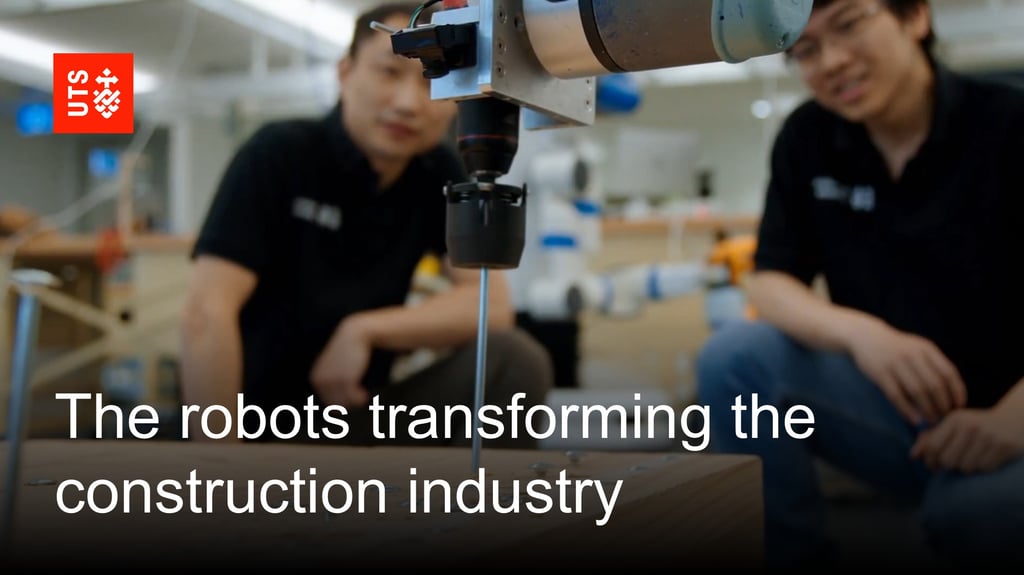
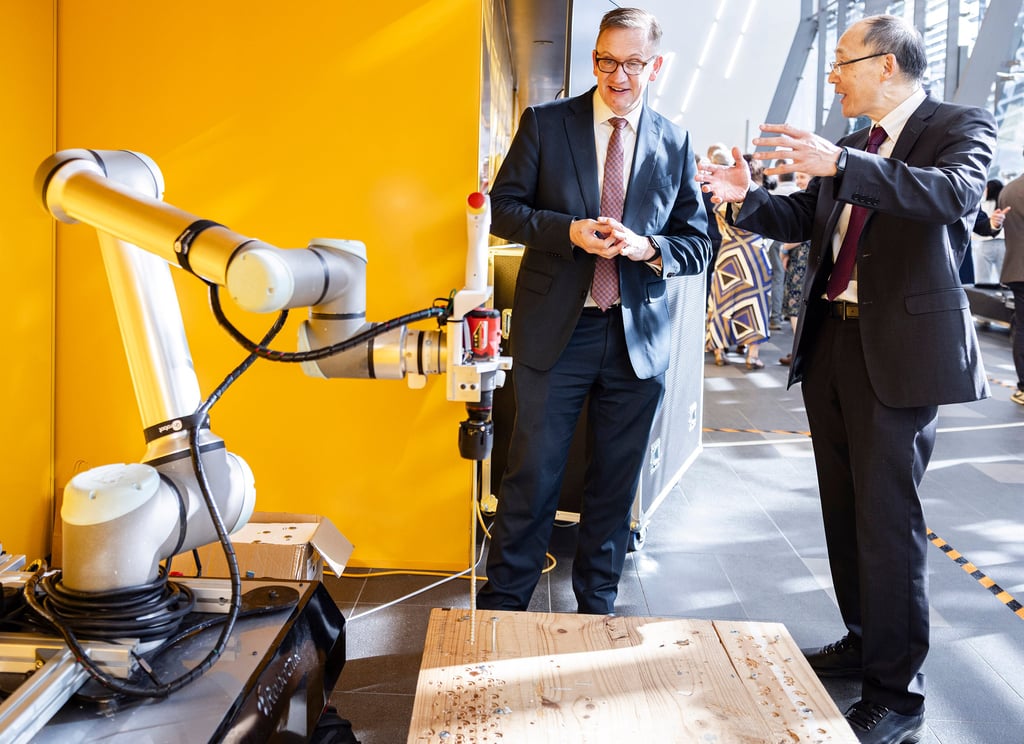
Working with engineering company Aurecon, Liu and his team had been developing QUENDA-BOT, an autonomous robot that can install long timber screw fixings up to one foot long.
Over the course of the two-week trial, QUENDA-BOT moved around the worksite and installed a hundred screws within an accuracy of five millimetres, exceeding the quality output for manual screw fixing.
“Robots can insert the screws more accurately and apply more consistent force and control to the drill than a human,” says Liu, who is Strategic Research Director at the UTS Robotics Institute.
“This type of innovation in construction technology has the potential to revolutionise the construction of timber structures.”
Longer term, automation like has the potential to increase productivity in an industry that consistently experiences labour shortages. At the same time, robots could reduce costs and improve worker safety by taking on the work of repetitive manual tasks.
But Liu explained that, to be deployed successfully, construction robots need to contend with a number of challenges.
The main one comes from the hectic environment of a worksite where large numbers of people are often working at the same time using various tools.
“Construction sites are varied, complex and constantly changing – and that can be a real challenge for a robot," he says.
"What we have been able to design is an intelligent robot that can focus on an important task even amidst this disruptive environment."
Researchers get on the tools
With this in mind, Liu and his team have been exploring new ways for people and robots to work together on building sites.
This culminated in 2024 with the creation of a world-first research collaboration.
The $23 million ARC Industrial Transformation Research Hub for Human-Robot Teaming for Sustainable and Resilient Construction (HaRTCon) brings together experts from UTS and six other universities, alongside 15 construction companies and industry organisations.
Human-robot teaming is an emerging field that focuses on combining human judgement, creativity and adaptability with robotic precision, power and consistency.
While Sandy and Rosie were operated by the push of a button, newer robots have much more sophisticated forms of human interaction.
The hub team are developing technology for specific tasks like tiling and industrial painting by following the instructions of a human operator. But instead of using a keyboard or control stick, the operator can speak to the friendly robot.
They are also exploring the human and economic dimensions of using robots in construction, in particular the way that people’s work can be designed to be more inclusive of women and older workers in the industry. The research hub will run through to 2029.
“We are going to see many more applications of robots to help human workers particularly combining AI and machine learning with robotic systems,” Liu says.
“Intelligent robots will be widely used for civil infrastructure construction and maintenance in the future. We’re making that future happen right now.”
Story
Talking pain equals learning gain
The classroom revolution changing how teachers and children understand chronic pain.
Story
Inclusive by co-design
How UTS researchers are combining lived experience and real-world data to rethink accessible bathroom design.

Story
Designing safety, shaping policy
Often hidden and complex, domestic violence affects far more lives than most people realise. Through the UTS Research Community on Domestic, Family and Sexual...
Story
The blue detectives
How scientists investigated the toxic agent behind an environmental catastrophe off the South Australian coast.
Story
Talking pain equals learning gain
The classroom revolution changing how teachers and children understand chronic pain.
Story
Inclusive by co-design
How UTS researchers are combining lived experience and real-world data to rethink accessible bathroom design.
Story
Designing safety, shaping policy
Often hidden and complex, domestic violence affects far more lives than most people realise. Through the UTS Research Community on Domestic, Family and Sexual...
Story
The blue detectives
How scientists investigated the toxic agent behind an environmental catastrophe off the South Australian coast.