


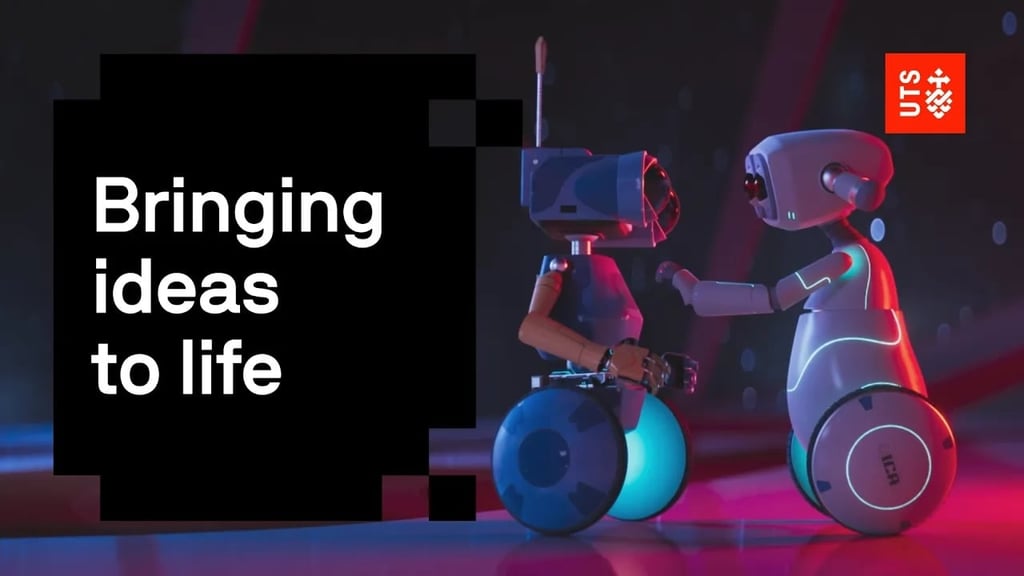
In deep space, a spaceship hurtles through the dark on a 312-year journey to Earth 2.0. Its only passengers are a group of frozen humans and a lonely maintenance robot who passes the days watching an endless montage of their memories.
This is the opening of Alone, a 3D-animated short film that has been rapturously received by international audiences. It won gold at the Australian Effects and Animation Festival; silver at the Portland Festival of Cinema, Animation and Technology; was a finalist at the Sydney Film Festival; and received an honourable mention at the Cleveland International Film Festival.
Alone is the latest in a long list of wildly successful animated films that have transformed Australia into a global player in the animation and VFX industry. But, while it was produced under the guidance of some of Australia’s leading 3D film and animation experts, it isn’t the work of a professional studio.
Instead, it was created by students at the UTS Animal Logic Academy, one of Australia’s leading 3D-animation production training studios.
"You need to be one of many"
The UTS Animal Logic Academy is a collaboration between the University of Technology Sydney (UTS) and Netflix Animation Studios (formerly Animal Logic) – an award-winning animation studio known for such globally successful films as Happy Feet, Peter Rabbit, The Lego Movie and Leo. Through its flagship course, the UTS Master of Animation and Visualisation, the Academy is building a talent pipeline to serve the animation and VFX sector.
Featured academic

Creative Lead, Faculty of Design and Society
To do it, the course addresses some of the key skills gaps that prevent new animation graduates from meeting industry expectations. According to the Academy’s Creative Director Alex Weight, a writer, director and animator who has worked on major international animation and VFX projects for more than 30 years, new hires often need up to 12 months of on-the-job experience before they’re ready to operate as fully autonomous professionals.
“Many emerging artists are still in the process of developing and refining core animation fundamentals such as walk cycles, timing and overlap,” he says.
“They’re also taught to build broad generalist skills, which means they may produce work across multiple departments. The challenge is that high-end animated feature and VFX studios tend to be more specialty based, and that’s what we’re training our students for.”
While many animation courses provide strong creative and theoretical foundations, transitioning into large-scale studio production can still require additional hands-on industry experience. But the most prominent issue is that new hires often enter the workforce with a sense of ego that’s at odds with the industry’s collaborative nature.
“A successful animation career is 80-90% soft skills. It’s how to collaborate, how to communicate, how to let go of ego,” Weight says.
“You’re in it together, you’re bouncing ideas off each other to the point where no one actually knows whose idea it was. But junior staff often arrive not really understanding that it’s not my shot, my project; it’s our shot, our project.
“If you want to be a creative in the animation or VFX industry, you need to be one of the team, and that’s a completely different way of working.”
283
Master of Animation and Visualisation graduates since the Academy’s launch in 2017.
An antidote to industry pain points
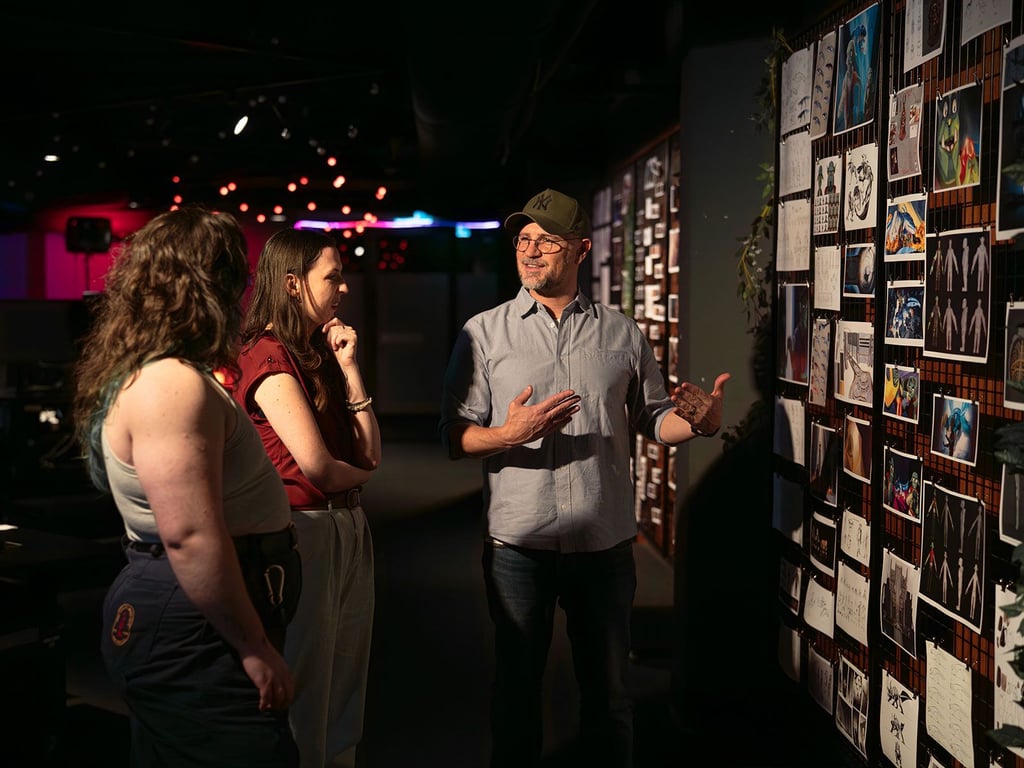
It’s a pattern that Weight has seen play out in studios around the world, from Sydney to London, Los Angeles to Beijing. The Academy is an antidote to these challenges: while offering an accredited postgraduate degree, it combines it with a production-studio model designed to mirror industry workflows. In the curriculium, there is also space for students to explore emerging technologies yet to be integrated in industry in 3D animation, VFX and mixed reality.
Instead, the space is set up with tools and workflows that mimic those of major studios like Netflix Animation Studios, Industrial Light and Magic, Flying Bark and Framestore. Students, who apply to the program based on creative or technical expertise in a particular area, are on the tools as soon as their studies begin.
Depending on their interests, they’re assigned to one of 11 production departments: art, modelling, rigging, animation, surfacing, effects, lighting, compositing, technical direction, previs/layout and production coordination. Each student cohort delivers two end-to-end animated films that equip them with the technical and collaborative skills to work in professional animation and VFX roles.
“There are no classes, no lectures, no homework. It’s 9–5. It’s a job,” Weight says.
For the 2023 Academy intake, one of those projects became Alone. The students worked together to brainstorm, pitch, develop and produce the critically acclaimed story of two robots on the outer reaches of the solar system. As well as learning the tools of their future trade, they found themselves unlearning the habits that could limit their career potential.
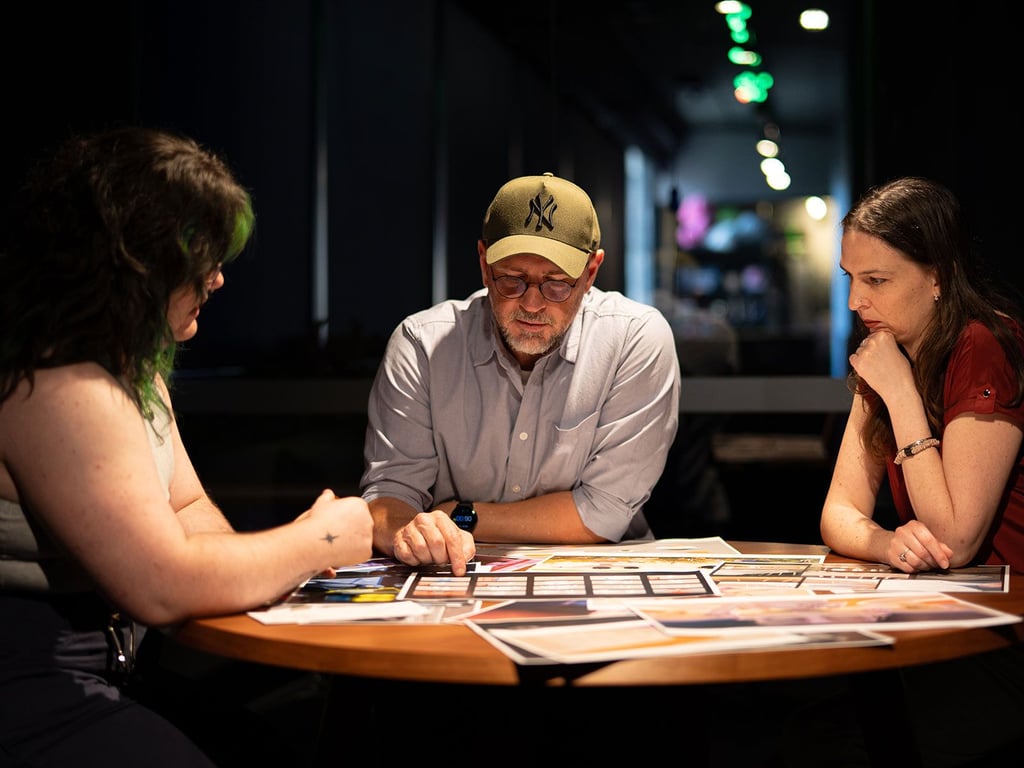
“We had to learn to leave our artistic pride behind and work collectively. It wasn’t just, ‘oh, I’m designing the robot’. There was a lot of negotiation back and forth, and that was a new experience for me,” says student Ildy Izso, a member of Alone’s art department.
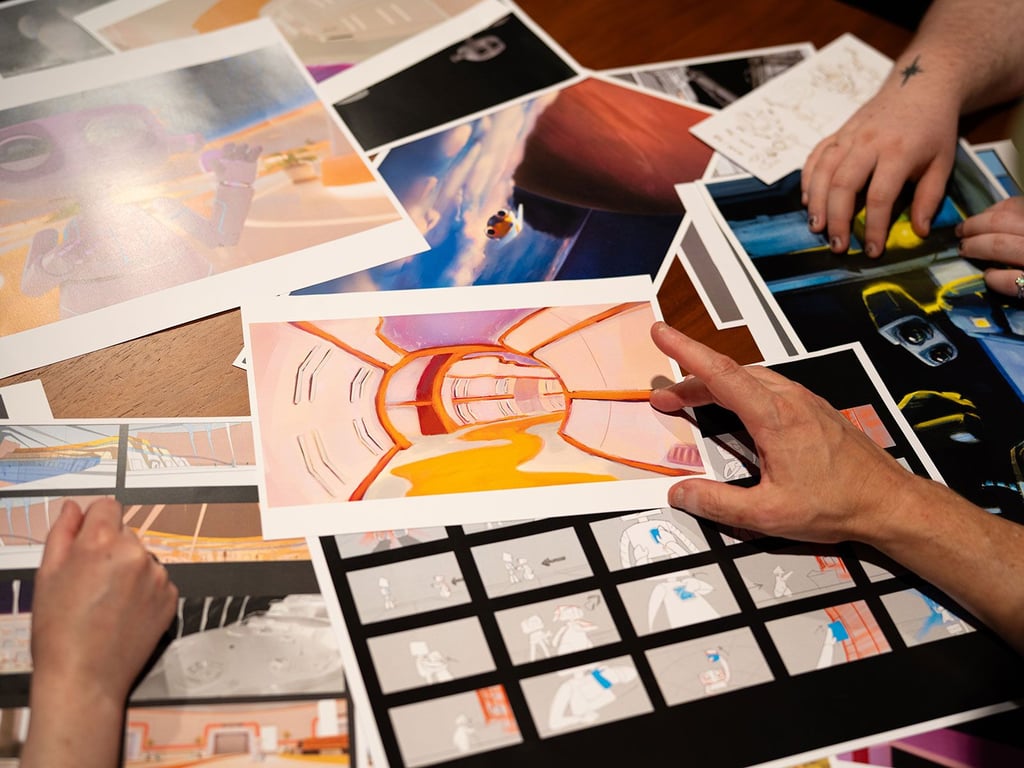
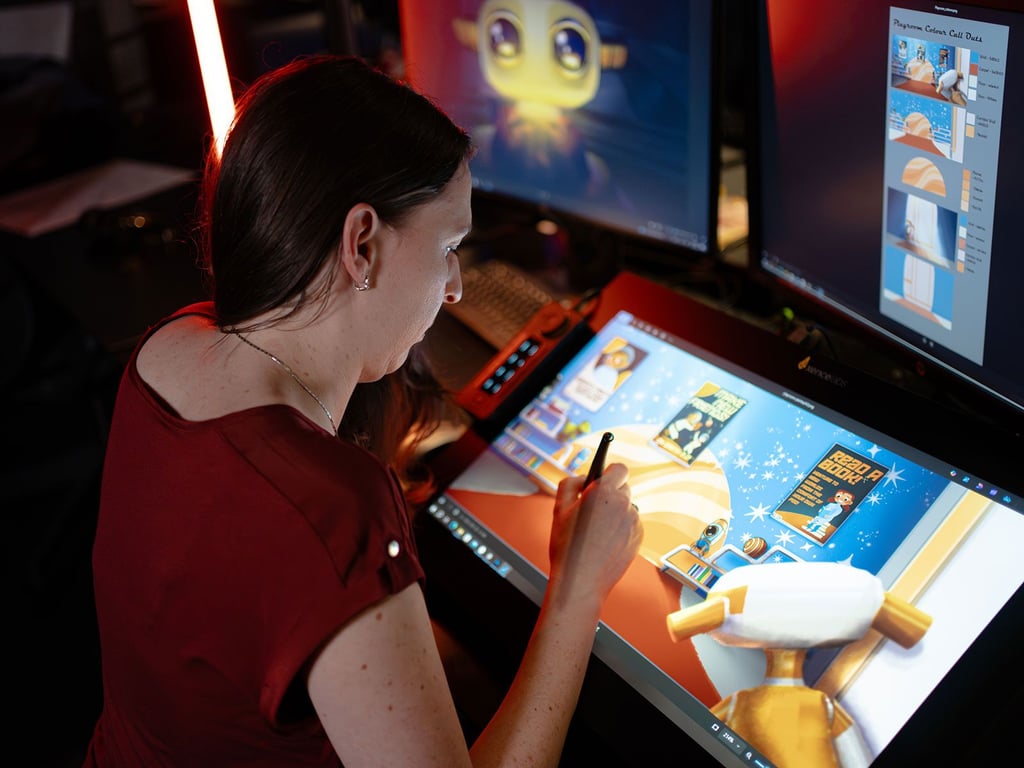
Izso and her peers created what would become the film’s retro-futuristic look, anchored by its wide-eyed robot characters with their very human emotions. Because the film takes place in an otherworldly setting, the art department faced both the challenge and the opportunity of creating something completely new.
18
Number of film projects produced by students at Animal Logic Academy.
The difference colour choice can make
A series of images shows how changing the colour concept for the film Alone changes the mood, look and feel of the characters and environment.
-
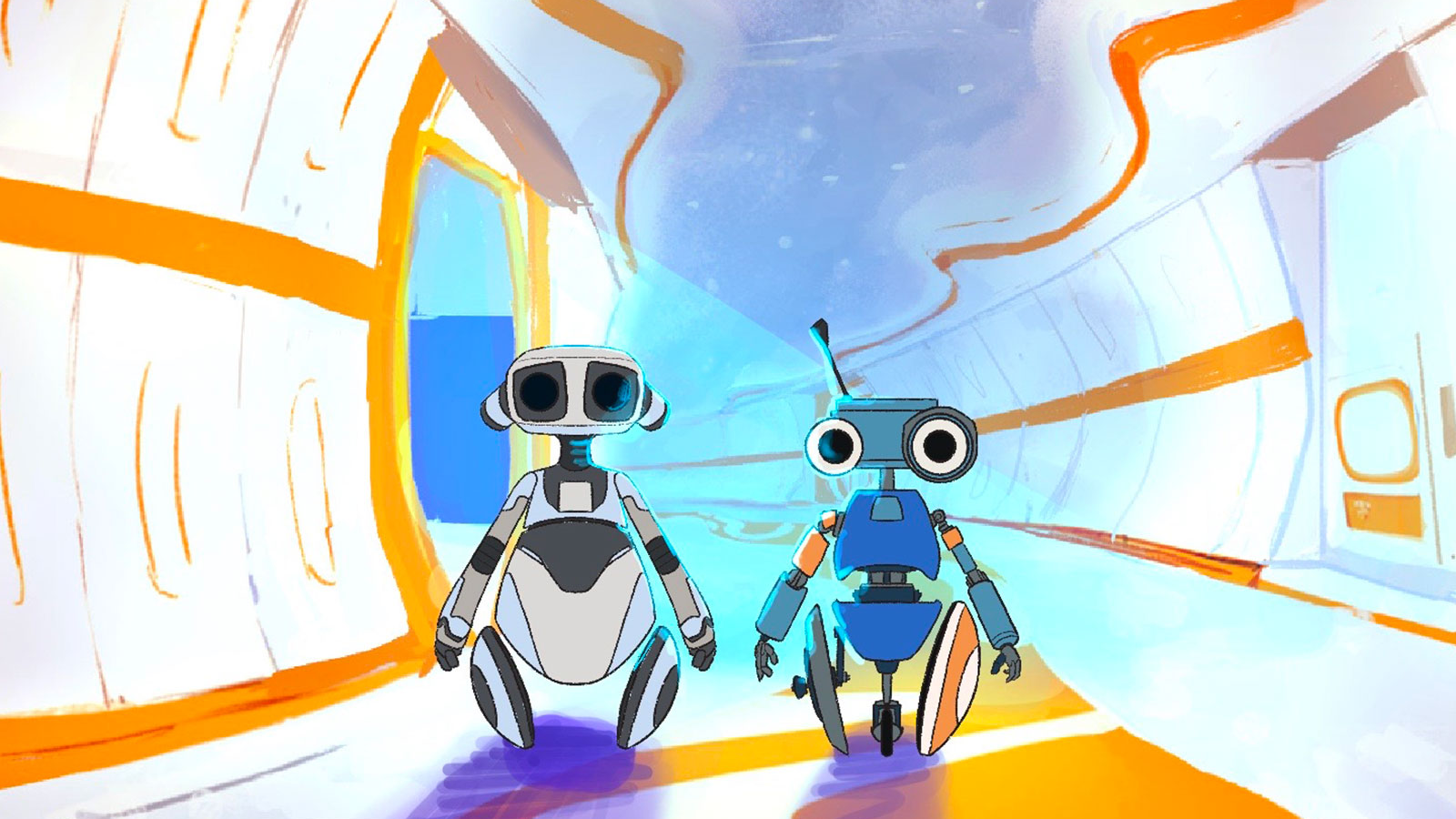
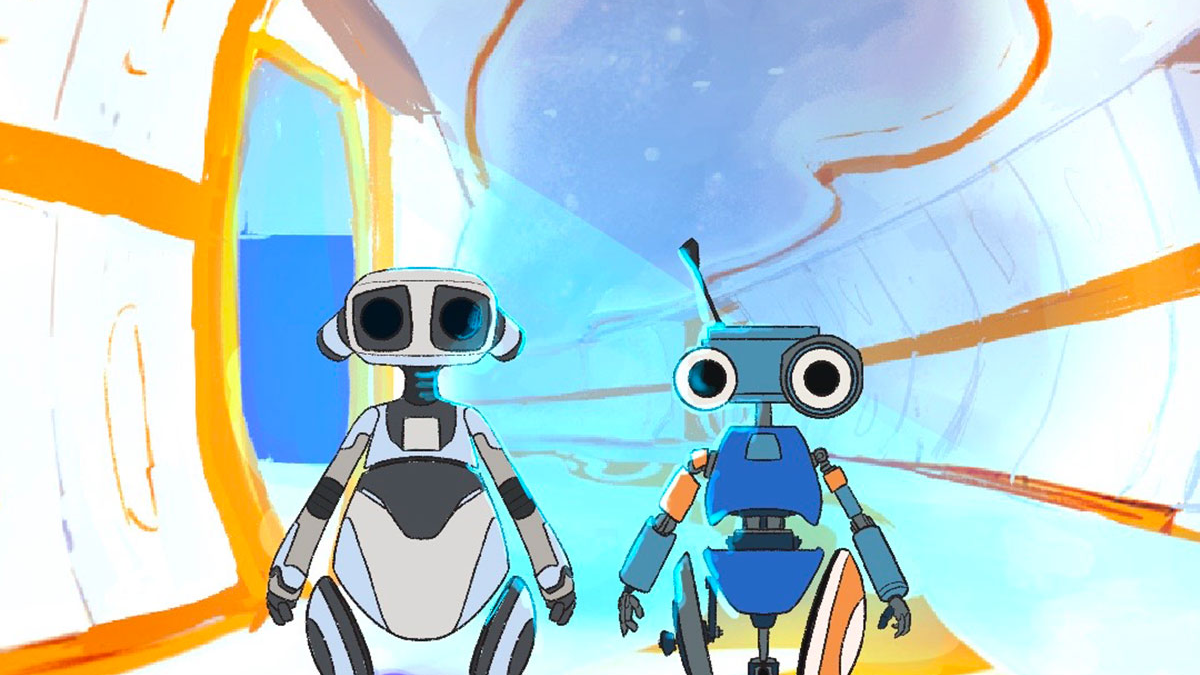
Every detail is agonised over, from colour palettes to the angle of each eye. -
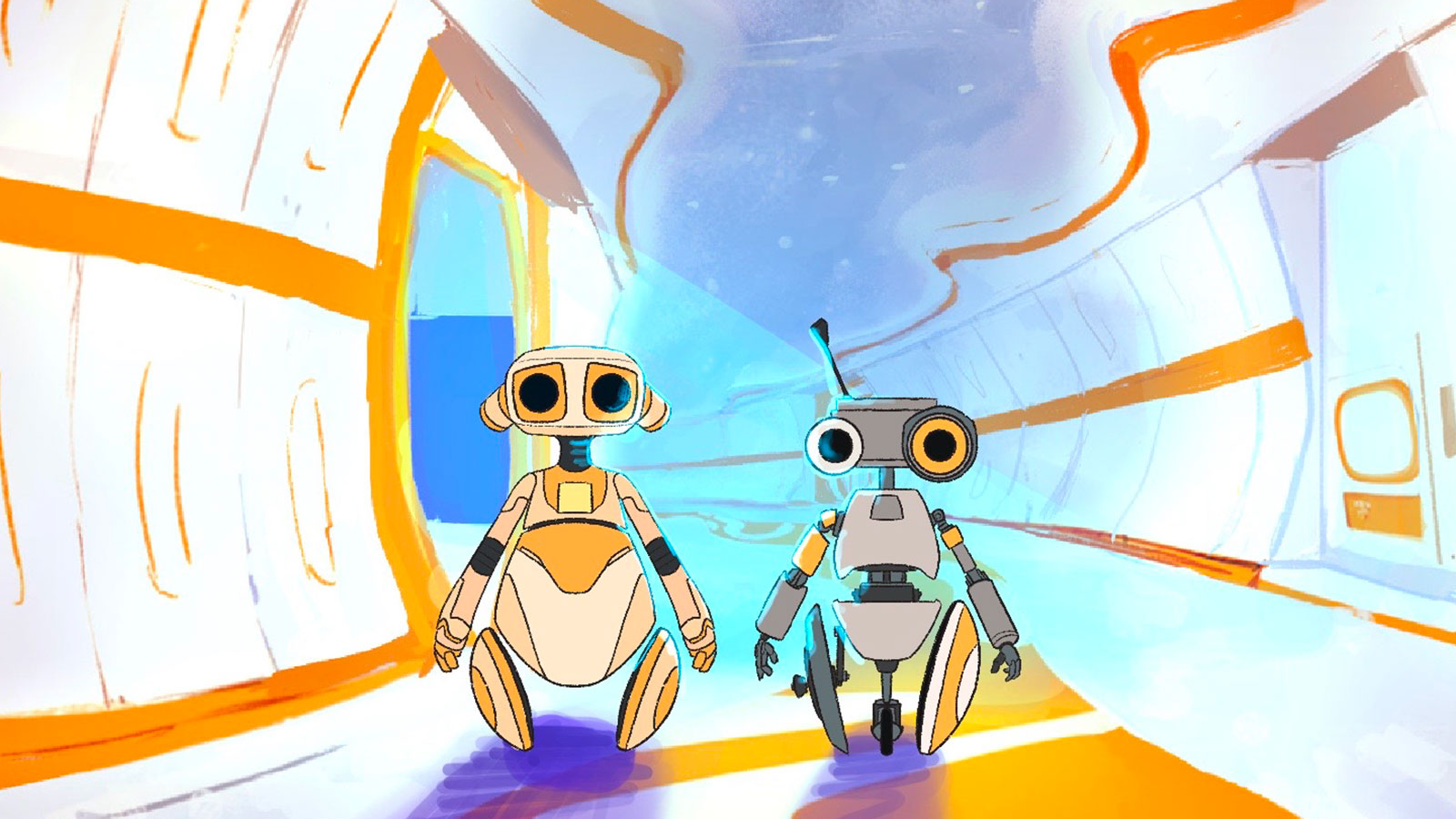
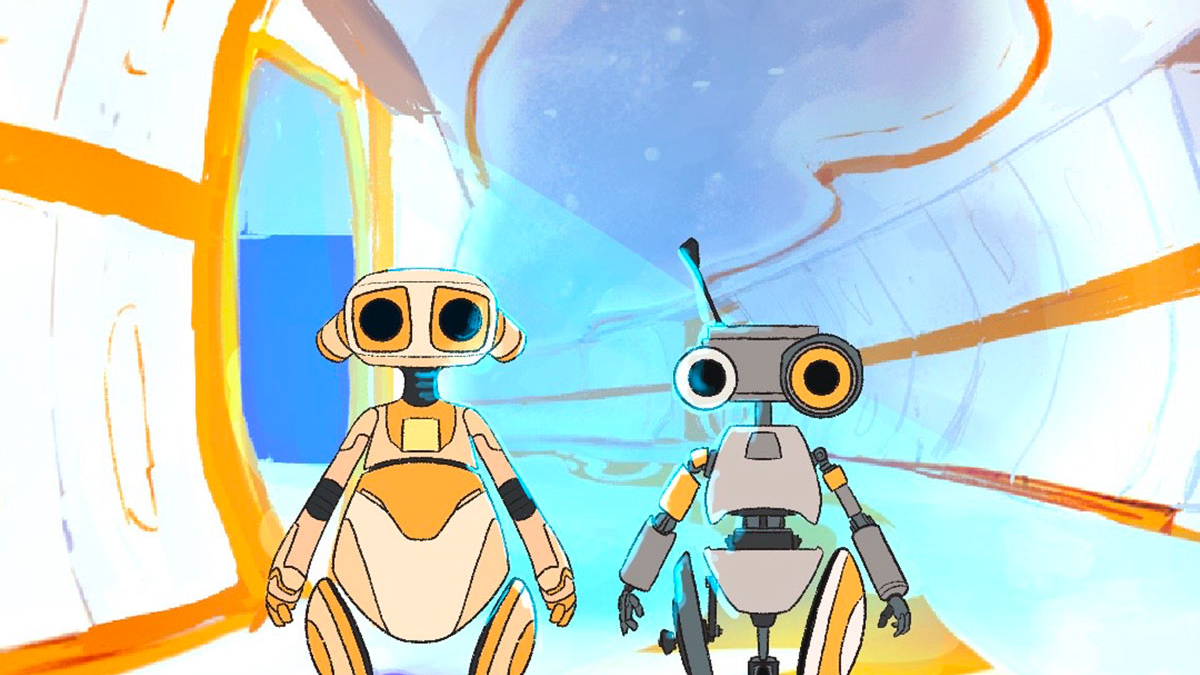
Every detail is agonised over, from colour palettes to the angle of each eye. -
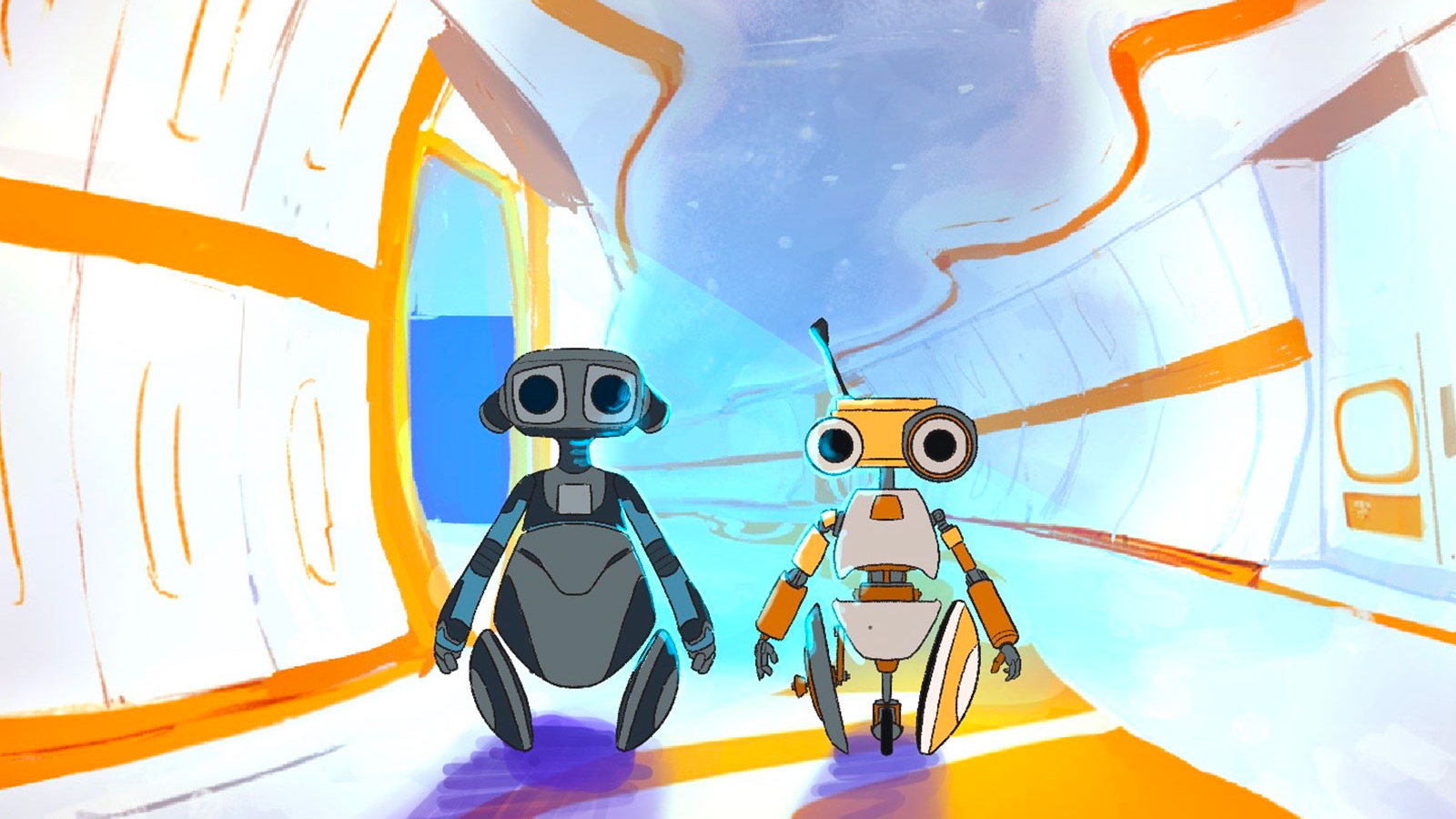
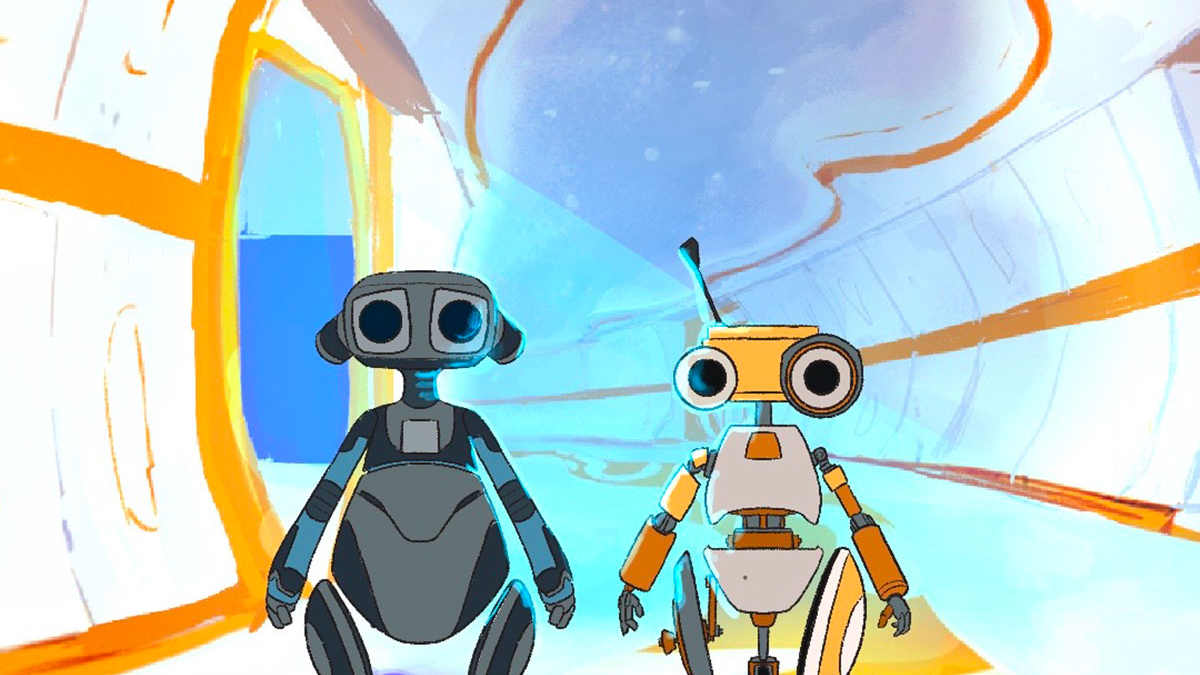
Every detail is agonised over, from colour palettes to the angle of each eye. -
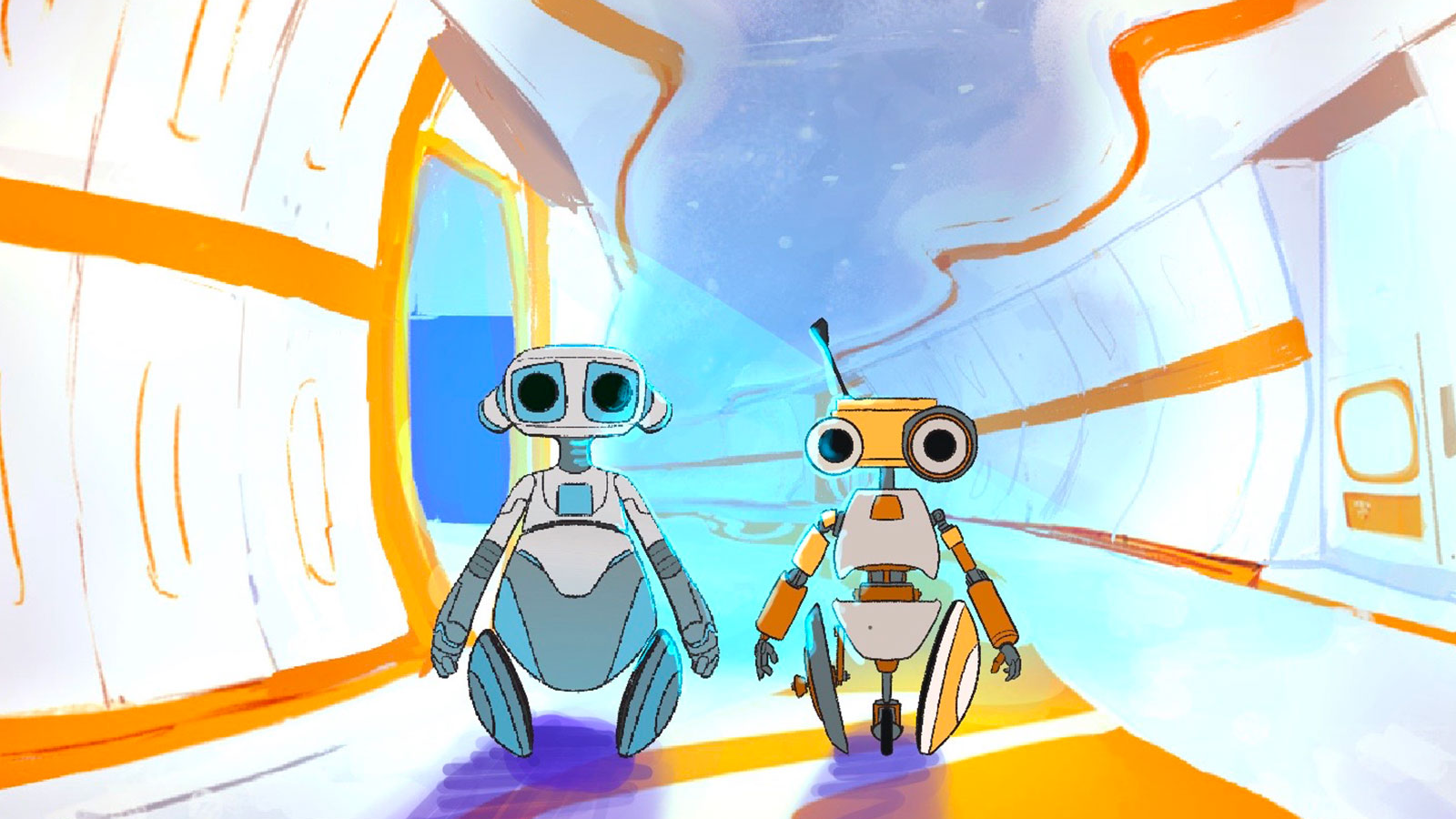
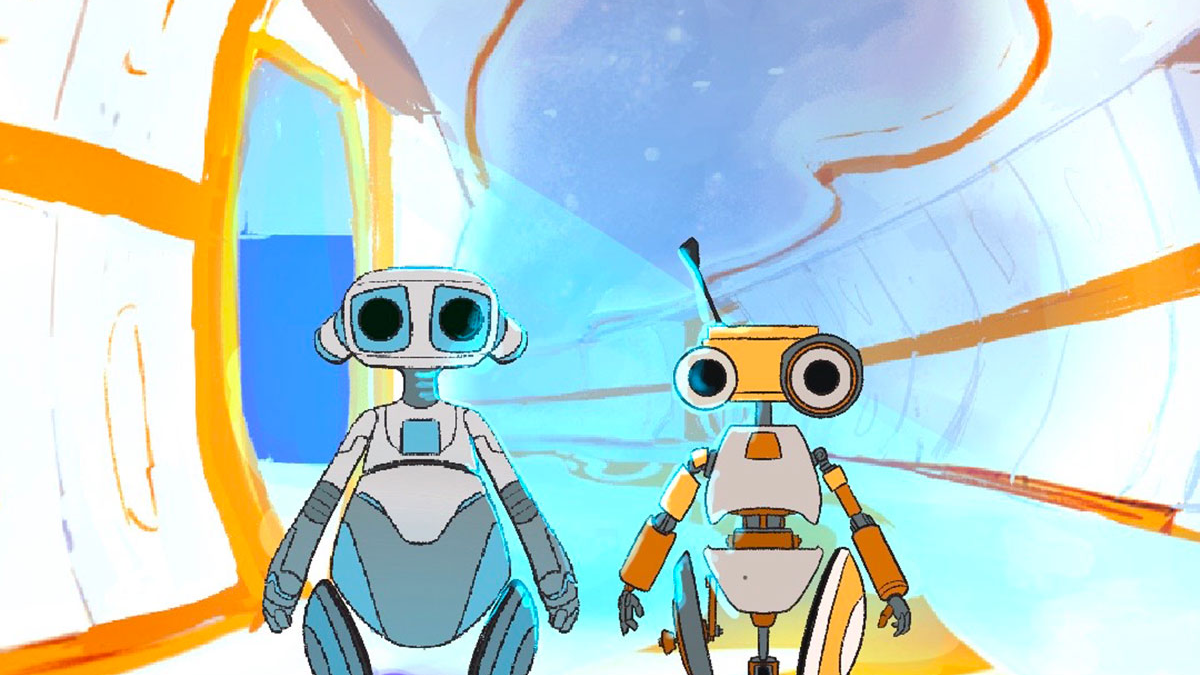
Every detail is agonised over, from colour palettes to the angle of each eye.
From the design of the ship itself to the lighting and the colour scheme, the team worked from a blank canvas to build a previously unimagined world. On screen, they created a soft, ethereal environment that feels cocooned from the bleak darkness beyond its windows. Off screen, they gained a new understanding of what it meant to work as one piece of a larger whole.
“As you keep drawing and reiterating and discussing them, you get more inspired, you give each other ideas and bounce off one another. At the end, you have something totally unique that you’ve all created together,” Izso says.
Animating the future of a global industry
Since the launch of the Academy in 2017, nine cohorts have come through the master’s degree. Most graduates go on to junior careers at major studios in Sydney and Melbourne; as they progress through the ranks, international roles become more available.
“The industry loves our grads, because the skills they learn with us are an exact mirror of industry. They just grab someone and go, ‘Come on board.’ And within a few days, the new hires are up to speed,” Weight says.
These successes are in no small part due to the Academy’s commitment to continually adapting the master’s degree in response to industry feedback. At the end of every year Weight and his team host an industry discussion panel with a dozen professional studios.
The goal is to better understand the tools, pipelines and trends that are shaping the contemporary industry so they can adapt the master’s content to keep pace. It’s good news for students and even better news for the industry, which now has access to a steady supply of highly trained juniors.
“We’re constantly pivoting. We can't afford to be stagnant because we don't want to be sending any of our students out in the world with the wrong skillset," Weight says.
60
Number of award nominations received by student films at Animal Logic Academy.
For the 2023 Academy intake, now in their second year in industry, the master’s program has more than delivered on its promise. But even as they lend their creativity to some of the biggest animation and VFX projects in the global pipeline, few will forget the experience of working on Alone.
At the film’s first public screening, watching as audiences saw their work for the first time, the students finally understood just what it was they’d made. Like all great animated films, it was built on the power of working together, not alone.
“We were sitting at the back and we could really see the audience experiencing all the emotions we’d built into the story. There was laughter and tears and everything in between. At the end, they gave us a standing ovation,” Izso says.
“We knew then that we had created something very special.”

Webpage
All stories, every screen
Sam Reilly is passionate about telling stories of diversity. Now, as a graduate of the UTS Master of Animation and Visualisation, they want to bring those...
Story
Blending tradition and technology in fashion
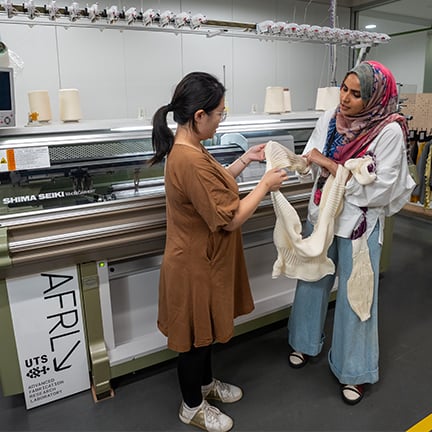
Wajiha Pervez, a PhD candidate at UTS, is combining cutting-edge technology with traditional craftsmanship to rethink athleisure and reduce fashion waste.
Story
Liquid gold
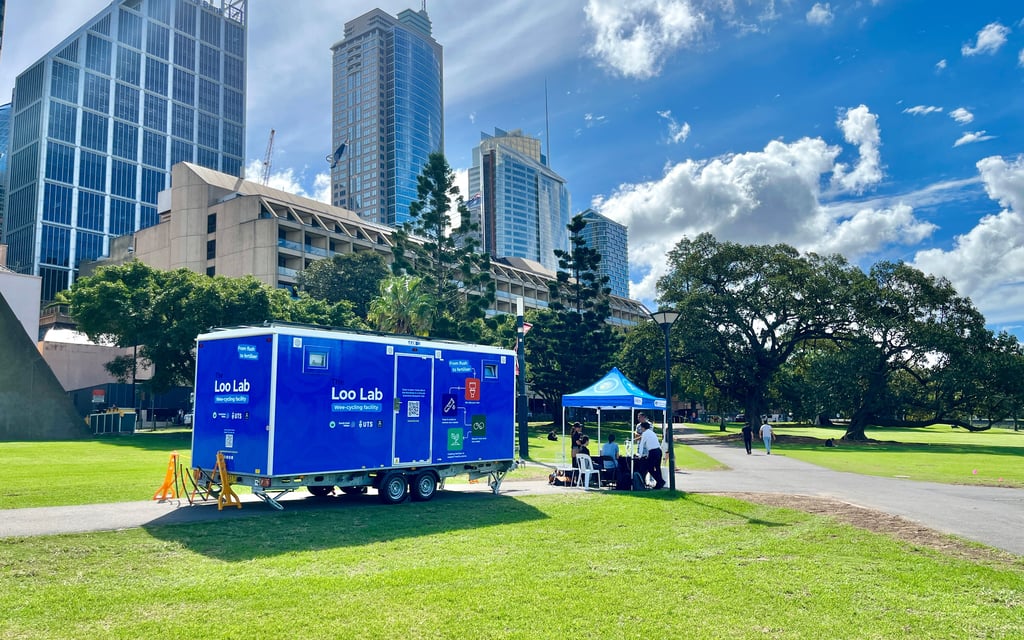
The NiCE Loo uses advanced water filtration to turn urine waste into valuable fertiliser and help our sewerage system work more efficiently.

Story
Free speech
Over the past 30 years, the Australian Stuttering Research Centre has improved the lives of tens of thousands of adults, teenagers and children who stutter.
Webpage
All stories, every screen
Sam Reilly is passionate about telling stories of diversity. Now, as a graduate of the UTS Master of Animation and Visualisation, they want to bring those...
Story
Blending tradition and technology in fashion
Wajiha Pervez, a PhD candidate at UTS, is combining cutting-edge technology with traditional craftsmanship to rethink athleisure and reduce fashion waste.
Story
Liquid gold
The NiCE Loo uses advanced water filtration to turn urine waste into valuable fertiliser and help our sewerage system work more efficiently.
Story
Free speech
Over the past 30 years, the Australian Stuttering Research Centre has improved the lives of tens of thousands of adults, teenagers and children who stutter.