
UTS 3 Minute Thesis Finals for 2025

The Three Minute Thesis (3MT) celebrates the exciting research conducted by Doctor of Philosophy (PhD) and Professional Doctorate (Research) candidates.

It is an international academic competition developed by the University of Queensland to cultivate students’ academic, presentation, and research communication skills.
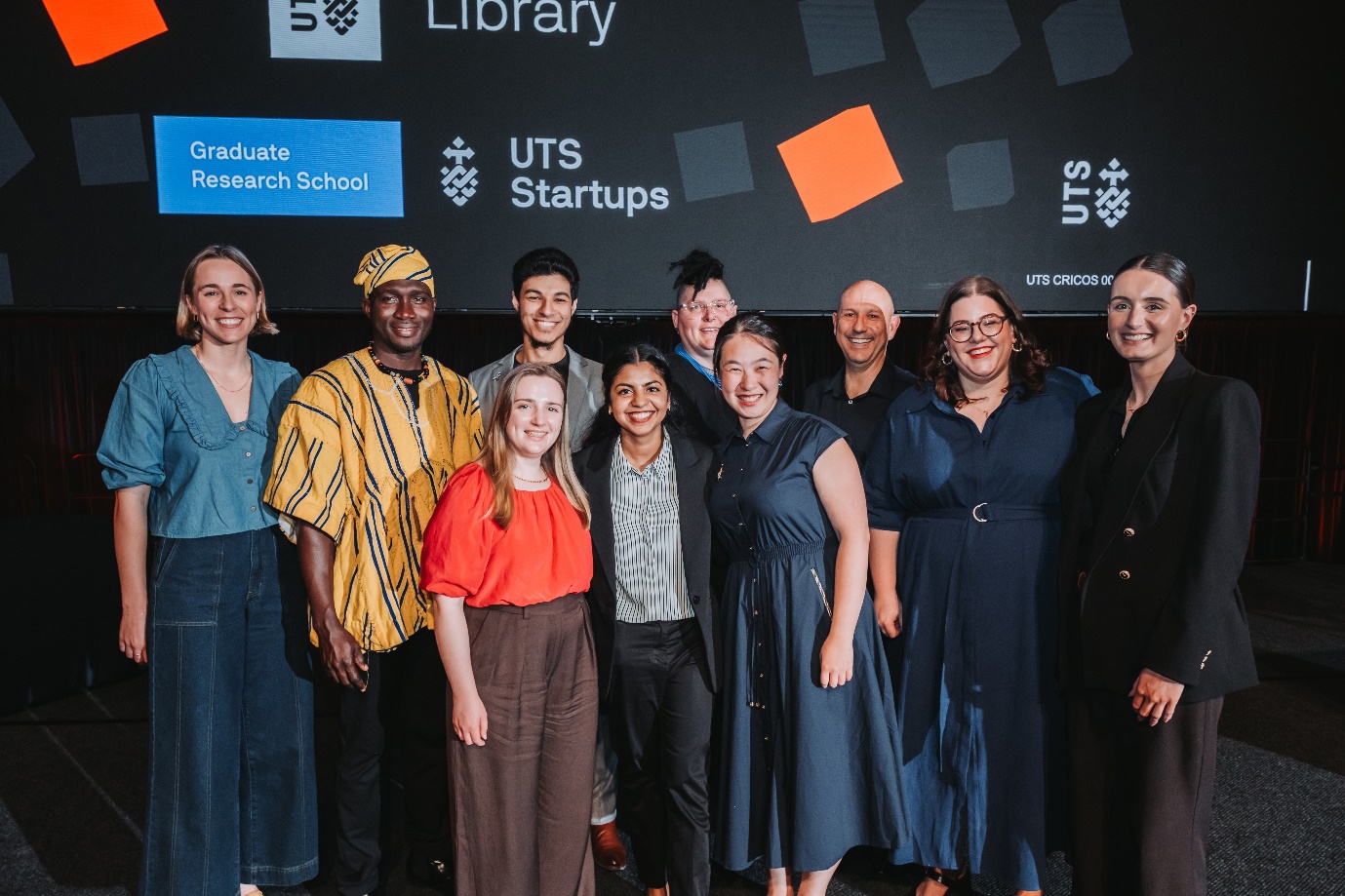
L–R: Back – Lucy Allen, Eric Duku, Ahmed Da’na, Clare Colquhoun, Adam Haysom-McDowell, Sarah Mould, Samara Bridge. Front – Hannah Mullen, Priya Soi Pulickal, Hanwei Yu


This year’s 3MT finals included an in-person event plus an online session via Zoom. Topics ranged from maternal healthcare, sign linguistics, accounting and auditing practices, regenerative agriculture, athleisure clothing design, First Nations framework for police discretion, osteoporosis to multiple sclerosis.

Our judges had the difficult decision of choosing the winner and runner-up award, while our in-person and online audience were busy voting for their People’s Choice. 

A very special thank you to Aaron Ngan from UTS startups for all their support of our finalists that included workshops and one on one sessions.

Thank you to Ness Heckscher and Dhurata Stanaj from UTS Events, Daniel Hamilton, Barak Remalli and Tess Hobbis from UTS Library for the event coordination needed to bring this event to life.

Our 2025 judging panel

  • Professor Jua Cilliers, Associate Dean of Research, Faculty of Design and Society
  • Murray Hurps, Director of Entrepreneurship at UTS
  • Sarah Kinkel-Miller, Deputy Dean, Graduate Research School
  • Michael Gonzalez, University Librarian

2025 UTS 3MT winners

  • Ahmed Da’na
    School of Design, Faculty of Design and Society
    Presentation: From scan to step: Custom knee-ankle-foot-orthoses (KAFOs) for Polio survirors
    First prize: $3000 and representing UTS at the 2025 Asia-Pacific 3MT competition
  • Sarah Mould
    School of Communication, Faculty of Design and Society
    Presentation: How writers can use literary science fiction to create fat hope
    Runner-up: $1000
  • Adam Haysom-McDowell
    Graduate School of Health, Faculty of Health
    Presentation: Detour ahead: Disrupting lung cancer’s escape routes
    People’s Choice: $1000

2025 Faculty Finalists

Overall winner: Ahmed Da’na, Design and Society
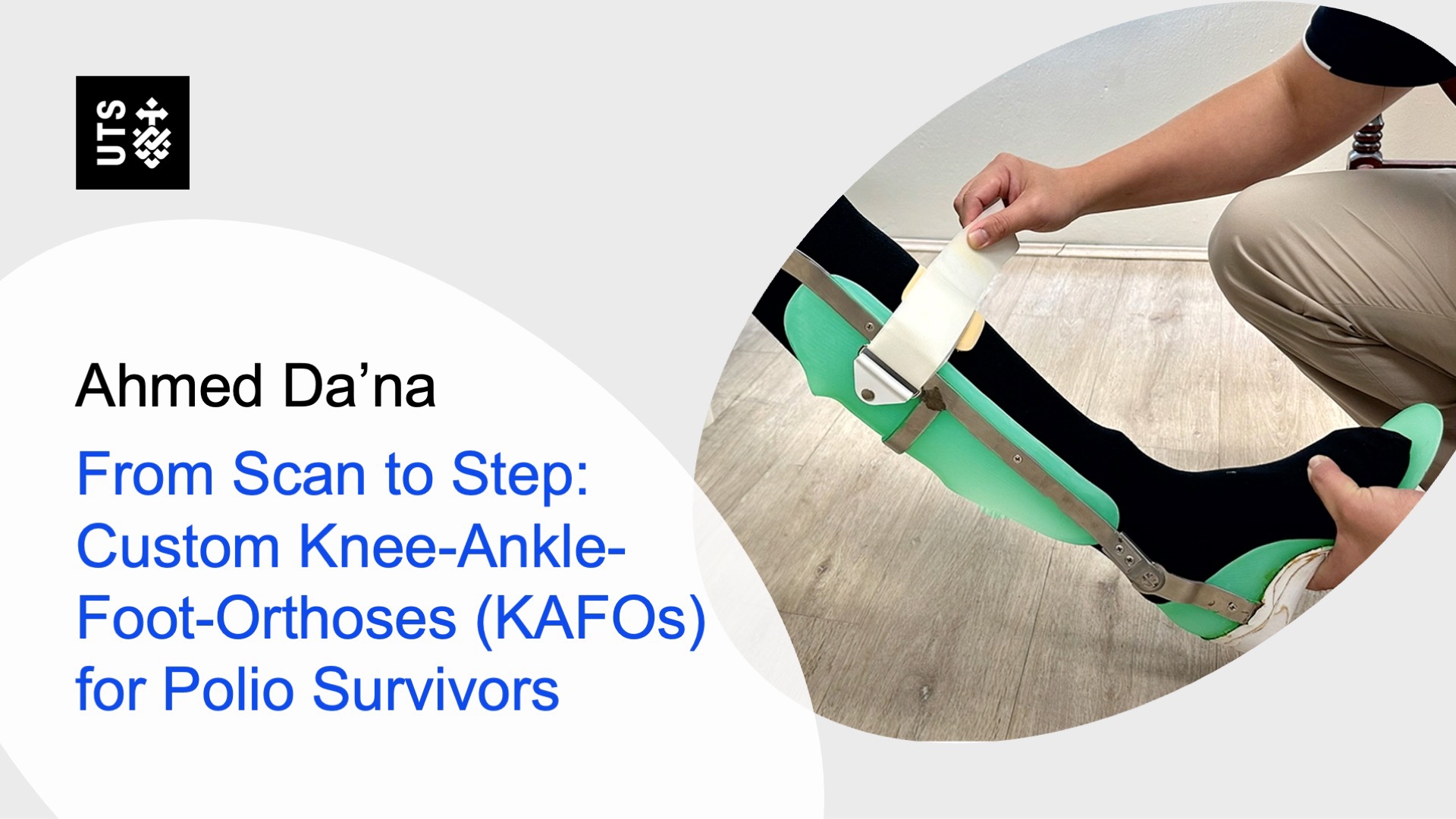
A person fitting a green knee-ankle-foot orthosis on another person's leg. Text reads: "Ahmed Da’na: From Scan to Step; Custom KAFOs for Polio Survivors." UTS logo visible.

Hello.

Five steps.

How many of you counted each step I took? How many of you envied each step I took? Many of us don't think about this. Walking, one of the most common forms of movements is the start of mankind. something that many of us take for granted. Hundreds of millions worldwide struggle with this. One of the oldest neurological reasons for this is polio. It causes weak muscles and paralysis in the legs.

My name is Ahmed. I'm an industrial designer and researcher working with an orthotic clinic in Sydney. Polio. Isn't that so last century? You may be surprised to know that there are over 25 million worldwide who have it. 500,000 here in Australia to assist with walking and knee ankle foot orthosis is used. These are very complex mechanical devices. However, doctors have figured this out centuries ago, haven't they?

Today we still use very primitive and labor intensive methods that are expensive and super wasteful. In the eyes of the patients, it's widely documented that this process is uncomfortable and many don't wear it due to its overpowering and industrial look. Typically, these can take up to two months to deliver, which is far too long.

Fortunately, the orthotic clinic and I have used an innovative method called fused pellet modeling. It's a fast 3D printing process that's great for large and durable products. Instead of two months, two weeks alongside this, a testing framework where any new device or material can get tested, hoping to influence new TGA regulations.

The patient walks into the clinic, gets a 3D scan of their limb, then can decide what colors or features they would like. This is crucial. They can now have a meaningful and custom device that suits their own lifestyle.

Once the orthosis has done its job, it gets sent back to us. We can slice it up and shred it, throw those granulates back into a printer and reprint another orthosis now for a new patient, creating a sustainable and closed loop. Polio, cerebral palsy, multiple scerosis, and the rise of trauma events can definitely benefit from this new digital workflow. 25 steps. It's 2025. Let's help make each step feel steady, strong, and comfortable.

Ahmed Da'na

About Ahmed

I’m a PhD candidate at the University of Technology Sydney, working with Korthotics, an orthotics clinic in Sydney, to research how additive manufacturing can transform custom-made orthotics, particularly Knee-Ankle-Foot Orthoses (KAFOs) for polio survivors. My work combines human-centred design, 3D scanning, finite-element-analysis, and sustainable manufacturing to deliver personalised, efficient, and eco-conscious devices. Alongside my research, I teach product design as a Casual Academic at UTS and bring industry experience in 3D printing, end-to-end manufacturing, and urban furniture design. My background in teaching marital arts honed my ability to connect across ages and cultures—a skill I now apply to inclusive, collaborative problem-solving in design and healthcare innovation.

Runner-up: Sarah Mould, Design and Society
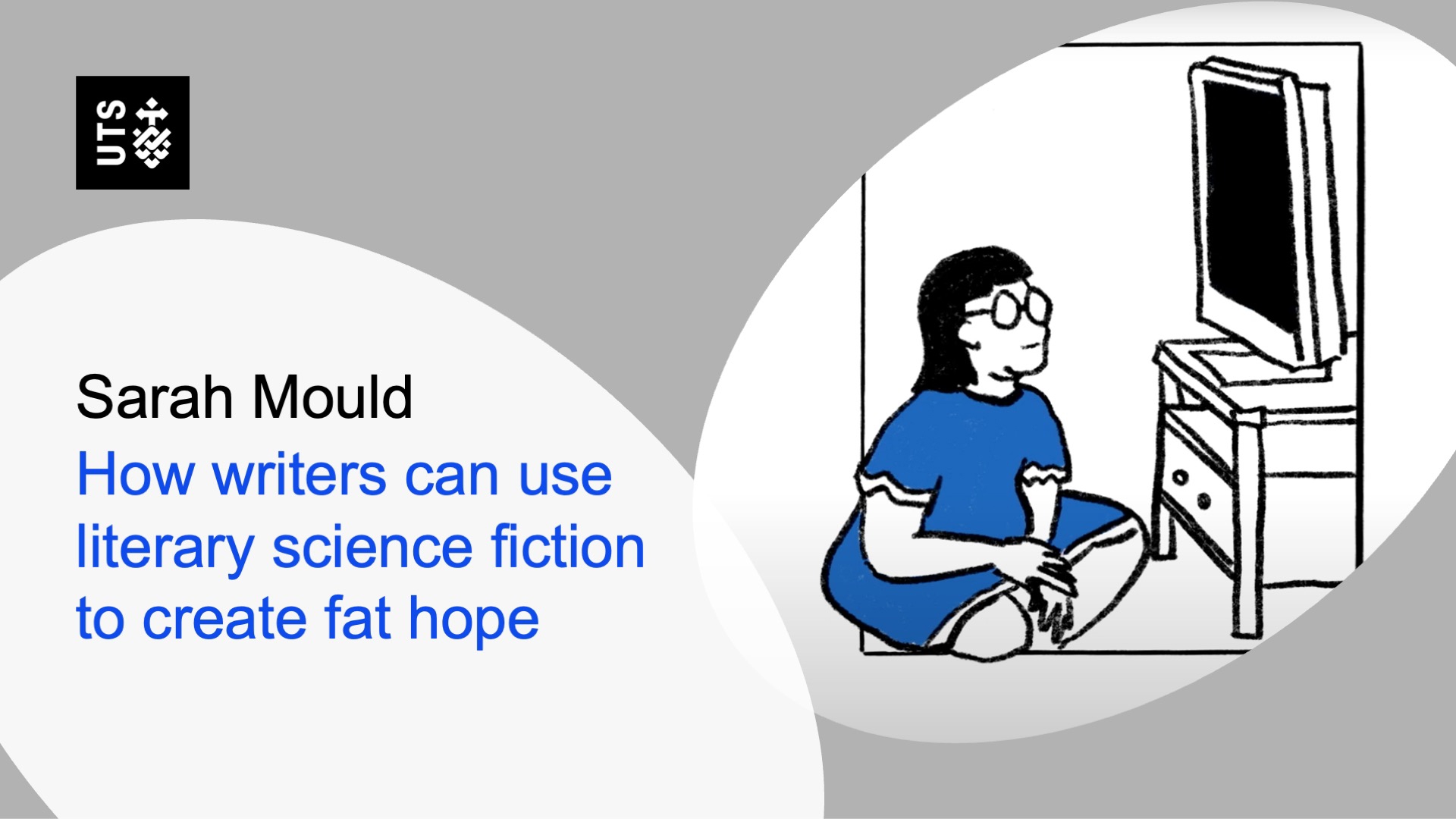
Illustrated woman in a blue dress sits cross-legged, watching TV. Text: "Sarah Mould, How writers can use literary science fiction to create fat hope." UTS logo present.

When I was 11 years old, dad sat me down in front of the television and said, "Sarah, you must watch this show and you must like it." That show was Doctor Who. And that's when I like to say I started my PhD. Science fiction has always had an incredible ability to create speculative visions of the future. It allows us to imagine and shape what our culture could be. This is particularly true for writers who push science fiction to its feminist potential, creating worlds free from sexism. But despite that potential, one question kept popping up. Where am I? Where are all the fat women in the future? In Australia, over 60% of women are considered fat. And yet when we look to literary science fiction, we don't see any. Fat women either don't exist or we're negative and unhappy stereotypes. This has a profoundly damaging effect on all women. It restricts which bodies we see as normal and desirable and leads to worse physical and mental health outcomes. It even limits our imagination. As part of my research, I interviewed a diverse range of fat women and I asked them, "What does a positive fat future look like?" They could have said, "An entire planet of happy fat women on rocket ships." But they didn't. Every woman said the same thing. A chair. A chair that I fit in. Nothing else. So, how do we fix that? I turned to Joseé Munz's theory of queer hope. Munz argues that queer people and people who exist outside the normal must not focus our activism solely on the present, but should instead dream and enact new and better futures. My creative practice, PhD, uses this idea to create another version of hope. Fat hope. I conceptualized, drafted, and edited my very own collection of science fiction short stories centered on futures in which the fat body is a positive solution, joyous and revolutionary. I also created a framework so that other writers can better depict their fat characters and avoid harmful tropes. It's my way to contribute to science fiction and it's my way to contribute to a more inclusive future so that every kid who picks up a sci-fi book or turns on the latest episode of Doctor Who with Dad can see themselves represented and know that their body, their identity is a beacon of hope. Thank you. [Applause]

Sarah Mould

About Sarah

Sarah Mould (she/her) is a creative practice PhD candidate and recipient of a Research Excellence Scholarship at the University of Technology Sydney. Her research investigates how writers can use literary science fiction to create positive fat futures. Sarah has been shortlisted for the Monash Prize at the Emerging Writers’ Festival and the B&T Award for Diversity, been a TikTok Young Lions finalist, and written multiple industry-recognised advertising and advocacy campaigns.

People’s Choice: Adam Haysom-McDowell, Health
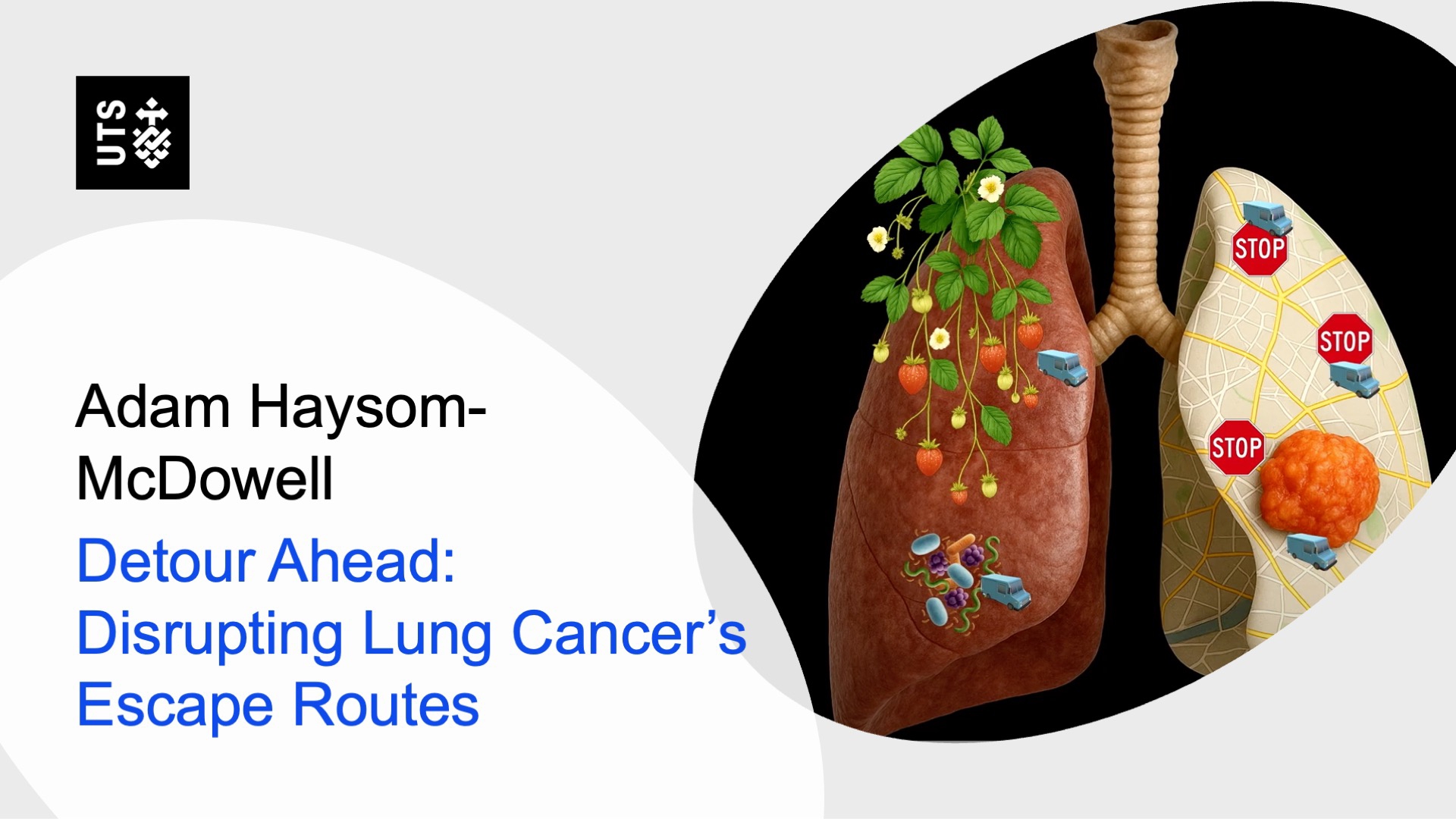
Alt text: "Illustration of human lungs with plants and stop signs. Left lung shows green plants and pathways; right lung features stop signs and cancer cells, symbolizing research on blocking cancer spread. Text reads 'Adam Haysom-McDowell, Detour Ahead: Disrupting Lung Cancer’s Escape Routes' with UTS logo."

I'm sorry. You have lung cancer. It's the most common type called non small cell lung cancer. But with surgery and chemotherapy, you have a 1 in5 chance of surviving 5 years. Imagine hearing those words. Over two million people around the world hear them every year. Lung cancer is the leading cause of cancer related deaths, killing 9,000 Australians last year. Patients receiving chemotherapy and radiation will endure terrible side effects. But the patient isn't the only one with the drive to survive. You see, lung cancer is clever and just like Google Maps, it's always searching for alternative pathways to survive and grow. Now, cancer drugs work like roadblocks. They block nutrients, cut off blood supply, and they even set traps to make cancer cells self-destruct. But lung cancer finds new pathways. It adapts and it spreads, and it sets up new colonies in other organs. This is called treatment, resistance, and metastasis. It's exactly what makes non small cell lung cancer so deadly. And this is where my research begins. For thousands of years, plants have been used to treat lung disease. Today, we can isolate their powerful molecules called phytouticals. For my thesis, I'm exploring compounds from plants like fiscetin from strawberries. Because research shows they do have anti-cancer effects, but we have a problem. Compounds like fiscetin are poorly absorbed. They don't travel well in the body. It's like trying to drive somewhere new with no directions. So, we wrap them in tiny delivery vehicles called nano particles. These help the body absorb the molecule and drive it straight to the tumor. But let's not stop there. In our bodies lives an entire workforce, trillions of organisms called the gut microbiome. These microbes influence tissue repair in the lungs via the gut lung axis. So in my lab, I treated human lung cancer cells with nanop particles loaded with fiscetin and an extract from the microbiome because I wanted to know would there be a synergy that could increase the roadblocks. Well, the cancer cells seemed to lose their map. I measured how they responded. Their ability to replicate slowed their um their movement slowed down and most importantly they couldn't form a new colony. My future research includes Australian natives like Lemon Myrtle. By unlocking nature's pharmacy and using nanop particles to deliver precision medicine, I hope my research can redraw the road map of lung cancer treatment and disrupt lung cancer's escape routes so those who hear those those final words have better pathways. Thank you. [Applause]

Adam Haysom-McDowell

About Adam

Adam brings a unique perspective to his research, drawing on over a decade of clinical practice in Traditional Chinese Medicine and nutrition, offering a translational perspective to scientific inquiry, connecting traditional therapeutics with modern pharmacological understanding.  The introductory chapter of Adam’s thesis titled “Recent trends and therapeutic potential of phytoceutical-based nanoparticle delivery systems in mitigating non-small cell lung cancer” has been published in the Q1 peer-reviewed journal “Molecular Oncology”. His manuscript was selected as the cover feature for Volume 19, Issue 1; https://doi.org/10.1002/1878-0261.13800. In the laboratory, Adam conducts in vitro experiments to identify the actions and mechanisms of phytoceuticals such as fisetin from strawberries, nobiletin from citrus and Australian native plants such as Lemon Myrtle. Additionally, a key aspect of Adam’s research is the development of advanced nanoparticle delivery systems to enhance the bioavailability and function of phytoceuticals. Adam is passionate about communicating complex concepts clearly, both in academic settings and broader public health discourse.

Hanwei Yu: Engineering and IT
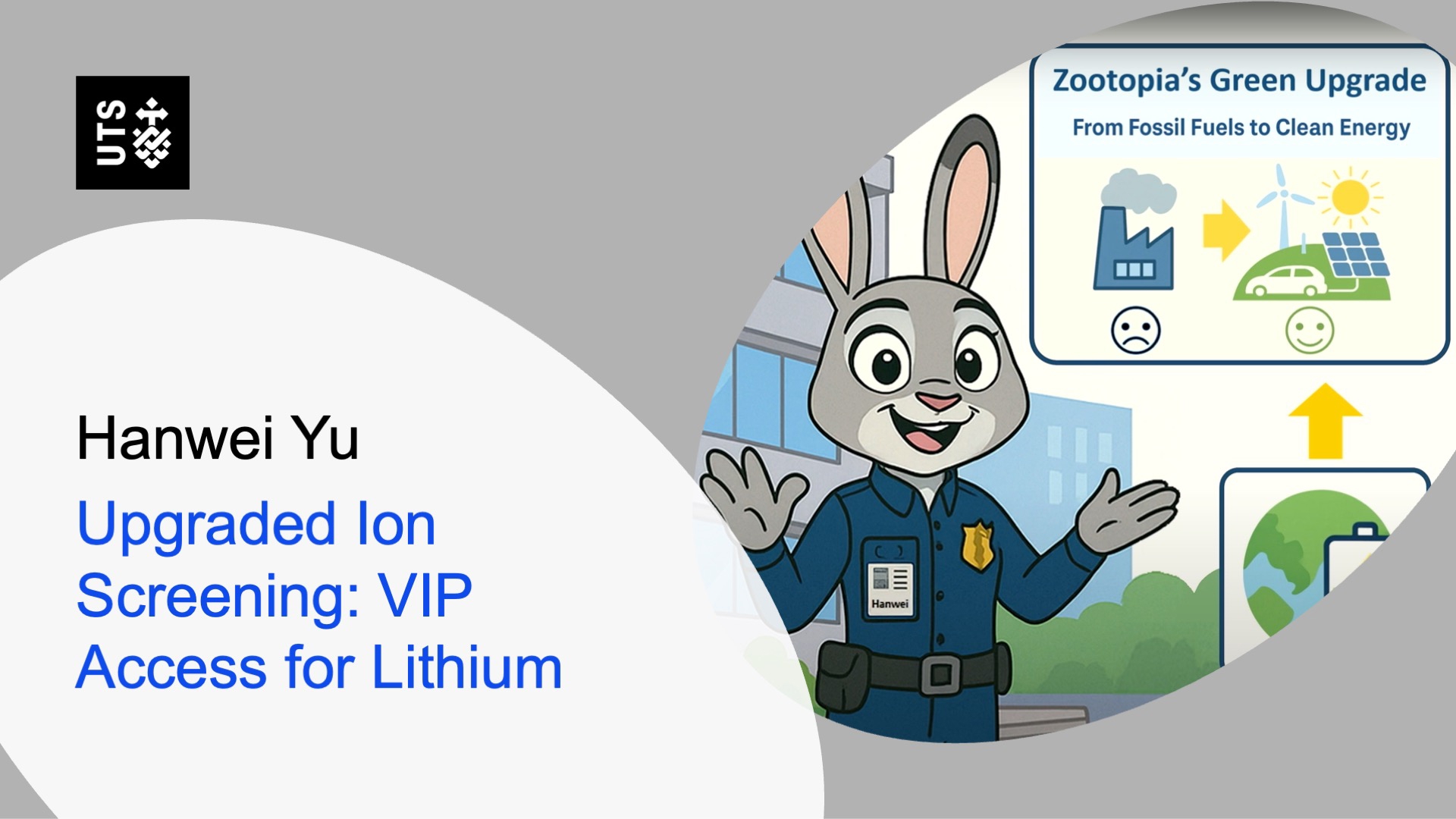
Cartoon rabbit in a police uniform stands beside a banner titled 'Zootopia's Green Upgrade.' Nearby are icons of pollution, solar energy, and a smartphone. Text reads 'Hanwei Yu; Upgraded Ion Screening: VIP Access for Lithium.' UTS logo in the corner.

Good afternoon everyone. Welcome to Zootopia Green City. I'm Ban Judy's new colleague Hanei in the Department of Environmental Security. Let me share an exciting news. To protect our land and air, Zootopia is moving away from fossil fuels and embracing clean energy. So to make the mission happen we need a special guys the lithium also called the white gold. Lithium powers batteries electronic devices electric vehicles which are crucial to everybody's life. It is absolutely our Mr. Big the VIP we are after. But where does our VIP come from? A small portion of lithium is mined from hard rocks, but those resources are limited, nearly exhausted, and the mining process is hurting the environment. In fact, over 99.99% of lithium is dissolved in the natural water bodies such as seawater. What a monumental and sustainable resource but extremely dilute and challenging to extract. Why? Because lithium has amount of billions of other ions. They look similar. They carry charge. They rush to the gate competing to get in. But our border security system doesn't work smartly. All other ions come through. No, I cannot let it happen. It's time to upgrade our checkpoints. Iron separation system. Upgrade one, the size scanner. It's like a narrow gate blocking all the big eyes out. Upgrade two, the charge detector. It can instantly detect and separate negative ions and overcharged ions. The third upgrade is a real breakthrough. Build with advanced eye recognition. Even in a crowd of look lights, it can spot lithium and says access granted. These upgrades have achieved over 20 times faster extraction speed and over 100 times higher lithium selectivity. That means lithium gets in the VIP lanes effectively and efficiently. This gives our city a smarter, safer, and brighter future. As for me, I'm proud to help build a future where the sustainable lithium powers a cleaner and greener world for all of us. Thank you.

Hanwei Yu

About Hanwei

Hanwei Yu is a final-year PhD candidate in Environmental Engineering at the University of Technology Sydney, specialising in sustainable resource recovery through electrochemical water treatment. Her research develops capacitive deionization (CDI) systems for the selective extraction of lithium from seawater desalination brine, addressing the low concentration and high ion-competition challenges of unconventional resources. Driven by the global demand for critical minerals and the environmental impacts of traditional mining, her work advances low-energy, high-selectivity recovery methods aligned with circular economy principles. She has published 10 peer-reviewed journal articles, presented at major international conferences, and earned multiple honours, including the Best PhD Student Oral Presentation at MSA-ISPT 2023, first prize in the JWPE Global 3-Minute Thesis Competition, the MSA Student Award Top Place, 3rd place in the 2023 UTS "Visualise Your Thesis" Competition, 2024 UTS FEIT HDR Excellence Award, and the 2024 Chinese Government Award for Outstanding Self-financed Students Abroad. Bridging material science, electrochemistry, and environmental engineering, Hanwei’s long-term goal is to scale up innovative water-resource technologies for sustainable mineral recovery in both industry and academia.

Samara Bridge: Science
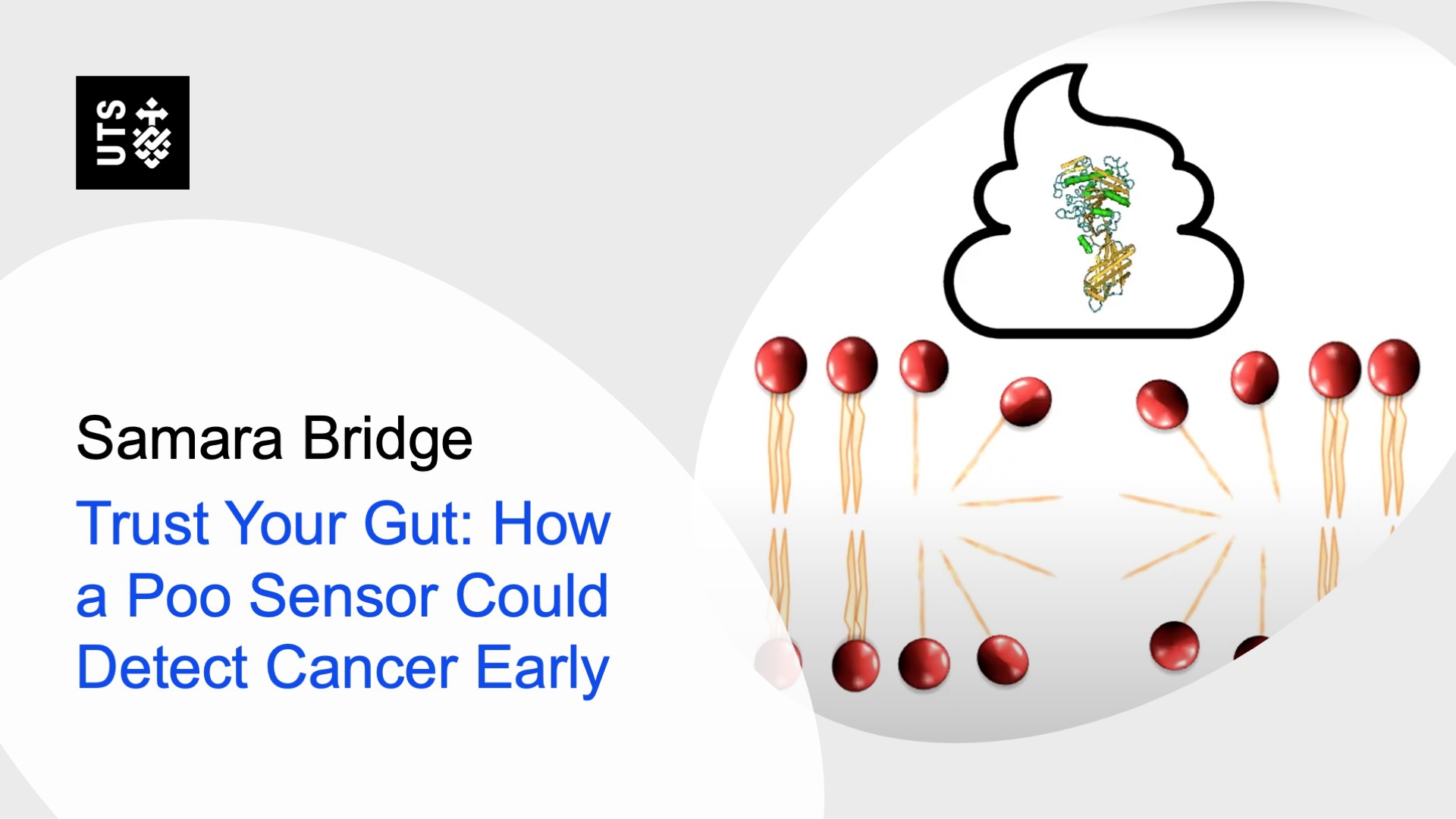
Presentation slide with UTS logo. Title reads 'Trust Your Gut: How a Poo Sensor Could Detect Cancer Early' by Samara Bridge, featuring abstract intestine and microstructure graphics.

Ignorance is not bliss. In the case of bowel cancer, it could cost you your life. Bow cancer, when caught early, is over 90% treatable. Interestingly, it's still the second leading cause of cancer deaths in Australia, taking over 5,000 lives each year. Why? Because early bowel cancer doesn't shout, it whispers. Its symptoms are vague, often invisible, and our current diagnostics rely on symptoms already being present. By then, it's often too late. Australia's National Bow Cancer Screening Program looks for hidden blood in poo. Now, if you can imagine, blood in poo is not unique to cancer. Many other conditions could trigger the exact same result. Take inflammatory bowel disease for instance. And to make matters worse, participation in the program remains low at around 40% of eligible Australians taking part each year. And of those, only 6% return a positive result, whilst only 3.8% actually have cancer. So with this in mind and the $1 billion healthcare burden and the high force positives and the high mortality rates, it is clear we need to do something better. Well, that's where my PhD project steps in. We build biosensors, tools that detect molecular changes linked to disease. And we think that we found one of these changes in something you flush away every single day in your poo. Now, here's the catch. Detecting meaningful biomarkers in poo is difficult. It's full of a lot of waste and random molecules. However, we have found something that seems to cut away at all this noise. And it's called phospholipase A2 or PL A2. And it's an enzyme that shows up at the very first signs of cancer. So we had an idea. What if we gave these molecular scissors something to cut? Every cell in your body is made of this membrane. And these membranes are made of fats or lipids. We can take these lipids and make our own membrane in the lab like giving PLA 2 a sheet of paper. So if these molecular scissors are present in your poo, our bio sensor can detect the cut. Now our hope is that one day this could be added to the national screening program because when it comes to bowel cancer, early detection is the cure and we may have finally found a way to hear cancer's whisper before it starts to shout. So, the next time you go to the toilet, think what if your poo could talk. Thank you.

Samara Bridge

About Samara

My name is Samara Bridge, and I am a final year PhD candidate in the School of Life Sciences, researching in the field of membrane biophysics. I completed my Bachelor of Advanced Science (Pharmaceutical Sciences) in 2022, where I became fascinated by biosensor research. My current research focuses on creating a stool-based biosensor using the enzyme Phospholipase A2 (PLA2) to detect early signs of bowel cancer. Through this work, I hope to improve early detection and reduce the burden of bowel cancer on individuals and the healthcare system.

Clare Colquhoun, Law
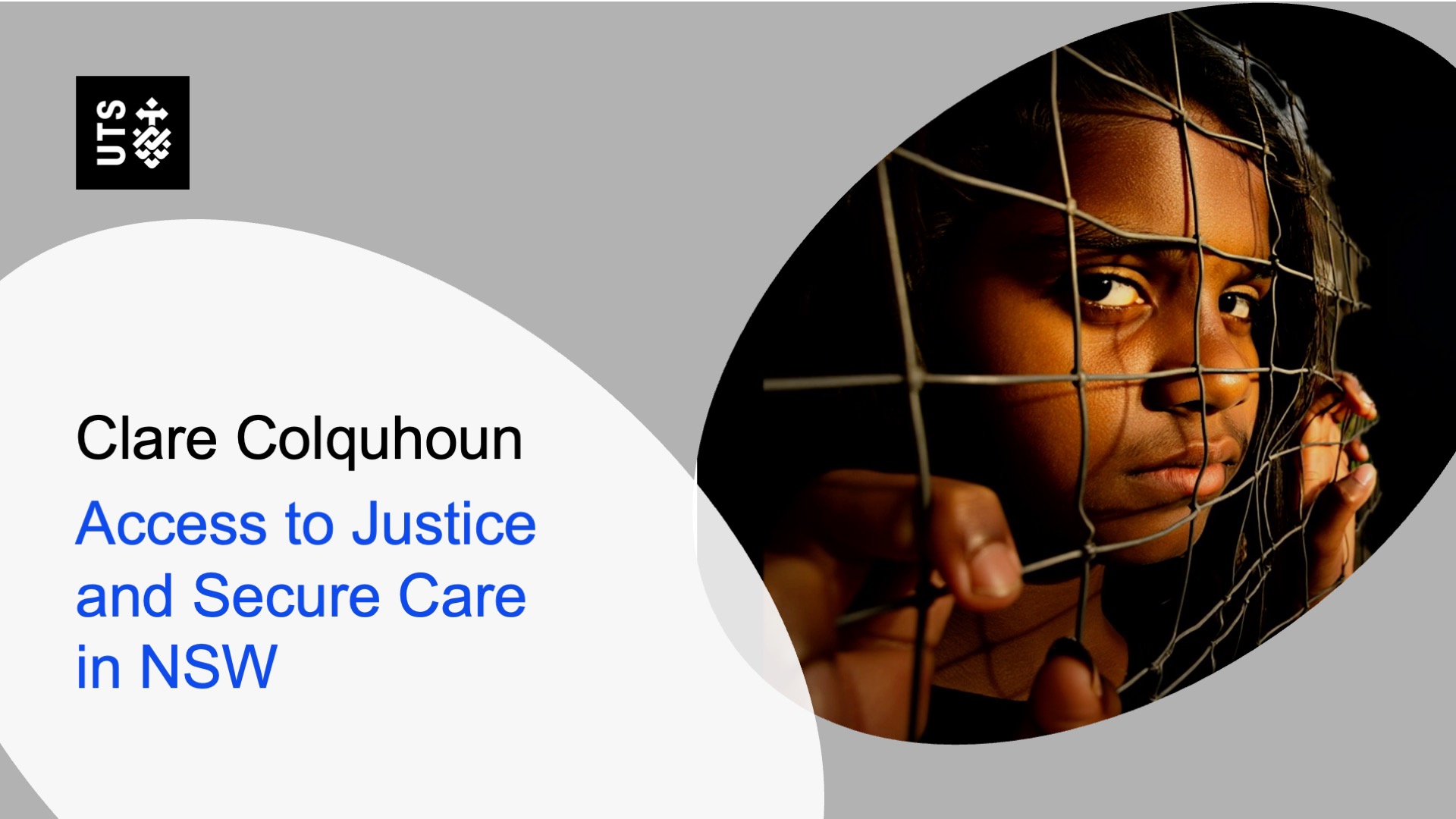
A young person holds a wire fence, looking serious and contemplative. Text reads "Clare Colquhoun: Access to Justice and Secure Care in NSW."

Take a second to think about what you were doing when you were 12. Arguing with your sibling over what to watch on television or playing cricket on the street until the lights came on. Now imagine something completely different. You're still 12, but like Sarah, you don't live at home because it's not safe to. You sleep on the streets. You use ice every day. You have been physically and sexually assaulted in unsafe environments. You have significant mental health issues. And sometimes when you get really upset, you harm yourself, often so seriously that you need medical or surgical intervention. But as soon as you have an opportunity, you run away, making it impossible for anybody to engage or support you. And so the cycle of harm continues. In New South Wales, children like Sarah can be detained without a criminal conviction in something called secure care. This extreme deprivation of rights is aimed at keeping children safe from catastrophic harm or death. Children usually stay in secure care for about two and a half years. Since 2009, 66 children in New South Wales have been detained in secure care. My research is the first in New South Wales to investigate the legal rights of these children and how those rights are protected from their initial placement in secure care throughout the period of detention. It considers how these children access justice through things like participation, having their voices heard, having access to an independent solicitor. I interviewed all the all the uh the players involved in this process, including judges, lawyers, case workers, managers, and people who have previously been detained in secure care to understand the process and to understand what the key concerns were. From this some significant and compelling issues have come to light. One, there is a dra drastic over representation of girls and first nations children in secure care. Two, the judges hearing these matters don't have any specific training. In fact, they often hear commercial or property disputes. Three, the children themselves have very limited access to the court process. and four, even their lawyers don't feel feel heard when in court. My research is making recommendations to improve the legal rights and protections for some of the most invisible children in New South Wales. Um because we have an obligation to create a legal process that minimizes marginalization and ensures that children have access to justice. Thank you. [Applause]

Clare Colquhoun

About Clare

Clare has a strong commitment to social justice and the representation of children and young people involved in legal processes. With over 20 years of experience in the child protection field, Clare has served in various roles, including social worker, project leader, and solicitor. Armed with degrees in Social Work, Bioethics, and Law, Clare has dedicated over a decade to representing children within state child protection jurisdictions. The Family Court of Australia and the Supreme Court of NSW, demonstrating a deep commitment to advocating for children's rights and well-being.

Hannah Mullen, Institute for Sustainable Futures
Woman in activewear walking a dog on a sunny path. Text shows "UTS Hannah Mullen Management of Hazardous Chemicals in Clothing: The Case of Silver Nanoparticles."

Imagine you're on a morning walk. The birds are chirping, the trees are swaying, and you take in a deep breath of fresh air. But on this walk, are you thinking about whether your socks smell? Most people aren't, but over half of clothing brands seem to think you we are. anti- odor, antibacterial, and stays fresh are all on the labels of clothing like socks, underwear, and active wear. But what we don't realize is that these features can come from harmful chemicals. One of these chemicals is silver nano particles. Silver nanop particles are tiny particles so small they can penetrate the skin the cells of humans, plants and animals causing serious harm to human health and the environment. Their use in clothing is especially concerning because we are increasing their usage in these non-essential items without considering the impact this is having. This means we're creating new pathways for pollution. Yet, despite these risks, there is still limited regulation of silver nanop particles in clothing, meaning that clothing brands are left to voluntarily opt in to industry-ledd initiatives if they want to do anything about hazardous chemicals. But this approach isn't working. And this is where my research comes in. I'm asking what is industry doing to eliminate hazardous chemicals and what are the barriers and enablers for brands to take more uh responsibility for the impacts of these chemicals. To answer these questions, I've been speaking with brands and the NOS's behind industry-ledd initiatives. One key barrier I found so far is that brands often don't know what chemicals are in their products. let alone the risks involved. And they rarely disclose this information. In fact, I found 76% of brands selling antibacterial clothing provide no information on chemicals used. This leaves us as consumers unable to make informed purchasing decisions and means we don't know what hazardous substances could be recirculated in recycling systems. But that's just one part of the puzzle. As I explore why barriers like knowledge gaps exist and how to overcome them, my research will provide new insight to industry, including what brands can do themselves, what external support is needed, and what safer alternatives exist. Using these insights, I'll provide practical industry guidelines so that we can prevent harm now before it happens. [Applause]

Hannah Mullen

About Hannah

Hannah is a PhD candidate at the Institute for Sustainable Futures (ISF), University of Technology Sydney (UTS). Her research explores how clothing brands can have product stewardship over hazardous chemicals in their clothing, with a specific focus on silver nanoparticles. Her research seeks to understand the current role brands play in chemical management, the challenges they face and the enablers to transition to pro-active chemicals management strategies. Her background is in sustainable fashion, with over five years of experience working in the industry.

Priya Soi Pulickal, Business School
Portrait of a smiling woman in a professional setting next to text titled "From Home to Host" on skilled migrant workers' experiences.

[Applause] Meet Anjali. She's at a job interview in Australia. She's a woman and Indian and brownskinned and speaks English with an Indian accent. I stress the word and because these identities don't exist separately. They overlap. They intersect. And that intersection shapes how we are seen, heard, and hired. Researchers called this intersectionality. It's also the heart of my PhD research, exploring how overlapping identities like gender, ethnicity, and migration status shape the work experiences of skilled migrants. You might think with so many migrants and anti-discrimination laws, fairness should follow. But fairness fails because real life is intersectional. I heard this again and again in my interviews with highly qualified Indian women in Australia and Saudi Arabia. Different countries, different cultures, yet their stories were strikingly similar. Not smooth transitions, not equal opportunities, but barriers. Barriers to belonging, to visibility. And these barriers aren't one of incidents. They are patterns, systemic. So, how do we fix this? I focused on the entry point, hiring. I designed an experiment with real recruiters in Australia to see if Indian women face hiring discrimination and whether nudges could reduce it. Nudges are subtle prompts that help decision makers pause and reflect like a gentle tap on the shoulder. In my study, they either reminded the interviewers the benefits of diversity or warned them the risks of discrimination. These nudges don't force change. They invite it. Just a small, simple nudge at the hiring stage could yield big wins. Fairer hiring, fewer barriers, and no need for expensive diversity training. Let's return to where we began. Now imagine you are Angelie. You are at an interview that finally sees you. Not your accent, not your skin tone, not your gender, just your worth. That's the change my research is working toward. And as an Indian woman, I know how deeply this matters because it means migrants like Anjeli, like me, can navigate Australian workplaces with confidence. But this change isn't just for Aneli and it is not just for me. When workplaces from startups to multinational companies see skills instead of stereotypes, everyone benefits. [Applause]

Priya Soi Pulickal

About Priya

Priya is a PhD candidate pursuing a collaborative doctoral research degree at the University of Technology Sydney (UTS) and the Indian Institute of Technology (IIT) Madras, India. She holds a Master’s and Bachelor’s degree in Psychology, graduating at the top of her class in both programs. Priya has extensive teaching experience in colleges across India. Her research focuses on skilled migration, gender, intersectionality, and human resource management. Currently, she explores the work experiences of skilled Indian migrant women in Australia and Saudi Arabia, using both qualitative and experimental methods to address hiring discrimination and promote inclusive workplaces.

Eric Duku, Design and Society
A speaker in a bright yellow and black patterned outfit stands on stage. Text reads: "Eric Duku, Solving the crisis in small-scale fisheries: The case of Ghana." UTS logo is present.

Imagine you wake up at 4:00 a.m. The blue ocean is your office. Your wooden canoe is your lifeline. For generations, your ancestors have fed their communities with fish caught with their own hands. But today, something is wrong. I am Eric, one of Ghana's 3 million smallcale fish workers. 30 years ago, my father returned home with net full of fish. Today I spent twice as long at sea and returned with a net full of plastic. The numbers tell a heartbreaking story. Fish catches have dropped by 50% in just 26 years. My country is on the verge of losing 60% of our protein intake that comes from fisheries. Behind these statistics are families facing an uncertain future. This is the same story across the global blue economy. So, how can researchers help? My PhD research focuses on improving the governance and sustainability of small-scale fisheries by unveiling gaps and creating opportunities using the concept of interactive governance. I interviewed 45 fish workers and 25 other key stakeholders along Ghana's coast looking at communities, governance, and agents at all levels of fishes management. My research revealed that the socioeconomic needs of small-scale fish workers are not sufficiently incorporated into fisheries governance structures. Lack of grassroot participation and low livelihood protection means that fish workers feel excluded from decisions affecting them. Poor representation has weakened their engagement and collaboration is merely symbolic. Fish are disappearing, leaving families without reliable food and income. Young people leave their communities and traditions and crime increases as people struggle to survive. But there is hope. My research uncovers something beautiful. When communities collaborate, magic happen. In those communities where fish workers, government officials and civil society organization join hands. Fish workers see themselves as active partners in decision making, supporting and complying with sustainable management measures. illegal fishing and dumping has decreased and fish populations are recovering. Now I have developed a framework so that the next generation of fish workers in Ghana and along the global blue economy come home with nets full of fish again. And we will proudly say in our language, our coast, our future, your future. Thank you.

Eric Duku

About Eric

Eric Duku was born and bred in Ghana's coastal zone, making him well-connected with riparian and fishing communities. He holds a Bachelor of Science in Geography and Regional Planning and a Master of Philosophy in Integrated Coastal Zone Management from the University of Cape Coast. Eric was part of the first cohort of scholars for the World Bank-funded Africa Centre of Excellence in Coastal Resilience (ACECoR).

He has developed a more extraordinary passion for integrated and interdisciplinary research, where he can apply knowledge from social and natural disciplines to understand and contribute to the human-nature connection debate. This justifies the direction of his past and current research. So far, Eric has over ten research publications to his name, with 267 citations. His PhD research at UTS under the supervision of Professor Michael Fabinyi and Professor Kate Barclay focuses on improving the governance and sustainability of small-scale fisheries in Ghana.

Eric’s skills span community engagement, geospatial and statistical analysis, to textual data analysis. Before coming to UTS, Eric was a program assistant in charge of land use and community outreach at a renowned NGO in Ghana, Hen Mpoano (Our Coast). Also, he previously worked as a teaching assistant for his post-undergraduate national service with the Department of Geography and Regional Planning, University of Cape Coast.  

Lucy Allen, Transdisciplinary School
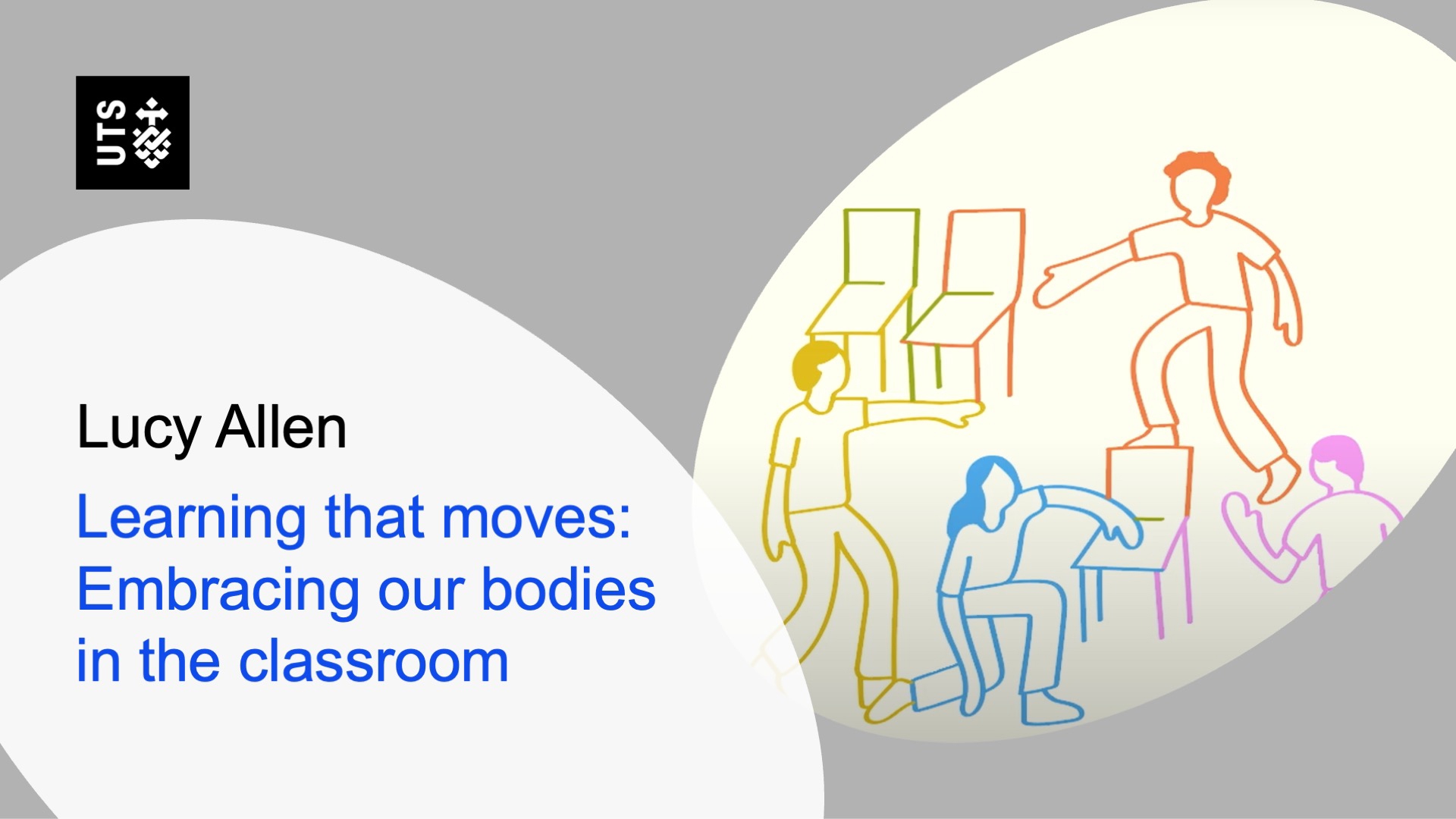
Gray background slide with UTS logo. Title reads 'Learning that moves: Embracing our bodies in the classroom' by Lucy Allen. Right side shows colorful outlines of people balancing on stacked chairs, suggesting movement and creativity.

Welcome to science class. Today we are going to learn about friction. Bring your palms together and rub them as quickly as you can. Can you feel that heat? That is kinetic energy being turned into thermal energy. And you might be getting a little bit tired because there's resistance between our two palms. Okay, you can relax. This experience of feeling friction through the body is an example of embodied learning far more powerful than any textbook definition. This approach sees us using our bodies alongside our minds to make sense of things. Now, we know our bodies help us learn. Research tells us that posture affects our confidence, gesture supports memory, and movement supports engagement. And while teachers recognize the value of this, they can find it challenging to implement in the classroom. My research explores both the challenges and opportunities for implementing embodied learning in the university classroom. Working with teachers to understand their experiences, we found there are five key reasons we don't see more of it. First, there's a sense that learning with the body just isn't proper learning. Second, many teachers have had negative experiences with it in the past. People such as myself, teachers haven't been taught about it in their training. Fourth, many of our classrooms aren't set up for it. They're filled with tables and chairs designed for sitting, listening, and lecturing. And finally, while embodied learning is embraced in areas like the creative arts, where does it fit within other areas of the university? I ran workshops with teachers and found that by providing a few key ingredients, we could work within and actually overcome these challenges. So, we designed a training experience that brought these ingredients together. We gave teachers their own experience, hands-on experience of embodied learning with teachers from across the university so that they could develop understanding and confidence together. We then helped them notice how they were already using embodied learning. most are. They just don't realize it. We then built on what teachers are doing well, recognizing the endless ways that embodied learning can be done. And finally, we supported them to experiment and take risks so that when they face a classroom full of tables and chairs, they can creatively adapt. Now, this training experience has been tested and implemented in two universities, and an adapted version is now part of teacher training within my own workplace here at UTS. If we want to see more of this in the university classroom, we must support our teachers to notice, experience, and experiment with embodied learning alongside others, building on what they already do. Well, thank you. [Applause]

Lucy Allen

About Lucy

Lucy Allen is a Lecturer and final-year doctoral candidate in Transdisciplinary School at UTS. With a background in the arts and innovation, Lucy leads creative education and research with a focus on facilitating transformative learning experiences. Through her PhD, Lucy has been exploring the challenges and possibilities for using embodied learning to support transdisciplinary education that brings together students and educators from across disciplines.