

- Posted on 21 Oct 2026
- 2-minute read
By James Laurenceson and Xi Chen
This article appeared in Griffith Asia Insights on October 21 2026.
In 2022, writing in the Journal of Australian Studies, Colin Mackerras reflected on the history and development of Australian studies in China. His core contention was that the character and decisions of the individuals building the field had played a critically important role, but their efforts were also spurred or checked by the context in which they operated, including the state of political relations between Canberra and Beijing.
Drawing on decades of personal involvement, Colin traced how Australian studies in China emerged through the combined efforts of individual scholars, institutions and governments. Together, these efforts helped transform Australian studies from a small component of broader Western studies into what he identified as a “genuinely Chinese branch of scholarship”.
Yet Colin was never blind to the difficulties. Writing during a period of strained official relations, he observed what he described as a growing “dark shadow” over academic exchange. Educational cooperation, long regarded as one of the strongest foundations of the relationship, was increasingly viewed through the lens of strategic competition and security concerns. For Colin, this represented a troubling departure from the spirit that had animated earlier decades of engagement.
What stands out, however, is where he placed his faith. It lay in the generations of scholars, students and researchers he had known over the course of his career, and in those yet to come. Having spent decades engaging with the people who built Australian studies in China, he remained convinced that mutual understanding could outlast the political fluctuations of the day. As he wrote:
Future historians might well regard the present difficulties as merely “a blip in an overall positive relationship”.
We recently had the experience of working together on a new paper assessing the state of Australian studies in China, which coincidentally will appear in the same journal that Colin’s had. Just a few days after our paper was accepted for publication, we learned of his passing. As we reflected, we were struck by how Colin had pinpointed and modelled what had brought our own collaboration to life. Expertise alone was not sufficient. Successful collaboration required mutual trust, goodwill, humility and a shared commitment to studying and presenting a complex history fairly and respectfully. It was fitting then, as well as a small source of consolation, that we can now dedicate our forthcoming paper to his memory.
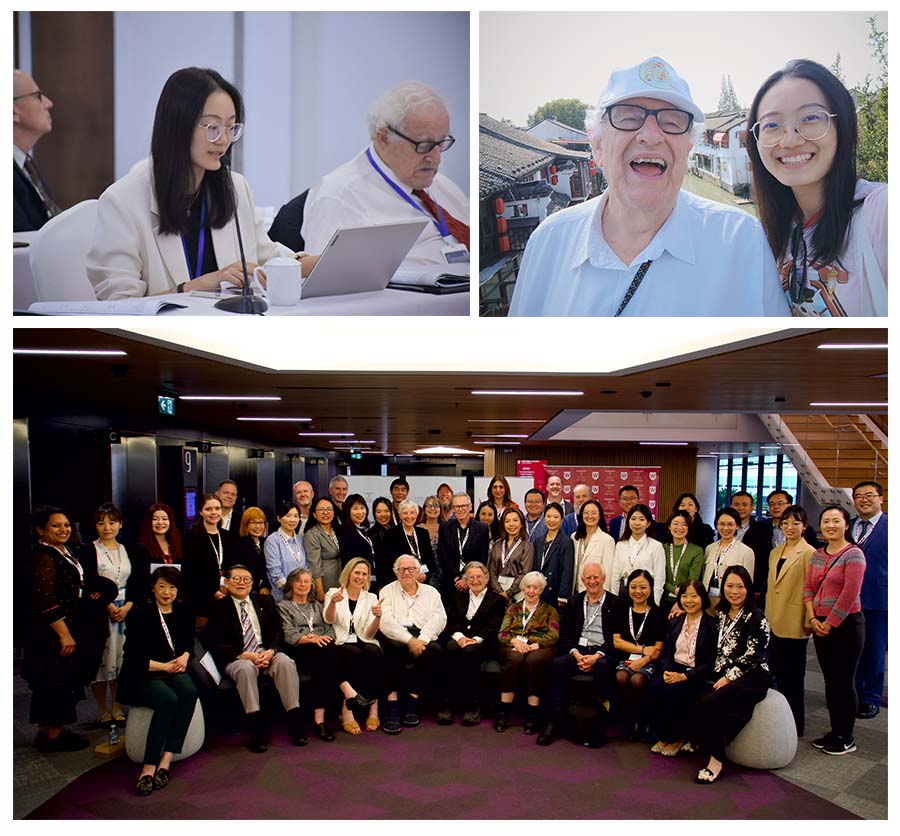
Colin forged a connection between ideas and people. His understanding of China was shaped not only by what he read and wrote, but also by decades of conversations, friendships and scholarly exchange.
"He knew the history of Australian studies in China because he knew the people who made that history."
Chin resting on one hand, a smile never far away, and punctuated by the occasional nod, Colin was always genuinely interested in what others had to say. It was through countless conversations such as these that he shared his knowledge, wisdom, generosity and empathy with all who had the privilege of knowing him. Like the tiramisu he enjoyed so much, he never failed to provide a small lift to the spirits of those around him. In that sense, the values that informed his scholarship and the qualities that characterised him as a person were one and the same.
Vale, Colin. You remain part of the story you helped to build.
AUTHOR

Director, Australia-China Relations Institute And Professor, DVC (International & Development)
AUTHOR
Xi Chen
Research Fellow, Australian Studies Centre, East China Normal University.

News
Feeling without knowing? Chinese Australian perspectives on Indigenous affairs in Australia
This article appeared in Australian Journal of Political Science. https://doi.org/10.1080/10361146.2026.2758183
News
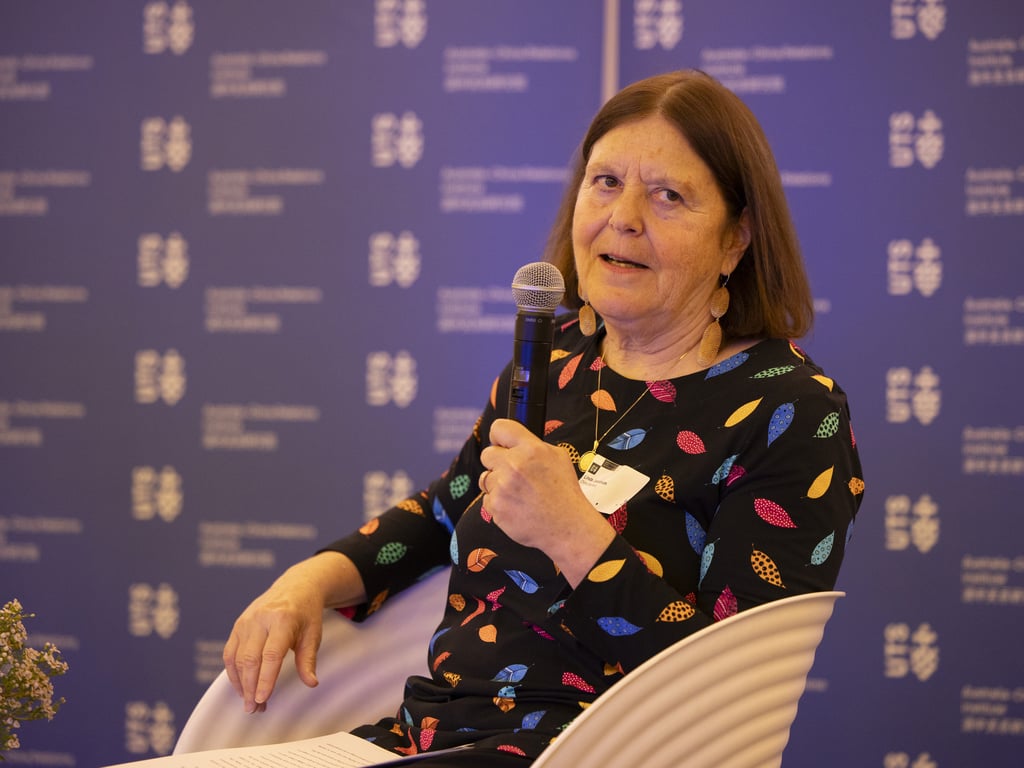
Is a clash over Taiwan just around the corner?
On October 28 2026, the Australia-China Relations Institute at the University of Technology Sydney (UTS:ACRI) hosted Ms Linda Jakobson, Founding Director and...
News
Australia-China Weekly Brief: October 2026 issues
The Australia-China Weekly Brief by the Australia-China Relations Institute at the University of Technology Sydney (UTS:ACRI) tracks key developments in...

News
Can China solve the global climate catastrophe?
This article appeared in Journal of Contemporary China. https://doi.org/10.1080/10670564.2026.2747620
News
Feeling without knowing? Chinese Australian perspectives on Indigenous affairs in Australia
This article appeared in Australian Journal of Political Science. https://doi.org/10.1080/10361146.2026.2758183
News
Is a clash over Taiwan just around the corner?
On October 28 2026, the Australia-China Relations Institute at the University of Technology Sydney (UTS:ACRI) hosted Ms Linda Jakobson, Founding Director and...
News
Australia-China Weekly Brief: October 2026 issues
The Australia-China Weekly Brief by the Australia-China Relations Institute at the University of Technology Sydney (UTS:ACRI) tracks key developments in...
News
Can China solve the global climate catastrophe?
This article appeared in Journal of Contemporary China. https://doi.org/10.1080/10670564.2026.2747620