


- Posted on 26 Oct 2026
- 5-minute read
By Chris Cook
This article appeared in UTS:ACRI's Perspectives on October 26 2026. Perspectives is the commentary series of the Australia-China Relations Institute at the University of Technology Sydney (UTS:ACRI), offering research-informed viewpoints on developments and debates in the Australia-China relationship.
Two new reports from the Australia-China Relations Institute at the University of Technology Sydney (UTS:ACRI) raise important questions about how Australia's research security policies are affecting scientific collaboration with China.
The reports are Right-Sizing Research Security: A Survey of Chinese-Background Scientists in Australian Universities and a companion qualitative report, Right-Sizing Research Security in Practice: Interviews with Chinese-Background Scientists in Australian Universities. Drawing on a survey of 109 Chinese-background researchers and interviews with 12 senior scientists, the reports raise concerns that unclear research security requirements could undermine Australia's scientific capabilities.
The reports present their findings clearly and acknowledge their methodological limitations. Although the survey was voluntary and self-selected and thus cannot be considered statistically representative of all Chinese-background researchers in Australia, its findings warrant serious attention.
If Australia wishes to have a productive and prosperous future, it must be competent in the technologies shaping the global economy. China is at the forefront of most of these fields, including batteries, electric vehicles, rare earths processing, artificial intelligence, advanced manufacturing and health-related technologies. Many of these have already been identified by the federal government as priority areas in Australia’s national interest.
China has one of the world’s most productive research systems and is home to the world’s largest and most advanced manufacturing sector. Its proximity to Australia and extensive research capabilities creates significant opportunities for collaboration greatly benefiting Australia’s future economy, but policies are now in place inhibiting such engagement.
Chinese industry can provide industrial partnerships and funding opportunities for research conducted in Australia. This is invaluable support since Australian business investment in R&D remains well below the OECD average – 0.9 percent of GDP compared with 1.99 percent, according to the government's Ambitious Australia review. Australia’s established research links with China are supported by many key researchers familiar with Chinese culture and language. These connections are a significant asset, yet as the UTS:ACRI findings suggest, government policy settings aimed at addressing security concerns risk undermining our ability to benefit fully from China’s scientific and technological strengths.
Many countries recognise that R&D collaboration can raise legitimate security concerns. Technological capabilities are increasingly being treated as strategic assets. For example, China itself recently proposed export controls covering 40 technologies in artificial intelligence, biomedicine and solar energy, citing concerns about national security and the proliferation of sensitive technologies. This makes carefully targeted research security policies more important, not less.
Although the UTS:ACRI research reports draw on a self-selected sample of Chinese-background researchers, the findings should concern the broader research community, and policymakers, given the importance of China to Australia’s scientific output. One indicator of this importance is that China-based collaborators are involved in around 52 percent of Australian top-decile cited STEM publications since 2020. Fracturing these research links could therefore have implications extending well beyond individual researchers, particularly in the priority STEM areas so important to Australia’s future prosperity.
A key point from the UTS:ACRI research is that the researchers surveyed and interviewed recognise that international research collaboration can present security risks and accept the need to manage them. Indeed, 62 percent of survey respondents agreed that Australia needs policies to manage national security risks in international research collaboration, while 73 percent favoured case-by-case assessment.
However, the findings suggest that researchers, and many of their associated institutions, face considerable uncertainty about what is required. For example, it seems to many that ‘dual-use’ research (research which may have military as well as civilian applications) is now unlikely to proceed. Yet, as any engineer or scientist knows, just about anything can be classified as dual-use. As one researcher interviewed for the UTS:ACRI reports observed:
After all, it’s difficult to think of any technology that could not, in some way, be considered dual use. In this political climate, everything becomes a security issue simply because people want to avoid making mistakes. As a result, if your work involves artificial intelligence, biology, medicine, genetic information, or virtually any branch of engineering – mechanical, electrical, information engineering, and so on – it can all be labelled as ‘dual-use’. That’s because modern military capability is itself a systems enterprise: it draws on and integrates advances from virtually every field of science and technology.
In the absence of sufficient clarity about what research is acceptable, the bureaucratic response is typically to be risk-averse. For example, it is administratively easier to refuse approval of proposed collaborations with China, given uncertainty about how government requirements should be applied and the limited transparency, accountability and opportunities for review in institutional decision-making.
The UTS:ACRI research suggests that this risk-averse approach is evident at some universities. One interviewee reported having stopped applying for Australian Research Council funding involving China-based researchers or universities because they anticipated difficulties at their university's internal review stage.
Some of Australia’s best and most experienced researchers interviewed for the UTS:ACRI reports indicated that the uncertainty and opaqueness of the current rules and regulations now make research collaboration with China extremely difficult, indeed almost impossible in some circumstances.
The findings raise serious concerns about the long-term effects on Australia’s research capabilities. Although many lively and productive research collaborations remain underway, this is changing swiftly and the outlook is bleak unless current trends are rapidly ameliorated.
The survey suggests that research security requirements are already influencing decisions that will shape future scientific activity. For example, ‘Fifty-seven percent [of the respondents] agreed that they had avoided, changed, delayed or ended China-related collaboration because of research security policies, procedures or related institutional expectations. The most commonly reported changes concerned collaborator selection (74%), grant applications (63%), supervision, hosting or recruitment (62%), research topics (59%) and international co-authorship (54%).’ In other words, between 54 percent and 74 percent of affected respondents reported changes across key areas of STEM activity – a worrying trend that, if sustained, could become a catastrophe in the making.
There is still time to address these concerns. Importantly the reports also identify practical ways to do so. Both recommend improvements to the implementation of research security policies, including ‘… clearer guidance, more transparent and predictable review processes, case-specific assessment and better explanation of how decisions are made. These are not arguments for weaker safeguards, but for safeguards that are more targeted and easier to navigate.’
The findings should serve as a warning about the dangers of the path Australia is currently treading. Australia must protect sensitive research and manage genuine national security risks, but it must also recognise the costs of unnecessarily restricting international scientific collaboration. Clearer guidance, transparent review processes and case-by-case assessments would help researchers and universities distinguish legitimate security concerns from lower-risk research activities. At a time when access to advanced technologies is becoming increasingly contested, Australia cannot afford to undermine the scientific relationships and expertise on which its future prosperity depends.
Let us hope that policymakers are listening.
Author
Emeritus Professor Chris Cook has worked for Marconi Avionics in the UK as a project engineer designing aerospace computing systems after receiving his PhD in 1976, and later with GEC Australia as the Technical Manager of their Automation and Control division, where he set up a group which designed and installed robot controlled automation systems for manufacturing applications. He then became the founding Managing Director of the Automation and Engineering Applications Centre Ltd., a non-profit company of the University of Wollongong, which built and installed automation and robotic systems for manufacturing companies around Australia. He became Professor of Electrical Engineering at the University of Wollongong in 1989 and was Head of School for 12 years before taking on the role of Executive Dean of Engineering. With the merger of the Faculty of Engineering and the Faculty of Informatics in 2013, he became Executive Dean of the Faculty of Engineering and Information Sciences (EIS) until retirement in 2017. His research interests are in industrial automation, robotics and power engineering. Though now retired he still assists others with research proposals, and in mentoring early and mid-career researchers. He is also involved with Engineers Australia in accrediting engineering degrees at Universities across Australia.
AUTHOR
Chris Cook
Emeritus Professor, University of Wollongong
News
Australia-China Weekly Brief: October 2026 issues
The Australia-China Weekly Brief by the Australia-China Relations Institute at the University of Technology Sydney (UTS:ACRI) tracks key developments in...

News
The struggle over what China wants
China expertise is itself a field of epistemic struggle, shaped by competing convictions, dispositions and geopolitical perspectives. Doshi’s critique of Kang,...
News
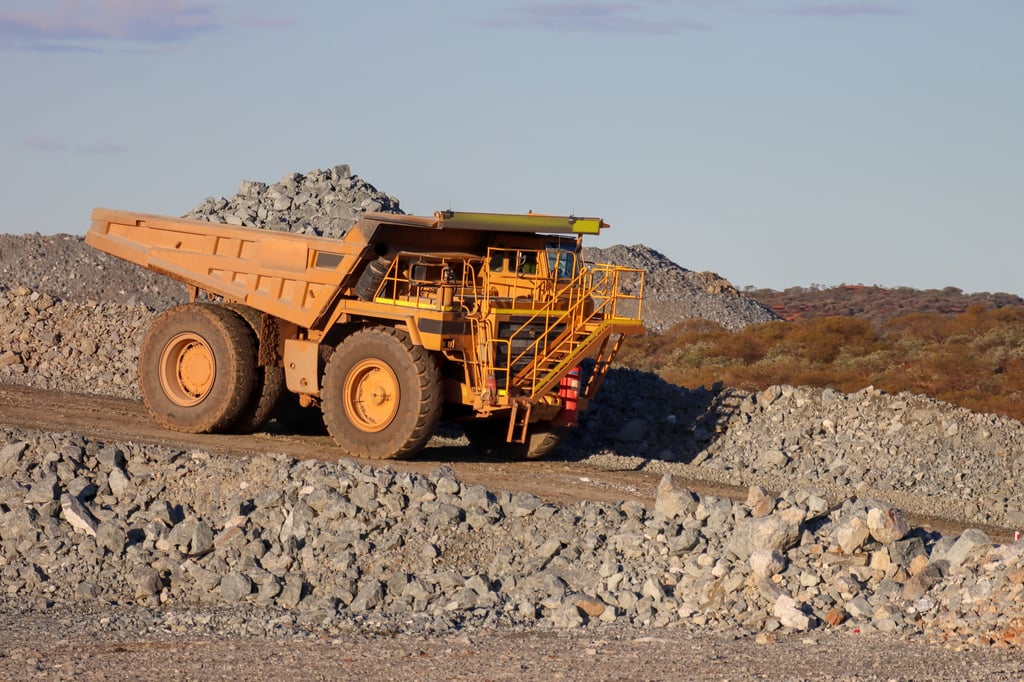
Australia should turn critical minerals leverage into industrial capability
Australia’s Syerston Scandium Project is a test of whether critical minerals cooperation can make Australia not merely a supplier, but a critical capability...

News
PERSPECTIVES | Can Australia and China talk sensibly about AI Safety?
This article appeared in UTS:ACRI's Perspectives on October 20 2026. Perspectives is the commentary series of the Australia-China Relations Institute at the...
News
Australia-China Weekly Brief: October 2026 issues
The Australia-China Weekly Brief by the Australia-China Relations Institute at the University of Technology Sydney (UTS:ACRI) tracks key developments in...
News
The struggle over what China wants
China expertise is itself a field of epistemic struggle, shaped by competing convictions, dispositions and geopolitical perspectives. Doshi’s critique of Kang,...
News
Australia should turn critical minerals leverage into industrial capability
Australia’s Syerston Scandium Project is a test of whether critical minerals cooperation can make Australia not merely a supplier, but a critical capability...
News
PERSPECTIVES | Can Australia and China talk sensibly about AI Safety?
This article appeared in UTS:ACRI's Perspectives on October 20 2026. Perspectives is the commentary series of the Australia-China Relations Institute at the...