• Posted on 30 Oct 2026
Linda Jakobson

Is a clash over Taiwan just around the corner?

Is a clash over Taiwan just around the corner? transcript

Is a clash over Taiwan just around the corner?

October 28 2026

UTS Business School

E&OE | Check against delivery


Professor James Laurenceson:

Welcome one and all. I still see people coming in, but we might make a start. Let me begin tonight by acknowledging this event tonight is hosted on the Country of the Gadigal. The Gadigal have cared for their community, land and water for thousands of generations based on their deep knowledge of their country. We pay respects to their ancestors, their elders, and acknowledge their ongoing status as the first peoples on this land.

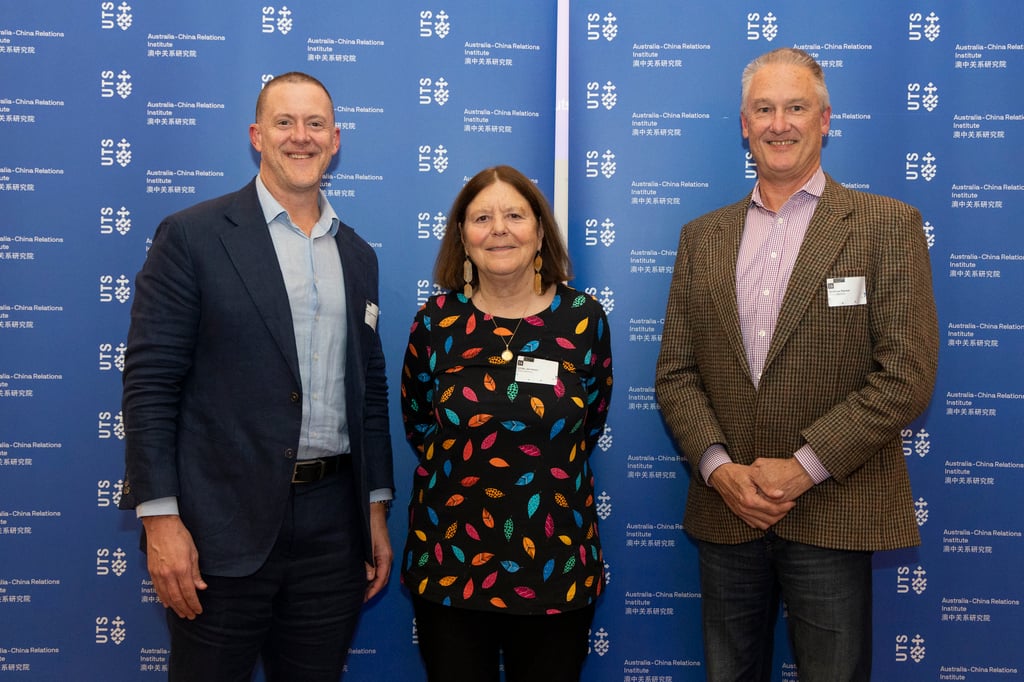
Welcome, everyone. My name is James Laurenceson and I'm the Director of the Australia-China Relations Institute here at the University of Technology Sydney. A particular welcome, not just to friends of ACRI, but also to old friends of China Matters. There's many of you in this room. I won't name you all, but let me single out a couple people. It's great to see Steve Fitzgerald in particular. Real good to see you, Steve. Yin Cao, I saw Yin before as well. We've also got Stuart Fuller, Andrew Parker, Kevin McCann, Jocelyn Chey. There're a lot of you. So welcome to all of China Matters longstanding supporters.

Now to introduce tonight's event. Look, folks, as an economist, my interest naturally gravitates to what is a nearly $350 billion two-way annual trade relationship between Australia and China. But in Australia's discussion of China more generally, perhaps no other single topic attracts more attention than that of Taiwan. Now, look, Beijing may well say that the status of Taiwan is an internal affair. We've all heard that, but make no mistake, Australia has very real and very significant interests in that 150 kilometres odd straight between the island of Taiwan and the Chinese mainland remaining peaceful. So the focus that Taiwan gets here in Australia is very much warranted and it's something at UTS:ACRI we're very happy to engage with.

That said, there is always the question of how best to engage with that topic. We could, for example, host a Chinese government representative or perhaps a prominent nationalistic Chinese commentator or their Taiwanese counterparts, or perhaps one of the many activists on this issue, including activists here in Australia. And of course, all these voices are very much welcome in a liberal democracy like Australia. But I must say, in terms of fulfilling ACRI's mission, which is to inform Australia's engagement with China through research analysis and dialogue grounded in scholarly rigor, I'm actually very attracted to hosting an expert voice. How shall I put it? An expert voice who's one step removed. And I'm very pleased to say tonight that we have just such an expert voice.

Linda Jakobson is not from the Chinese mainland, nor is she from the island of Taiwan, nor is she even from Australia in fact, although she has extensive experience visiting and living in all these three locations. Linda Jacobson has in fact been engaged with the topic of Taiwan for more than 30 years as a piece published in Australian Foreign Affairs magazine just a few years ago demonstrates. I've got to say I re-read that piece preparing for tonight and it is an impressive piece of work.

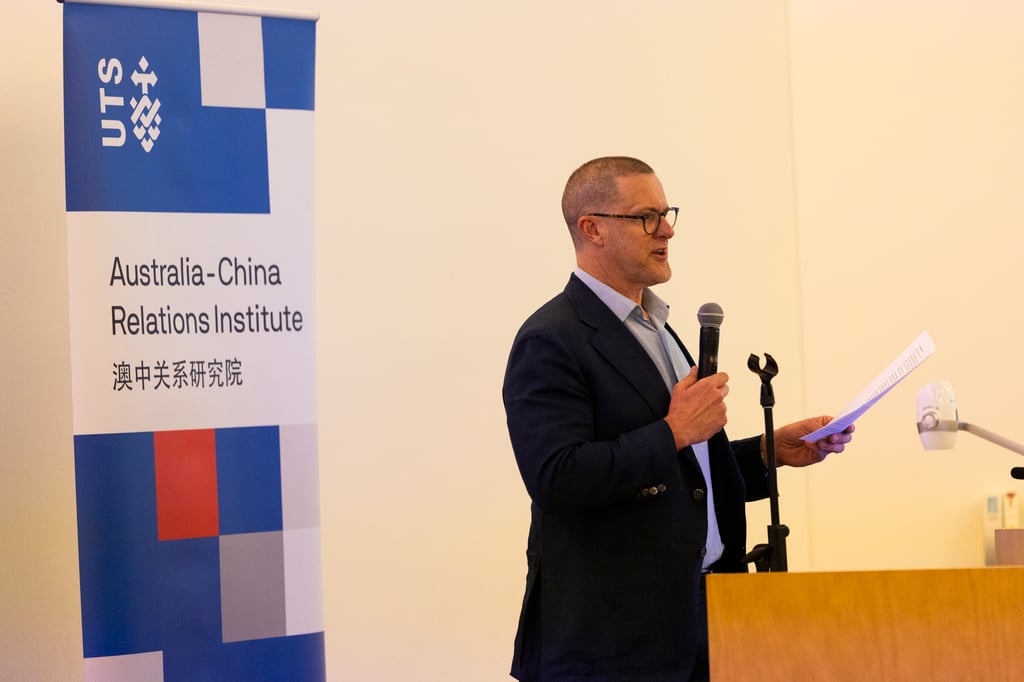
Look, I won't go into Linda's bio now. You would've seen it when you registered to event and the fact that you're here tonight tells me that you were very much impressed with it too. Tonight, Linda's going to give an address for about 20 minutes. Then she and I are going to be in conversation for about another 20 minutes. And then after that, we'll have 15 minutes for Q&A with the audience. So look, on that note, let's get started. Linda, welcome to the front to deliver your 20 minute address. Let's give her a welcome.

Ms Linda Jakobson:

Thank you, James. Good evening everyone. It's a real pleasure to be back at UTS:ACRI. It's a real pleasure to be back in Sydney. And certainly, it's a pleasure to be working again with James Laurenceson.

He and I together oversees the China Matters-UTS:ACRI Fellowship, have continued to do so even though I haven't been present in Sydney as of late. This is a fellowship that facilitates on the ground research by a young Australian-China researcher to make sure that they have that experience of doing work in China and interacting with Chinese interlocutors. I'm very proud of this fellowship. This year's fellow, Dr. Annie Drahos, is with us here this evening. I continue to believe that field work in China is essential if you want to understand the drivers of Chinese policy.

I'm not going to go through the old friends list of China Matters as James already did it for me, but I will single out two donors of this fellowship, Kevin McCann and Stuart Fuller. Thank you for your support. It means a lot. And Jocelyn Chey, sorry, I had to look down at my paper because those gentlemen were sitting over there. And Jocelyn is also a donor of the Fellowship.

This evening I'm going to address some of former Prime Minister Kevin Rudd's recent assessments about the outlook of Taiwan. I do this for a number of reasons. First of all, Rudd is still globally an authoritative voice on China. There's no doubt about that. The second reason is that he's very recently been here in Australia, given a number of talks. He also gave some extensive interviews internationally, but the Australian media didn't quite pick up on all of his thinking. So I thought it would be important for an Australian audience to a little bit pick apart his thinking on what's going on in the Taiwan Strait and present my own perhaps counter arguments to some of the points he makes.

As background, Kevin Rudd resigned from office just as I was arriving in Australia. I have no opinion of him as a politician or as a prime minister for that matter. I have great respect for him as a China analyst. He is really one of those very thoughtful people who try hard to examine anything to do with China from a broad range of approaches.

I had the great pleasure of hosting Kevin Rudd at my countryside home in Finland this past June. It's a visit which has been in the making for the last three years ever since he did China Matters, the honor of presenting the China Matters ovation. He did this at a time when China Matters was under attack by the Morrison government and he was one of the very few outstanding Australian citizens who spoke publicly about the need for us to tolerate organizations like China Matters. So I feel very indebted to Kevin Rudd and wanted to arrange a good visit to Finland.

Now, during that visit, we sat in the car for numerous hours. It was an intellectual treat to sit and discuss China and Taiwan with him with no timetable. And this very complex issue of the future undecided status of Taiwan really needs many hours to fully understand. And today I'm going to try and unpack some of those complexities for you.

I still believe that it is the most dangerous flashpoint, the Taiwan Strait that is, in the Indo-Pacific. And though many people will disagree with me, I also think it is the only flashpoint which could lead to a military conflict between China and the United States. There are lots of other flashpoints and I'm not belittling the importance of them, but I think this is so emotionally charged that if it is handled poorly, it could indeed lead to military conflicts. And I hope by the end of this talk, you'll know the answer to my question, 'Is a clash over Taiwan just around the corner?'.

Before I move on to what Kevin Rudd thinks about these complexities, I though I'd just paint, with a very broad brush, a picture of what is the situation in the Taiwan Strait today. As a reminder to everyone, most people in this room know this, there has been no official communication between Taiwan and the People's Republic of China for the last 16 years, not since a lady called Tsai Ing-wen was voted to be president and now we have her successor in office. His name in English is William Lai, Lai Ching-te in Chinese. Both of these, both Tsai and Lai, are members of the so-called independence-leaning party, the DPP, the Democratic Progressive Party. Now, Lai is in his first term at present, so he can still run for re-election and I have no doubt that he will run for re-election. And this is an important point because it's part of Kevin Rudd's thinking on this matter. At the moment, I think anyone would agree that it is impossible to assess whether William Lai is going to be voted in for a second term.

Taiwanese politics are factuous to say the very least. I would describe Taiwan and its political environment as one that is deeply divided, highly argumentative, very difficult to govern, to mention just one facet of this complex political environment. At the moment the parliament, the Legislative Yuan, is controlled by the so-called opposition party, the KMT, the nationalists, while we have a sitting DPP independence-leaning president. So that in itself makes the roller-coaster nature of Taiwanese politics even more intense.

The KMT has not yet chosen a presidential candidate, but the party did make headlines just a year ago when they chose a very colorful populist called Cheng Li-wun to be their new chair. Now, she used to be a radical pro-independence politician. Twenty years ago, she changed tack. She joined the KMT and now supports unification. I should say that the KMT has tried hard over the last 16 years when it's been in opposition to carve out an image of a party that continues to strongly support a Taiwanese identity while at the same time saying that we need to work with the mainland. We need to work with the PRC. We need to have communication with the PRC.

So in April of this year, the new chair, Cheng Li-wun, traveled to Beijing. She met with Xi Jinping, that too quite a historic meeting, and she publicly advocated peaceful coexistence. She then went to the United States and she met with many of Congress representatives there and other business community, academic representatives, and she explained in detail her vision for peace and prosperity across the Strait.

She emphasised the need for dialogue, saying otherwise Taiwan is going to be the next Ukraine. She also has said quite controversially, in Taiwan that is, controversially, that Taiwanese people should be proud to be Chinese. This is a very loaded statement for a society, which for at least 16 years, but I'd say for longer has been so emphatic about being separated from mainland identity. This has been driven, I would like to add, by politicians and by DPP politicians in particular.

According to all opinion polls, regardless of who does them, people in Taiwan would just prefer the status quo to continue. Do what Deng Xiaoping said when China and the United States in 1979 formed diplomatic relations, 'Kick the can down the road. This is so complex an issue, we'll leave it to future generations.'

So just a few words about what is the status quo. From Taiwan's point of view, the status quo means that Taiwan is an independent society. It has its own military, its own currency, it has its own very democratic political system, but it lacks international recognition as a sovereign state. At Beijing's insistence, Taiwan is today barred from all international organisations which require statehood as a pre-requisite for membership. And of course this is detrimental to Taiwan's development, to one's society of 23 or 24 million people, highly educated people. But from Beijing's point of view, and we have to remember this is such a divisive issue that we have to take both opinions or viewpoints into consideration, Taiwan today is a bleeding sore. It's a bitter legacy of the Civil War when the KMT troops fled to Taiwan after the communists took power in 1949.

So to Beijing, Taiwan is a rebellious province and the status quo is an open wound that can only be healed via reunification. But status quo, it shifts, it transforms. And as I already mentioned, for three decades, this separate identity of Taiwan and Taiwanese people from the mainland has been emphasised and nearly drummed in to the minds of Taiwanese people.

Beijing has tried to appeal to the hearts and minds of Taiwan and Taiwanese people by offering economic incentives, but it's important to note that over the last three years in particular, Beijing has ramped up military exercises, both the scope and the frequency of these military exercises near the island. It has also ramped up disinformation, misinformation campaigns, cyber attacks. All of these are meant to remind President Lai, who they absolutely loathe in Beijing, that Beijing will not tolerate any action that moves Taiwan even an inch towards a more separate identity than it still has today.

So before I turn to Kevin Rudd and the thinking that he has about why it's so important to realise that we're at a crossroads in the Taiwan Strait, let me just say that de jure independence remains absolutely, or opposition of de jure independence of Taiwan remains absolutely paramount for the Communist Party of China and Xi. I don't think anyone can emphasise this enough. I have no doubt that if Taiwan would seek international recognition of its sovereignty, Beijing would use, as it has threatened to use, military means to stop it.

But in Taiwan, everyday life goes on as normal. People are very divided, as I mentioned before, over politics in general, but certainly over this matter, should Taiwan prepare for war? Some people feel absolutely increasingly anxious about these military exercises so near the island, about the cyber attacks and so on.

During my last visit, I was struck by how much civil society has become attuned to the possibility of military conflict in Taiwan. And they're increasingly aware of civilian willpower as deterrence, and that's because of what has happened after Russia invaded Ukraine. President Lai has also been much more forthright in speaking and promoting about the importance of whole of society resilience. When I was lost in Taipei, I was told about the military manning the subways in Taipei during a drill so that everyone could see them. It was quite a dramatic sight. Tanks would roll down the boulevards of Taipei in another military drill. This is unheard of five, six years ago. So Lai has really ramped up this notion that civilians need to think about their own defense.

Okay, so now I'm going to inject some of Kevin Rudd's analysis into this discussion. Rudd calls 2028 a disturbing year, and he is, quote unquote, 'Very much worried that Xi Jinping could miscalculate in 2028.' If Lai is re-elected, Rudd feels there's a 50/50 chance that he will be, he asks, 'Would this become a trigger for Xi to say enough is enough?' A key message of Rudd's is reflected in the following passage, which I took from a very lengthy New York Times article. Rudd says, "What do I fear? A miscalculation by Xi Jinping about the level of American resolve. Do the Chinese conclude post-Iran, for example, that the likelihood of any American leadership to deploy forces in the event of a Taiwan crisis would be reduced as a result of the Iran experience? Could he possibly arrive at a conclusion, through a bout of excessive self-confidence, that a unique opportunity has arisen? The danger is that Xi miscalculates."

Now, I agree that 2028 is fraught with risk. I agree that Xi Jinping seeks a unique opportunity to unify the two sides. Trump will be on his way out in early 2028. It'll be 12 long months from the Taiwanese election until we have a new American president in the White House.

And this is where I very much differ from many analysts of the Taiwan Strait, and Mr. Rudd included, I do not foresee Beijing invading Taiwan. Xi Jinping does not want war, he wants reunification. And it's an important distinction. Peace has prevailed for many decades because everyone agreed to kick the can down the road like I quoted Deng Xiaoping, or it's attributed to Deng Xiaoping, we don't know did he actually say it. But that's the saying that kick the can down the road, don't make any decisions. Xi Jinping comes to power in 2012 and says, 'We cannot leave the Taiwan question to future generations. We need to have some progress.' And that is during Xi's lifetime, he means.

So I agree that the results of the 2028 January Taiwanese presidential elections will be decisive. So in that sense, I am in agree with both Rudd and many other analysts.

If the KMT wins and no one seems to remember that the KMT could win, many of the alarmist predictions that we're hearing about, and especially in the Australian media, I feel, that have been swirling around, they will be proven hollow. The KMT will pursue a much more conciliatory approach to the mainland. I think that Cheng will initiate talks with the mainland, political talks, and this is something that Xi Jinping very much wants.

But what if the DPP wins? How do I see that unfolding? Instead of military action, I foresee at an opportune moment, Xi Jinping launching a ferocious intensive pressure campaign on Taiwan using all means short of war. He will intend to create confusion, uncertainty, fear, ultimately chaos in society. These actions by the PRC will pit the two extremes in Taiwanese politics against each other, the small, small, small pro-unification camp and the growing pro-independence camp. Both are minority voices, but they are very politically active.

So what do I mean by all means short of war? I mean that Beijing would shut down electricity generation in Taipei. We'd be in the dark if you were in Taipei. I mean Beijing taking out communication across the island. Taiwanese would be cut off from the rest of the world. I foresee relentless cyber security attacks. I see missile exercises during which an accident happens and one missile strays into a shopping centre and kills many dozen people. I also see a flotilla of maybe 100,000 unarmed fishermen going on a peace mission across the Strait only to turn out that they are militia and they're tasked with the job of sabotage and stirring up civilian strife within Taiwanese society. And I also see the PRC enforcing a semi-blockade of the island. Now I know that the blockade technically is an act of war, so one can't take too literally when I say all means short of war.

My point is that it will not be the army that is sent in to invade Taiwan. The ultimate goal of this intense pressure campaign will be to get the Taiwanese political leadership to its knees and agree to political talks. Talks can begin, they can take for years. In Chinese tradition, that wouldn't be anything special. But Xi Jinping could claim as his legacy that I have started both sides on the path towards reunification. He wants that legacy to be his.

Of course, if the campaign that I have described does not lead to the political leadership in Taiwan buckling and agreeing to political talks, then there is a definite risk that the situation will spiral out of control, escalate, and we will be looking at a military conflict across the Strait.

I'd like to say that drone technology has changed the nature of warfare everywhere and has a big impact on any predictions about the possible military confrontation between the two sides. And maybe we can talk about that in the Q&A. It's a very specialised area, but I have looked into it because of the Ukraine element in it.

So I, like Kevin Rudd, see the danger of Xi Jinping miscalculating, but for completely different reasons. What if the resolve, I ask, of the Taiwanese people, and, in turn, also the DPP leadership, proves much more resilient than we expect? Rudd says don't underestimate the US resolve. To be honest, I am skeptical that any American president today would want to tolerate US soldiers being returned to the homeland in body bags. I do question the US resolve to fully commit to the defense of Taiwan. But I say it is a mistake to underestimate the will of the Taiwanese people and the resolve of the people. I think the Ukraine war has taught us not to underestimate human courage when a giant faces a much smaller entity.

But most importantly, and I'm going to conclude here, I think Rudd underestimates the readiness and willingness of Xi Jinping to rely on the PLA, the Chinese military, as soon as 2028. That's only one year and two months away. The purges that Xi Jinping has of late overseen within the senior leadership of the PLA have surely impacted on PLA morale. Over 100 senior officers have lost their jobs. Rudd, when he is asked about this, he brushes this aside, and he did it with me in the car too, and he says, and I quote from the New York Times, "My experience of these things is that for everyone that is purged, there's a queue of 100 people waiting to take the job. The PLA is a very big beast." Yes, it is a big beast. I fully agree there, but I strongly question whether it's all that simple. In my view, there is a very serious trust deficit at the moment between the PLA and Xi Jinping.

Therefore, while a DPP victory in the 2028 January elections could trigger a serious crisis across the Strait, I do not believe that it is a given that Xi Jinping would already, in 2028, be ready to use all means short of war to start that intensive ferocious pressure campaign, even though I do think he still does want to make his mark in history at some point, but he's young, he's 73, as a man who initiated that reunification process. I think it's ahead of us, but I just don't think that that trust deficit between him and the PLA will go away by 2028 January.

So when we talk about deterrence and how to deter a horrible, horrible crisis, possibly a war across the Taiwan Strait, I would say that the reliability and the credibility of China's own armed forces in Xi Jinping's eyes is perhaps the most efficient deterrence of all.

I'll stop there and look forward to my conversation with James. Thank you.

Professor James Laurenceson:

Linda, just as you're taking a seat, it may give you, I'm not sure if it'll give you some comfort, perhaps it will, I was listening to Graham Fletcher, Australia's recent former ambassador to China a couple weeks ago and his analysis was very much along the same lines as yours, that his main source of confidence that there wouldn't be a military confident was because he didn't think that Xi Jinping would be confident enough in the PLA. Anyway, that's just an aside.

Ms Linda Jakobson:

That's actually very interesting that he too, thinks like that. We used to discuss Taiwan and China with Graham Fletcher regularly back in the day when I lived here.

Professor James Laurenceson:

Linda, one of the things you did in your address, which I liked, was that you talked about the Taiwanese people themselves, how resistant they might be to such a development. And I want to do the same thing with my first question because it's very tempting in this field to talk about what Beijing wants, how the Americans might respond, what that means for Canberra and so on. We actually forget the people who are actually living in Taiwan. So, Linda, can I just hit you with some polling?

Taiwanese polling I came across recently that I found fascinating. This is by Taiwan's Institute for National Defense and Security Research. This is a government-backed think tank. And according to their recent poll, 55 percent of respondents view China's territorial ambitious as a serious threat to Taiwan over the next decade. Well, 55 percent, that's a pretty decent number, more than half. But, Linda, 68 percent cited economic stagnation as a serious threat. Sixty-four percent cited an extreme weather or natural disaster as a serious threat. I still remember polling by the Australia Institute in Canberra a couple years ago that sampled Australian and Taiwanese respondents. Nearly one in four Australians thought that China would attack Taiwan soon, while just one in 20 Taiwanese thought that China would attack Taiwan soon. So, Linda, my question for you is, are Taiwanese people disastrously complacent? Or in fact, are they more accurately pricing risk, and it's we in Australia or the West that have got this wrong?

Ms Linda Jakobson:

That's a really good question, and I will take a little time to answer it because I think it's really important. First of all, until maybe three or four years ago, basically until, I guess, Trump started his second term, which is not three or four years ago, but people could see it coming, Taiwanese were pretty complacent about the prospect of war. They went about their everyday lives and they said, "Oh, the West American Press, in particular, but generally speaking, the Western press just continuously talk about war." And they were sure that the Americans would come to their aid, so they didn't have to worry too much. Please remember that Joe Biden, when he was president, a whole four times broke the so-called strategic ambiguity principle and said directly, "The US will come to the aid of Taiwan," so there was no reason why the Taiwanese wouldn't think that the Americans are going to come to their aid.

But things have changed. The unpredictability of Donald Trump has changed things. The fact that Xi Jinping has not, in any way, backed away from what he said, that this generation has to make progress. Now, I didn't say it in my talk because I wanted to keep exactly to time so there's enough time to discuss, but no one pays attention to this. Make progress. He hasn't said that reunification has to happen in his lifetime. He has said we have to make some progress on the path to reunification. And that's why I feel that my scenario could well be plausible. As long as political talks start, he will have satisfied that. People in the China-watching community, whether they're academics or policy-relevant experts or the media or whoever, they're very focused, A, on the possibility of China invading. Well, I've already explained that I don't think China is going to invade Taiwan, but also very focused on a military clash of some kind.

And Taiwanese people are not. But since Ukraine, that's four years ago, since Donald Trump came to power, because William Lai has really emphasised the need for civilian defence thinking, a change in thinking, generally speaking, about the defense, people have thought about war a lot more in the last two and a half to three and a half years. I think telling is that I've kept in touch for the last 35 years with four ladies who became engineers back 35 years ago, and I follow their lives all the time. I always meet them. So last year, we had the dinner. And it's a really good test of my Chinese. Everyone's talking at the same time and telling me their opinions, and I'm just trying to keep up with them. And two of them said, "Absolutely. I have already enrolled," or one of them was about to go to a national defence course of these two ladies.

They're now in their 50s, with grown up children. Two of them said, "What's the point? Either the Americans come to our aid and there's no problem, or we will succumb to the PRC." So again, we have to remember, it's a very divisive issue. It's a very divided society. So they're not thinking about war all the time, but generally, just to answer your question, they're much more realistic, calm about war than the rest of the world.

Professor James Laurenceson:

Yeah. Okay. Let me now switch to talking about how we should weigh expert mainland Chinese voices on these issues. Linda, the reason I was prompted to ask you about this was just a few days ago, I read an article by Shao Yuchun, who I'm sure you know at SIIS in Shanghai.

Ms Linda Jakobson:

Fantastic researcher.

Professor James Laurenceson:

And that's exactly why I'm asking you about it. She's not a Ministry of Foreign Affairs propagandist or a Global Times loudmouth. She's a serious scholar. And what prompted her to write the article was a trip she took to Australia just last month. She came to see us at ACRI. I believe she went to the Lowy Institute and the United States Studies Centre as well. And, Linda, in her article, she was pretty scathing of Rudd's one-in-three assessment. There were two points she honed in on, and I wanted to get your reaction to it. First, she said that Rudd's depiction of Beijing's aggression failed to acknowledge political decisions that had been taken in Taipei and in Washington. So in other words, in her view, Beijing was responding to these developments. The second thing she said that Rudd failed to do was to mention the continuity in how Beijing talks and thinks about these issues. She quoted Chinese leaders, authoritative policy documents as stating that Beijing's overall interests were long-term and also were motivated by the welfare of people, not just on the mainland, but also those living in Taiwan. So, Linda, has she got a point?

Ms Linda Jakobson:

Well, definitely, I think the Western press forgets that one can actually read the policy documents put out by the Chinese Communist Party. And they tell us a lot about the thinking there. Very few scholars bother to read rather long-winded documents, but so are Western government documents quite long-winded. So she has a point that since Xi Jinping came to power, but even before him, during the Hu Jintao 10 years, so we're talking already about 22 years, Beijing has been very consistent. We are not hurrying with unification. We are not going to start a war, unless you cross our red lines. And this is a long-term goal. And we do care about the prosperity and wellbeing of the Taiwanese people. And I want to add here because I spoke about this new KMT chair and said that though I don't think she'll be the presidential candidate, but she'll be, of course, consulted on who should be elected as the KMT candidate for the presidential elections 2028.

Even if the KMT would win the presidential elections, this is going to be a very slow process that they reach out to Beijing. We're looking at over many years, talks taking place. It's not going to be, oh, the KMT won. We've now got reunification on our doorstep. The KMT is a Taiwanese political party today. That's important to remember. But they do believe in dialogue and they do think that having a working relationship with the PRC is in the interest of Taiwanese people. So yes, I do think the Western press misses some of the more long-term objectives of Xi Jinping because they're very focused on what he always says, "Don't cross our red lines because otherwise, we will take military action." And that's what gets all the headlines.

Professor James Laurenceson:

Linda, one final very quick question for me, then I want to go to our audience. The other thing I wanted to ask you is how does mainland Chinese public opinion feature in this or not? Yoni Bashan, who's the China correspondent for The Australian newspaper, just a few weeks ago, had a really interesting story. And it was reporting on polling conducted by the Carter Center and Emory University's China Research Center, which found that one in four mainland Chinese respondents, one in four, backed a full scale assault on Taiwan, even in the event of a formal declaration of independence, right? So this is Beijing's worst nightmare. And according to this poll, just one in four mainland Chinese citizens thought that Beijing should respond with a military assault. Fifty-six percent, instead, supported economic sanctions. Frankly, Linda, that didn't strike me as high. Fifty-six percent supporting economic sanctions in response to Taiwan declaring independence. Can we take any comfort from the Chinese public not exactly itching for a conflict?

Ms Linda Jakobson:

No, we can't. First of all, Taiwan is not discussed, talked about, debated today in restaurants, private conversations anywhere in the mainland like it used to be when I lived there. So I left Beijing, moved to Sydney in 2011. And the first 10 years of this century, Taiwan was discussed all the time and very heatedly. And people had very strong opinions and they did say them. And sometimes my friends, in a restaurant, would say them, and I'd say, "Shut up, please. You're going to get yourself in trouble." But it doesn't evoke the same emotions, I think, among university students, among young adults today as it did back then. So generally speaking, Taiwan isn't foremost on people's minds. And I think that would, in part, explain those very low numbers. But having said that, the Communist Party of China and Xi Jinping, in particular, has staked out that there is nothing more sacred or holy or important for our integrity and for our future than to reunite with the mainland. And he has said that this has to happen by the anniversary, the centennial anniversary '49, 2049, that is.

So I don't think that the party leadership is going to take into account polls like this. Number one, polling in China is always ... Well, polling in any country, you have to take with a grain of salt, especially in China. It's normal that people don't want to see their sons, daughters, husbands being sent to war. I am very surprised about the economic sanctions. You'd think that that's a kind of a mild punishment, and you'd have 98 percent supporting it. But I don't think in this case. There are other things where the leadership really does care about what people think and are afraid of riots or big demonstrations, like unemployment is one such issue or unpaid pensions and things like that. But on Taiwan, they're not going to listen to what they think is public opinion.

Professor James Laurenceson:

Yeah. Okay. Let's go to our audience questions now. Can I please have the first question from a female member of our audience today? If you've been to ACRI events before, you know I always start off in this way. And I've got to take her in the second row. Let's go to you. We've got a mic coming. And plokes, all of you, please don't make any big long statements. Just nice short, sharp questions.

Ms Linda Jakobson:

And if we could hear who you are, as I don't recognise everyone.

Audience member:

Thanks, James. You know that I'm always up for being the first person to ask a question. Hi, Linda. It's Merriden, very nice to see you again.

Ms Linda Jacobson:

Oh. I haven't got my glasses on.

Audience member:

It's okay.

Ms Linda Jakobson:

I really couldn't see you.

Audience member:

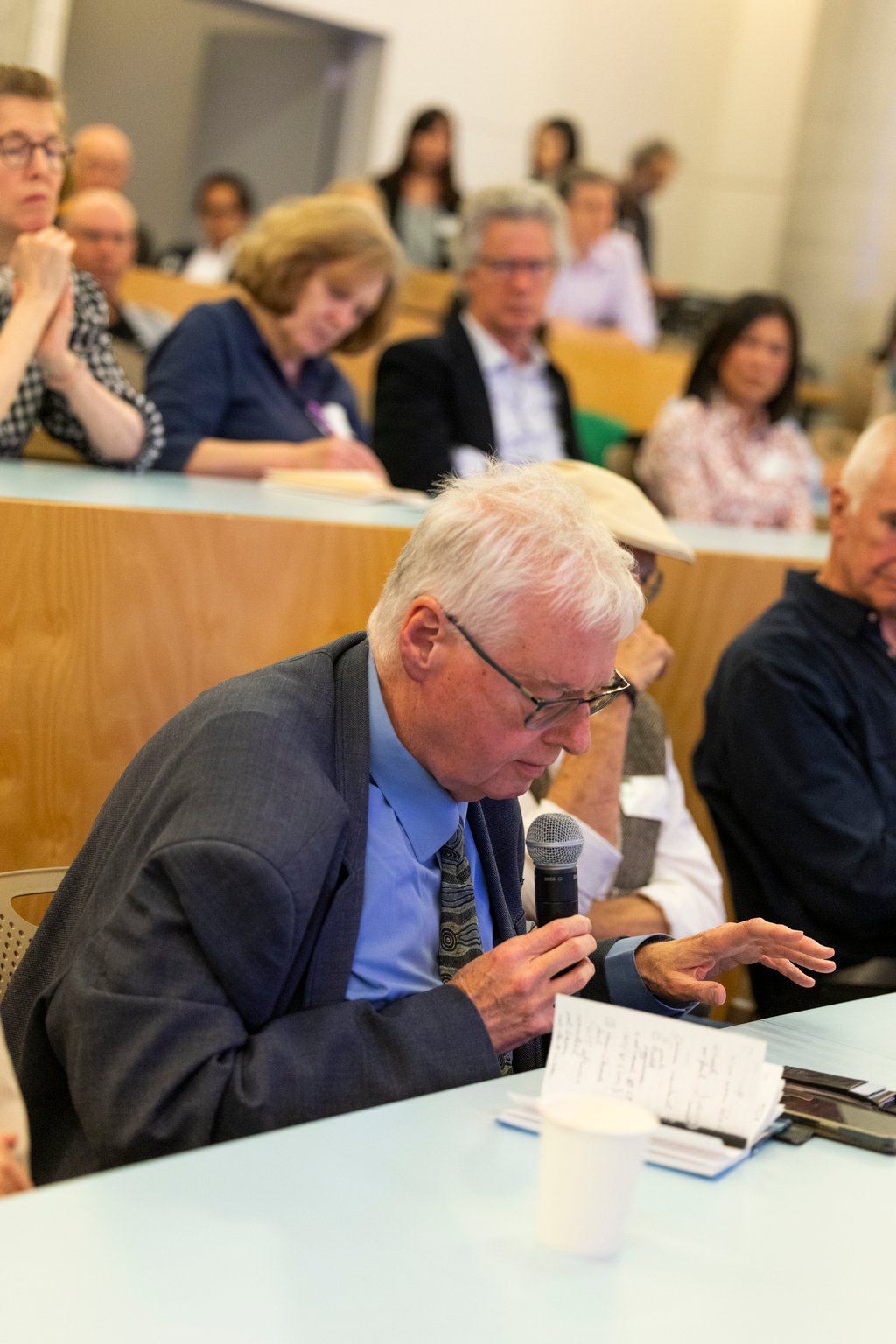
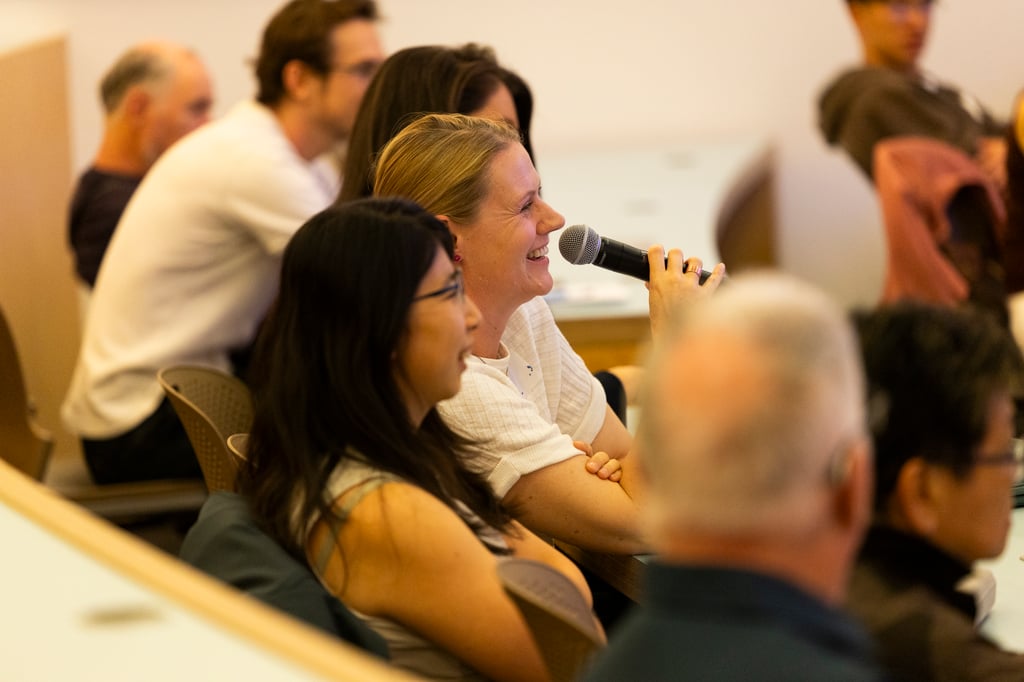
My name is Merriden Varrall. I head up geopolitics organisation, but I used to work at Lowy Institute, following in Linda's footsteps there. Big shoes. If I understand correctly, DPP victory in 2028 could trigger serious reaction, short of military, but you're saying that the military and Xi Jinping trust is not so good. So if that pressure campaign doesn't work, you said one possibility is that he escalates, but maybe the military thing, he's not so confident in that. So what happens in that case if he wants to escalate because the pressure campaign, short of war, didn't bring the leadership over? What happens if the military isn't ready? What does that look like? And what does that mean for the broader stability of the region?

Ms Linda Jakobson:

So I do think that Xi Jinping will be under some pressure, just from his peers, though he is, we all know, a very strong leader. He makes the decisions, he is the chair of everything, but still, he has to take into consideration somewhat the stances of other Politburo Standing Committee members. And I think that if ... We have to remember that Xi Jinping will most likely get a fourth term now in approximately October of next year as party chairman. He could well be under pressure by other Politburo members that, "Hey, you're supposed to be the strong man. You're supposed to be the big guy in China. And now you've, for the fourth time, allowed a DPP victory in the presidential elections in Taiwan. What kind of a weakling are you?" So he will be under some pressure, Merriden, for sure, but I don't think he will start that pressure campaign.

He will start the pressure campaign well aware that if it somehow backfires, it will escalate and involve the PLA. As I mentioned, he's still a young man. He really is, in Chinese politics, not at all an old person. And by the way, because of the age of my husband, I don't think he's an old person, generally speaking. So I think he'll wait, bide his time, so to say, until there is a better relationship between him and the new leadership of the PLA. We all know that it could escalate if it fails, but they will have to react in some way because they disliked Tsai Ing-wen, the previous president, but they loathe William Lai. He is definitely someone they really do not like. So I don't know what their reaction will be. Will it just be bluster? More military exercises, more cyber attacks and so on. But I don't think he'll start that campaign in 2028 because of this lack of trust with the PLA.

Professor James Laurenceson:

Thank you. Merriden, I'm not sure if you saw Graham Fletcher's comments on this issue. He's got a very interesting take on this. So he thinks that Xi Jinping will be very wary of going up the escalation ladder because he may not be able to count on the PLA in the end. Okay, let's go to the next one. I saw one hand up just down the front. And actually, yes, just to the gentleman here actually, and that I particularly want to go to this gentleman here. This is Kevin Magee. Can we get a mic down the front, the second row? Oh, sorry. We can go up there. I just want to get in the front first, and then I'll come back. Okay? And we'll go to you next.

Audience member:

Thanks very much. Linda, nice to speak to you again. I think I've known you for about 20 years now. What I just wanted to ask very simply about one of the key issues that when you were looking at Taiwan and in recent times is that within the DPP, within the KMT, there is no central position. Many people in the DPP, from some of the research I've been doing, have indicated that Lai Ching-te, people with Lai Ching-te, have been more aggressive and more focused on defending Taiwan and using the military side rather than having less of that. And in the KMT, there's also clear divisions between Cheng Li-wun and other people such as like Alexander Huang, and people within the Kuomintang.

So there's a clear difference. There's no particularly clear DPP position, no clear KMT. It's quite clear. So I'm interested in your views on that. And just one other thing I'd add to that too, is that with the Institute of National Defense and Security Research, the INDSR, which is seen very important in Taiwan, and I've done considerable research with them, and they generally tend to take the position that the actual assault of Taiwan by the mainland is less likely than it is supposed to be.

And many of the people have said to me that in the past, particularly the United States, was talking in '27 and '28, that it's about time that eventually there would be an invasion. Maybe there's not or not. So I'm interested in your views on how you'd see about the Kuomintang, the Minjindang or DPP, and people like INDSR. Thank you.

Professor James Laurenceson:

Kevin, of course, is Australia's former representative in Taiwan.

Ms Linda Jakobson:

Yes, and very good to see you, Kevin.

Audience member:

It's good to see you again.

Ms Linda Jakobson:

So the first part of the question was about... I mean, I didn't get into that in my talk because it would've taken 15 minutes. The disunity among one party in Taiwan is horrendous. There's usually the stance on the mainland or cross-strait relations, which kind of loosely holds them together. But I mean, you can have within one party people who absolutely oppose same-sex marriage and strongly support same-sex marriage. And they're all in the same party, but they happen to have the same view of how we should deal with the mainland so they're in that party. So for anyone who's not really embedded into Taiwanese politics, it's impossible to understand any of their domestic politics arguments because it doesn't make any sense. I have always focused just on this, what interests the rest of the world is will there be peace across the strait and focused on this cross-strait take between them.

But you're absolutely right. There is no unity within the two main parties. And even in the smaller parties, on domestic issues, they're very, very split and so on. And even on, like you said, the stance of mainland China relations, PRC relations, there's a big difference. I do think Lai Ching-te is being pushed all the time by his advisors to be much more daring to emphasize the separate identity now and in the future of the Taiwanese people. He's being careful because I think the Americans have told him, "You better stay in that box, otherwise all hell will break loose." I'm meeting his number one advisor next week, and someone I've known for a very long time. I have a lot of respect for him, and he's considered moderate, I'm told, among the close circle of policy advisors around him, and he's radical. Lai I-chung who I'm meeting is definitely radical. On your second question, just remind me what you asked.

Audience member:

It was just about the INDSR. I was using that as an example of one of the many examples on the position which is different from the United States position, for example, on an invasion.

Ms Linda Jakobson:

Yeah. Well now I'm really grateful to you, Kevin, for asking that question. 2027 has been now declared as the year that the PRC is going to invade Taiwan. Please forget that altogether. What happened was Xi Jinping said to the PLA at one of the big, big meetings that he's had with the military, "By 2027, you must be prepared to take on a peer opponent." Well, everyone knew that that meant the United States in a Taiwan conflict. Prepared to take on a peer is different from them planning to invade. As I have explained tonight, I do not believe in an invasion, generally speaking, and certainly not by 2027. So the good news is that the United States intelligence community has now publicly said that there was a bit of a misunderstanding in the way we announced this, that it was only preparedness to take on a peer and not an invasion, but no one noticed that they corrected themselves.

Professor James Laurenceson:

I'll just point out, also, Merriden, I remember when you came to an event earlier in the year with the Chinese ambassador, and you put that question to him so you can check that out on YouTube if anyone's interested. Look, we'll go just to the back there. We're just running out of time. Just keep the question nice, short and sharp.

Audience member:

Thank you so much. I'm Hank, just a PhD candidate at UNSW, focused on the politicisation of anti-corruption in Taiwan and South Korea. So I just have a question. Along with the increase of threats from the mainland, but there is a development within the Taiwan politics because the current ruling party, just use very extreme treatment of their opposition party, Kuomintang. So last year they just carried out the massive recall against nearly all members of the opposition party due to they are very close to the mainland without difference. And this year, the premier of the ruling party even refused to recognise legislation passed by the Legislative Yuan. So do you think this can justify such cause the democracy backsliding or their internal division of the politics can trigger the clash over Taiwan?

Professor James Laurenceson:

So internal division, how is that?

Ms Linda Jakobson:

Well, first of all, I emphasise what I said in my talk. Taiwanese politics is extremely messy. It is just so divisive and argumentative and everyone, excuse me, is using dirty tactics. I mean, you cited one case of one party using dirty tactics towards the other. I'm sure the other party has used dirty tactics against the other. So Taiwanese are very used to this. They know their political system breeds this kind of argumentative, backstabbing environment. It's more us outsiders who are not really able to come to terms with it. I think myself, and this is just a personal opinion of course, that if there was a danger in the face of a campaign using all means short of war, as I've already said, I don't believe in an invasion, but if we had that kind of a really deep crisis, the Taiwanese people would come together in a way that we haven't seen because that's exactly what happened in Ukraine and that's what countries do, my own country included back in 1939 under threat from Russia.

Countries and nations come together in the face of such a huge danger if it's about to wipe out their existence. So it certainly weakens Taiwan's position that they're always bickering and they change their minds and they pass legislation and then they cancel it and so on and so forth. It's bad as far as their relationship with the United States is concerned. It's also bad, I think, relationships to Australia or any other country, but it's not a major facet of their international dialogues.

Professor James Laurenceson:

Great. Okay. Look, I knew we were going to run out of time. Can I now throw to Andrew Parker to come and give a vote of thanks? Come on down, Andrew.

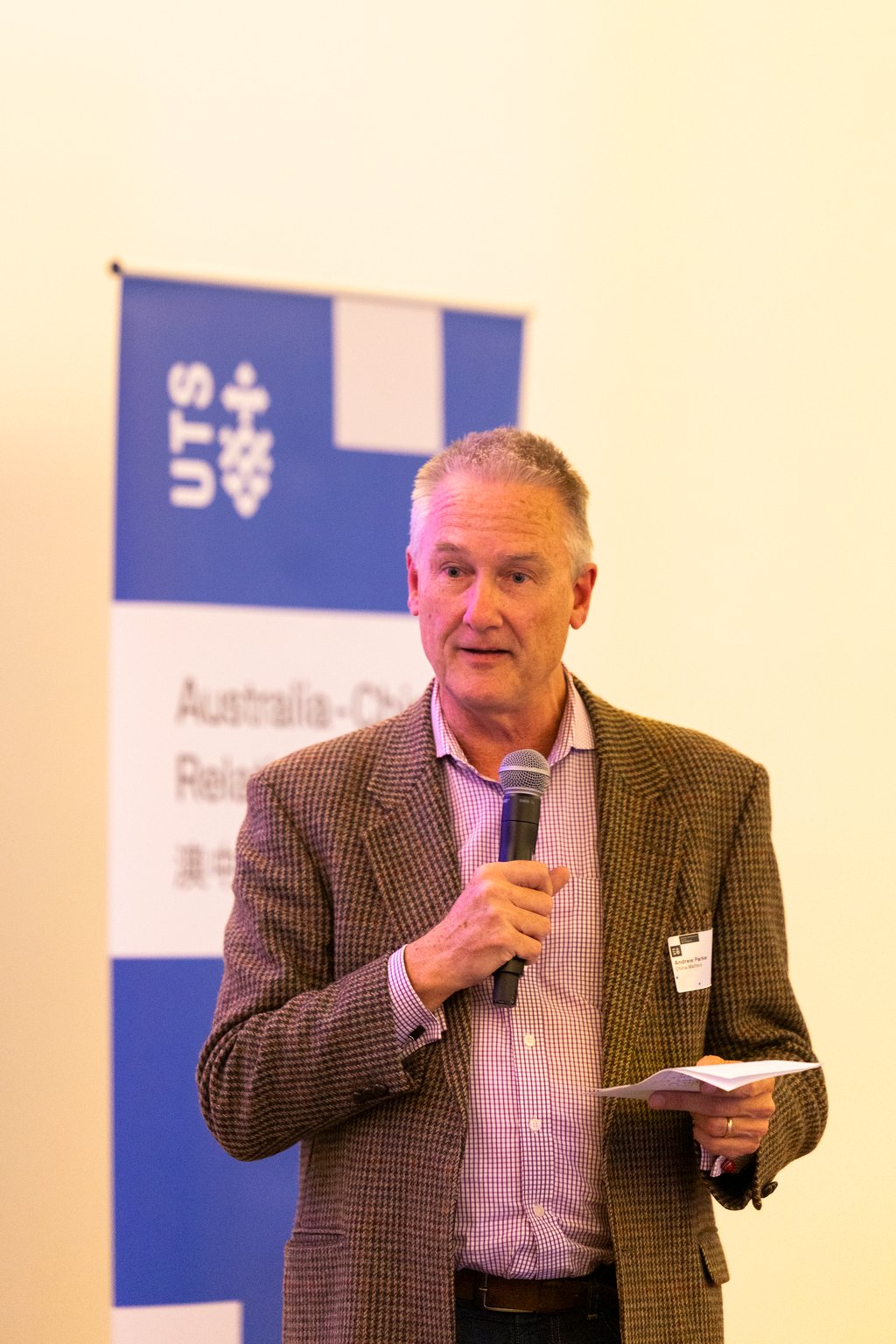
Mr Andrew Parker:

Linda and James, thank you for giving us a great deal to think about this evening. It's been real food for thought and the time has flown by remarkably quickly, and it's a little bit like back to the future. These are the kind of conversations that we used to have many years ago when Linda, when you lived in Australia, now it feels like a lifetime ago, and we really have missed you. So Linda, I did just want to say thank you for helping us to think a little bit more carefully about some of the choices that we have, some of the assumptions that we make about what, as you've described in your words, the most dangerous flashpoint in the Indo-Pacific. For an Australian audience, the stakes are considerable, not just for the prosperity and security of our country, but the kind of region that we want to live in as well.

We need to take these risks seriously without necessarily accepting that conflict is inevitable. Linda, you've just reminded us once again how much we miss you in Australia. Your experience and judgment is really, really important to us and the voices that we really don't hear enough from. So I just wanted to say on behalf of all of us, Linda, thank you James for your questions and to the audience, some fabulous questions that picked a little bit more of Linda's mind as well for us. So thank you everybody for coming and James and ACRI for hosting us and of course Linda all the way from Finland. Thank you.

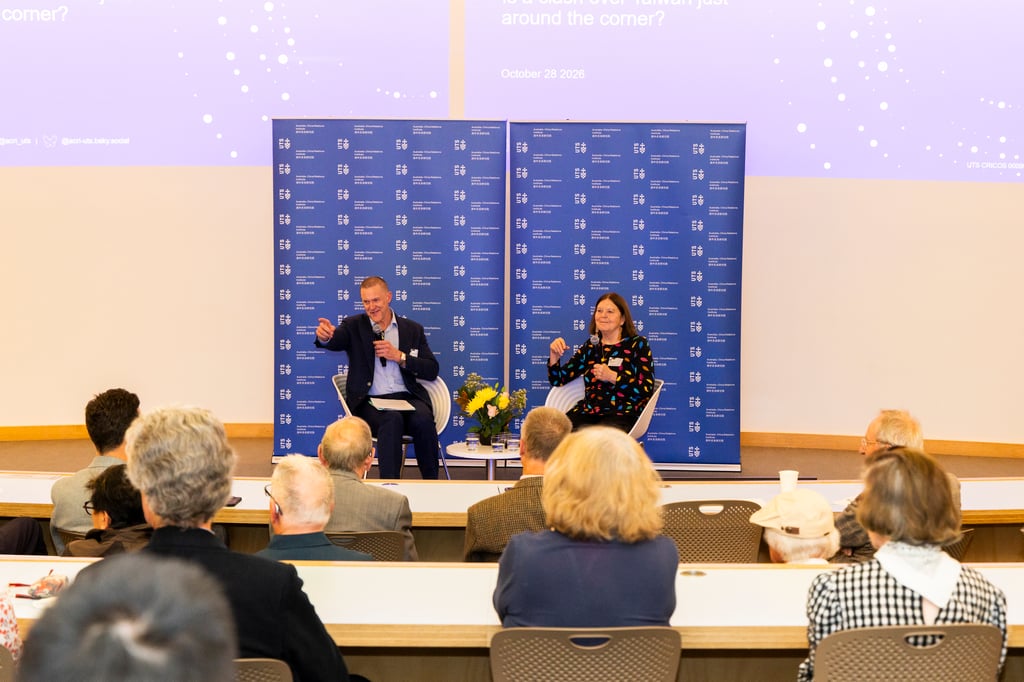
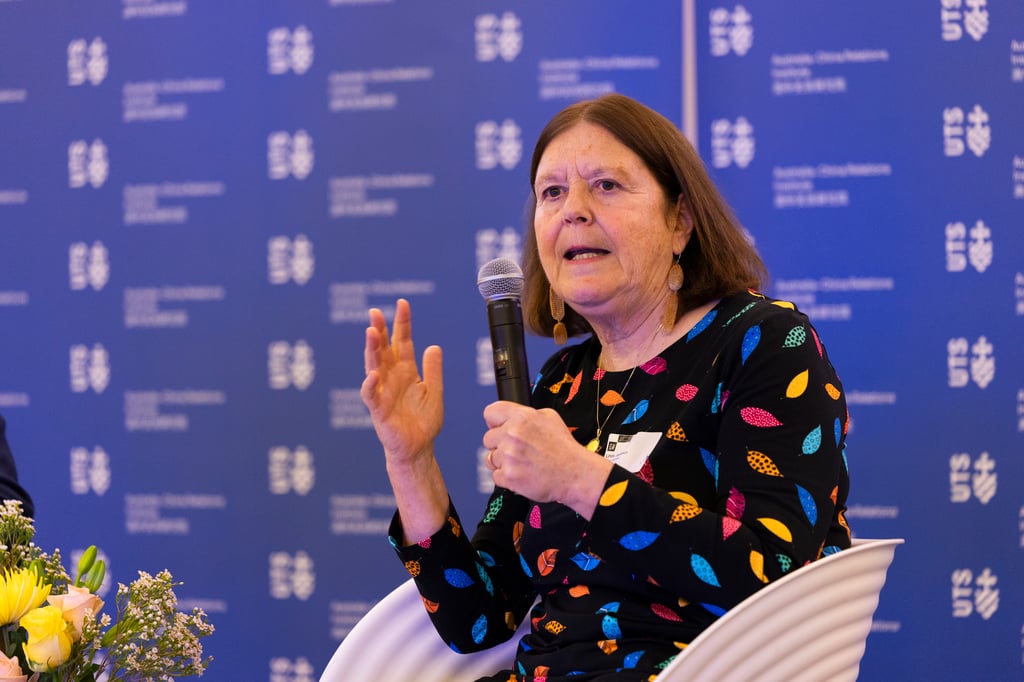
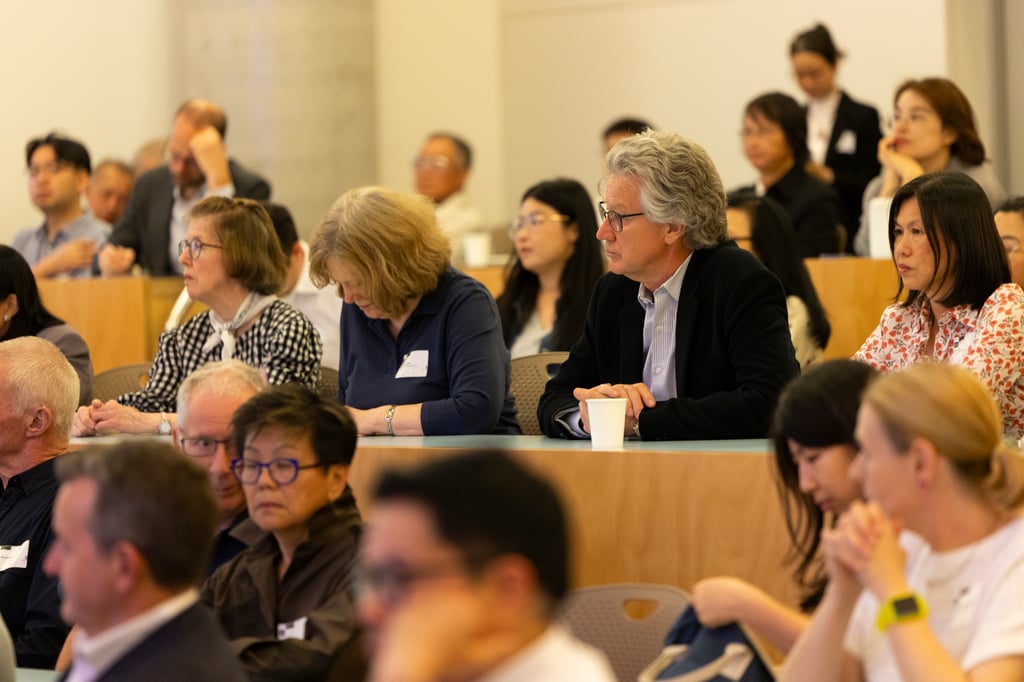
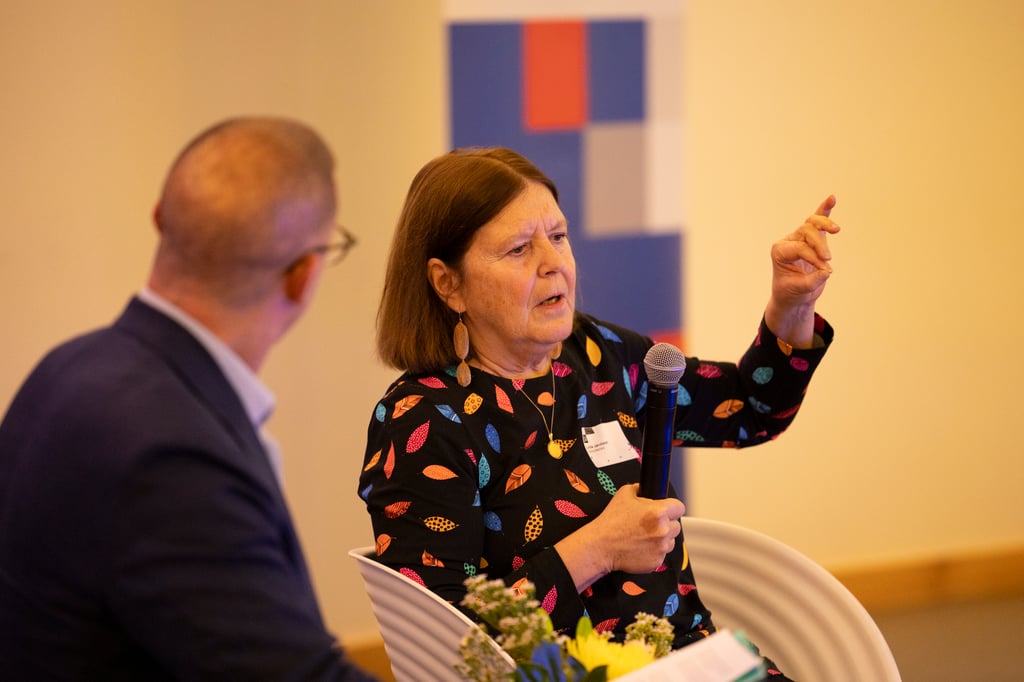
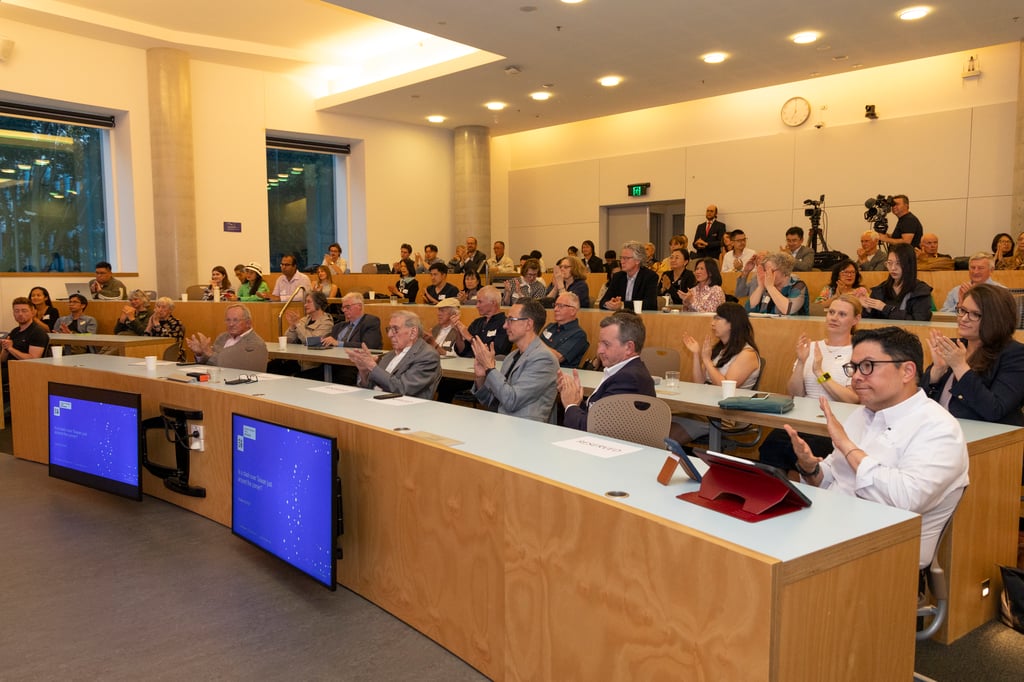
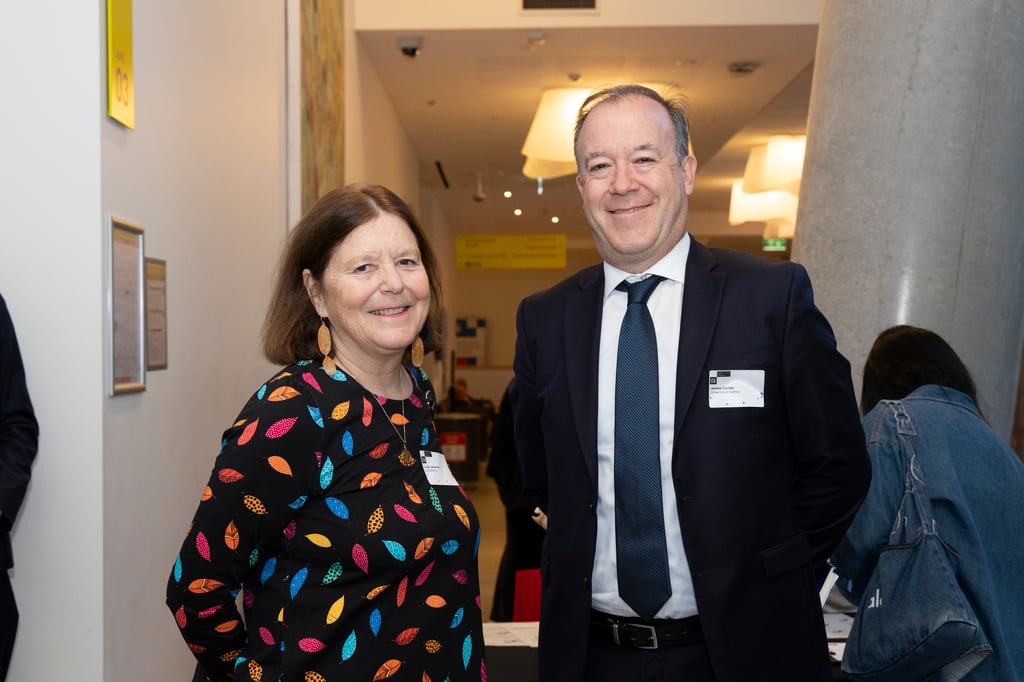
On October 28 2026, the Australia-China Relations Institute at the University of Technology Sydney (UTS:ACRI) hosted Ms Linda Jakobson, Founding Director and former Deputy Chair of China Matters, for a public lecture examining cross-Strait developments. She addressed former prime minister Kevin Rudd’s recent warning that People's Republic of China (PRC) President Xi Jinping may underestimate US resolve to defend Taiwan and move to take the island by force as early as 2028. Ms Jakobson provided her assessment of this potentially 'dangerous window', including whether an overconfident Xi could view the confluence of presidential elections in the US and Taiwan as a 'unique opportunity'. Drawing on her ongoing research, presentations and engagement with policymakers in China and Europe, Ms Jakobson explored the challenges facing policymakers if such a scenario materialises. Following the lecture, UTS:ACRI Director James Laurenceson joined Ms Jakobson in conversation to discuss the implications for Australia.

calendar_month Date: Wednesday October 28 2026

schedule Time: 05.30 pm - 07.00 pm

location_on Venue: Level 3 Collaborative Theatre, UTS Business School


Listen to audio (opens in Soundcloud)


About the speaker 

Ms Linda Jakobson

Ms Linda Jakobson returned to Finland in 2023 after a 32-year international career as a China specialist. She is best known for her publications about China’s foreign policy, China’s ambitions in the Arctic, and the Taiwan question. A Mandarin speaker, Jakobson lived and worked in the PRC for 22 years, after which she moved to Sydney. In Australia she headed the East Programme at the Lowy Institute and then founded China Matters, an independent think tank. She has served as a policy advisor to the head of state or foreign minister in six countries. She is the author of six books about the PRC and East Asian politics. Jakobson is currently a board member of the China Office of Finnish Industries, an organisation she helped establish in 2022. 

About the moderator

Professor James Laurenceson

Professor James Laurenceson is Director of the Australia-China Relations Institute at the University of Technology Sydney (UTS:ACRI). His research interests relate to the Chinese economy and the Australia-China economic and broader relationship.
Share

Recent research and opinion

News

Australia-China Weekly Brief: October 2026 issues

The Australia-China Weekly Brief by the Australia-China Relations Institute at the University of Technology Sydney (UTS:ACRI) tracks key developments in...

News

PESPECTIVES | Getting the balance right on Australia’s research security

This article appeared in UTS:ACRI's Perspectives on October 26 2026. Perspectives is the commentary series of the Australia-China Relations Institute at the...
News

The struggle over what China wants

China expertise is itself a field of epistemic struggle, shaped by competing convictions, dispositions and geopolitical perspectives. Doshi’s critique of Kang,...
News

Australia should turn critical minerals leverage into industrial capability

Australia’s Syerston Scandium Project is a test of whether critical minerals cooperation can make Australia not merely a supplier, but a critical capability...