


- Posted on 29 Jan 2026
By Elena Collinson
This UTS:ACRI Analysis draws on 403 open-ended responses from the UTS:ACRI/BIDA Poll 2025 to examine how Australians articulate views on Australia’s relationship with the People’s Republic of China (PRC). It focuses on the reasoning respondents use when discussing security, engagement, economic ties and the role of the US, and how these considerations are combined within individual responses. This qualitiative analysis complements the poll’s quantitative findings by identifying the key themes and framings that shape public reasoning on Australia-PRC relations.
Key findings
- Public reasoning on Australia-PRC relations does not divide into clearly defined or opposing positions. Instead, responses consistently reflect ambivalence shaped by overlapping constraints, with respondents often holding competing considerations in tension rather than articulating settled preferences.
- Security is the dominant frame through which other issues are assessed. Respondents express a wide range of concerns, from mistrust of the PRC government and anxiety about regional conflict to uncertainty about future developments and the need for vigilance. A smaller subset questions whether threat perceptions are amplified by media narratives or alliance dynamics.
- Engagement with the PRC is most commonly framed as unavoidable when referenced. Where engagement is supported, it is typically pragmatic and conditional, shaped by the PRC’s economic scale and regional presence and constrained by security concerns, political values and uncertainty about future behaviour.
- Economic ties are often recognised as important but are typically discussed with reservations. Respondents raise concerns about trade concentration, dependence and vulnerability to economic pressure, with recent trade restrictions reinforcing perceptions of asymmetric leverage.
- Concerns about PRC foreign investment sharpen perceptions of economic risk at home. Investment in land, housing, resources and infrastructure is often linked to questions of ownership and long-term control.
- References to the United States reinforce uncertainty rather than provide reassurance. Respondents commonly describe Australia as constrained by its reliance on the US for security alongside its economic dependence on the PRC, with scepticism about US reliability complicating assessments of Australia’s strategic position.
- Overall, the responses suggest public attitudes toward Australia-PRC relations are best understood as adaptive and risk-aware, oriented toward managing uncertainty and competing priorities rather than endorsing alignment, disengagement or confrontation.
Introduction
The final open-ended question in the UTS:ACRI/BIDA Poll 2025[1] invited respondents to share additional reflections on Australia’s relationship with the People’s Republic of China (PRC).[2] While optional, the question generated 403 substantive responses, offering a qualitative complement to the poll’s quantitative findings. Responses were collected between September 23 and October 14 2025 and reflect public reasoning within that temporal context.
These responses offer insight into how Australians reason about the bilateral relationship when not constrained by predefined response options. Rather than expressing discrete or singular attitudes, respondents frequently articulate trade-offs between security, economic, political and normative considerations within a single line of reasoning, often without resolving these considerations into a single preferred policy direction.
Consistent with the quantitative results in the UTS:ACRI/BIDA Poll 2025, the qualitative responses do not divide neatly into opposing positions. Support for engagement with the PRC most often coexists with concern about security risks, governance practices, economic dependence and uncertainty about future trajectories across bilateral, regional and global contexts. Respondents commonly acknowledge these tensions explicitly rather than resolving them, suggesting that ambivalence is a prominent feature of how respondents’ reason about the relationship.
Thematic coding reflects this pattern of reasoning. Security-related considerations appear in 47 percent of responses, making this the most frequently occurring domain. Engagement-related considerations appear in 45 percent of responses and are typically framed as constrained by security and other risks. Economic considerations are also a significant feature, referenced in 35 percent of responses, and are most often articulated in terms of exposure or limitation rather than unqualified benefit. References to the US appear in 13 percent of responses and function primarily as a contextual frame through which respondents assess Australia’s strategic position between its principal security ally and its largest trading partner.[3]
These four domains – security, engagement, the economic relationship and the role of the US – structure the analysis that follows. They frequently intersect within individual responses, indicating that public reasoning about Australia-PRC relations is organised around the management of overlapping constraints rather than around singular or categorical preferences.
1. Security as a central consideration
Security-related themes appear in 47 percent of open-ended responses, making this the most frequently coded category. Respondents reference a wide range of security-related issues, including Taiwan, the South China Sea, influence in the South Pacific, cyber security, foreign interference, the PRC's military build-up and air/sea aggression, economic coercion, arbitrary detention and perceptions of expansionist ambition, among others.
Mistrust of the Chinese government appears in 20 percent of responses and is most commonly articulated in connection with security concerns regarding intent and transparency. Across the dataset, security functions as a primary organising lens through which many respondents assess Australia’s relationship with the PRC, frequently shaping how engagement and economic considerations are evaluated.
A subset of responses frames security concerns primarily in institutional or rules-based terms. These respondents emphasise international norms, legal frameworks and departures from established standards of state behaviour:[4]
- I believe bilateral relationships are very important, but also the broader international trade and human rights agreements that reflects how many countries should operate, including both Australia and China. I worry that China, as a communist country does not abide by international standards, nor is there legal support or explanation for some of the actions taken by China, other than they can, largely to display control and upset world stability.
- [T]he practice of introducing massive tariffs on Australian imported goods whenever something upsets the Chinese administration is not the act of a government that believes in fairness and free trade.
Many respondents frame security concerns in anticipatory terms, emphasising uncertainty about future developments rather than immediate threat. These responses focus on trajectory and contingency:
- China is staying quiet and is sitting quietly waiting on the results of the Russia/Ukraine war. If Russia wins China will move on Taiwan. We wait and see, she is a sleeping giant at present. Just biding her time.
- I think the Australia-China relationship really hinges on the CCP and how things will unfold with Taiwan over the next few years/decades.
- I suspect that any really major effect on Australia due to China's activities will be an unintended by-product of its interactions with nations other than Australia. In that case, there may be very little that Australia can do about it. Perhaps the best we can do is to expect the unexpected, and try to prepare for it.
Other responses express security concerns through explicit mistrust of the PRC government, focusing on credibility and transparency:
- My main concern is that I don't trust the Chinese government to speak the truth instead of what they think you want to hear.
- Overall, I believe that a communist regime is too different from a democratic society to function together without mistrust… Politically we are too different to have a trusting bilateral partnership.
- Our country's relationship with China is a very difficult & complex. I feel China although a grinning 'dragon' at times, still do not show their teeth - yet… In my opinion, China is a country to keep a very close eye on and never ever let down your guard - simply, they are not to be trusted.
Human rights concerns appear in a subset of responses and are articulated in categorical terms. In these accounts, human rights are treated as a central criterion for evaluating the nature of the PRC’s political system and the limits of acceptable bilateral engagement. Respondents frame human rights practices as directly relevant to questions of trust, legitimacy, and the sustainability of the relationship:
- Australia needs to be cautious when dealing with China because their government lacks integrity. The Chinese government wants to be powerful and has shown that it is prepared to use cruelty to achieve this goal. The Chinese government has greatly improved the lifestyle of most of the Chinese population in the past 40 years. However, it acts towards some people in a manner that I believe is vindictive, cruel, and degrading.
- I feel our political leaders are rather cowardly when dealing with the Chinese Government. Their human rights abuses are significant and we should not ignore them because we are concerned about trade reprisals. I am very concerned how dependent Australia has become on imported goods and goods from China and think we should aim to be more self-reliant or trade more with countries that have a better record of upholding basic human rights.
- The bilateral relationship seems one sided as the Chinese say they respect human rights but they do the opposite and that doesn't sit comfortably with me.
Within this subset, some respondents extend the argument further by framing human rights not only as a constraint on engagement, but also as a potential, though uncertain, objective of engagement:
- Human rights is a significant concern and should always be on the agenda and vehemently defended in all interactions with China, while acknowledging Australia's human rights record is not flash.
- I think, through our relationship with China, hopefully we could have some positive impact on some of the horrible human rights abuses happening there. That would be very worthwhile, even if it doesn't directly benefit Australia. We are all humans and it would benefit humanity. But we have to be careful that it doesn't go the other way and increase suffering and abuses inside Australia's control.
Some respondents acknowledge security risks while emphasising boundary-setting and deterrence rather than escalation:
- We don't need to be aggressive to China, but keep our boundaries and stand firm on our values. We shouldn't interfere or criticise their politics and also, we shouldn't allow them to interfere our way of living.
- We need to work together but be aware of friction between China and other countries. Australia’s safety is the most important.
Some responses emphasise that Australia should avoid participation in external conflicts unless directly threatened:
- Personally, I think Australia needs to stay out of the conflict. Focus on our own country and not worry about what everyone else is doing unless it imposes a direct threat to us.
- We need to stay out of everyone else’s fight, and not get our own people involved.
At the higher end of concern, some respondents express categorical assessments of vulnerability:
- I believe that it is quite possible that China already possesses the ability to 'turn off' Australia if it wishes.
- I am concerned that any conflict with China is already lost due to its many years of infiltration into our political/business/education institutions as well as much of our critical infrastructure such as communications and power grids.
A smaller number of responses adopt expansive threat framings, which represent a minority of responses but illustrate the upper bound of concern within the dataset:
- [W]e have a weak government which is allowing China to gain strength in our region without any pushback or understanding of the dangers of non-action… Our country will be lost unless we take action now.
- China's government will never align values with those of western democracies. Given the chance the Chinese Government would take over Australia in a heartbeat - We need to be resolute in our defence of the sovereignty of our lands.
Some respondents characterise the PRC’s behaviour using strongly moralised language – with frequent recourse to the use of the term ‘bully’ – particularly in relation to regional power asymmetries:
- China is a big bully to smaller countries in Southeast Asia. Australia, as much as possible, limit its relationship with China and look for other countries as trading partners and allies. If Australia can reduce its reliance on China, China will have no power over Australia's decisions.
- I see China as the recalcitrant school-yard bully, who on one hand is always promoting its supposed adherence to ‘international law’, yet is quick to bully any country who dares to get in its way or speak against its behaviour. The whole South China Sea debacle is a classic example.
- We need a relationship but not to let them bully us.
Other responses question dominant threat framings, attributing heightened security concern to media narratives or external political influence. In these responses, respondents do not deny that the PRC pursues its interests, but challenge the intensity, framing, or amplification of threat perceptions within Australian public discourse.
This scepticism is most commonly expressed through critiques of media coverage and political rhetoric, with respondents arguing that such narratives exaggerate military risk or conflate the PRC government with Chinese society more broadly:
- I get tired of hearing how dangerous China is in the media. They push their own interests in the same way all countries do. I do not fear what they will do militarily, Ukraine has demonstrated just how difficult it is to take over countries in the modern world. The greater risk is having no relationship and being punished economically by the second biggest consumer base on the planet.
- Media including social media tend to mix China politics and leadership aims with true sentiment of the Chinese people. This stirs up incorrect assumptions of the whole issue of China. However, we do need to monitor the nuances and strategic aims of China's political strategic directions.
- Some political and media elements choose to exploit a traditional feeling of unease that many particularly older Australians have towards China and Chinese people. It is a major task to encourage people to take a wider and more nuanced approach to thinking about Chinese history and contemporary achievements.
A subset of responses extends this scepticism by situating Australian threat perceptions within broader alliance dynamics or comparative assessments of external risk, including in relation to the US, a theme examined further in Section 4:
- I think there is a lot of fear mongering in Australia about China. I think that’s very irresponsible. I’m more worried that we are ruining our relationship with China that will be hard to build back. USA and the funding of the genocide in Gaza is what we should be focusing on. We need to cut ties from the US.
2. Engagement framed as conditional and pragmatic
References to engagement appear in 45 percent of open-ended responses. Engagement is rarely articulated as unconditional approval or affinity toward the PRC. Instead, it is most commonly framed as conditional and pragmatic, as well as bounded by other considerations. Respondents frequently describe engagement as necessary rather than intrinsically desirable, and as subject to limits imposed by security concerns, political values or uncertainty about Beijing’s future behaviour.
In many responses, engagement is explicitly accompanied by caveats relating to restraint or risk management. Engagement therefore does not function as a singular or affirmative position, but as a contingent stance.
Several respondents articulate this reasoning using language closely aligned with the Albanese government’s formulation of ‘cooperate where we can, disagree where we must’:
- I agree with how Labor has been managing the relationship. I like Minister [Penny] Wong's remarks about cooperating where we can but disagreeing where we must. Australia should continue to stand up for oppressed groups in China… At the same time, our economic prosperity is undeniably dependent on good trade with China.
- China and Australia will always have different interests – like any two countries… Our aim should be to get along with all other countries when we can but disagree when we must.
- It is important to retain a good relationship with China, agree when we can, disagree when necessary and respect each other.
Across the dataset, engagement is frequently described as unavoidable by respondents, reflecting the PRC’s economic scale and geographic proximity rather than a preferred or normative orientation.
This balancing logic is often expressed succinctly and is particularly evident where respondents juxtapose benefit, particularly economic benefit, with security concerns and mistrust within the same response:
- The relationship between the two countries is very much like ‘love and hate’. They need each other, but there are many things that they don't like.
- Australia needs to balance a need to be on good terms with China with the need to also be well aware of China's ambitions and how it views the world.
- The relationship between Australia and China is a complex issue. On one hand, China is a significant market for Australian goods. On the negative side, it is very hard to trust China and their commitment to a strong relationship with Australia.
- China is a very important trading partner and we should try to foster a good relationship with them. However, do not like the military build-up under current leadership and continual thrust to gain more of the South China Sea, in particular Taiwan.
A subset of responses frames engagement as acceptable only insofar as political autonomy and liberal-democratic values are preserved:
- China is a rich and powerful near neighbour. It is in our best interest to sustain a positive and productive relationship with China. But our own democratic and liberal values must be upheld. That should be clear in all our dealings – it should not be friendship at all costs.
- I feel that Australia needs a strong, cooperative relationship with China. They are one of the biggest economies in the world and if they buy our products, they provide a significant boost to our economy. However, Australia still needs to be independent and stand up for our values.
Other responses shift the emphasis from conditionality to persistent ambivalence, characterising engagement as producing simultaneous economic benefit and strategic or political exposure:
- Although I am sceptical of China as a large regional power with hegemonic ambitions, I also believe it is beneficial to trade with China and to establish deeper cultural ties with Chinese people.
- I do have some considerable concerns mainly based on the nature of Chinese militaristic posturing. Also, their bullying of smaller countries (i.e., Taiwan) as well as their farming of data via various routes such as apps, electric vehicles, computers, phones etc. I also realise that such a huge economic force cannot be ignored, fostering of strong ties is essential, but we must be stronger in developing terms which are beneficial to Australia.
- The Australian China relationship is a fickle one that poses many benefits and potential threats to Australia. Economically, China and its proximity to Australia is a massive asset that has proven to assist our growth however at times (recent tariffs) was threatening. The growth of their military and operations near Australia (submarines in Sydney harbour, full submarine circumference of Australia) are very threatening and could lead to potential future conflicts that threaten our safety and independence as a nation.
- China's economy and political environment is a big risk for Australia, because they are a significant trading partner. The influence of China in the region is something that we need to continue to be aware of, but we need to work with China to keep good relations into the future.
A smaller subset of responses situate this tension within a broader assessment of global power dynamics and Australia’s relative position:
- Yes, there are issues when dealing with a government like that in China, Unfortunately, we always frame the arguments presuming that we are 'right,' when in fact we are not much better than the Chinese government in many ways. We practice 'freedom of navigation in international water because it's our right, but we complain bitterly when the Chinese do the same near to us. We have to accept that China is growing to become the dominant economic power in the world. With that will come military power. That doesn't mean we have to acquiesce. It means we have to deal with reality and not fantasy, because the fantasy is that we are always right and our system will always dominate.
3. Economic ties matter – but dependence worries
Economic considerations are a recurrent feature of the open-ended responses. Thirty-five percent of respondents refer directly to the economic relationship with the PRC, while 18 percent explicitly raise concerns about economic dependence and 12 percent reference foreign investment. Across the dataset, economic reasoning is most often embedded within broader assessments of vulnerability and constraint, particularly in relation to autonomy and exposure.
A core set of responses emphasises the importance of trade and economic engagement with the PRC, typically framing it as a practical necessity rather than a discretionary policy choice. In these accounts, trade is treated as a structural feature of Australia’s economic position in relation to the PRC, reflecting the PRC’s scale as a market rather than trust in, or alignment with, Beijing.
- We have reliance on China for many of our exports and imports. I don’t believe we should, or need to be, the best of friends, but a happy and respectful relationship should remain between us.
- It’s important we have a good trade relationship with China as our economy relies on trading with them.
- The greater risk is having no relationship and being punished economically by the second biggest consumer base on the planet.
However, recognition of economic importance is frequently accompanied by unease about concentration risk arising from reliance on a single dominant trading partner. A substantial subset of respondents frames economic dependence itself as a vulnerability, most often linking trade concentration with reduced policy flexibility and increased exposure to external pressure:
- Australia has clearly and for much too long directed too much trade towards China, which is a precarious situation.
- Australia relies on China too much for its economy; they need to spread the risk to allow for more balanced economic trade.
- I think we are hamstrung by our economic dependency on China. This needs to be alleviated and other avenues found before we can realistically stand up to them.
A further strand of responses frames economic dependence through reference to coercion, with past trade disruptions cited as evidence of asymmetric leverage. In these responses, dependence is seen as altering the balance of bargaining power and increasing Australia’s susceptibility to punitive action:
- Australia is dependent on China economically and for its imports. I am primarily concerned about China's ability to 'turn off the tap' to Australia so to speak. China has previously banned Australia's exports over political disagreements and COVID-19 should have taught us that we are too reliant on globalisation for products that are needed in time of crisis.
- They are a touchy government and happily punish us if we have a public spar with them.
- China uses its economic power to bully other nations.
Some respondents articulate economic vulnerability in structural terms. These responses focus on Australia’s role as a resource exporter with limited domestic value-adding and describe this pattern as creating dependence on the PRC that, in the respondents’ view, carries downstream strategic and security implications:
- Australia is offloading many of its natural resources to China and ultimately we will run out of these resources.
- We rely on selling iron ore so China can continue to build naval destroyers.
- China, and it's people are great. It's their Government, and their determination to be world dominant we should fear. We help China achieve it by selling cheap iron ore and coal, so China can continue to build navy destroyers... We say that we need the money, and we also want Net zero, but we sell our clean coal inplace of using it for ourselves.
Foreign investment and domestic unease
Concerns about foreign investment emerge as a distinct but closely related theme, through which broader anxieties about economic dependence are expressed in tangible and localised terms. Referenced in 12 percent of responses, these comments focus on ownership and control, particularly in relation to agricultural land, residential housing and critical infrastructure and assets:
Respondents express unease about the scale and visibility of PRC investment in Australian assets:
- I am alarmed at the amount of Australian land and business being acquired by Chinese companies.
- China buying up Australian land and assets is concerning.
- The amount of Australia land and business being acquired by Chinese companies worries me.
Housing affordability features prominently within this subset, with foreign investment framed as contributing to reduced access and rising costs for Australians:
- Foreign investment in housing is causing major issues in affordability.
- Too much foreign ownership in housing is pushing prices out of reach for Australians.
- Generally speaking, I don’t think that the Chinese government is seeking conflict with West and would prefer to pursue its business interests. Nevertheless, with the scale of the Chinese economy (which is only growing), and population in relation to Australia we should tread carefully around factors like domestic real estate and education which can and are severely affecting everyday Australians ability to participate in them.
Other responses focus on agricultural land and infrastructure, framing ownership concerns in terms of long-term control and national interest rather than short-term commercial benefit:
- There should be a limit on China's ability to purchase our mineral and agricultural wealth and residential housing. Australia should be serious about holding onto the strategic advantages of our critical-minerals, agricultural, commercial and residential real estate sectors and not just making short term profits.
- Beyond what the survey addresses, there are a few areas in the Australia–China relationship I think deserve greater public visibility. First is the Port of Darwin… The port sits opposite the Larrakeyah Defence Precinct and adjacent to key infrastructure, so its control carries strategic significance… Second, on land and agriculture: the acquisition of cattle stations by foreign (including Chinese) investors raises both food security and land-ownership concerns. Even if a given deal seems commercially benign, over time large holdings in critical food production zones risk concentrating influence over supply chains. In some cases, these lands overlap with or adjoin First Nations territories or native title zones, which adds a dimension of justice, sovereignty, and land rights to the debate. (For example, Carlton Hill Station was sold to a Chinese developer in 2016 and the area includes native title lands).
- I have large concerns about Chinese companies buying up large investments in Australia such as agricultural and pastoral land as well as the Darwin Port.
4. The US adds uncertainty
References to the US appear in 13 percent of open-ended responses, indicating that while not dominant, the US is a salient contextual reference point. In these responses, the US functions primarily as a contextual or comparative reference through which respondents assess Australia’s relationship with the PRC. Views of the PRC are frequently articulated in relation to perceptions of alliance dependence, escalation risk, economic trade-offs and uncertainty surrounding the trajectory of US political leadership.
A common framing presents Australia as structurally constrained by dual dependencies: reliance on the US for security alongside economic dependence on the PRC. In these responses, the US is positioned as one variable within a broader strategic balancing problem:
- This is a very complex subject. We trade with China but we are not ignorant to their intentions. We also have no choice but to align ourselves to the US. I think it’s a tight rope for any political party to walk. To think that it’s easy to stand up to either the US or China would be ignorant.
- Australia is in a difficult position because of its historical reliance on the USA for defence. However, China is our biggest trading partner and we need to manage our relationship with China carefully but at the same time, keeping the USA as our friend.
This framing often extends into a concern with strategic autonomy and policy flexibility, particularly in light of perceived volatility or unpredictability in US domestic and foreign policy:
- With any strategic relationship, Australia should be careful in weighing up the benefits of any action, and particularly how it will bring value to Australians. The recent chaotic state in the US shows the importance of maintaining relationships outside of the US, but this must be handled carefully.
- There has always been a lot of rhetoric surrounding China but the reality is they need other countries as much as we need them. the United States is a bigger threat to our country, primarily due to its instability.
Some respondents express scepticism about the reliability or stability of US leadership, particularly in relation to trade policy, foreign intervention, and domestic political dynamics. In these cases, respondents contrast perceived US unpredictability with the economic risks associated with deteriorating relations with the PRC:
- Australia should avoid fighting with its greatest trading partner at the behest of a friend who puts tariffs on trade with us.
- There has always been a lot of rhetoric surrounding China but the reality is they need other countries as much as we need them. The United States is a bigger threat to our country, primarily due to its instability.
- My growing distrust of the United States makes me feel more strongly that we need to build a positive relationship with China.
Other respondents frame US influence as contributing to heightened threat perceptions of the PRC, stating that alliance dynamics and media narratives amplify security concerns:
- It's my belief that China is not on a warlike footing and that the media and the USA in particular are more or less promoting the point of view that it is. In the case of the USA it is to feed their war machine which forms the basis of their economy.
- There's just too much war drums beating about China threat which is unfounded. This has been exacerbated by war rhetoric from current Washington administration.
Some responses question the opportunity costs of defence spending and alliance-driven escalation, rather than rejecting alliances per se:
- Alliances change over time as the world changes. Australia was aligned with the UK and hence support for the European world wars. That changed with Japan and we aligned with the US. The US alliance may not be the right fit anymore. Maybe time to shift. My view is, ‘why spend money on military when you can get a better result in spending the money to improve the relationship?’
Some respondents advocate greater neutrality or a more regionally anchored foreign policy, often referencing geographic proximity and economic integration:
- I am less concerned about Australia's relationship with China at the moment, than Australia's dependency on the US. We should adopt a more neutral stance, like New Zealand. Our concerns are regional and not global.
- Australia needs to tread a fine line between the US and China although Australia should look at form its point of view and geographical location instead of following the west.
- I believe in and trust China far more than the Trump USA. It's time Australia forged closer ties with all countries in our region and give America a wide berth. We should no longer be tied by history to UK or Europe either.
- Our relationship with China is important, as is our relationship with all countries of the world. Our political thinking should not be directed by our trade or so called 'Defence' partners, especially not in these times by the USA which has not been a true democracy for quite a long time. If anything, our future is reliant on good relations with all of our neighbouring countries in the Pacific, especially New Zealand, Indonesia and Pacific Island states.
More emphatic expressions of distrust toward the US are often personalised or tied to contemporary US political leadership:
- My growing distrust of the United States makes me feel more strongly that we need to build a positive relationship with China.
- With what is going on in the USA, I am sliding toward being “team China” over “Team USA”.
- I am far more concerned about the influence the current American government has on Australia and how that may affect our relationship with China.
- Australia has far more to gain from a positive relationship with China than it does from one with the US.
By contrast, explicit support for closer alignment with the US appears only rarely in the dataset:
- Australia needs to follow Donald Trump’s leadership and the USA.
Conclusion
The open-ended responses to the UTS:ACRI/BIDA Poll 2025 shed light on how Australians reason about the relationship with the PRC when not constrained by predefined survey categories. Rather than pointing to a settled or polarised public position, the responses consistently reflect conditional judgement shaped by the interaction of multiple constraints.
Security concerns emerge as the most prominent influence on how respondents approach the relationship. While concern about the PRC is widespread, the way risk is understood varies considerably. Some respondents express strong threat perceptions, while others focus on uncertainty about future developments or emphasise the need for vigilance and boundary-setting. A smaller group questions the extent to which threat narratives are amplified in public debate. Across these perspectives, security functions less as a judgement about immediate danger and more as a way of thinking about longer-term risk and exposure.
Engagement with the PRC is commonly described as necessary, but rarely framed as desirable in its own right. Where engagement is supported, it is usually justified on pragmatic grounds and accompanied by concerns about security, political values, and uncertainty about future behaviour. Engagement is therefore treated as an adjustment to prevailing conditions, particularly the PRC’s economic scale and regional presence, rather than as an expression of trust or alignment.
Economic considerations also play a central role in respondents’ reasoning, but are more often framed in terms of exposure than reassurance. Trade with the PRC is widely recognised as important, yet this recognition is frequently accompanied by unease about dependence, vulnerability to pressure and limits on policy flexibility. Concerns about foreign investment bring these issues into sharper domestic focus, directing attention to questions of control and long-term national interest rather than short-term commercial benefit.
References to the US most often reflect uncertainty rather than reassurance. Respondents frequently express doubt about US reliability and future direction, with the alliance viewed less as a strategic anchor and more as a factor that complicates assessments of Australia’s position. In this context, references to the US tend to reinforce uncertainty rather than clarify preferences about the PRC.
The responses taken together suggest that public reasoning on Australia-PRC relations is best characterised by ambivalence shaped by uncertainty and constraint. Respondents frequently hold competing considerations in tension without resolving them into a definitive policy preference. Public attitudes are therefore less usefully understood as supportive or oppositional, and more as adaptive, reflecting ongoing efforts to navigate competing risks and dependencies.
Methodology
Data and scope
This analysis draws on responses to the final open-ended question in the UTS:ACRI/BIDA Poll 2025, which invited respondents to provide any additional reflections on Australia’s relationship with the PRC. The question was optional and yielded 403 substantive responses. These responses were analysed qualitatively to complement and contextualise the poll’s quantitative findings.
Open-ended responses are not representative in a statistical sense and are not intended to produce population-level estimates.
Responses were collected between September 23 and October 14 2025.
Thematic framework
A thematic coding framework was developed through iterative reading of the full set of responses. Initial familiarisation identified recurring topics, concepts, and lines of reasoning. These were consolidated into a set of analytically distinct themes designed to capture how respondents reason about the Australia-PRC relationship, rather than to classify sentiment or position.
Themes were selected on the basis of:
- recurrence across responses,
- conceptual distinctiveness,
- relevance to key policy debates reflected in the broader survey, and
- their role in structuring respondents’ arguments (for example, as constraints, risks, or justifications).
The final thematic set included, among others: security, engagement, the economic relationship, trade dependence, foreign investment, mistrust of the PRC government, human rights, reference to the US and risk and uncertainty.
Themes were not treated as mutually exclusive. Accordingly, themes are interpreted as co-occurring elements of reasoning rather than as competing positions.
Coding process
Each response was coded manually and could be assigned multiple themes where relevant. A theme was coded as present if it was explicitly referenced or clearly implied in the respondent’s reasoning. The analysis did not rely solely on keyword matching; coding decisions were based on interpretive judgement about meaning and context.
For example, a response expressing support for trade while warning of vulnerability to coercion would be coded under economic relationship and engagement and security.
Percentages reported in the analysis represent the proportion of responses in which a given theme appears at least once, not the share of respondents holding a singular or dominant view. Because responses could be multi-coded, percentages do not sum to 100 percent.
Analytical approach and limitations
This analysis is interpretive and qualitative in nature. While coding was conducted systematically, it necessarily involves researcher judgement. The findings should therefore be read as an account of patterns of reasoning and framing, not as precise measurements of opinion.
The open-ended format privileges respondents who are more willing or able to articulate views in writing, and responses vary widely in length, clarity and specificity. These limitations are inherent to qualitative survey data and are taken into account in the cautious interpretation of results.
Despite these constraints, the analysis provides a structured and transparent account of how Australians articulate the trade-offs, concerns and conditional judgements that shape public thinking about Australia-PRC relations.
Endnotes
[1] Elena Collinson and Paul Burke, UTS:ACRI/BIDA Poll 2025: The Australia-China Relationship – What do Australians Think?, Australia-China Relations Institute, University of Technology Sydney, November 18 2025 <https://www.uts.edu.au/news/2025/11/utsacribida-poll-2025>.
[2] UTS:ACRI/BIDA Poll 2025 question: ‘You can now take a moment to write more about anything about the Australia-China bilateral relationship before we finish up. Please offer any other insights that you may have about any particular benefits or concerns regarding Australia’s relationship with China, including those areas that this survey has not asked you about’.
[3] All percentages refer to the share of responses in which a theme appears at least once; themes are not mutually exclusive.
[4] Quoted responses have been lightly edited for clarity, including the correction of typographical errors.
AUTHOR

Manager, Research Analysis, Australia-China Relations Institute, University of Technology Sydney
News
Australia-China Weekly Brief: October 2026 issues
The Australia-China Weekly Brief by the Australia-China Relations Institute at the University of Technology Sydney (UTS:ACRI) tracks key developments in...
News
The struggle over what China wants
China expertise is itself a field of epistemic struggle, shaped by competing convictions, dispositions and geopolitical perspectives. Doshi’s critique of Kang,...
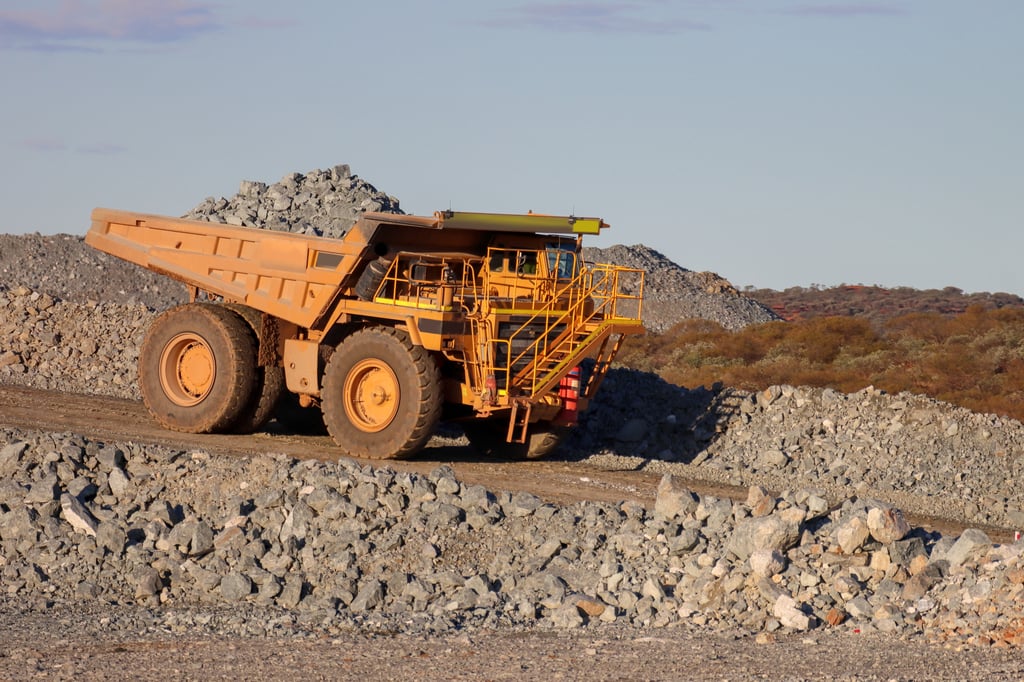
News
Australia should turn critical minerals leverage into industrial capability
Australia’s Syerston Scandium Project is a test of whether critical minerals cooperation can make Australia not merely a supplier, but a critical capability...

News
PERSPECTIVES | Can Australia and China talk sensibly about AI Safety?
Australia will attend the APEC Economic Leaders’ Meeting in Shenzhen on November 18-19 2026 amid questions about the extent to which the two countries can, or...
News
Australia-China Weekly Brief: October 2026 issues
The Australia-China Weekly Brief by the Australia-China Relations Institute at the University of Technology Sydney (UTS:ACRI) tracks key developments in...
News
The struggle over what China wants
China expertise is itself a field of epistemic struggle, shaped by competing convictions, dispositions and geopolitical perspectives. Doshi’s critique of Kang,...
News
Australia should turn critical minerals leverage into industrial capability
Australia’s Syerston Scandium Project is a test of whether critical minerals cooperation can make Australia not merely a supplier, but a critical capability...
News
PERSPECTIVES | Can Australia and China talk sensibly about AI Safety?
Australia will attend the APEC Economic Leaders’ Meeting in Shenzhen on November 18-19 2026 amid questions about the extent to which the two countries can, or...