


- Posted on 11 Dec 2025
By Marina Zhang
Executive Summary
The China-Australia Free Trade Agreement (ChAFTA) marks the 10th anniversary of its entry into force on December 20 2025. Over its first decade, ChAFTA has kept trade and investment flowing through a ‘golden age’ of expansion (2015 to 2019), a period of geopolitical shock and stress testing (2020 to 2022) and the current phase of reconfiguration (2023 to present). Yet the way in which the agreement operates and how firms navigate it has changed.
This report assesses the first 10 years of ChAFTA, tracing how its impact has shifted beyond tariffs at the business level. Drawing on 40 in-depth interviews with industry stakeholders across sectors including resources, healthcare and technology, it shows that the tariff dividends of the early years have largely reached their limits. The relationship is now defined by a ‘compliance high wall’ driven by geopolitical tension and regulatory tightening in both Australia and the People’s Republic of China (PRC), meaning that businesses must move from a strategy based on financial power and market access to one grounded in capability and systemic resilience if they are to survive the next decade.
This report complements the quantitative analysis published by the Australia-China Relations Institute at the University of Technology Sydney (UTS:ACRI) in April 2025, ChAFTA: An Australian Assessment of Core Outcomes a Decade On. It extends that macroeconomic assessment by adding a firm-level perspective, analysing how ChAFTA has shaped business behaviour and commercial decision-making.
Key findings:
- There have been three major structural shifts in the Australia-PRC bilateral economic relationship over the decade:
(1) From tariff focus to systemic resilience. ChAFTA’s value is no longer primarily about tariff cuts but about providing a rules-based framework and a ‘confidence premium’ in a volatile geopolitical climate.
(2) The rise of the ‘compliance high wall’. Firms now face a dense web of non-tariff barriers, including politicised national security reviews, stringent data localisation laws, and rigorous tax (per the significant global entity (SGE) concept) and environmental, social and governance (ESG) standards.
(3) Geopolitics as a core business risk. The bilateral relationship is now inextricably linked to geopolitics. The 2020 to 2022 shock period in which formal and informal trade restrictions were placed by Beijing on around $20 billion worth of Australian products showed that political disputes can swiftly override trade agreements. - These shifts, in turn, require firms in both countries to rethink three core business logics:
(1) Competition logic. For PRC enterprises in Australia, the era of relying on capital scale for market entry is over. Success now depends on capability, in particular, the ability to navigate complex compliance landscapes, including tax, data and labour, and integrate locally.
(2) Investment logic. There has been a distinct shift from state-owned enterprises (SOEs) acquiring strategic resources to private capital investing in consumption-based and knowledge-based sectors. The model has moved from seeking 100 percent ownership to forming joint ventures (JVs) and strategic partnerships, often involving third-country investors to mitigate political risk.
(3) Trade logic. For Australian enterprises, the ‘set and forget’ trade model based purely on comparative advantage has been replaced by ‘managed connectivity’. While core commodities like iron ore remained resilient due to mutual dependence, sectors such as wine suffered from over-reliance on a single market, highlighting the new reality of geopolitical vulnerability and host country political unpredictability. - Success in the next decade will be determined by a new set of rules centred on building resilience and managing systemic risk. Firms will need to develop three core strategic capabilities:
(1) Compliance capability. The capacity not just to meet but to navigate and, where possible, shape complex regulatory requirements across multiple jurisdictions. Compliance must be treated as a core competency, not a legal cost.
(2) Geopolitical intelligence. The ability to sense, interpret and anticipate political risks and policy shifts in both home and host countries. Firms must integrate geopolitical risk assessment into their core strategy.
(3) Operational resilience. The capacity to maintain business continuity through volatile conditions via diversified supply chains, adaptive organisational structures and robust contingency planning. - In addition, trust-building and localisation apply in both directions. Cultural exchanges and business-to-business and people-to-people dialogues are the soft infrastructure of cooperation and trust. Sustainable competitive advantage will require deep localisation of talent, partners and operating models. For PRC firms in Australia, this means deep localisation, investment in local management, supply chains and community engagement, and turning compliance costs into certification capital for global markets. For Australian firms in the PRC, it requires market diversification, strong government and consumer relationships, and agility in managing regulatory volatility, underpinned by strong local teams, trusted PRC partners and governance structures that align with both Australian and PRC regulatory expectations.
- ChAFTA’s first decade shows that the paradigm for corporate success has shifted from competing on price and cost to competing on compliance and resilience.
- The path forward is not about restoring a frictionless past but about jointly building a resilient symbiotic system. As such, the priorities for a ChAFTA 2.0 must be to: manage cooperation amidst disagreement, creating firewalls between economic and political disputes; seek alignment on new rules in green energy, digital trade and third-party market cooperation (i.e., Australia plus the PRC plus X); and create certainty amidst uncertainty by deepening sub-national and industry-level dialogue.
AUTHOR

Associate Professor - Research, Australia-China Relations Institute, University of Technology Sydney
News
Australia-China Weekly Brief: October 2026 issues
The Australia-China Weekly Brief by the Australia-China Relations Institute at the University of Technology Sydney (UTS:ACRI) tracks key developments in...

News
The struggle over what China wants
China expertise is itself a field of epistemic struggle, shaped by competing convictions, dispositions and geopolitical perspectives. Doshi’s critique of Kang,...
News
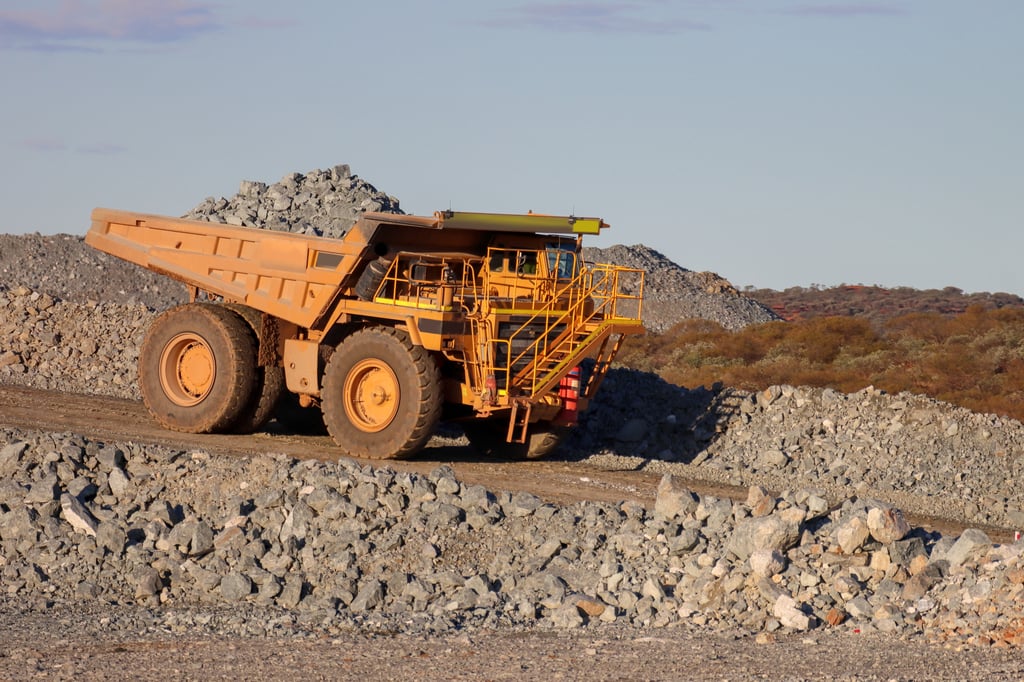
Australia should turn critical minerals leverage into industrial capability
Australia’s Syerston Scandium Project is a test of whether critical minerals cooperation can make Australia not merely a supplier, but a critical capability...

News
PERSPECTIVES | Can Australia and China talk sensibly about AI Safety?
Australia will attend the APEC Economic Leaders’ Meeting in Shenzhen on November 18-19 2026 amid questions about the extent to which the two countries can, or...
News
Australia-China Weekly Brief: October 2026 issues
The Australia-China Weekly Brief by the Australia-China Relations Institute at the University of Technology Sydney (UTS:ACRI) tracks key developments in...
News
The struggle over what China wants
China expertise is itself a field of epistemic struggle, shaped by competing convictions, dispositions and geopolitical perspectives. Doshi’s critique of Kang,...
News
Australia should turn critical minerals leverage into industrial capability
Australia’s Syerston Scandium Project is a test of whether critical minerals cooperation can make Australia not merely a supplier, but a critical capability...
News
PERSPECTIVES | Can Australia and China talk sensibly about AI Safety?
Australia will attend the APEC Economic Leaders’ Meeting in Shenzhen on November 18-19 2026 amid questions about the extent to which the two countries can, or...