


In today’s rapidly changing world, traditional ways of learning are no longer enough.
Employers are looking for graduates who can think beyond the boundaries of one discipline, adapt quickly, and tackle problems from multiple angles. This is where transdisciplinary learning comes in. It’s an approach to education that brings together knowledge, skills, and perspectives from across disciplines to solve complex, real-world challenges.
What is Transdisciplinary Learning?
Transdisciplinary learning is an educational approach that integrates insights and methods from different fields to address problems that cannot be solved within a single discipline. Unlike multidisciplinary or interdisciplinary learning, which combine separate fields side by side, transdisciplinary learning goes further. It dissolves traditional subject boundaries and encourages learners to collaborate to create new ways of thinking that are directly connected to real problems and contexts.
What Does It Involve?
In practice, transdisciplinary learning involves collaborative projects, open-ended inquiry, and applied research. Students work in diverse teams, often with industry or community partners, to design solutions to challenges that mirror those faced in the workplace and wider society. For example, climate change, ethical use of technology, or sustainable business models.
Why is Transdisciplinary Learning Important in the Workforce?
The modern workforce increasingly values adaptability, innovation, and systems thinking. Employers are looking for professionals who can connect dots between technical expertise, human needs, and global challenges. By engaging in transdisciplinary learning, graduates develop the ability to:
- Work effectively in diverse, cross-functional teams.
- Understand the complexity of global and local issues.
- Apply creative problem-solving to uncertain or evolving situations.
- Communicate across different areas of expertise.
These skills are essential in industries ranging from technology and healthcare to sustainability and design, where no single perspective can provide all the answers.
Skills Developed Through Transdisciplinary Learning
Students who take part in transdisciplinary education develop a wide-ranging skillset that includes:
Critical thinking and problem-solving: approaching challenges from multiple perspectives.
- Collaboration and leadership: working with people from different backgrounds.
- Communication: translating complex ideas for different audiences.
- Creativity and innovation: generating new solutions that draw from varied fields.
- Resilience and adaptability: thriving in environments of ambiguity and change.
Learning Beyond the Classroom
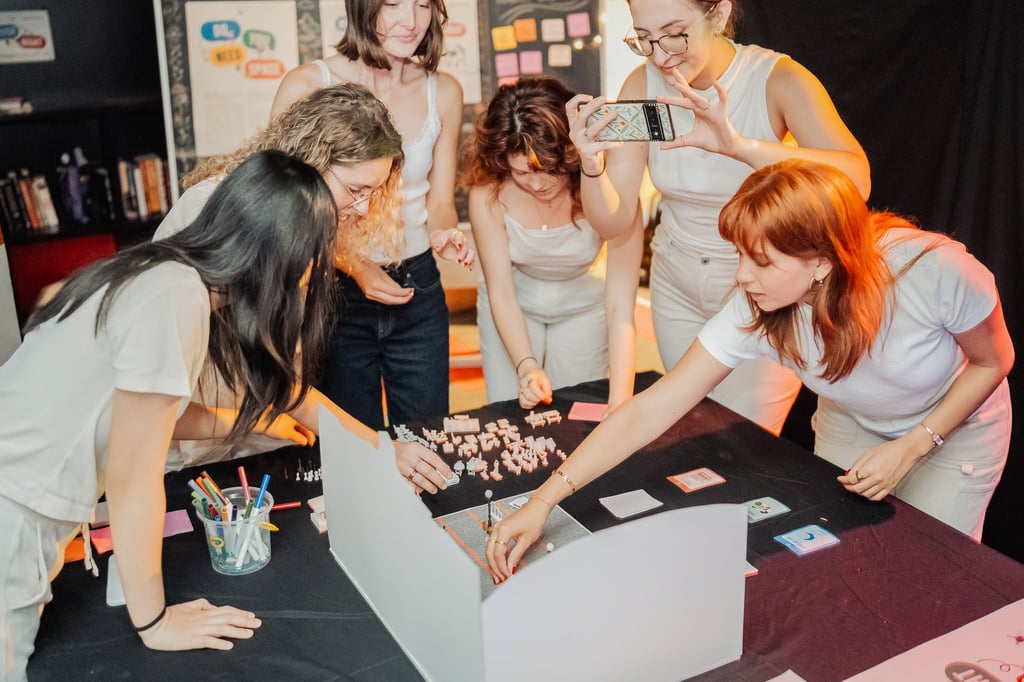
Importantly, transdisciplinary learning extends far beyond the classroom. Students gain practical experience by engaging with industry projects, community partners, and real-world case studies. This approach bridges the gap between university learning and professional practice, ensuring that students graduate job-ready and confident in their ability to contribute meaningfully.
Connecting to the Wider World
The world’s most urgent problems, including climate change, public health, digital ethics, and social inequality, cannot be solved in isolation. Transdisciplinary learning equips students with the mindset and tools to approach these issues collaboratively, creating solutions that are socially responsible, sustainable, and innovative.
In short, transdisciplinary learning is about preparing for the future. It teaches students not just what to think, but how to think across boundaries, in collaboration, and with purpose. For employers, graduates with a transdisciplinary education represent the next generation of adaptable professionals who can navigate complexity and drive meaningful change.
Explore how you can study Transdisciplinary Innovation at UTS

Webpage
Designing a creative urban future
Awkar Ruel has creativity running through his veins. From a young age, he wanted to be an architect, working in a profession where he could bring the drawings...
Webpage
Creative intelligence will be essential to the future of work. Here’s why.
Creative graduates who can thrive within complex and uncertain environments and tackle challenges across disciplines, fields and industries are transforming...
Webpage
Innovation for the greater good
Kirah Godsell was always going to change the world, but it wasn’t until she enrolled at the University of Technology Sydney (UTS) that she figured out how.

Webpage
One degree, multiple paths to a data science career
One of the most valuable aspects of the Master of Data Science and Innovation is that graduates emerge with the skills to work in multiple industries.
Webpage
Designing a creative urban future
Awkar Ruel has creativity running through his veins. From a young age, he wanted to be an architect, working in a profession where he could bring the drawings...
Webpage
Creative intelligence will be essential to the future of work. Here’s why.
Creative graduates who can thrive within complex and uncertain environments and tackle challenges across disciplines, fields and industries are transforming...
Webpage
Innovation for the greater good
Kirah Godsell was always going to change the world, but it wasn’t until she enrolled at the University of Technology Sydney (UTS) that she figured out how.
Webpage
One degree, multiple paths to a data science career
One of the most valuable aspects of the Master of Data Science and Innovation is that graduates emerge with the skills to work in multiple industries.