


Study Economics and Secondary Teaching at UTS
Do you have a passion for economics and are you looking to pursue a career in teaching? The Bachelor of Economics Master of Teaching in Secondary Education offers you the knowledge and practical hands-on experience required to teach over 20,000 secondary school pupils studying Business and over 5,700 students undertaking Economics in NSW (NSW Education Standards Authority, 2025 HSC Enrolments by Course).
The combined course (undergraduate + postgraduate degree) enables you to learn a greater depth of disciplinary knowledge in Economics before you commence your teaching subjects in the Master of Teaching in Secondary Education from the second year of study. Gaining a wider and deeper understanding in the field of study ensures you start your teaching career with confidence.
Part of the Faculty of Business and Faculty of Design and Society.
Your future in Secondary Education: Career guide
Explore career pathways in secondary education and discover the technologies and research shaping the future of teaching.
EXPLORE
Bachelor of Economics Master of Teaching in Secondary Education
CODE
UTS: C10450 (version 2)
CRICOS: 106138A
UAC: 600066 Business Studies & Economics (Autumn Session)
LOWEST SELECTION RANK
DURATION
4 years full time
INTAKE
Autumn D Session 2027
View important datesCOURSE FEES
LOCATION
City campus
What you’ll study
You must complete 96 credit points of disciplinary content subjects in the Bachelor of Economics consisting of 66 credit points of core Economics subjects, 12 credit points of core Business subjects and 18 credit points of Economics electives.
In the Master of Teaching in Secondary Education component, you complete 96 credit points comprising 54 credit points of core subjects focused on the foundation education disciplines of learning, motivation, and adolescent psychology, crucial areas such as Indigenous Australian studies, integration of digital technologies and inclusive education, as well as professional experience; and 42 credit points of teaching methods and electives.
You'll need to achieve a credit average after four sessions of full-time study (or part-time equivalent), typically at the end of your second year, to progress into the final years of the program. You will also need to complete the NSW Government’s LANTITE Literacy and Numeracy test before progressing to the first Professional Experience supervised teaching placement in Year 3.
Subjects at a glance
-
Core subjects
Subject Code Subject Name 25400 Financial Literacy21212 People and Organisations23115 Economics for Business26134 Responsible Evidence-Based Decisions23506 Strategic Decision Making and Game Theory23566 Economics for Business 223508 Quantitative Methods in Economics and Business23571 Introductory Econometrics23567 Intermediate Microeconomics23568 Intermediate Macroeconomics23509 Empirical Methods for Policy Evaluation23005 Behavioural Economics23600 Economic Policy and Analysis (Capstone)013235 Human Society and its Environment Teaching Methods 1013126 Human Society and its Environment Teaching Methods 2013204 Human Society and its Environment Teaching Methods 3010046 Learning Futures: Teaching for Complexity and Diversity013404 Inclusive Education013407 Resetting the Future: Indigenous Australian Education013408 Teaching and Learning with Digital Technologies010048 Professional Learning010049 Understanding and Engaging Adolescent Learners010047 Literacy and Numeracy Across the Curriculum013241 Professional Experience Teaching Practice 1013242 Professional Experience Teaching Practice 2
Skills you'll develop
Learn Economics and teaching skills within 4 years in this degree.
Professional experience teaching placements comprise of 80 days of hands-on training in at least two secondary schools from over 200 school partners across NSW. This real-world experience is crucial for mastering curriculum delivery and classroom management.
- check_circle
- check_circle
- check_circle
- check_circle
- check_circle
- check_circle
Admissions information
Admissions information
Find more Business courses
Entry schemes and pathways
Elite athletes and performers scheme
If you're an elite athlete or performer who has represented your school or state at a national level, and your studies have been affected, this scheme is for...
InpUTS
If you've experienced long-term disadvantages that have affected your education, you may be eligible for selection rank adjustments through inpUTS.
Completing a recognised TAFE or VET provider qualification
With a VET qualification, you're eligible to apply for certain courses. Take the next step in your education.
Jumbunna Admission Program
If you're Aboriginal or Torres Strait Islander, Jumbunna is an alternative application process for our courses that emphasises diverse pathways to success.
Changing from another undergraduate course
You can apply for our courses using your previous study. You may even be eligible for recognition of prior learning, so you won’t need to repeat subjects.
UTS College
Transition smoothly to UTS with UTS College. Explore our programs now.
Careers
Your future career
As a graduate of the combined course in Secondary Education, you'll be comprehensively prepared to enter a contemporary secondary school environment and teach students in areas of Business Studies and Economics.
With an extensive foundation of up-to-date theory and practical classroom skills, you'll be able to design, develop, and deploy teaching programs for adolescent learners. You'll know how to create encouraging, supportive learning environments in a range of educational settings, using the latest approaches and technologies to help your students go further and achieve more.
Graduates may seek work as an economist, economic analyst, econometrician, data analyst, policy analyst, business consultant, market analyst and researcher in various industries including the banking, finance, insurance, consulting and public sector.
Please note: Applicants are advised to check with potential employing bodies regarding employment requirements. As of the date of publication, the NSW DoE requirements can be found here. Both public and private sector schools can set eligibility requirements relating to academic performance, among other criteria. Requirements to teach internationally can vary from country to country.
Career options
- check_circle
- check_circle
- check_circle
- check_circle
- check_circle
Industry accreditation
This course is currently accredited by the NSW Education Standards Authority (NESA) as a recognised secondary school teaching qualification. UTS is seeking additional NESA approval for proposed organisational and curriculum variations, to be implemented in Autumn 2027. To gain employment as a teacher in NSW schools, graduates must meet the requirements of the NESA, including language proficiency.
Where you’ll study
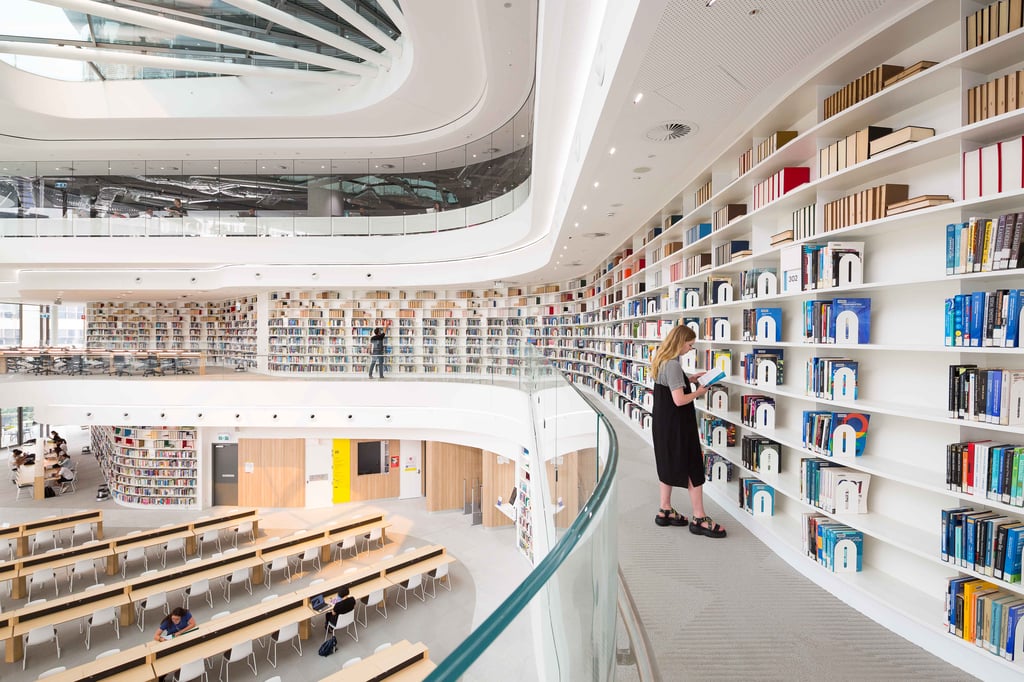
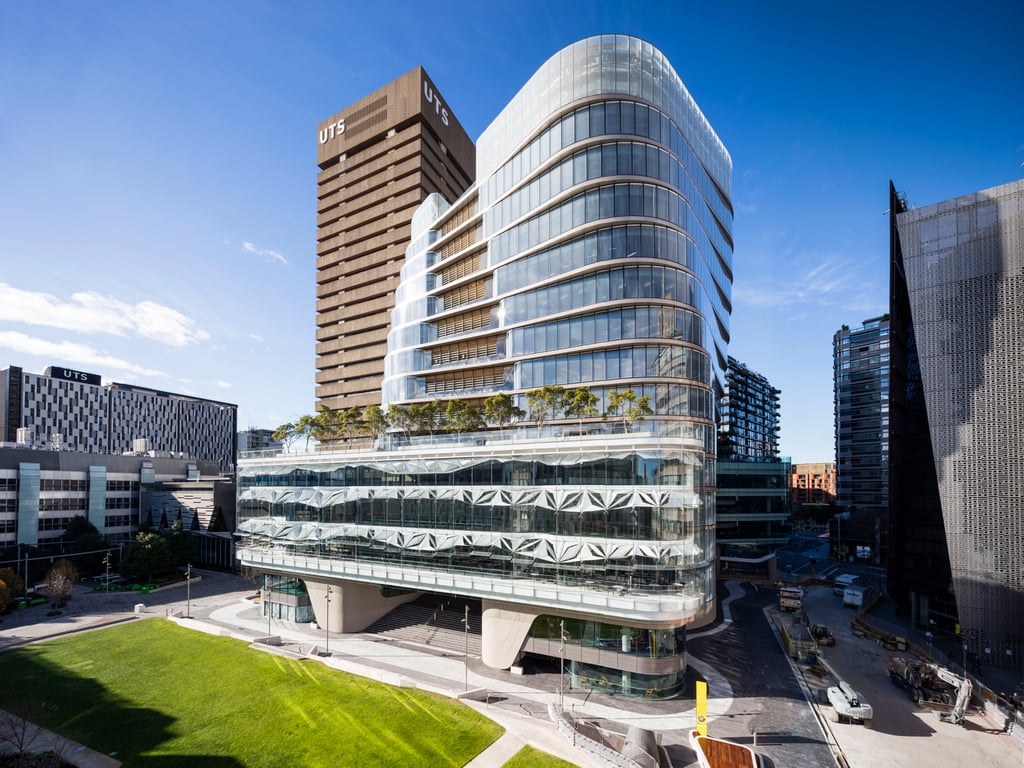
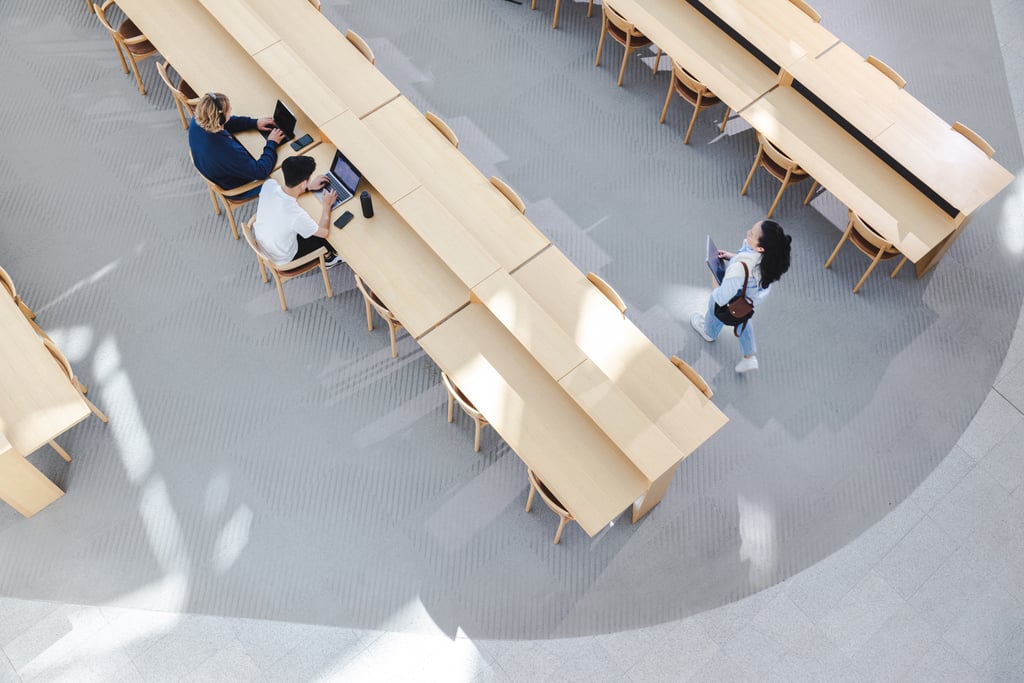
Our world-class facilities support your future-focused learning and high-impact research. They enable effective partnerships with industry and provide services to our community.
Why UTS?
Why study Education at UTS
Contribute to the future of education with degrees informed by advancements in research, technology and creativity. You'll experience hands-on learning, practical workshops and in-classroom professional practice at some of our 200+ partner schools, aligned to your interests and career goals.
Choose from qualifications in primary or secondary teaching, applied linguistics, TESOL, learning design and leadership or higher degree research.
13.4%
increase in education and training positions over the next five years.
Labour Market Insights 2021
Top 100
in the world for Education.
Times Higher Education subject rankings 2025
Above world standard
for Curriculum and Pedagogy.
2018 Excellence in Research for Australia (ERA) evaluation
-
calendar_today
On-demand
-
location_on
Online
-
attach_money
Free admission
-
calendar_today
Thu 22 Oct 2026
-
schedule
5.30PM - 7.30PM Australia/Sydney (2 hours)
-
location_on
City campus Dr Chau Chak Wing Building, Building 8 UTS Business School, level 3 (ground floor, entry via Goods Line)
-
attach_money
Free admission

-
calendar_today
Thu 1 Jan 2026 - Thu 31 Dec 2026
-
schedule
9.00AM - 5.00PM Australia/Sydney (8 hours)
-
location_on
Online
-
attach_money
Free admission

-
location_on
City campus Science Building, Building 4 CB04 Building 4, Science Area 337, Level 6, 745 Harris Street Ultimo NSW 2007
-
attach_money
Free admission
-
calendar_today
On-demand
-
location_on
Online
-
attach_money
Free admission
-
calendar_today
Thu 22 Oct 2026
-
schedule
5.30PM - 7.30PM Australia/Sydney (2 hours)
-
location_on
City campus Dr Chau Chak Wing Building, Building 8 UTS Business School, level 3 (ground floor, entry via Goods Line)
-
attach_money
Free admission
-
calendar_today
Thu 1 Jan 2026 - Thu 31 Dec 2026
-
schedule
9.00AM - 5.00PM Australia/Sydney (8 hours)
-
location_on
Online
-
attach_money
Free admission
-
location_on
City campus Science Building, Building 4 CB04 Building 4, Science Area 337, Level 6, 745 Harris Street Ultimo NSW 2007
-
attach_money
Free admission
Make an enquiry
Considering studying at UTS? Connect with our team to explore your study options, the application process, and discuss any other questions you may have.

location_on
City campus
schedule
4 years full time 8 years part time

location_on
City campus
schedule
5 years full time

location_on
City campus
schedule
5 years full time

location_on
City campus
schedule
4 years full time 8 years part time
location_on
City campus
schedule
4 years full time 8 years part time
location_on
City campus
schedule
5 years full time
location_on
City campus
schedule
5 years full time
location_on
City campus
schedule
4 years full time 8 years part time