


Study Creative Writing and Secondary Teaching at UTS
Are you fascinated by the world of writing and publishing? Want a career where you’ll play a vital role in shaping the next generation? With the combined Bachelor of Communication in Creative Writing Master of Teaching in Secondary Education, you’ll gain the comprehensive knowledge and practical experience to teach secondary school English in a rapidly evolving educational landscape.
This combined program allows you to complete both your undergraduate and postgraduate degree in four years. You’ll acquire advanced, in-depth communications capabilities while undertaking a practical, job-ready teaching qualification. The combined course enables you to gain a greater depth of disciplinary knowledge before you commence your teaching subjects in the Master of Teaching in Secondary Education from the second year of study. Gaining a wider and deeper understanding in the field of study ensures you start your teaching career with confidence.
Part of the Faculty of Design and Society.
Your future in Secondary Education: Career guide
Explore career pathways in secondary education and discover the technologies and research shaping the future of teaching.
EXPLORE
Bachelor of Communication in Creative Writing Master of Teaching in Secondary Education
CODE
UTS: C10405 (version 4)
CRICOS: 118359M
UAC: 600062 English/Society & Culture (Autumn Session), 600060 English (Autumn Session), 600061 English/EALD (Autumn Session)
LOWEST SELECTION RANK
DURATION
4 years full time
INTAKE
Autumn D Session 2027
View important datesCOURSE FEES
LOCATION
City campus
What you’ll study
Choose a path that allows you to become specialised in teaching English, English and Society and Culture or English and English as an Additional Language/Dialect (EALD) in secondary schools.
In the Bachelor of Communication in Creative Writing component, you’ll complete 96 credit points of disciplinary content comprising of 18 credit points of Communication core subjects, a 48 credit point Creative Writing stream, a 6 credit point core literary subject and 24 credit points of either Society and Culture subjects or electives.
In the Master of Teaching in Secondary Education component, you’ll complete 96 credit points comprising 54 credit points of core subjects focused on the foundation education disciplines of learning, motivation, and adolescent psychology; crucial areas including, Indigenous Australian studies, integration of digital technologies in teaching and inclusive education, as well as professional experience, and 42 credit points of teaching methods and electives or teaching methods and additional discipline subjects for those who select English/EALD.
You'll need to achieve a credit average after four sessions of full-time study (or part-time equivalent), typically at the end of your second year, to progress into the final years of the program. You’ll also need to complete the NSW Government’s LANTITE Literacy and Numeracy test before progressing to the first Professional Experience supervised teaching placement in Year 3.
Subjects at a glance
-
Core subjects
Subject Code Subject Name 010046 Learning Futures: Teaching for Complexity and Diversity013404 Inclusive Education013407 Resetting the Future: Indigenous Australian Education013408 Teaching and Learning with Digital Technologies010048 Professional Learning010049 Understanding and Engaging Adolescent Learners010047 Literacy and Numeracy Across the Curriculum013241 Professional Experience Teaching Practice 1013242 Professional Experience Teaching Practice 252600 Communication and Society52601 Communication and Technology52602 Communication and Work Futures52690 Narrative in Theory and Practice52691 Creative Writing Foundations52692 Imagining the Real52603 Writing Through Form and Genre52604 Experiments in Creative Writing52695 Adaptations52696 Publishing Industry Practices52697 Major Writing Project024411 Literary Narrative from Sendak to Shakespeare
Typical course program
The outline below shows an example program for the Bachelor of Communication (Writing and Publishing) Master of Teaching in Secondary Education based on a full-time study load. Please note that your exact program may differ based on your unique circumstances, such as your commencement date, subject selections and recognition of prior learning.
Course structure
-
- 3
- core Communication subjects
-
- 4
- Communication Electives
or- 3
- Communication Electives
-
- 8
- Writing and Publishing major subjects
-
- 7
- core Secondary Education subjects
-
- 9
- Secondary Education specialisation subjects
-
First year
You’ll kick off your degree with your Communications studies, where you’ll learn about citizenship and digital literacy. You’ll build specialised knowledge through subjects in areas like narrative, writing and editing and complete two disciplinary electives of your choice. -
Second year
This year, you’ll jump into your postgraduate coursework, learning critical perspectives, approaches and methodologies for teaching numeracy, literacy and English. You’ll also continue honing your writing and publishing acumen, developing your industry knowledge and practical skills in adaptation. -
Third year
You’ll finalise your Communication degree, drawing together your learnings to produce an original piece of writing in your choice of genre and form. You’ll also acquire further competencies in teaching and undertake your first hands-on placement in a real classroom. -
Fourth year
You’ll conclude your program by completing final-year subjects in teaching methods, inclusive education and digital technologies. You’ll carry out a second placement, establishing advanced capabilities in secondary education teaching and classroom management to support you as you begin your career.
Course highlights
Learn Creative Writing and gain teaching qualifications within 4 years in this degree.
This degree gives you an up-to-date understanding of the contemporary publishing industry as well as expert writing and storytelling competencies across nonfiction, screenwriting, digital content and more. You’ll also become a competent, confident educator, blending your acute knowledge with the hands-on experience acquired from 80 days of professional experience in at least 2 secondary schools from over 200 school partners across NSW.
- check_circle
- check_circle
- check_circle
- check_circle
- check_circle
- check_circle
Admissions information
Admissions information
Find more Communication and Social Sciences courses
Entry schemes and pathways
Elite athletes and performers scheme
If you're an elite athlete or performer who has represented your school or state at a national level, and your studies have been affected, this scheme is for...
InpUTS
If you've experienced long-term disadvantages that have affected your education, you may be eligible for selection rank adjustments through inpUTS.
Completing a recognised TAFE or VET provider qualification
With a VET qualification, you're eligible to apply for certain courses. Take the next step in your education.
Jumbunna Admission Program
If you're Aboriginal or Torres Strait Islander, Jumbunna is an alternative application process for our courses that emphasises diverse pathways to success.
Changing from another undergraduate course
You can apply for our courses using your previous study. You may even be eligible for recognition of prior learning, so you won’t need to repeat subjects.
UTS College
Transition smoothly to UTS with UTS College. Explore our programs now.
Industry accreditation
This course is currently accredited by the NSW Education Standards Authority (NESA) as a recognised secondary school teaching qualification. UTS is seeking additional NESA approval for proposed organisational and curriculum variations, to be implemented in Autumn 2027. To gain employment as a teacher in NSW schools, graduates must meet the requirements of the NESA, including language proficiency.
Careers
Your future career
As a graduate, you’ll possess both the in-depth knowledge of the writing and publishing industry and the job-ready capabilities in secondary school education you need to launch a rewarding, meaningful career in English teaching. You’ll be an accomplished writer, blending your knowledge and skills in a range of genres and formats with your editing and publishing acumen to inform your practice.
Plus, with your cutting-edge educational abilities honed in real classroom environments, you’ll be fully prepared to become the informed, inspirational and creatively minded secondary teacher of the future.
Career options
(*Depending on teaching areas chosen)
- check_circle
- check_circle
- check_circle
- check_circle
- check_circle
- check_circle
- check_circle
- check_circle
- check_circle
“Studying at UTS has been a wonderful experience; it’s the perfect mix between campus and city vibes.”
Amy Robson
Undergraduate student
“Communication at UTS is different from other universities in the way that you gain practical experience in the industry whilst learning up to date methodologies from tutors who are working in the industry themselves.”
Daniel Snell
Bachelor of Communication (Media Arts and Production) (Public Communication)
Where you’ll study
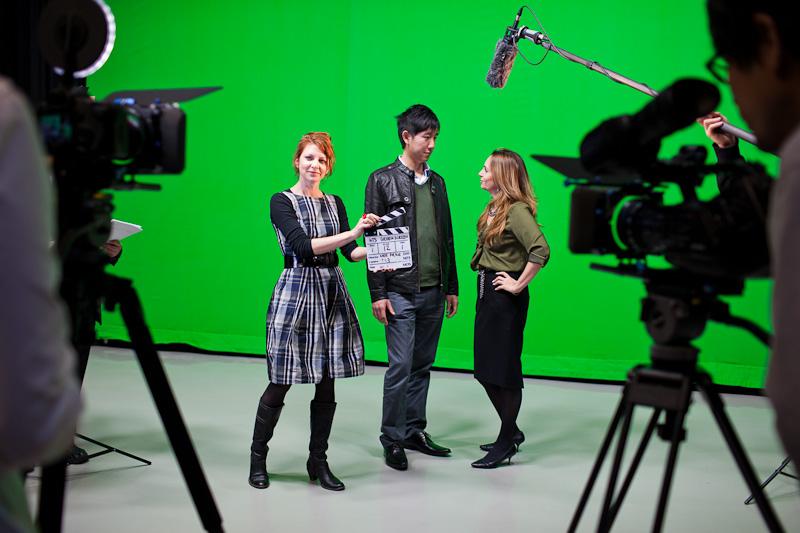
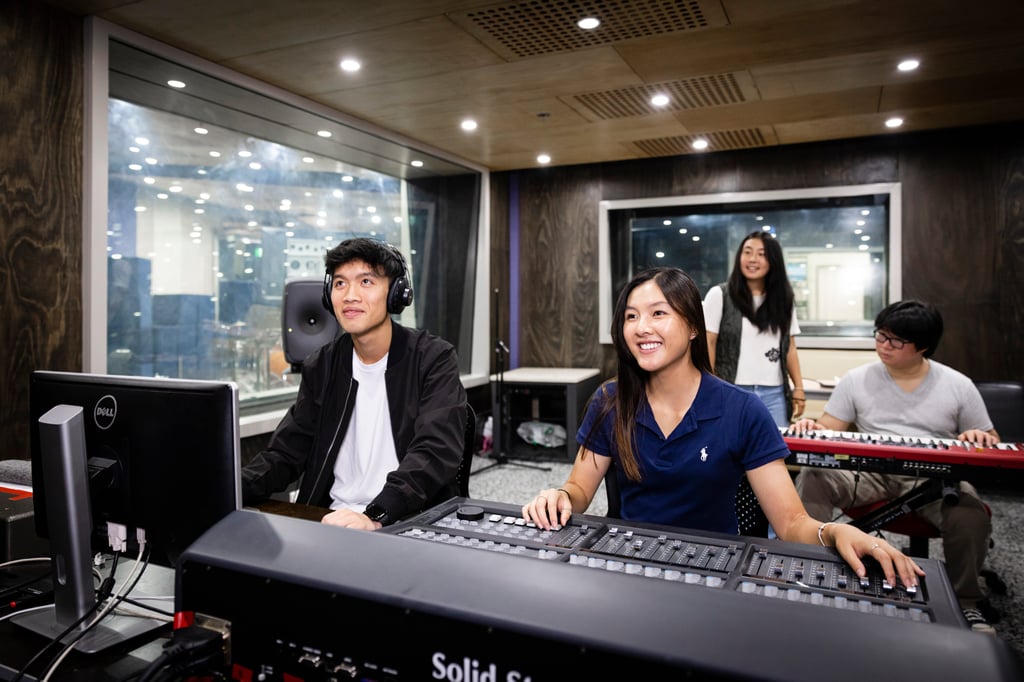
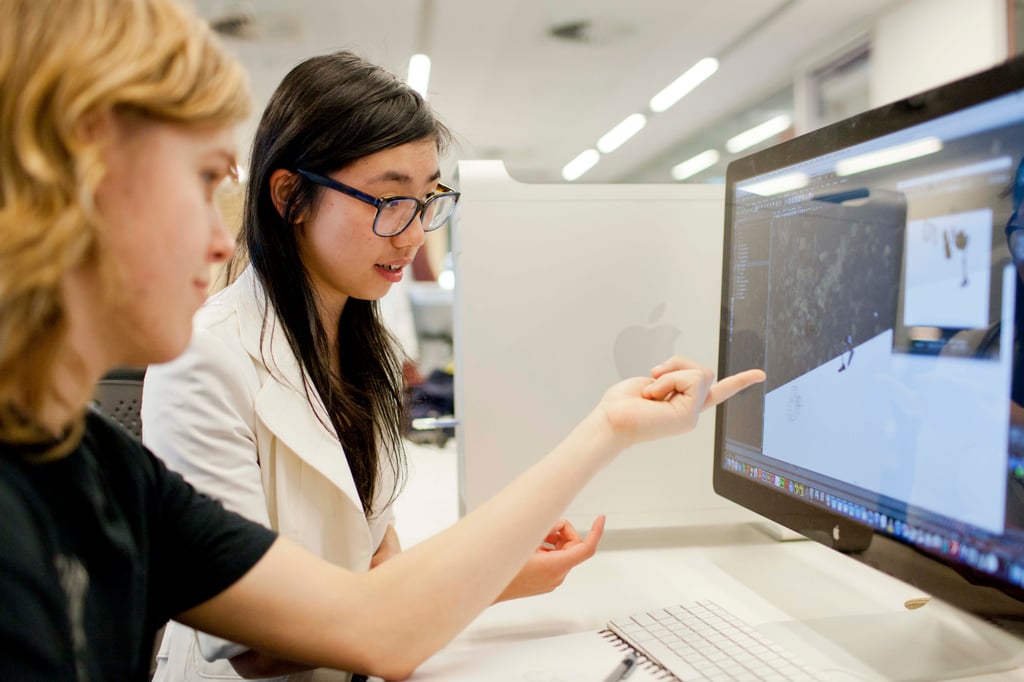
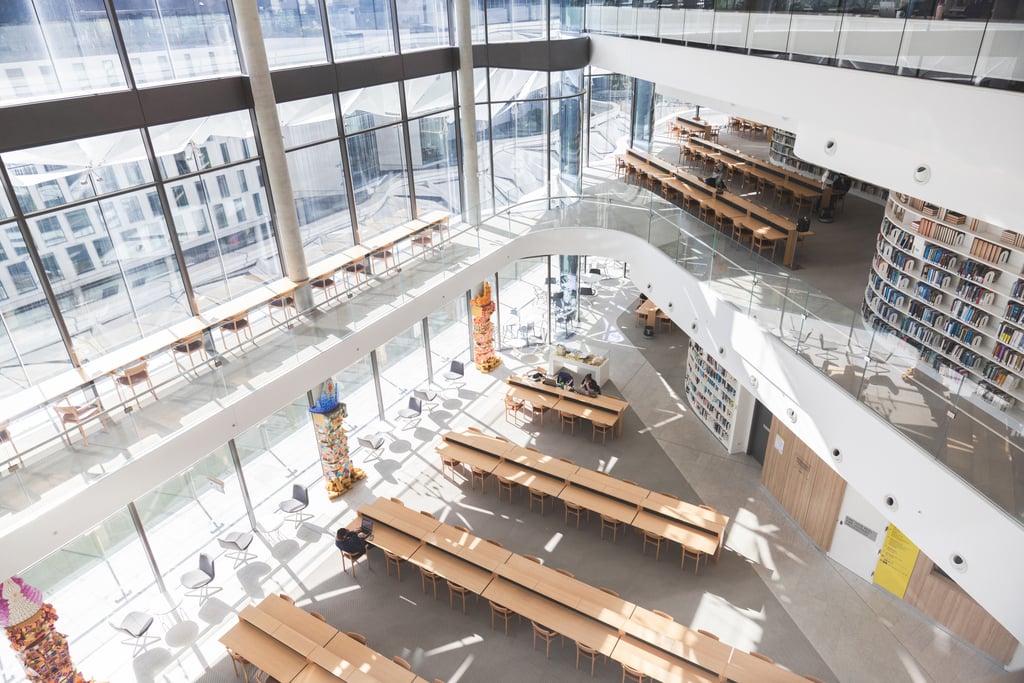
Our world-class facilities support your future-focused learning and high-impact research. They enable effective partnerships with industry and provide services to our community.
Why UTS?
Why study Communication at UTS
With a degree in Communications, you'll develop a professional portfolio and learn the skills to adapt in a rapidly evolving field.
We offer innovative and interdisciplinary media, communication and creative production programs that combine theory with practical learning and industry experience.
#1 employment rate
Highest overall employment rate for communication graduates in NSW.
Graduate Outcomes Survey 2019
5th in Australia
for Communication and Media Studies.
QS World University Rankings by Subject 2023
Top 100 globally
Global ranking for Communication and Media.
QS World University Rankings by Subject 2023

-
calendar_today
On-demand
-
location_on
Online
-
attach_money
Free admission

-
location_on
City campus
-
attach_money
Free admission
-
calendar_today
On-demand
-
location_on
Online
-
attach_money
Free admission
-
calendar_today
On-demand
-
location_on
Online
-
attach_money
Free admission
-
calendar_today
On-demand
-
location_on
Online
-
attach_money
Free admission
-
location_on
City campus
-
attach_money
Free admission
-
calendar_today
On-demand
-
location_on
Online
-
attach_money
Free admission
-
calendar_today
On-demand
-
location_on
Online
-
attach_money
Free admission
Make an enquiry
Considering studying at UTS? Connect with our team to explore your study options, the application process, and discuss any other questions you may have.

location_on
City campus
schedule
2 years full time

location_on
Online campus
schedule
0.67 years full time 1.33 years part time

location_on
City campus
schedule
1 year part time
location_on
City campus
schedule
1 year full time 2 years part time
location_on
City campus
schedule
2 years full time
location_on
Online campus
schedule
0.67 years full time 1.33 years part time
location_on
City campus
schedule
1 year part time
location_on
City campus
schedule
1 year full time 2 years part time