


Timeframe
-
2022 - 2024
Lead researchers
-
Dr Simon Fane, UTS
-
Dr Ann-Marie Rohlfs, WaterNSW
SDGs
-
6. Clean Water and Sanitation
Collaborator
-
WaterNSW
- Posted on 15 Aug 2025
Exploring plausible alternate future states of Greater Sydney’s Drinking Water Catchment to understand the impacts of Megatrends and local drivers on water security in 2040 and 2060.
Secure water supplies are essential for modern cities amidst future uncertainty. Megatrends such as climate-change, shifting demographics and technological advancements will impact drinking water catchments, including those providing water for the 5 million people in Greater Sydney. As such, how can water authorities prepare today to protect drinking-water for tomorrow, even under previously unexperienced conditions? To address this question, the UTS Institute for Sustainable Futures partnered with WaterNSW to develop narrative scenarios of potential future directions and apply spatial modelling techniques to given physical changes for each scenario.
Alternate future scenarios were informed by the megatrend's literature and UTS-ISF expert knowledge. Collaborative workshops allowed the incorporation of on-ground knowledge provided by WaterNSW staff, further refining the scenarios. These science-based narrative exercises were translated into future land use projections via a spatial model built from 30 years of historical catchment land use transitions. The modelling provided a tangible and interactive representation of what Greater Sydney’s drinking water catchments could look like in 2040 and 2060.
Whilst no future scenario can be expected to eventuate exactly as described, they are useful tools for considering previously unexperienced conditions and testing potential solutions. As a result of the project, WaterNSW is already acting on one scenario addressing a carbon positive catchment. This involves investigating ways to generate revenue from carbon sequestration, biodiversity regeneration and supporting the low-carbon transition through renewable energy generation, transmission and storage projects. Across the scenarios the outputs are aiding planning and decision-making by water authorities today to protect drinking-water for future generations.
Researchers

Associate Professor And Research Director, DVC (Research)

Research Principal, DVC (Research)

Associate Director Learning And Development, DVC (Research)
Dr Deyvid Barreto Rosa (UTS-ISF PhD Graduate)

Webpage
Bioengineering Protein Nanocages into Multi-target Vaccines for Alzheimer’s Disease
Alzheimer's disease (AD) is characterised by the clumping of abnormal proteins in the brain, which increases over time and leads to worsening cognitive...

Webpage
The Right to Housing in Australia
Housing is increasingly unaffordable, and inequality in housing is growing. The human right to housing offers a response to this crisis that centres human...

Webpage
Thrive project: Helping all young Australians finish school well
Completing high school well is a critical milestone that shapes young people’s future opportunities. Yet many students, particularly those facing social,...
Webpage
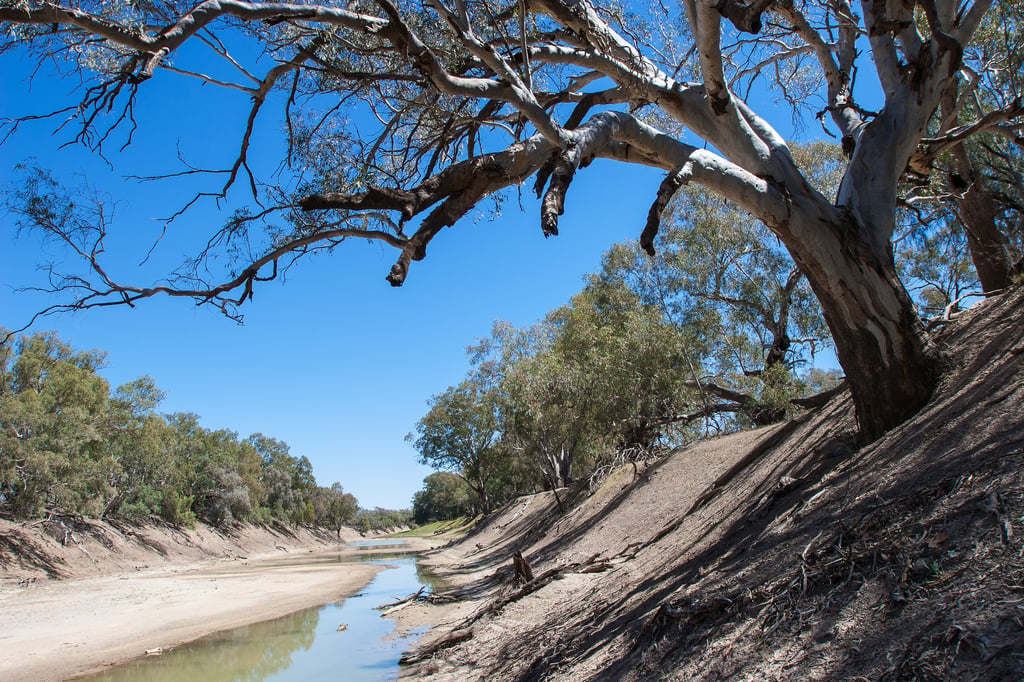
Can the Darling River System survive both climate change and mismanagement?
Water levels in the Darling River are notoriously irregular but decreasing rapidly. Darling River water is critical for the Murray-Darling Basin and in recent...
Webpage
Bioengineering Protein Nanocages into Multi-target Vaccines for Alzheimer’s Disease
Alzheimer's disease (AD) is characterised by the clumping of abnormal proteins in the brain, which increases over time and leads to worsening cognitive...
Webpage
The Right to Housing in Australia
Housing is increasingly unaffordable, and inequality in housing is growing. The human right to housing offers a response to this crisis that centres human...
Webpage
Thrive project: Helping all young Australians finish school well
Completing high school well is a critical milestone that shapes young people’s future opportunities. Yet many students, particularly those facing social,...
Webpage
Can the Darling River System survive both climate change and mismanagement?
Water levels in the Darling River are notoriously irregular but decreasing rapidly. Darling River water is critical for the Murray-Darling Basin and in recent...