


Transdisciplinary research is more than collaboration.
What distinguishes transdisciplinary research is not simply that diverse people work together. It is the deliberate integration of different forms of knowledge, the co-creation of how problems are understood, and the use of systemic, creative and reflexive approaches to generate new insights and pathways for change.
Our approach to research is shaped by the realities of complex challenges. This page explores the principles, practices and processes that guide how we work across disciplines, sectors and communities to create meaningful impact.
Working with complexity
Today’s challenges - across climate, health, technology, equity and sustainability - are complex. They are interconnected, constantly evolving, and rarely have simple solutions.
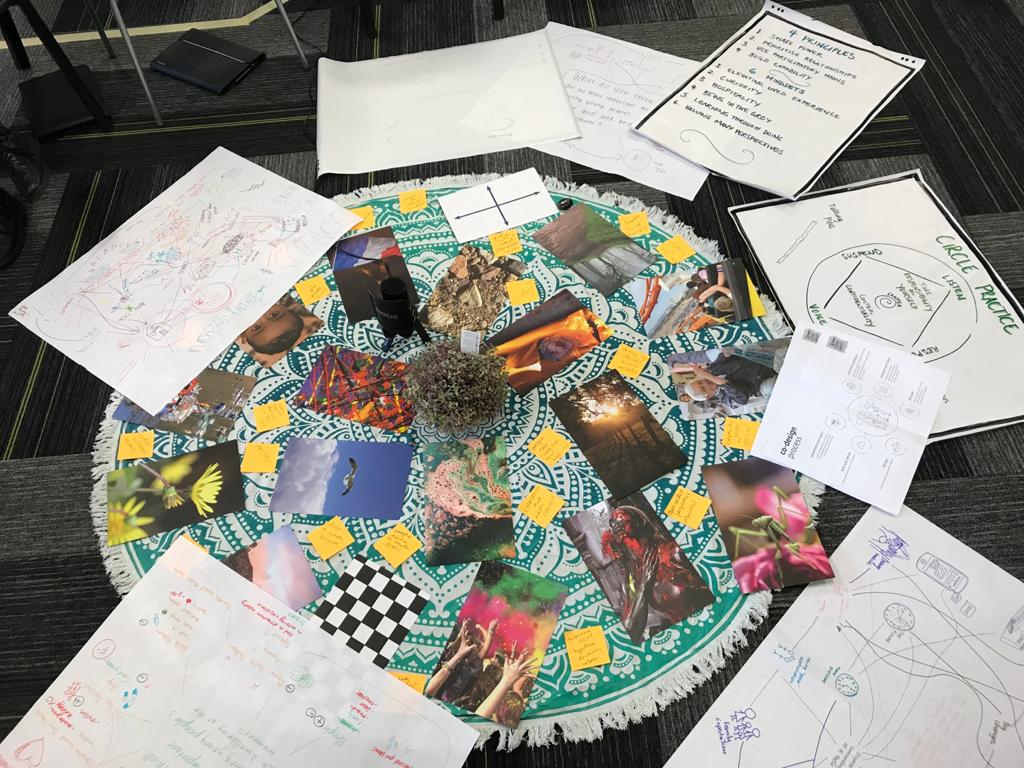
TD Research is designed specifically to work within this complexity. By integrating diverse perspectives and adapting as challenges evolve, we help navigate uncertainty and generate meaningful, lasting impact.
Why today's challenges require new approaches
Traditional approaches to research are often not enough to address today’s most complex problems.
Transdisciplinary research (TD research) goes further.
Our research approach:
- Addresses root causes, not just symptoms.
- Integrates knowledge across disciplines, sectors and lived experience.
- Works beyond academic boundaries to include stakeholders in the research process.
- Responds to problems as dynamic, interconnected systems.
At the Transdisciplinary school we take a human-centred approach - bringing people together to co-create knowledge, frame problems and develop new pathways forward.
How is transdisciplinary research different?
Many of today's challenges are too complex to be solved by a single discipline alone. While multidisciplinary and interdisciplinary approaches bring expertise together, transdisciplinary research goes a step further by integrating knowledge from academia, industry, government, communities and people with lived experience.
Rather than simply combining perspectives, transdisciplinary research creates new ways of understanding problems and developing solutions that are grounded in real-world contexts and needs.
Our transdisciplinary model bridges gaps between:
- Disciplines
- Research and practice
- Academic expertise and lived experience
- Knowledge creation and real-world impact
Rather than prioritising a single perspective, our approach integrates diverse forms of knowledge - including Indigenous knowledges, professional practice and community insight - to better understand and respond to complex challenges.
Complex challenges share three characteristics:
-
live_help Solutions are not always known at the outset.
#1
Discovery before certainty. Rather than assuming the answer, we explore challenges from multiple perspectives to uncover new opportunities for change.
-
explore Problems evolve over time.
#2
Adaptation over prediction. Today's challenges are dynamic and interconnected, with problems often evolving over time. We continuously refine our understanding as contexts, systems and needs evolve.
-
crowdsource Impact requires collective action
#3
Meaningful impact requires collaboration, openness and adaptability. Lasting change happens when researchers, practitioners, industry and communities work together to develop and implement solutions.
What defines transdisciplinary research at UTS?
The diagram below shows how transdisciplinary approaches differ from traditional multidisciplinary and interdisciplinary models to drive innovation.

"Multidisciplinary research brings expertise together. Interdisciplinary research integrates it. Transdisciplinary research goes further, bringing together disciplines, industries, communities and lived experience to create new ways of understanding and addressing complex challenges".
Martin Tomitsch
Head of Transdisciplinary School (TDS)
At TD Research, this transdisciplinary approach is embedded throughout our research process. The 8-step framework below outlines how we work with partners to understand complex challenges, integrate diverse perspectives and generate meaningful impact.

Step 1
Start with a complex
real-world problem
TD Research begins with problems that matter—often referred to as complex, wicked, or systemic challenges that cannot be solved within a single discipline. These problems are grounded in real societal, environmental, technological or organisational contexts, rather than academic theory alone.

Step 2
Convene diverse perspectives around
the problem
TD Research deliberately brings together radically diverse disciplines and knowledges, including academics from multiple fields, industry, government and community partners, First Nations knowledges and perspectives, and people with lived experience. Diversity is treated as a design principle, not an add-on.

Step 3
Build a shared understanding
(problem framing)
Rather than the problem is alreadywell defined, TD Research emphasises collaborative problem framing. Participants surface assumptions, values and disciplinary biases, developing a shared language and understanding of the system they are working within. Reflexivity is core at this stage.

Step 4
Integrate knowledge
across & beyond
disciplines
TD Research describes transdisciplinarity as working across, between and beyond disciplines, integrating academic expertise with professional, policy and community knowledge. This integration is not additive-it creates new ways of thinking and new frames for action.
Step 5
Use creative, systemsbased
& participatory
methods
TD Research explicitly combines creativity, systems thinking, participatory design, futuring and experimentation to explore
complex challenges. Methods are chosen to suit the problem, not
the discipline, and often involve prototyping, scenario-building or realworld experimentation.

Step 6
Co-develop
actionable responses
& interventions
Solutions are co-created with partners, ensuring they are usable, ethical and context-aware. Outputs may include strategies, policies, tools, prototypes, new practices or capabilities, not just academic publications. Action orientation is a defining feature.

Step 7
Reflect, learn & adapt throughout
the process
TD Research treats transdisciplinary work as iterative rather than linear. Reflection and learning happen throughout-teams revisit assumptions, adapt methods and respond to emerging insights as the
problem evolves.
Step 8
Focus on real-world impact and longterm
change
The ultimate goal is meaningful impact for communities, organisations and systems-rather than discipline-specific outcomes. Success
includes capabilitybuilding, relationship building
and enabling future change, not just immediate solutions.
Creativity is key
Creativity is a core capability at TD Research. Many of the challenges we work on are complex, uncertain and constantly evolving, meaning solutions are often unknown at the outset.
By combining creativity with systems thinking, design, futures and research expertise, we help people explore new possibilities, challenge assumptions and develop innovative responses to complex problems.
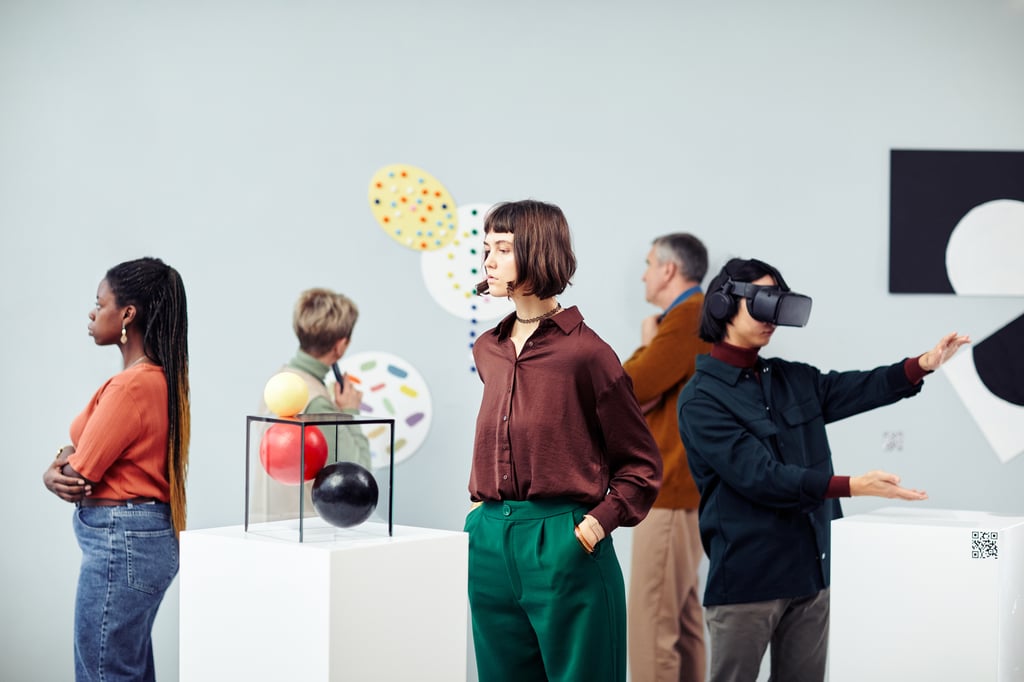
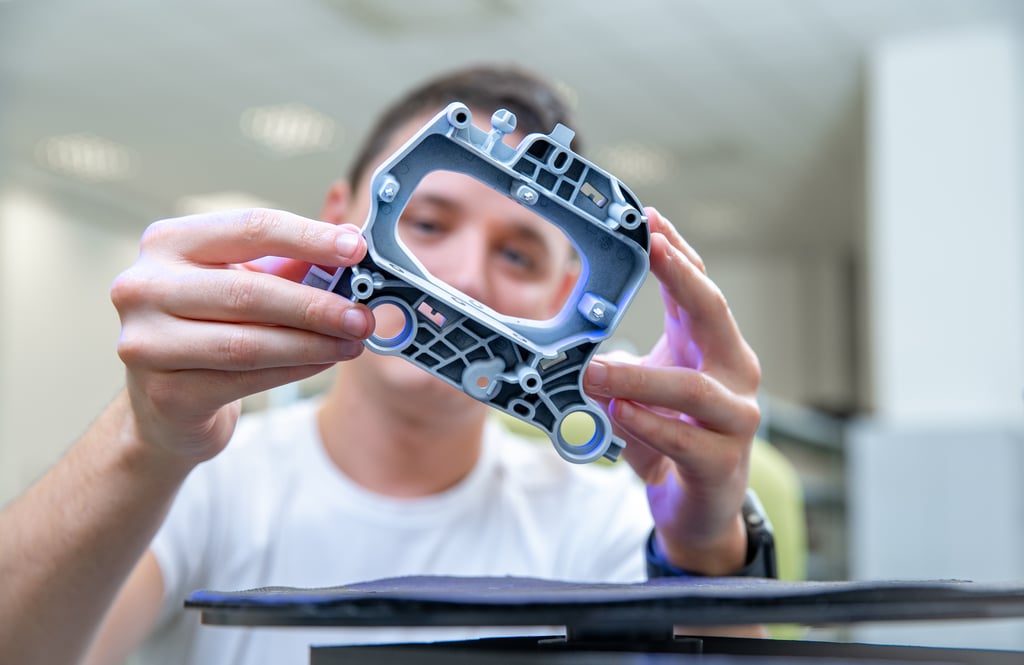
Our work may generate a range of outputs, including prototypes, exhibitions, policy tools, design artefacts, creative works, global databases, templates and practical resources that support real-world impact.
Alongside traditional academic outputs, our work includes non-traditional research outputs (NTROs) such as:




What partnering with TD Research can help you achieve
Where TD Research creates impact
Because transdisciplinary research focuses on complex challenges rather than disciplinary boundaries, it can create impact across a wide range of domains, such as:

Management, business & industry
Our research draws on expertise across management and organisational behaviour, economics, finance and accounting, entrepreneurship and innovation, marketing and consumer behaviour, and operations and systems management, enabling richer insights into the complex challenges and opportunities facing organisations, industries and economies.

Society, culture and policy
Our work spans a diverse range of disciplines, including sociology and anthropology, education and learning sciences, law, ethics and public policy, social justice and equity, and cultural and communication studies, enabling richer insights into complex societal issues.

Design, creativity and futures
Our research draws on expertise across human-centred design, user experience and service design, creative and arts-based practice, futures and foresight, and heritage and narrative studies, enabling new ways of understanding challenges, imagining possibilities and shaping the future.

Digital and computational systems
Our research draws on expertise across artificial intelligence and machine learning, data science and analytics, computer and information systems, human-computer interaction, and spatial and visualisation technologies, enabling richer insights into the opportunities, challenges and societal impacts of an increasingly digital world.

Health and wellbeing
Our research draws on expertise across public and population health, medicine and clinical sciences, mental health and psychology, veterinary and animal sciences, and digital health technologies, enabling more holistic approaches to the interconnected health and wellbeing challenges facing society today

Environment, planet and place
Our research draws on expertise across climate, ecology and conservation, agriculture and food systems, hydrology and Earth science, urban and regional systems, and sustainability science, enabling richer insights into the environmental challenges and opportunities facing communities, cities and ecosystems.
Who We Work With
Collaborating Across Sectors
From government agencies and industry leaders to community organisations and research partners, we collaborate across sectors to deliver innovative, impactful research.
Some examples of these include:






Contact us
At TD Research, we don’t just study problems – we work across disciplines and public and private sectors to co-create solutions and navigate positive paths forward. Our approach blends systems science, socio-cultural insight and design-led innovation to tackle challenges that no single field can solve alone. This is one of our competitive advantages and what makes us so unique.
By partnering with us, you gain access to a world-class team that’s skilled in navigating complexity, fostering collaboration and turning bold ideas into actionable strategies. Together, we can shape a more inclusive, resilient and forward-looking society.
To learn more about our research strategy or to see how TD Research can help you and your organisation, contact TDResearch@uts.edu.au.