

kx0OoY-GkPk

Transcript

Broadly speaking, my research is about pharmacy education and interprofessional collaboration. I test strategies that enable students to arrive at better clinical decisions through reflective practices. I certainly hope that this type of research enables students to be better practitioners, making better decisions for better clinical outcomes for patients.

I use a number of different strategies, such as the RACA, the Reflective Ability Clinical Assessment, and also the RIPE Model, which is the Reflective Interprofessional Education Model. We use medium and high fidelity mannequins, simulation, and standardised patients. We've been putting this research into practice, we've published around this model of learning, and recently we actually received a university award for this model of learning too.

[Visuals: Footage of pharmacy students working with mannequins and in simulated clinical environments.]

My research is focused on the integration of pharmacists in general practice, which means when you go in to see your doctor, there's not only a nurse or a physio that you can see within the practice, but also a pharmacist. Pharmacists are really enjoying working within general practice. It gives them a chance to use their skills and really show other healthcare professionals what they can do. The GPs have also loved having someone there to support them in helping patients understand their medications. I really hope that our research shows that having a pharmacist involved in a general practice team stops patients going to hospital because of drug-related problems, helps them get the most out of their medicines, and really helps them control their disease states.

[Visuals: Pharmacists interacting with GPs and patients in a general practice setting.]

My research is on chronic airway inflammations as presented in asthma, chronic obstructive pulmonary disease, and cystic fibrosis. There is currently no cure for these diseases and current anti-inflammatory formulations are insufficient. We are currently working on a pre-clinical validation of a novel anti-inflammatory platform that we've developed. We can load it with different therapeutics, and these therapeutics are going to induce cells' own recycling mechanism to target inflammation. This is a paradigm shift. No other therapeutic on the market has taken this approach to resolve inflammation. So in patients with lung diseases like asthma and cystic fibrosis, when the patient gets to the stage that they become refractory and do not respond to current corticosteroid therapies, then this new treatment would be another option that helps their body's own recycling mechanism to fight and clear the inflammation.

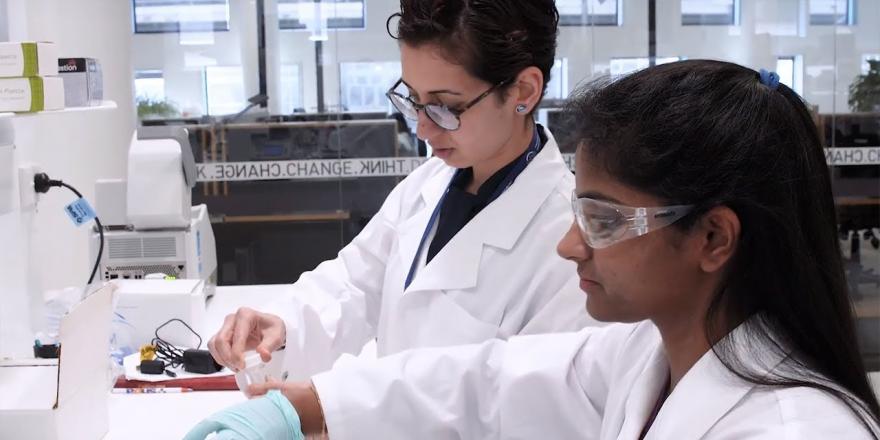
[Visuals: Laboratory scenes, researchers working with samples and scientific equipment.]

My research is looking at the safety and the quality of the way medicines are used in hospitals and nursing homes. I get medicine supply data from a pharmacy or an industry partner that has worked with nursing homes, and by looking at what's happening in the real world, we're able to identify problems, start to think about solutions, and change the way that medicines are used in facilities and in hospitals.

I'm passionate about my research because I'm a pharmacist, and I started my life in the hospital setting where my specialty area was medicines used in older people. So it made sense for me, when I moved across to research, to bring that clinical knowledge and that background with me, that I'd been working one-on-one with older people and their medicines, and so it was just a natural progression to look at how we could improve things at that population level.

[Visuals: Pharmacists reviewing medication charts and consulting with aged care staff.]

My research is interested in microvesicles. Microvesicles are small bubbles that are released from the surface of all cell types. In cancer, these microvesicles or bubbles pass messages that increase drug resistance and increase metastatic capacity. So basically, these microvesicles are causing the progression of cancer.

Multidrug resistance is a huge problem in cancer. We get clinical relapse of patients when they're treated with a chemotherapeutic agent, and we believe this is because of microvesicle signals. So in the end, we hope to come up with novel therapeutics that target these vesicles to stop the progression, stop multidrug resistance, and improve patient outcomes.

[Visuals: Animated graphics of microvesicles and cancer cells, researchers in laboratory settings.]

Get in touch

+61-2-9514-1448

gsh.future@uts.edu.au

or see all contact details

Health research is an area of strength in UTS' research strategy. The strategy is underpinned by a significant five-year investment and a focus on collaborative and interdisciplinary research; innovative technological approaches; commitment to researcher development and strengthening the relationship between research and teaching and learning.

UTS Pharmacy has a research intensive culture, with internationally renowned researchers in pharmacy practice and pharmaceutical science leading teams of postdoctoral fellows and research students to actively improve health outcomes and the quality use of medicine.


Work with us
We welcome expressions of interest from enthusiastic researchers at all career stages.    
Email pharmacy@uts.edu.au to make a confidential enquiry.