


Abstract
The University of Coimbra (UC) in Portugal, through the Centre for Informatics and Systems (CISUC), has been actively advancing research and innovation in trustworthy and human-centric Artificial Intelligence. Building on UC’s long-standing tradition in computing and interdisciplinary collaboration, the Responsible AI Lab (RAIL) emerges as a transversal initiative dedicated to developing AI systems that are transparent, fair, sustainable, and aligned with societal values.
RAIL structures its mission around five complementary research axes. First, Explainable AI and causal inference are integrated to produce interpretable models capable of uncovering causal relationships and supporting accountable decision-making. Second, the lab advances reliability and robustness by designing model-agnostic uncertainty estimation techniques that quantify confidence and strengthen the dependability of AI tools. Third, RAIL addresses societal challenges through bias detection and mitigation, developing methods to identify, inhibit, or compensate for unfairness in data and algorithms and enabling systematic assessments of model fairness. Fourth, in the realm of trustworthy human–computer interaction, the lab explores mechanisms that foster human–AI collaboration, including co-creation and interaction designs that centre user trust. Finally, inspired by biological systems, RAIL investigates efficient brains, studying principles of natural intelligence to engineer more efficient, sustainable machine-learning models.
These research lines support a broad range of real-world applications, including domains such as environmental intelligence, digital transformation, decision-support systems, and human-facing AI services. Across these contexts, RAIL’s methods help improve transparency, robustness, and fairness while promoting sustainable and responsible AI adoption. The talk will highlight selected projects that illustrate how these principles translate into practical impact and will outline opportunities for future collaboration.
By presenting ongoing work and exploring joint avenues, this talk aims to strengthen international links and foster initiatives toward a future where AI systems are not only powerful but also trustworthy, inclusive, and sustainable.
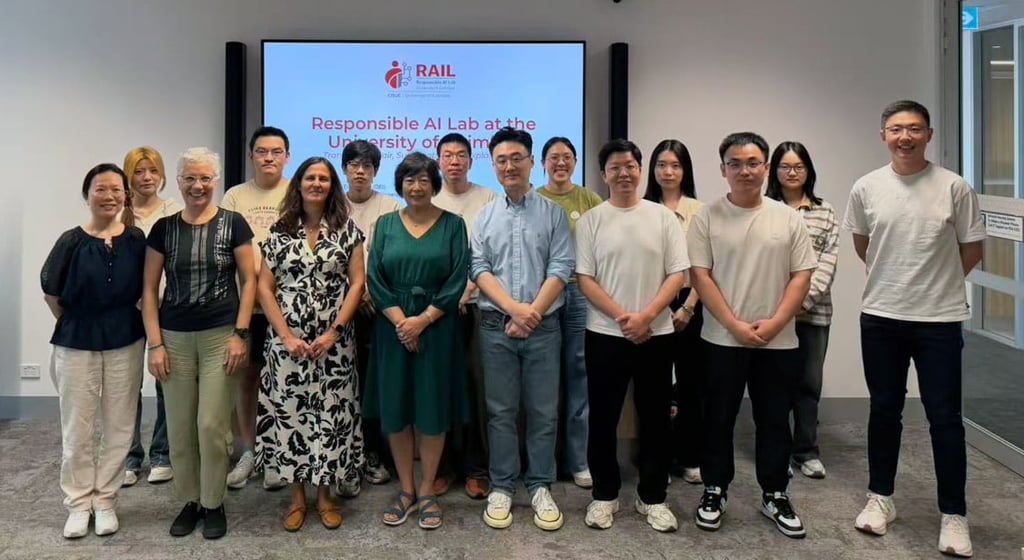
Speaker
Catarina Silva has a PhD degree in Computer Engineering, with 25 years’ experience teaching Computer Engineering BSc and MSc, while also supervising MSc and PhD students. She is a senior researcher at the Adaptive Computation Group of Center for Informatics and Systems of the University of Coimbra, Portugal (ACG-CISUC) with machine learning and pattern recognition as main areas of research. More specific recent research projects on Smart Farming and Sustainability (PRR); Transparency in AI in Finance (COST); Industry 4.0 Circular and Agile Manufacturing and individualized consumer preferences (H2020); Real-time Condition-based Maintenance for Adaptive Aircraft Maintenance Planning (H2020); Real-time monitoring of ambient air quality with low-cost nano-sensors (Sudoe); Natural Language Processing (P2020).
Skilled at managing different sized projects and scientific entrepreneurships, involving people with different backgrounds, namely faculty, students, alumni, and companies. Author and co-author of 4 books, circa 40 journal articles and 130 conference papers. Scientific committee and paper reviewer of several conferences and journals. Chair of the Portuguese Association of Pattern Recognition, IEEE senior member of the Computational Intelligence Society, IEEE past chair of the Portuguese Section.