


- Posted on 8 Oct 2026
By Elena Collinson
The Australia-China Weekly Brief by the Australia-China Relations Institute at the University of Technology Sydney (UTS:ACRI) tracks key developments in Australia-China relations over each week.
October 1 - October 8 2026
1. Beijing raises concerns over Australia’s proposed gas reservation scheme
The PRC Embassy in Canberra submitted comments on Australia’s proposed domestic gas reservation scheme, stating that previous interventions had ‘affected investor confidence to some extent’. It urged equitable treatment of Chinese LNG importers and investors and warned against undermining Australia's reputation as a reliable supplier.
An October 1 analysis estimated that Chinese companies earned at least $1.6bn in arbitrage profits from reselling Australian LNG between 2021 and mid-2026, highlighting the commercial value of flexible export contracts.
The takeaway: The PRC’s reliance on Australia for around 36% of its LNG imports and the scheme's protection of existing contracts reduce the risk of immediate disruption. However, growing global LNG capacity, rising Chinese domestic production and increasing Russian pipeline imports could strengthen Beijing's negotiating position over future contracts.
2. Iron ore earnings forecast to fall on weaker Chinese demand
Australia's Department of Industry, Science and Resources released its September 2026 Resources and Energy Quarterly on October 2, forecasting iron ore export earnings to fall from $123bn in 2025-26 to $107bn in 2026-27 and $79bn in real terms by 2030-31. The decline reflects weaker Chinese steel demand, elevated inventories and growing global supply, particularly from Guinea's Simandou mine.
PRC Ambassador Liu Jinsong met BHP’s chief executive on October 6 to discuss green smelting and mining technology, amid political scrutiny of China Baowu Steel Group's reported interest in a stake in BHP's Jimblebar mine.
The takeaway: Weaker demand and rising supply are shifting bargaining power towards buyers, with CMRG's centralised purchasing pressuring Australian iron ore prices. Baowu's reported interest in Jimblebar could further expand Chinese ownership of major Australian iron ore assets, raising questions about the implications for Australian producers as China's purchasing power becomes more concentrated.
3. China’s fuel export suspension puts upward pressure on Australian fuel costs
Chinese refiners suspended exports of diesel, gasoline and jet fuel for October to preserve domestic inventories amid global energy disruptions. Major refiners entered the National Day holiday (October 1-7) without export authorisation outside Hong Kong and Macau, while PetroChina cancelled scheduled shipments.
The takeaway: Australia was China's second-largest overseas jet fuel customer in 2026 to date and a major diesel customer. While Energy Minister Chris Bowen reported adequate fuel inventories and incoming shipments on October 3, reduced Chinese exports have tightened Asian fuel markets, exposing Australian importers to higher prices even from alternative suppliers.
4. Marles reaffirms defence dialogue with Beijing as Australian naval operations continue
On October 7, Defence Minister Richard Marles reaffirmed Canberra's desire for ‘the most productive relationship’ possible with the PRC, while acknowledging significant security concerns. Highlighting efforts to rebuild bilateral defence dialogue since 2022, he noted that such engagement ‘doesn't resolve issues, but it does build understanding’.
The takeaway: Marles' remarks reinforce Canberra's view that productive relations with Beijing need not constrain Australia's regional defence posture. Defence dialogue helps manage security differences without making broader bilateral progress contingent on their resolution.
5. Privacy regulator investigates Chinese smart glasses company
The Office of the Australian Information Commissioner (OAIC) has launched a formal investigation into Shenzhen Qingcheng Future Technology, whose HeyCyan app is used by low-cost smart glasses sold through Kmart, Big W Marketplace and Amazon.
An ABC News investigation identified more than a dozen security flaws, including data transmission to servers in China and vulnerability to Bluetooth hijacking. Shenzhen Qingcheng has not responded to OAIC inquiries, including concerns about facial recognition capabilities. Retailers have been urged to reconsider sales, while the federal government is considering restrictions in public service workplaces.
6. Other developments: Rare earths, biomedical cooperation and APEC preparations
Lynas expands rare earths interests in Brazil
Australian rare earths producer Lynas agreed to acquire Meteoric Resources for $968m, gaining access to its Caldeira project in Brazil, one of the largest rare earth deposits outside the PRC. The deal could strengthen alternative supply chains beyond the PRC’s dominant rare earths industry, although substantial further investment is required.
Australia-China biomedical cooperation
The inaugural Australia-China Biomedical Summit took place in Melbourne (October 5-7), bringing researchers together in infectious diseases, cancer, climate change, biomedical engineering and AI. The event illustrates continuing scientific cooperation amid growing research security scrutiny.
APEC preparations
Reporting during the week indicated that the PRC was considering changes to the format of November's APEC meetings, including moving ministerial discussions online and omitting the traditional informal leaders' retreat. For Australia, such changes could reduce opportunities for direct regional diplomatic engagement.
AUTHOR

Manager, Research Analysis, Australia-China Relations Institute, University of Technology Sydney
News
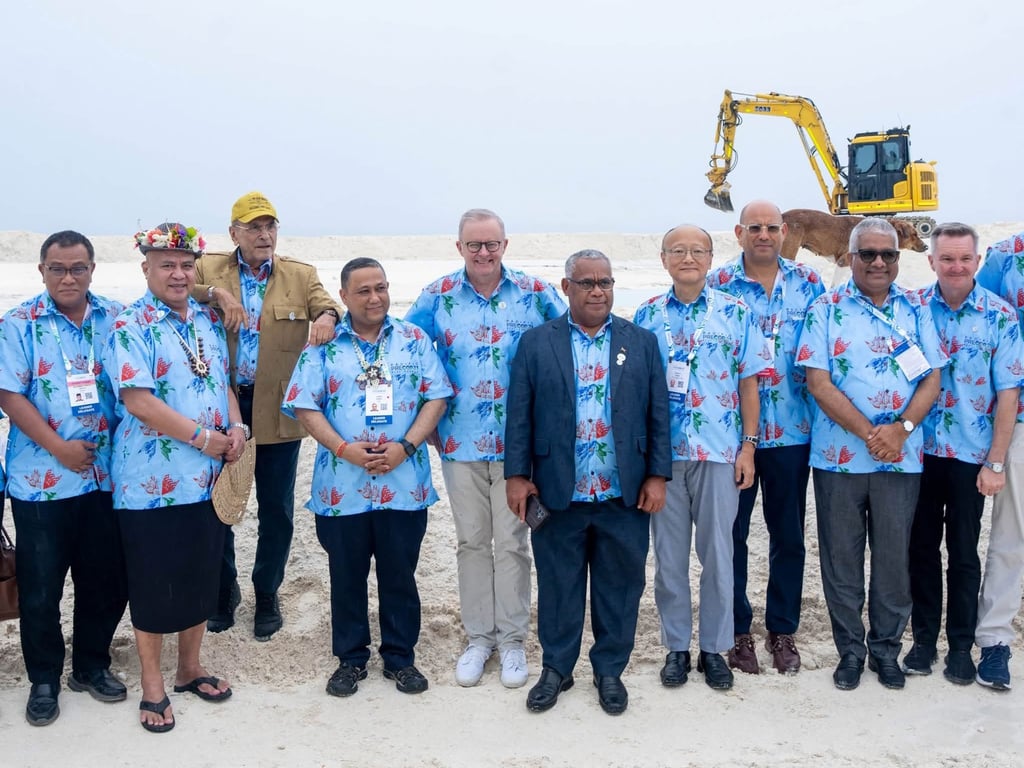
Whose security counts in the Pacific?
While climate-related spending gets criticised, billions forked out for security and strategic engagement gets framed as for the “national interest”.
News
Australia-China Weekly Brief: September 2026 issues
The Australia-China Weekly Brief by the Australia-China Relations Institute at the University of Technology Sydney (UTS:ACRI) tracks key developments in...
News
If we asked the Americans to leave, would they?
Canada is looking for ways to protect its independence from Washington. Australia has embedded itself so deeply in the US military system that it risks being...
News
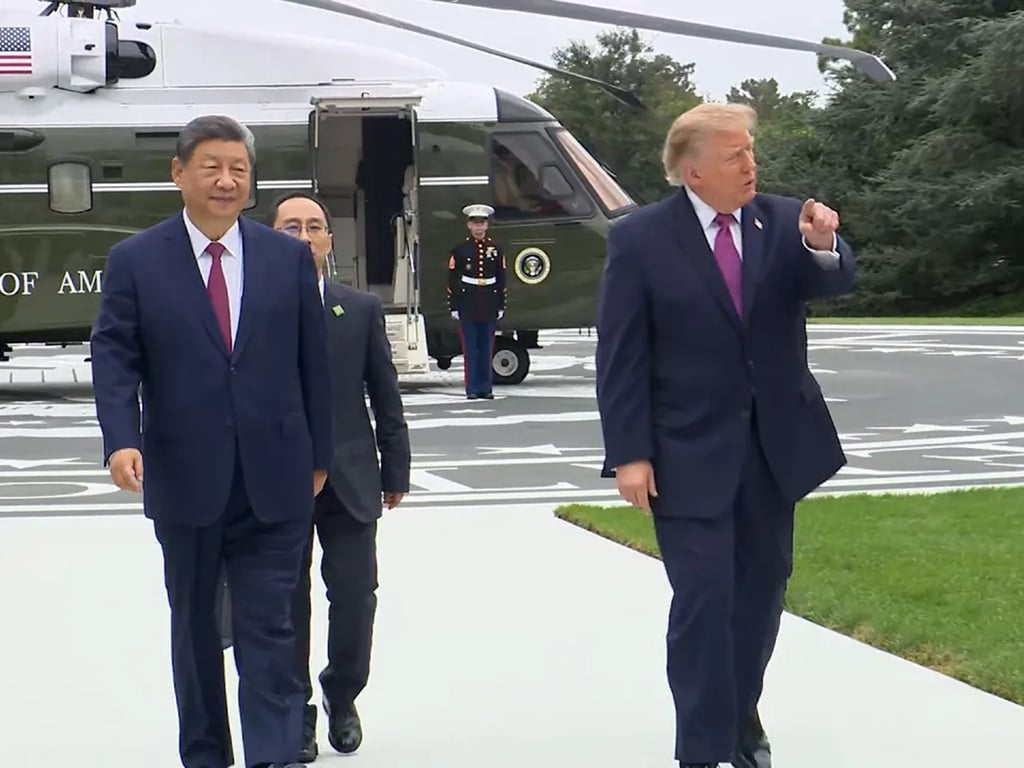
The Trump-Xi Summit: Stakes for Australia
Trump wants more sales. Xi wants fewer constraints. What does Australia need from the Trump-Xi summit?
News
Whose security counts in the Pacific?
While climate-related spending gets criticised, billions forked out for security and strategic engagement gets framed as for the “national interest”.
News
Australia-China Weekly Brief: September 2026 issues
The Australia-China Weekly Brief by the Australia-China Relations Institute at the University of Technology Sydney (UTS:ACRI) tracks key developments in...
News
If we asked the Americans to leave, would they?
Canada is looking for ways to protect its independence from Washington. Australia has embedded itself so deeply in the US military system that it risks being...
News
The Trump-Xi Summit: Stakes for Australia
Trump wants more sales. Xi wants fewer constraints. What does Australia need from the Trump-Xi summit?