


- Posted on 28 Sep 2026
Mutual banks and health funds examined their risks from climate change from different perspectives, and arrived at the same place, write UTS Industry Professor Chris Lee, CEO of Climate-KIC, and Sharanjit Paddam from Finity Consulting.
Australia’s first mandatory climate reporting regime is now upon us. Since January 2025, organisations across the economy have been required to comply with AASB S2. It requires organisations to assess their climate risks and opportunities and show how they plan to stay resilient under plausible future climate scenarios.
Most climate planning begins by asking which future to prepare for, but recent work across two different financial sectors suggests a more interesting question is emerging: which pressures persist regardless of the future that arrives?
Over the past year, two of Australia’s most community‑focused financial sectors, mutual banks and mutual health funds, have moved ahead of the pack.
In partnership with Climate KIC Australia and Finity, members of the Customer Owned Banking Association and the Members Health Fund Alliance have both developed sector‑wide climate scenarios aligned with AASB S2, along with shared assessments of climate‑related risks and opportunities.
This is the first time in Australia that two distinct financial sectors have taken a coordinated approach across their sectors to climate scenario analysis.
The recently released reports developed by Climate KIC Australia and Finity reveal a picture of climate risk that is broader and more interconnected than a single-entity view can capture.
In banking, climate change affects household income, employment stability, insurance affordability and the financial resilience of communities exposed to extreme weather.
These pressures flow directly into credit risk, arrears, hardship support and long‑term financial wellbeing.
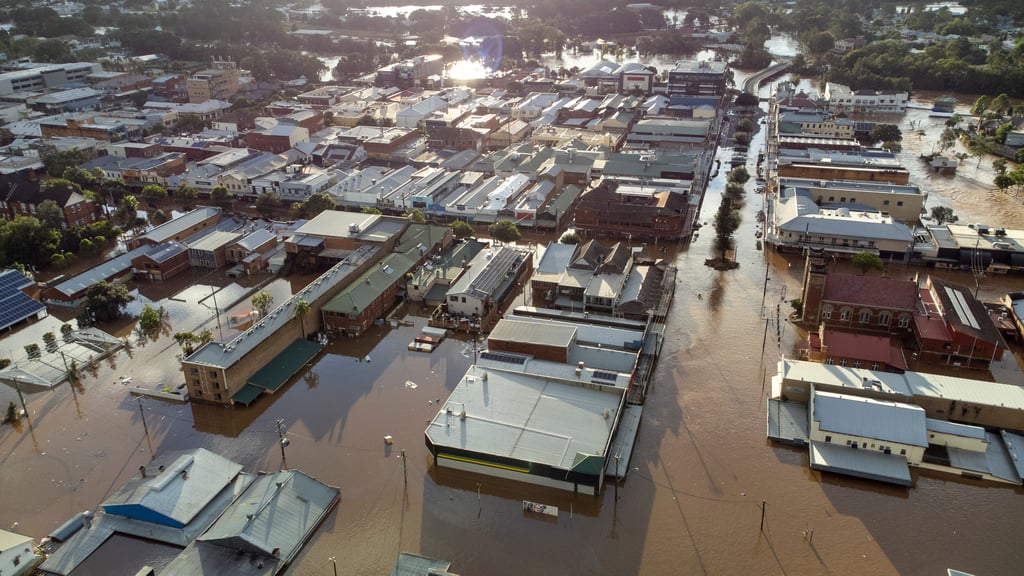
In health, climate change affects member health outcomes, healthcare utilisation, provider costs and the affordability of private health insurance.
Heatwaves, smoke events, floods and storms are already driving acute and chronic health impacts, mental health pressures and disruptions to care, all of which increase claims costs and strain system capacity.
Both reports show climate change is a whole‑of‑household risk, affecting both financial stability and access to essential health services, and rippling through homes and communities.
Members of these representative bodies chose to develop shared climate scenarios that individual organisations could adapt to their own circumstances, creating a common foundation for disclosure and resilience planning.
The result not only served to prove the value of collaboration, but also to surface common pressures appearing across multiple climate futures.
In banking, borrower affordability and credit risk emerged under both high- and low-warming scenarios, though through different mechanisms. In health, provider costs, premiums and affordability pressures also appeared across both futures, despite being driven by different combinations of physical and transition impacts.
We’ve seen this kind of collective action work before to fill critical information gaps. The Australian Energy Market Operator’s Integrated System Plan is a sector‑wide scenario exercise that guides billions of dollars in investment across electricity networks, something no single utility could produce alone.
Similarly, the National Climate Risk Assessment released last year relied on coordinated modelling across agencies, states and scientific institutions to create a shared picture of Australia’s physical climate risks. Both examples recognise that some challenges are too interconnected to be understood organisation by organisation.
We cannot predict which climate future we will face, but the real benefit lies in understanding how risk travels through systems, and using that insight to manage uncertainty.
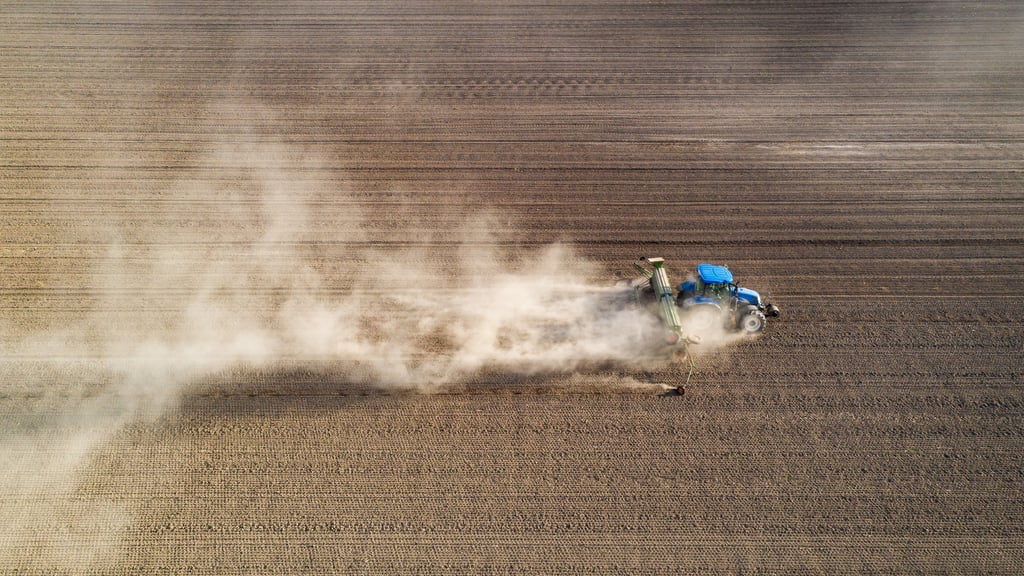
It rarely stays within the boundaries of one institution, instead moving through households, communities, healthcare systems, housing markets and local economies.
Understanding those connections may prove just as important as selecting the climate scenario itself.
There is no obvious reason this model should stop with banking and health. Insurers, superannuation funds, local government, utilities and other sectors depend, in different ways, on the resilience of households, communities and the systems around them.
For an insurer, that vulnerability may be shaped by the interaction between hazards, affordability and the availability of cover, while for a superannuation fund it may appear through long-term asset values, member outcomes and changing regional economies.
Local councils and utilities may see it through infrastructure, service continuity and the capacity of communities to recover from repeated disruption; each sector will need to identify its own transmission pathways.
The mutual banking and health fund projects began with a practical objective: to support disclosure, risk assessment and resilience planning at a sector-wide level. If other sectors apply the same approach, the value may extend beyond more consistent disclosures.
Shared scenarios can help organisations identify common vulnerabilities, understand how risk moves through interconnected systems and focus their attention on the pressures that remain important across different futures.
Over time, that could shift climate reporting beyond understanding risks within individual organisations to a broader understanding of resilience across entire sectors.
Reports
Authored by
CEO Climate-KIC Australia And Industry Professor, DVC (Research)
News by topic
News
Research puts resilient infrastructure on solid ground
Groundbreaking $24 million research centre will develop sustainable technologies that stabilise the foundations underpinning major infrastructure.

News
UTS researchers develop new AI tool to better predict stroke risk
New AI model analyses DNA to identify genetic risk factors for stroke, paving the way for more personalised prevention and treatment.

News
National First Nations College update
UTS has been working towards building a National First Nations College, an Indigenous-designed, culturally responsive residential community where students can...
News
After neoliberalism – what comes next?
A Trump-led post-neoliberal world order, dominated by four or five powerful nations, could dismantle decades of international cooperation in favour of...
News
Research puts resilient infrastructure on solid ground
Groundbreaking $24 million research centre will develop sustainable technologies that stabilise the foundations underpinning major infrastructure.
News
UTS researchers develop new AI tool to better predict stroke risk
New AI model analyses DNA to identify genetic risk factors for stroke, paving the way for more personalised prevention and treatment.
News
National First Nations College update
UTS has been working towards building a National First Nations College, an Indigenous-designed, culturally responsive residential community where students can...
News
After neoliberalism – what comes next?
A Trump-led post-neoliberal world order, dominated by four or five powerful nations, could dismantle decades of international cooperation in favour of...