


- Posted on 17 Jul 2026
- 6-minute read
By Wanning Sun
A huge disconnect between innovation and productivity already plagues Australia. Comparing ourselves to the US, and following their lead, will only make it worse.
share_windows This article appeared in Crikey on July 17 2026.
America’s National Science Foundation issued a “Dear Colleague” letter earlier this month, banning the use of NSF funds for collaborations with entities that appear on US government restricted parties lists. In plain English, this means the US government has decided to “ban collaborations between every US scientist it funds and nearly all Chinese research institutions and their employees”.
Until now, the NSF has attempted to balance the potential risks and benefits of US-China collaborations.
The question on the minds of many Australian university managers and scientists is how the Australian government, and especially security agencies such as ASIO, will react to this latest development. This is a natural question, given that Australia’s research governance policy has developed in close alignment with America’s, and the threat assessments and risk frameworks currently being used in Australia draw on templates developed in the US.
For instance, Australia has relied on US-defined categories of “critical technologies” and US-generated “black lists” of Chinese entities with alleged military links both in assessing student visa applications from China, and in gauging security risks arising from government-funded research.
The Australian Research Council is Australia’s equivalent to the NSF. Although the ARC recommends funding projects based on their academic merit following a rigorous and independent peer-review process, the government can reject recommendations on grounds of national security. In fact, 13 grants in the last round were vetoed by Minister for Education Jason Clare, acting on the advice of security agencies.
Our research has found that most universities in Australia have adopted research governance practices that tend to err on the side of over-caution. They explicitly advise grant applicants against collaborating with China, and request academics to go through elaborate approval processes for participating in most types of scholarly exchange, including inviting conference speakers, co-authoring research papers, and training students in partnership with Chinese universities.
The worry driving this research governance policy is the fear that Chinese science collaboration partners will commit scientific espionage and steal Australian intellectual property. And indeed, there have been incidents of Chinese espionage in the past. National security concerns are real issues, especially given today’s geopolitical dynamics. Every security agency, including ASIO, is expected to adopt proactive and proportionate measures to minimise national security risks in relation to international science collaboration.
The problem is whether the risk of collaboration with China is worth the cost of curbing it.
Uncomfortable as it is for those in Australia’s security agencies, China is emerging as a global leader in scientific research. Clarivate’s InCites database suggests that researchers affiliated with Chinese institutions have appeared on 55% of the world’s top 10% most-cited STEM publications since 2020 — more than triple the US share (17%) and 11 times Australia’s (5%). In other words, as one Financial Times writer observes, China is no longer operating in “catching up mode” but in “superpower” mode. And China is rapidly shifting from a position of knowledge acquisition to one of knowledge generation.
But perhaps nobody in the science community would feel a chill more acutely in response to the NSF’s announcement than Chinese-Australian academics in STEM research areas. These are Australian citizens, permanent residents or Chinese nationals who have been long-term Australian researchers, and who form the backbone of Australia’s science and technology research. Last year, one-quarter of the 300-odd recipients of the prestigious Clarivate Highly Cited Researcher awards affiliated with Australian institutions were of Chinese background.
In recent years, these scholars have mostly been portrayed as objects of distrust by the security agencies, scrutinised by universities that have adopted the government’s University Foreign Interference Taskforce guidelines, and unfairly targeted by media.
The 12 senior professors I have interviewed told me that while they understand the need to adopt a national security risk policy in research, what has been happening on the ground is not proportionate to the actual level of risk, but is rather an instance of over-securitisation. They also told me that the concept of “dual-use” technologies — those that have civilian consumer use but can also enhance defence capabilities — has been overwhelmingly misused to cast doubt on the great majority of research areas.
When I asked which areas of research are considered “sensitive”, one materials engineering professor replied:
“In theory, Australia uses America’s list of ‘critical technologies’ as a guideline, but in practice, as long as it involves China, everything can become sensitive.”
Chinese-Australian scientists also told me that, except for a few collaborative projects between Australia and China instigated by state-based Australian governments, collaboration between individual Australian scientists and China-based researchers has become increasingly rare — and since the introduction of the UFIT guidelines, virtually non-existent.
The perceived over-securitisation and undue distrust of these scientists as Chinese-Australians is already taking a toll. Those I talked to reported feeling demoralised despite having made Australia their home for decades and having become part of the Australian community. Some are hanging in there, while others have decided to leave for Hong Kong, Singapore, China, the Middle East and Northern Europe. A leading researcher in chemistry told me that a few ARC laureate professors are among those who have left.
American scientists described the latest NSD policy as “utterly self-defeating” and “very damaging” to science in the US. That said,the US has a large domestic research ecosystem and R&D expenditure, a sizable venture capital and industrial base, and a strong capacity to commercialise research domestically. For these reasons, the US sits among the top three nations on the Global Innovation Index.
Although an ally of the US, Australia is not comparable to the US. Australia has a small population and domestic market, limited venture capital, a much smaller advanced manufacturing base, and fewer large companies capable of taking research from laboratory to market.
Despite Australia’s ambition to transition from a resource-based nation to an “innovation nation”, it is no longer in the top 20 band in the Global Innovation Index, currently ranking 22nd. Meanwhile, for the first time, China has entered the top 10, being the only medium-income country in this bracket.
Even though Australia will not make any further adjustments following the NSF’s new policy, the current curtailed level of collaboration with China is already likely to be costly, risking denying Australia access to China’s latest science ecosystem, including its expertise, state-of-the-art lab facilities, unique datasets, and large-scale research networks.
Furthermore, given Australia is already suffering from a disconnect between innovation and productivity growth due to its small market and limited industry base, excessive policing of Australia-China collaboration risks a further narrowing of Australia’s innovation pathways. For these reasons, most of the high-calibre achievements in fundamental research, which Australia is renowned for, will have fewer opportunities to achieve commercialisation and thereby to enhance Australia’s productivity.
If we accept that Australia’s national strengths are not the same as those of the US despite our being their strategic ally, following the US in adopting a similar science research governance policy is clearly not in our national interests.
News
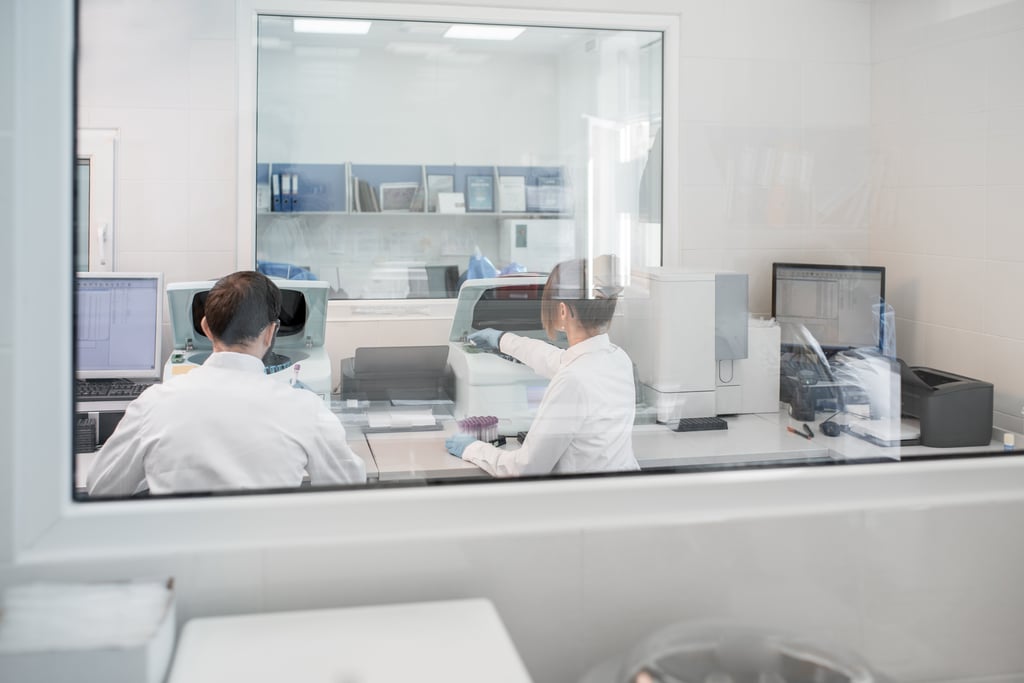
PESPECTIVES | Getting the balance right on Australia’s research security
This article appeared in UTS:ACRI's Perspectives on October 26 2026. Perspectives is the commentary series of the Australia-China Relations Institute at the...
News
Australia-China Weekly Brief: October 2026 issues
The Australia-China Weekly Brief by the Australia-China Relations Institute at the University of Technology Sydney (UTS:ACRI) tracks key developments in...
News
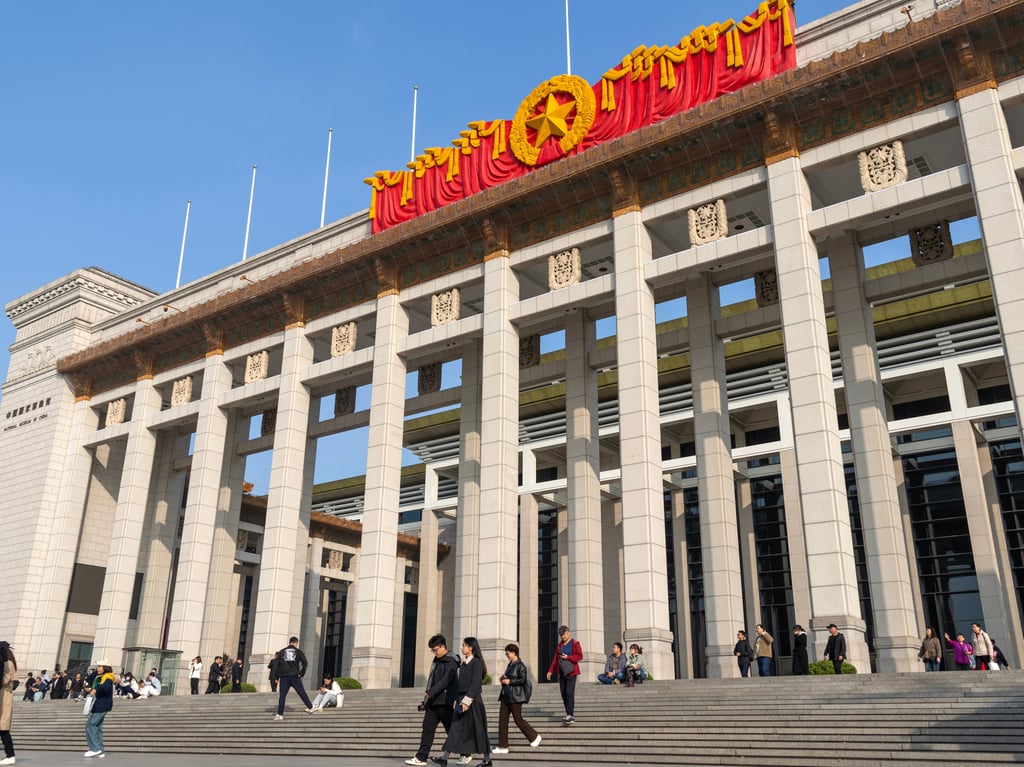
The struggle over what China wants
China expertise is itself a field of epistemic struggle, shaped by competing convictions, dispositions and geopolitical perspectives. Doshi’s critique of Kang,...
News
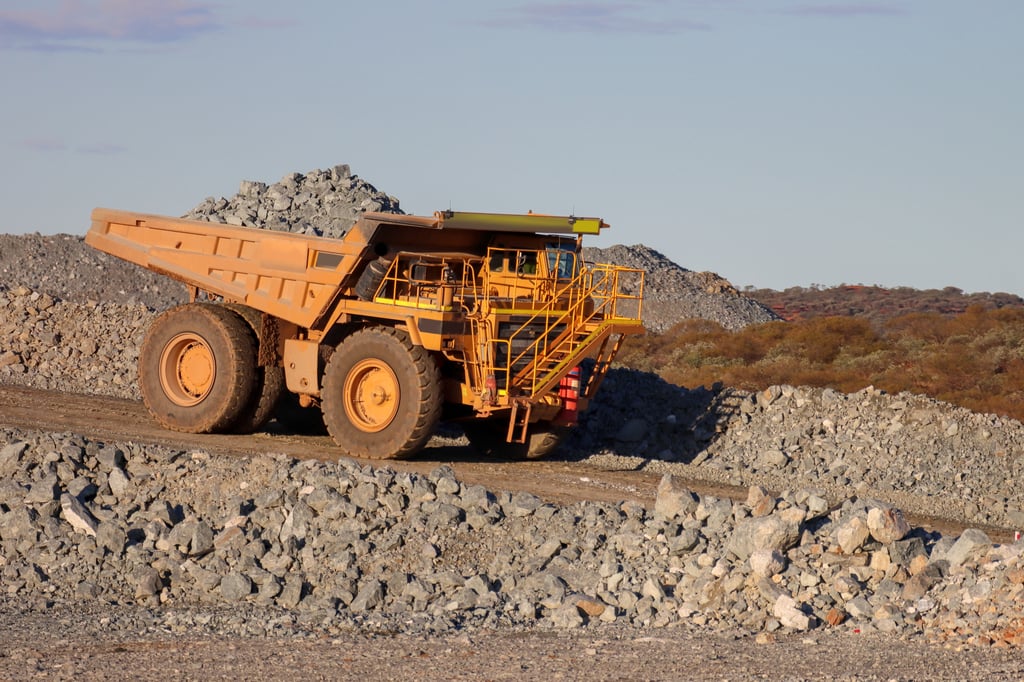
Australia should turn critical minerals leverage into industrial capability
Australia’s Syerston Scandium Project is a test of whether critical minerals cooperation can make Australia not merely a supplier, but a critical capability...
News
PESPECTIVES | Getting the balance right on Australia’s research security
This article appeared in UTS:ACRI's Perspectives on October 26 2026. Perspectives is the commentary series of the Australia-China Relations Institute at the...
News
Australia-China Weekly Brief: October 2026 issues
The Australia-China Weekly Brief by the Australia-China Relations Institute at the University of Technology Sydney (UTS:ACRI) tracks key developments in...
News
The struggle over what China wants
China expertise is itself a field of epistemic struggle, shaped by competing convictions, dispositions and geopolitical perspectives. Doshi’s critique of Kang,...
News
Australia should turn critical minerals leverage into industrial capability
Australia’s Syerston Scandium Project is a test of whether critical minerals cooperation can make Australia not merely a supplier, but a critical capability...