


- Posted on 25 Jun 2026
By Elena Collinson
The Australia-China Weekly Brief by the Australia-China Relations Institute at the University of Technology Sydney (UTS:ACRI) tracks key developments in Australia-China relations over each week.
1. ASIO case study shows the breadth of AUKUS intelligence interest
During his 2026 Annual Threat Assessment (June 24) ASIO chief Mike Burgess said a foreign intelligence officer posed online as a consultant to approach an Australian security clearance holder, first paying for reports on Pacific relationships before seeking inside information on AUKUS, including Pillar 1 and 2 progress, investment, geostrategic ambitions, trilateral relations and public opinion.
ASIO did not name the country involved. But it closely echoes a June 4 Five Eyes bulletin warning that the PRC’s military intelligence services use professional networking and job platforms to target people with classified or privileged access.
The takeaway: ASIO has previously identified AUKUS as a priority intelligence target; this case shows how broad that interest may be. The contest is not only over classified technical capability but also about building a picture of the program’s momentum, decision-making, alliance pressure points and political durability.
It also widens the sensitivity perimeter, with even open-source topics such as public opinion becoming more valuable when interpreted by an insider with privileged context.
2. ASIO warns of cyber pre-positioning in critical infrastructure
Burgess also disclosed that nation-state hackers had compromised an Australian critical infrastructure provider in what ASIO assessed was preparation for sabotage.
The hackers were mapping the network, maintaining access and stealing credentials, including logins for active users, so they could ‘cripple [the provider] at a time of their choosing’.
The takeaway: Again, ASIO did not name the state involved. But the warning sits against wider Five Eyes concern about China-nexus cyber actors pre-positioning inside critical infrastructure networks, including Volt Typhoon activity. The issue is less ‘Was data stolen?’ than ‘What options would that access create if Australia were drawn into a regional crisis?’
3. China’s beef quota trigger hits Australian exporters
The PRC’s beef safeguard hit Australian trade this week after Australia filled its 205,000-tonne 2026 quota on June 18.
From June 20, over-quota Australian beef entering the PRC faces a 55 percent tariff, effectively suspending ChAFTA’s zero-tariff treatment for affected exports for the rest of 2026.
Agriculture Minister Julie Collins said the Australian government had raised the matter with Beijing.
The Australian Meat Industry Council said Australia’s quota was disproportionate to the established trading relationship, noting Australia accounts for only around eight percent of the PRC’s total beef imports.
The takeaway: This is not simply a return to 2020-style trade coercion as the tariff is part of a broader PRC safeguard regime framed as protection for domestic producers. But it shows the limits of stabilisation. A major post-stabilisation export recovery is now constrained by a quota mechanism that weakens the practical value of ChAFTA market access, making beef an obvious test case for the current ChAFTA review and whether ‘upgrading’ the agreement can address the safeguards that still matter most commercially.
4. Australia slipping down Beijing’s priority list?
During a visit to China last week, UTS:ACRI Director James Laurenceson heard from several local interlocutors that Australia was not currently seen as a priority country for Beijing’s foreign policy.
That is not necessarily diplomatic punishment. Australia has rarely ranked near the top of Beijing’s priorities, though the rupture earlier this decade, and the post-2022 stabilisation effort, briefly gave the relationship unusual salience.
The view Laurenceson heard was that, after four years of stabilisation and what Beijing sees as Canberra’s limited appetite for new initiatives, Chinese attention has shifted elsewhere.
The takeaway: Stabilisation may have reduced friction without creating much forward momentum. That is not necessarily a bad outcome for Canberra, given the risks of overreach. But it matters for ambitions that require more than routine stability, such as building a viable green iron industry.
Past issues
AUTHOR

Manager, Research Analysis, Australia-China Relations Institute, University of Technology Sydney
News
Australia-China Weekly Brief: October 2026 issues
The Australia-China Weekly Brief by the Australia-China Relations Institute at the University of Technology Sydney (UTS:ACRI) tracks key developments in...
News
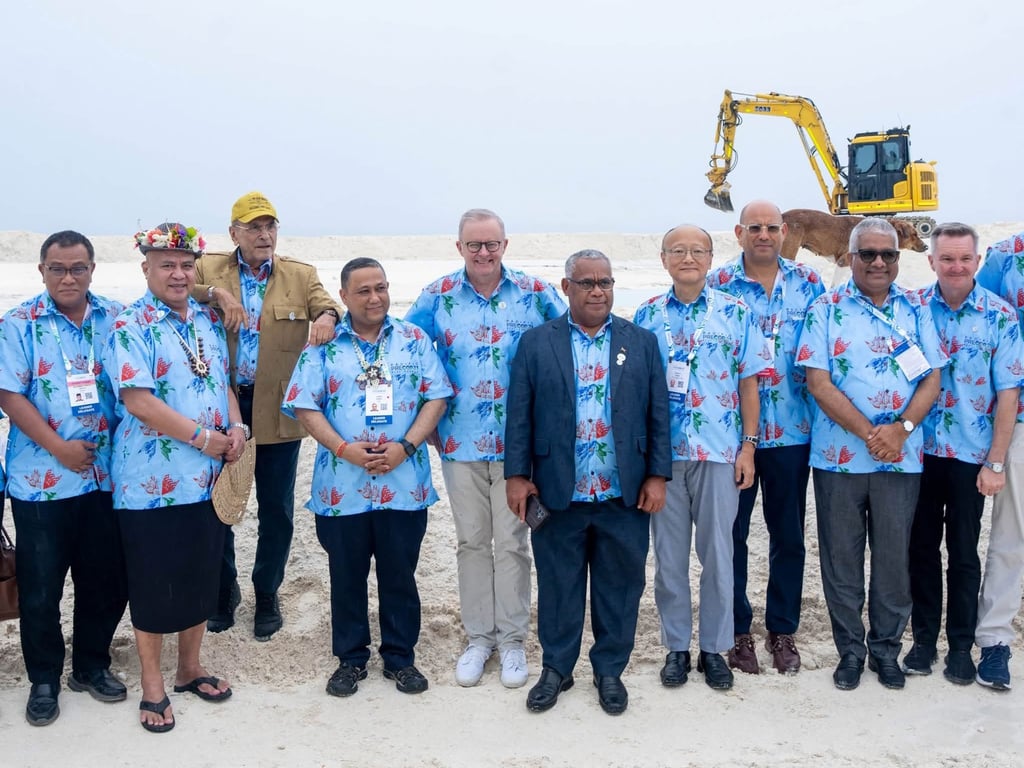
Whose security counts in the Pacific?
While climate-related spending gets criticised, billions forked out for security and strategic engagement gets framed as for the “national interest”.
News
Australia-China Weekly Brief: September 2026 issues
The Australia-China Weekly Brief by the Australia-China Relations Institute at the University of Technology Sydney (UTS:ACRI) tracks key developments in...

News
If we asked the Americans to leave, would they?
Canada is looking for ways to protect its independence from Washington. Australia has embedded itself so deeply in the US military system that it risks being...
News
Australia-China Weekly Brief: October 2026 issues
The Australia-China Weekly Brief by the Australia-China Relations Institute at the University of Technology Sydney (UTS:ACRI) tracks key developments in...
News
Whose security counts in the Pacific?
While climate-related spending gets criticised, billions forked out for security and strategic engagement gets framed as for the “national interest”.
News
Australia-China Weekly Brief: September 2026 issues
The Australia-China Weekly Brief by the Australia-China Relations Institute at the University of Technology Sydney (UTS:ACRI) tracks key developments in...
News
If we asked the Americans to leave, would they?
Canada is looking for ways to protect its independence from Washington. Australia has embedded itself so deeply in the US military system that it risks being...