


- Posted on 30 Jan 2026
- 5-minute read
By Xunpeng Shi and Muyi Yang
share_windows This article appeared in East Asia Forum on January 30 2026.
At the G20 Summit in November 2025, China and South Africa announced the Initiative on Cooperation Supporting Modernization in Africa. While detailed implementation plans are still forthcoming, its scope and framing signal a significant shift from previous models of China–Africa energy cooperation.
Following the launch of China’s ‘Going Out’ strategy in 2001, later reinforced by the Belt and Road Initiative, Chinese companies became deeply involved in large-scale energy projects across Africa, including coal-fired power generation, hydropower dams and transmission networks. This phase of cooperation was largely project-oriented, with the primary objective of closing energy access gaps and addressing infrastructure deficits.
From the mid-2010s, this project-oriented approach began to evolve, placing greater emphasis on renewable energy, particularly smaller-scale, targeted initiatives aligned with a new ‘small is beautiful’ paradigm. Between 2010 and 2024, Chinese-backed renewable energy projects in Africa reached US$66 billion, with nearly 60 percent of China’s energy initiatives focused on solar and wind by 2026. This shift reflected growing social and environmental concerns associated with large infrastructure projects, alongside rising scrutiny of debt sustainability.
In contrast, the new Initiative on Cooperation Supporting Modernization in Africa moves beyond standalone projects towards a more integrated cooperation framework. It places clean energy within a wider agenda that also encompasses infrastructure upgrading, clean industry development and sustainable mining to align with the African Union’s Agenda 2063.
This shift aligns with a broader rethinking across development agendas in the Global South. For decades, climate action in the developing world was often seen as a difficult trade-off, pitting environmental responsibility against economic growth. This mindset left many countries with a dilemma: people rightly expect higher living standards, yet following the old ‘grow first, clean up later’ pathway risks deepening climate vulnerabilities.
But that logic is now rapidly dissolving. The costs of solar, wind and batteries have fallen dramatically, opening new pathways for expanding energy access and reducing fossil-fuel import dependence — opportunities that were largely out of reach just a decade ago. At the same time, the rapid expansion of global clean energy markets is generating new forms of economic development. Countries positioning themselves as key nodes in emerging clean-tech supply chains — whether in critical minerals, component manufacturing or advanced technologies — stand to gain strategic leverage and long-term economic resilience.
This momentum has spurred widespread adoption of a ‘growing by greening’ approach. Africa is no exception, with early signs of a green economy boom — from the rapid expansion of solar capacity in Egypt, Morocco and Kenya, to the emergence of clean-tech manufacturing, including solar assembly lines in the north and battery precursor processing in the mineral-rich south.
African countries have considerable potential to move rapidly and decisively into green economies. They combine abundant renewable resources, vast reserves of minerals essential to the clean energy transition, the world’s youngest and fastest-growing workforce and rising energy demand.
Here lies the real test: turning this immense potential into sustained, system-wide progress. Failure to do so risks Africa lagging behind as others pivot more rapidly towards green growth.
This risk is already evident in global investment patterns. Worldwide investment in clean technologies surpassed US$2.2 trillion in 2025, but Africa received only around 2 percent of that total. A similar pattern is evident in clean manufacturing. For a continent home to nearly one-fifth of the world’s population, this imbalance is striking — and unsustainable.
Closing this gap requires more than simply mobilising additional capital. It necessitates building the enabling foundations of a green economy. This includes modern, interconnected grid infrastructure to unlock domestic demand for clean energy, predictable investment and regulatory frameworks to de-risk projects, and industrial clusters capable of converting clean-technology deployment into lasting jobs and economic value.
Establishing these conditions requires coherently applying policy levers across planning, market, regulatory, operational and industrial domains. The key is not a single set of ‘correct’ formal policies, but cross-sector coordination, credible implementation and coherent policy design adapted to countries’ specific circumstances.
This, in turn, places a premium on governance capacity, requiring strong domestic institutions equipped with clear mandates, adequate resources and the technical expertise to plan, regulate and enforce across complex energy and industrial systems. Yet in many parts of the continent, such capacities remain constrained by fiscal scarcity, competing priorities and fragmented institutional responsibilities. As a result, even well-designed policies often struggle to translate into predictable outcomes, hindering the transition from individual projects to system-wide green growth.
The scale and complexity of these challenges far exceed what any single partner can deliver alone. So as Chinese policymakers, financial institutions and firms work with African counterparts to operationalise the new initiative, they should consider shaping it into a platform for broader, multilateral cooperation.
This cooperation can enable African countries to draw on China’s cost-competitive technologies and engineering capabilities, Europe’s development finance and regulatory expertise and Africa’s own abundant natural resources and dynamic workforce to build a resilient green economy. If successful, this model can create opportunities for African enterprises while opening new avenues for global investors and development partners.
With Africa’s population set to double by mid-century, the availability of opportunities at home for hundreds of millions of young people will shape not only the continent’s developmental trajectory, but also regional and global stability.
AUTHOR

Research Principal, DVC (International & Development)
AUTHOR
Muyi Yang, Adjunct Fellow, Australia-China Relations Institute, University of Technology Sydney; Senior Researcher, Ember
News
Australia-China Weekly Brief: October 2026 issues
The Australia-China Weekly Brief by the Australia-China Relations Institute at the University of Technology Sydney (UTS:ACRI) tracks key developments in...
News
The struggle over what China wants
China expertise is itself a field of epistemic struggle, shaped by competing convictions, dispositions and geopolitical perspectives. Doshi’s critique of Kang,...
News
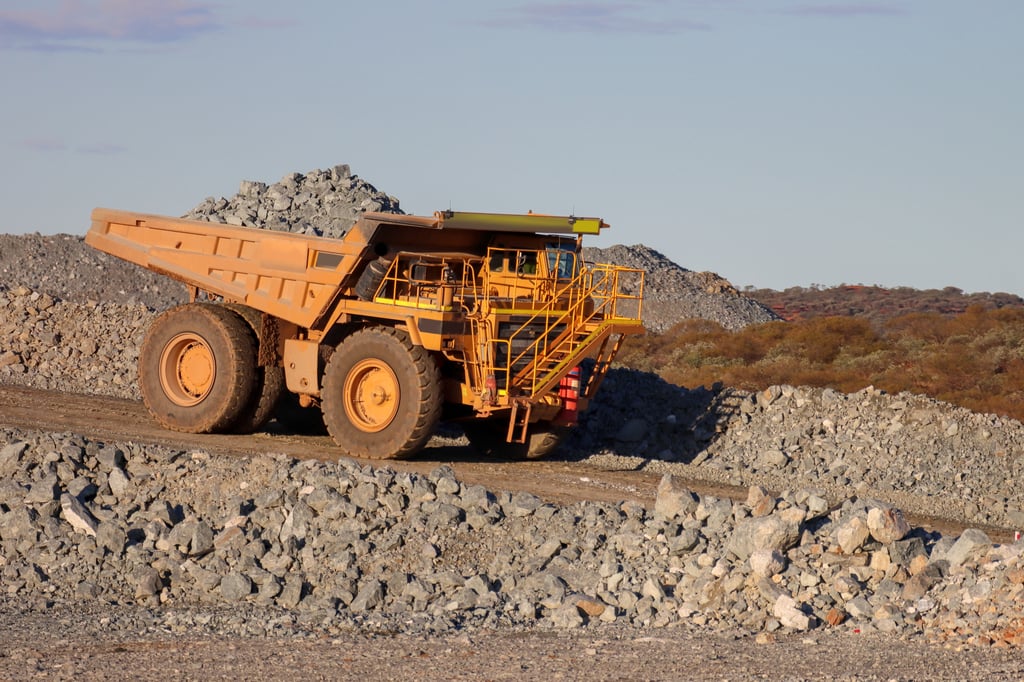
Australia should turn critical minerals leverage into industrial capability
Australia’s Syerston Scandium Project is a test of whether critical minerals cooperation can make Australia not merely a supplier, but a critical capability...

News
PERSPECTIVES | Can Australia and China talk sensibly about AI Safety?
Australia will attend the APEC Economic Leaders’ Meeting in Shenzhen on November 18-19 2026 amid questions about the extent to which the two countries can, or...
News
Australia-China Weekly Brief: October 2026 issues
The Australia-China Weekly Brief by the Australia-China Relations Institute at the University of Technology Sydney (UTS:ACRI) tracks key developments in...
News
The struggle over what China wants
China expertise is itself a field of epistemic struggle, shaped by competing convictions, dispositions and geopolitical perspectives. Doshi’s critique of Kang,...
News
Australia should turn critical minerals leverage into industrial capability
Australia’s Syerston Scandium Project is a test of whether critical minerals cooperation can make Australia not merely a supplier, but a critical capability...
News
PERSPECTIVES | Can Australia and China talk sensibly about AI Safety?
Australia will attend the APEC Economic Leaders’ Meeting in Shenzhen on November 18-19 2026 amid questions about the extent to which the two countries can, or...