


- Posted on 3 Sep 2025
By Mark Beeson
This book chapter appeared in Mobo Gao, Justin O’Connor, Baohui Xie and Jack Butcher (eds.), The Great Decoupling: A New Global Order/Disorder?, (Singapore: Palgrave Macmillan, 2025), pp. 143-160. https://doi.org/10.1007/978-981-96-8426-7_8.
Abstract
If the environment has demonstrated one thing with brutal clarity, it is that we—the human—race are all in this together. Unfortunately, this does not mean that political leaders around the world have suddenly recognised the interdependent, mutually constitutive nature of human existence; nor have they inaugurated a new era of enlightened cooperation. On the contrary, while the geophysical boundaries that delimit individual and collective human possibilities are becoming ever more apparent, the contemporary international order is distinguished by an entirely futile and counterproductive effort to decouple and privilege the national over the transnational. Exploring some of these contradictions by considering what might be described as the geopolitics of climate change, I argue that environmental policies are still not accorded the importance they merit and remain a subordinate part of wider strategic considerations. This is not a possibility that is confined to the great powers like the US and China, however. On the contrary, middle powers like Australia risk becoming collateral damage, with a declining capacity and will to address its own, increasingly visible environmental problems.
share_windows Read the book chapter online here. (Access may require purchase or subscription).
AUTHOR
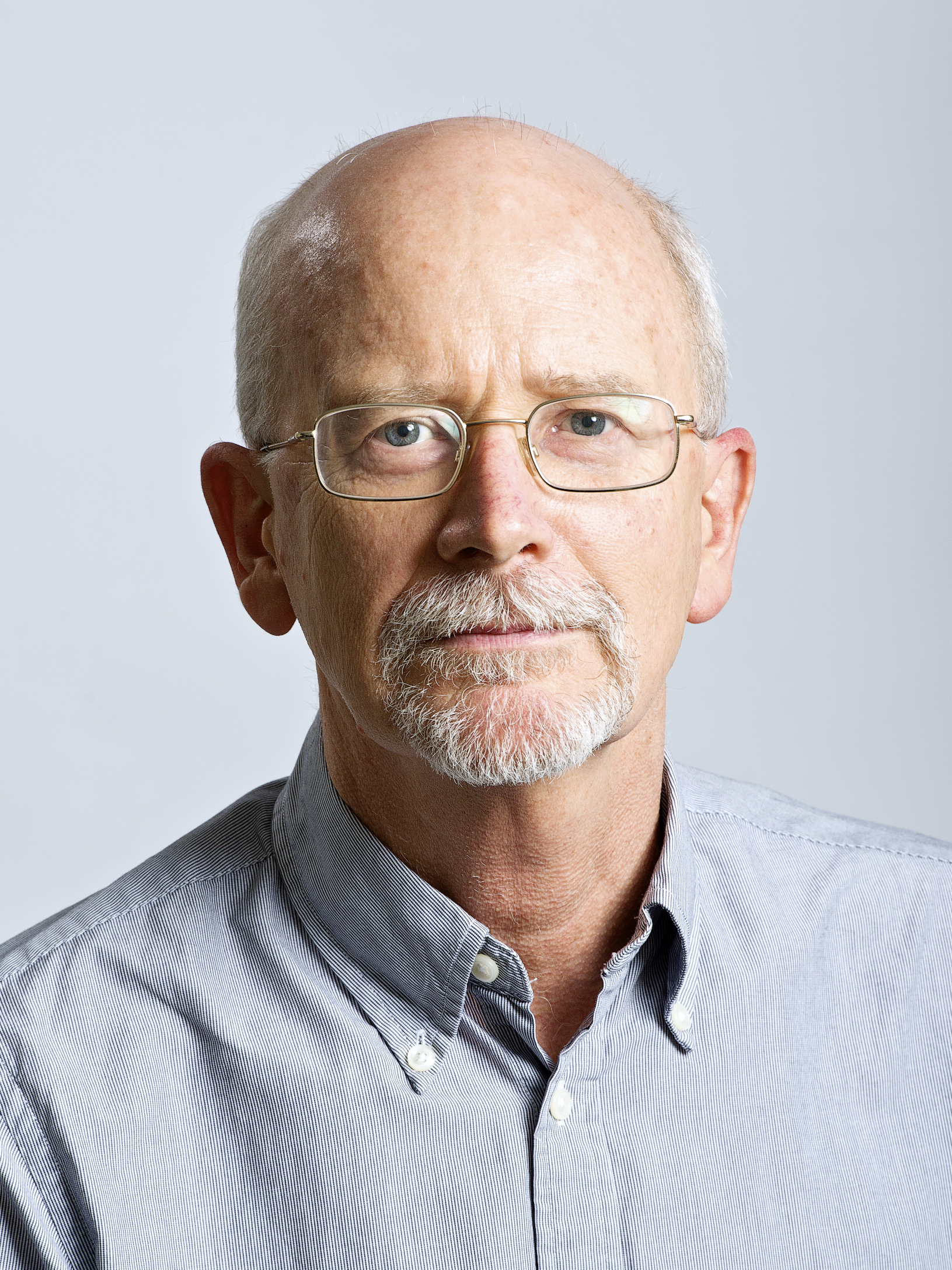
Mark Beeson
Adjunct Professor, Australia-China Relations Institute, University of Technology Sydney
News
Australia-China Weekly Brief: October 2026 issues
The Australia-China Weekly Brief by the Australia-China Relations Institute at the University of Technology Sydney (UTS:ACRI) tracks key developments in...
News
The struggle over what China wants
China expertise is itself a field of epistemic struggle, shaped by competing convictions, dispositions and geopolitical perspectives. Doshi’s critique of Kang,...
News
Australia should turn critical minerals leverage into industrial capability
Australia’s Syerston Scandium Project is a test of whether critical minerals cooperation can make Australia not merely a supplier, but a critical capability...

News
PERSPECTIVES | Can Australia and China talk sensibly about AI Safety?
Australia will attend the APEC Economic Leaders’ Meeting in Shenzhen on November 18-19 2026 amid questions about the extent to which the two countries can, or...
News
Australia-China Weekly Brief: October 2026 issues
The Australia-China Weekly Brief by the Australia-China Relations Institute at the University of Technology Sydney (UTS:ACRI) tracks key developments in...
News
The struggle over what China wants
China expertise is itself a field of epistemic struggle, shaped by competing convictions, dispositions and geopolitical perspectives. Doshi’s critique of Kang,...
News
Australia should turn critical minerals leverage into industrial capability
Australia’s Syerston Scandium Project is a test of whether critical minerals cooperation can make Australia not merely a supplier, but a critical capability...
News
PERSPECTIVES | Can Australia and China talk sensibly about AI Safety?
Australia will attend the APEC Economic Leaders’ Meeting in Shenzhen on November 18-19 2026 amid questions about the extent to which the two countries can, or...