


- Posted on 12 Sep 2025
By Michael Clarke
share_windows This article appeared in East Asia Forum on September 12 2025.
Prime Minister Anthony Albanese’s handling of Australia’s relationship with the United States has drawn criticism. According to some commentary, by not securing an in-person meeting with President Donald Trump and by signalling ‘differences and distances between Canberra and Washington’ on defence spending and China policy for domestic political gain, the approach risks ‘losing’ the alliance.
Such critiques underplay a deeper bind facing Canberra — what Glenn Snyder termed the ‘security dilemma in the alliance game’. After joining an alliance, states must decide how firmly to commit to their alliance partner and how much support to provide when specific conflict arise with an adversary.
These choices generate the twin ‘horns’ of abandonment and entrapment. Overcommitment runs the risk of entrapment in conflicts unaligned with national interests, while heavily conditioning support invites doubts about reliability and the risk of abandonment.
Past governments sought to mitigate abandonment risks by demonstrating loyalty through costly commitments to US-led wars in Vietnam, Iraq and Afghanistan. They expected that sacrifice would produce ‘reciprocal loyalty’ if Australia ever required direct US security assistance. This has been a product of the ambiguous ANZUS Treaty, which does not offer explicit security guarantees but commits parties to ‘consult’ if security is threatened, placing a premium on demonstrations of loyalty.
For Australia, this dilemma is not new. What is new is that both horns are sharpening at once due to a change in Washington and Australian defence choices.
Demonstrations of loyalty are no longer a viable approach with the current administration. On 5 June, Secretary of Defense Pete Hegseth asserted that allied postures cannot rest on ‘reliance on America’. The Trump administration’s downplaying of American ‘leadership’, scepticism about alliances, cuts to US government programs supporting democracy and development abroad, and illiberal domestic policies suggest that appeals to past loyalty and shared values will count for little.
Entrapment risks have intensified through demands for greater material and political commitment from Australia. At the Shangri-La Dialogue on 1 June, Hegseth conveyed to Defence Minister Richard Marles a US desire to see Australia’s defence spending rise to 3.5 percent of GDP. Elbridge Colby, US Under Secretary of Defense for Policy, has reportedly pressed ‘Japan and Australia to make clear what role they would play if the US and China went to war over Taiwan’.
Framed as a means to ‘accelerate efforts to strengthen deterrence in a balanced, equitable way’, this message — coming amid a review of AUKUS — implies a linkage between the review’s outcome and ‘Canberra’s next set of choices on defence spending’.
This is exacerbated by Australia’s long-term dependence on the United States for high-end military capability, munitions and sensitive data and intelligence. The AUKUS commitment to obtain nuclear-powered submarines further deepens this dependence.
Such dependence, Snyder argues, provides ‘greater bargaining leverage…to the party that is least dependent on the alliance’. The balance of dependence is skewed against Australia. Combined with Washington’s proclivity to coerce allies, efforts to leverage AUKUS for further Australian commitments cannot be ruled out.
If entrapment risks have sharpened, so too have fears of abandonment.
While outright abandonment in peacetime is rare, Australia should be alive to the fact that Trump’s United States is increasingly a ‘renegade’ superpower that pursues unilateral advantage. A ‘deal of the century’ with Chinese President Xi Jinping is conceivable. Such a bargain would be determined not by any concern for Taiwan, but ‘only about how the risks of war affect the United States, its prosperity’ and Trump’s own legacy.
The Albanese government will now need to make a clear calculation as to the risks of both abandonment and entrapment. The former are a function of the ‘balance of dependence’, while the latter is a function of the extent of shared interests with the United States.
Framed in this way, two moves stand out — increasing defence spending with a focus on independent force projection capabilities and making clear to Washington the different Australian interests vis-a-vis China. As Paul Dibb has asserted, instead of ‘yet more expensive major platforms’ — ships, aircraft, big ground vehicles — focus must shift to drones and unmanned combat aircraft and submarines. This will ensure greater capacity to project force in Australia’s ‘region of primary strategic concern’.
With respect to the latter, the Albanese government reaffirmed the long-standing position that ‘the decision to commit Australian troops to a conflict will be made by the government of the day, not in advance’. Canberra must remain vigilant to convey to Washington that it seeks to avoid actions against China that are self-harming in trade, economic and strategic terms.
Challenges from Beijing are real. Yet like other US allies in Asia, the absolute gains accrued from the bilateral economic relationship remain vital ‘both to fulfill domestic political objectives and to effectively support the internal balancing necessary to cope with Chinese assertiveness’.
This will be difficult for the Australian government to straddle. But the fundamental trade-offs between the risks of both abandonment and entrapment must be faced squarely and the government deserves some credit for beginning to reckon with them.
AUTHOR

Michael Clarke
Adjunct Associate Professor, Australia-China Relations Institute, UTS and Associate Professor, Deakin Centre for Future Defence and National Security, Deakin University
News
Australia-China Weekly Brief: October 2026 issues
The Australia-China Weekly Brief by the Australia-China Relations Institute at the University of Technology Sydney (UTS:ACRI) tracks key developments in...

News
The struggle over what China wants
China expertise is itself a field of epistemic struggle, shaped by competing convictions, dispositions and geopolitical perspectives. Doshi’s critique of Kang,...
News
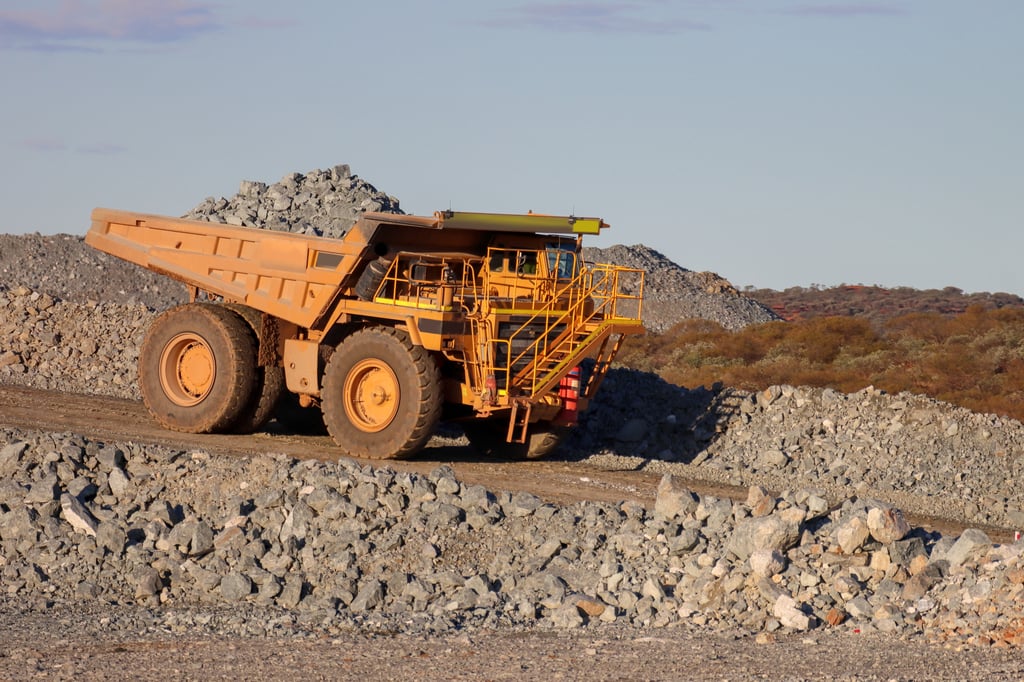
Australia should turn critical minerals leverage into industrial capability
Australia’s Syerston Scandium Project is a test of whether critical minerals cooperation can make Australia not merely a supplier, but a critical capability...

News
PERSPECTIVES | Can Australia and China talk sensibly about AI Safety?
Australia will attend the APEC Economic Leaders’ Meeting in Shenzhen on November 18-19 2026 amid questions about the extent to which the two countries can, or...
News
Australia-China Weekly Brief: October 2026 issues
The Australia-China Weekly Brief by the Australia-China Relations Institute at the University of Technology Sydney (UTS:ACRI) tracks key developments in...
News
The struggle over what China wants
China expertise is itself a field of epistemic struggle, shaped by competing convictions, dispositions and geopolitical perspectives. Doshi’s critique of Kang,...
News
Australia should turn critical minerals leverage into industrial capability
Australia’s Syerston Scandium Project is a test of whether critical minerals cooperation can make Australia not merely a supplier, but a critical capability...
News
PERSPECTIVES | Can Australia and China talk sensibly about AI Safety?
Australia will attend the APEC Economic Leaders’ Meeting in Shenzhen on November 18-19 2026 amid questions about the extent to which the two countries can, or...