


- Posted on 5 Sep 2025
- 3.5 minutes read
The new book 'Erased Voices and Unspoken Heritage' by Dr Zozan Balci – author, social justice advocate, and lecturer in social and political sciences at UTS – follows the compelling journeys of young adults caught between preserving the culture and language of their migrant parents and navigating societal pressures to fit into the country in which they were born.
On Sunday 31 August 2025, anti-immigration protests called on us to ‘take our country back'. Once again, the question of who gets to belong in Australia is on the national stage. These rallies are built on a dangerous fiction: that there is a singular, authentic way of being ‘Australian’ that must be defended from outsiders. But the reality tells a very different story.
The 2021 Census shows nearly half of Australians (48 per cent) have at least one parent born overseas. Cultural mixing is not an anomaly – it’s our national reality. Yet racialised, simplistic views continue to erase these complex identities, and fuel division.
This harm is evident in the experiences of young people which I document in my new book, Erased Voices and Unspoken Heritage. Their stories reveal how identity policing, exclusion, and intergenerational conflict fracture families, silence cultures and languages, and create lasting wounds. And in the shadow of anti-immigration protests, these lived realities are not abstract, they are urgent reminders that political rhetoric has human costs.
The myth of national identity
I have always been fascinated by national identity. In the book, I share one of my favourite examples: the story of Maria Antonia Josepha Johanna, a key descendant of the Austrian Habsburg Empire. She is better known as Marie Antoinette, the last Queen of France. At 14, she was forced to marry the French king to cement political alliances and, upon arrival, to change her name, language, fashion, wear a wig and renounce her Habsburg heritage. Her children were given French names and titles and raised within French customs. At the age of 37, Marie Antoinette was executed in the name of France.
An Austrian person could not become a national symbol of France. Successful integration meant entirely surrendering her cultural identity and heritage to achieve complete assimilation. Yet, a wig and a French name are highly superficial acts of identity that do not genuinely make you French overnight. They were symbolic measures to eradicate the difference and make her appear ‘the same’ as them. In contemporary Australia, we still ask people to assimilate in a similar way. Although almost every family in Australia has been touched by migration, mixing, or cultural exchange, debates about 'true' Australianness and an imagined homogeneity persist. Even a perceived ‘foreign’ name is anglicised, shortened, or otherwise butchered in ways to make them fit in.
The challenge before us is not whether Australia is diverse – it is. The real question is whether we can recognise that hybridity, fluidity, and cultural in-betweenness are not threats to national unity, but it’s very foundation.
Mixed-heritage individuals are still treated as exceptions, repeatedly asked where they are ‘really from,’ or pressured to ‘choose’ one side of their identity. This obscures a simple truth: that cultural purity is a fiction. But national fictions carry weight. This one fuels intergenerational tension, deepens social divisions, and denies the layered complexity of everyday life in multicultural Australia.
Mixed, many and already here
Too often, debates about national identity remain abstract. Politicians speak of ‘social cohesion’ or ‘integration’, but these debates have real consequences, playing out in homes, schools, workplaces, and public spaces.
For culturally mixed Australians, the stakes are personal. Families fracture under conflicting cultural expectations, and languages and traditions are sometimes silenced to 'fit in,' leading to losses of cultural memory
These struggles can be heard in the way we treat languages. Children and young people actively conceal their heritage languages in order to fit in, a shield against ridicule, exclusion, and shame.
The book exemplifies this in Kai’s story. He was born in Australia to a Greek mother and a Swedish father, and remembers:
Kai: ‘In primary school, for school assembly and they’re like talking about different cultures and stuff, and they’ll be like “Kai! How do you say hello in Greek?” You know, singling me out, and then everyone would turn and look. And I remember saying “I don’t know”’.
Zozan: ‘But you knew.’
Kai: ‘Yeah, I knew.’
[We both paused for quite a while here, reflecting}.
Zozan: ‘Why do you think you said, “I don’t know?”’
Kai: ‘Because I didn’t want to be different, I guess. They didn’t know…so if I don’t know, then I’m like them.’
These decisions carry emotional weight, and when this behaviour of self-censorship is repeated often enough – including at home –it becomes habitual, eventually resulting in the inability to speak the language. The double exclusion – rejected by the mainstream as too ethnic and criticised by heritage communities as not ethnic enough – creates a profound sense of isolation. Many grow up feeling they belong nowhere.
We could be thriving in the in-between. In a globalised world, hybridity is not just a personal experience – it is essential to our collective future.
Cultural and linguistic mixing is central to our nation’s fabric, and it equips us with the flexibility, creativity, and understanding needed to navigate complex societies and interconnected communities.
The ability to move between languages, traditions, and ways of being is a strength, not a weakness. Every culturally mixed family is an opportunity to get this right – if we let them.

Webpage
Empowering queer Muslim voices: Building bridges for inclusion and support
Siobhan Irving and Sydney Queer Muslims have developed a toolkit for culturally safe care to help healthcare providers better understand the unique needs of...

Webpage
Bridging continents, reclaiming histories: Aboriginal archives in Italy
In a quiet museum in La Spezia, Italy, a handwritten diary from the late 1800s tells tales of Aboriginal cultures, languages, and people through the eyes of...
Webpage
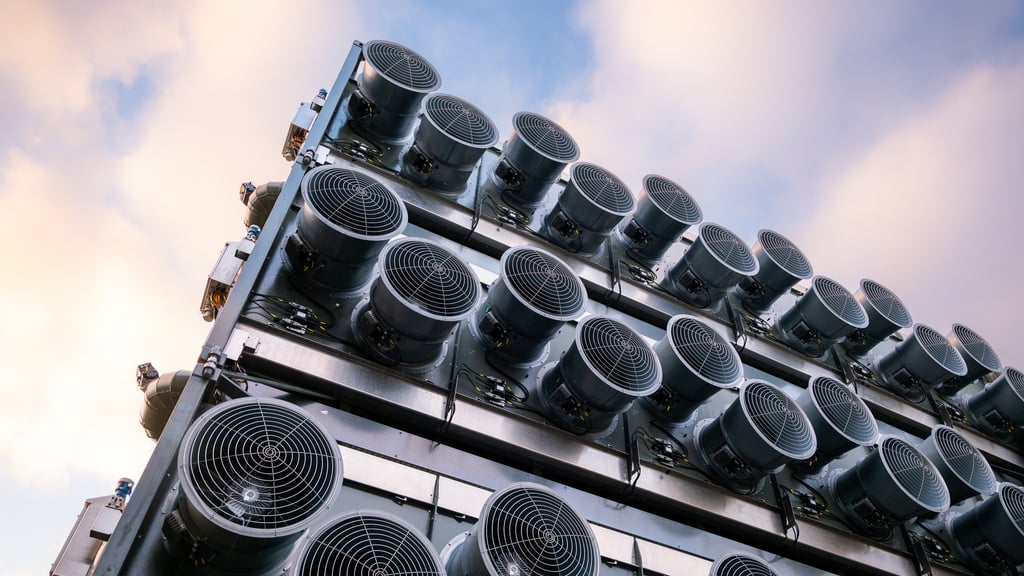
Building a workforce for novel carbon dioxide removal technologies in Australia
A first-of-its kind study looking at the workforce requirements for scaling novel carbon dioxide removal (CDR) in Australia.
Webpage
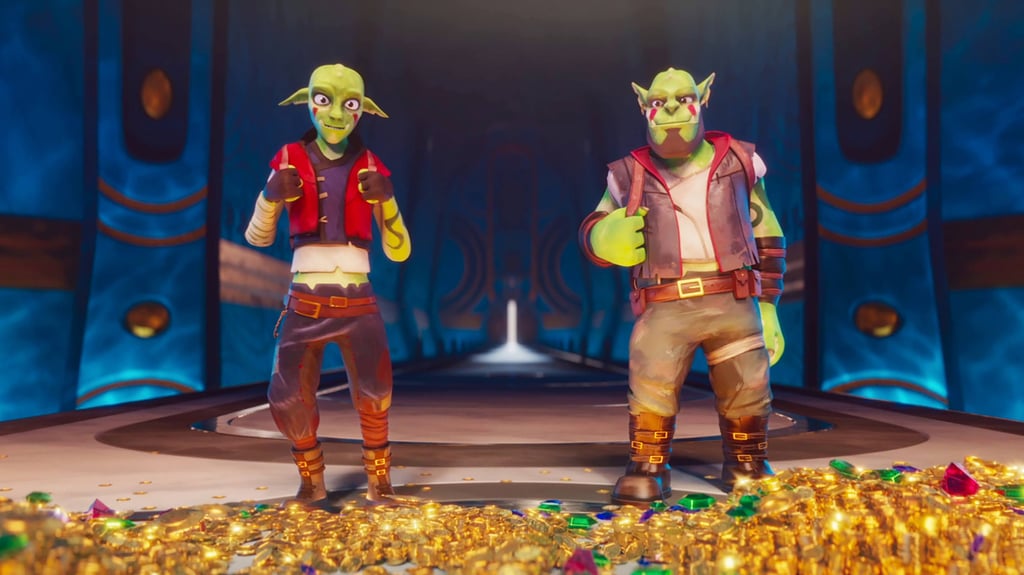
Fool's Gold
When two goblin thieves break into an ancient temple looking for treasure, they unsuspectingly awaken the guardian creature - leading to a treacherous chase...
Webpage
Empowering queer Muslim voices: Building bridges for inclusion and support
Siobhan Irving and Sydney Queer Muslims have developed a toolkit for culturally safe care to help healthcare providers better understand the unique needs of...
Webpage
Bridging continents, reclaiming histories: Aboriginal archives in Italy
In a quiet museum in La Spezia, Italy, a handwritten diary from the late 1800s tells tales of Aboriginal cultures, languages, and people through the eyes of...
Webpage
Building a workforce for novel carbon dioxide removal technologies in Australia
A first-of-its kind study looking at the workforce requirements for scaling novel carbon dioxide removal (CDR) in Australia.
Webpage
Fool's Gold
When two goblin thieves break into an ancient temple looking for treasure, they unsuspectingly awaken the guardian creature - leading to a treacherous chase...