


- Posted on 30 Jul 2025
- 6-minute read
When Siobhan Irving began listening to the stories of queer Muslims in Sydney, she heard a common thread: a deep sense of being misunderstood.
Many faced rejection or silence around their queer identities within their faith communities. In LGBTQ+ spaces, they often encountered Islamophobia or a lack of cultural understanding. The result was a kind of double exclusion – and for many, it came at the cost of their mental health.
And a lack of understanding and recognition by healthcare providers of their unique circumstances left many queer Muslims feeling isolated when accessing support services.
As a medical anthropologist and a member of the executive committee of Sydney Queer Muslims (SQM), Siobhan had long been aware of these challenges. But she also saw in them an opportunity. With support from a UTS Social Impact Grant, she set out to create a practical resource that could help service providers better understand and support LGBTQ+ Muslims.
‘The aim of the project was to identify some of the main mental health and social inclusion needs of queer Muslims in Sydney and then report these to service providers in an accessible, easily understood way,’ said Siobhan, who is also a lecturer in the Faculty of Design and Society at UTS.
‘By creating a toolkit, we wanted to help service providers bridge their gaps in knowledge in this space so that they can provide more culturally safe care.’
Conversations leading the charge for change
Siobhan and her research assistant, Shiffa Samad, worked closely with SQM to design a research process that was safe, respectful, and community-led. They held focus groups and individual semi-structured interviews with queer Muslims, asking about their experiences with mental health services, including what had helped, and what had hindered. The stories that emerged were powerful – and often painful.
One participant, a trans woman seeking asylum, described the fear she felt during her protection visa interview. ‘The officer I spoke to had rigid ideas about what a trans person looks like, acts like, speaks like,’ she said. ‘I felt that I had to present myself in a particular way to be marked as acceptable by government.’ She spoke of the pressure to conform to a narrow definition of gender identity – one that didn’t reflect her lived experience. ‘My life was in the hands of this officer, and I had to perform for him.’
Another participant shared how a well-meaning therapist insisted they come out to their family – not understanding that, in their culture, even straight people rarely talk openly about relationships. ‘Our families show love by feeding people,’ they said. ‘To us, that’s enough.’ For them and their partner, being ‘loud and proud’ wasn’t the goal. Safety, subtlety, and cultural nuance mattered more.
These stories became the foundation for Supporting queer Muslim clients: a toolkit for culturally safe care – a practical, accessible guide for healthcare and support service providers.
It doesn’t ask providers to be perfect. It asks them to listen, to learn, and to meet people where they are.
‘We wanted to hear directly from the community,’ says Siobhan. ‘Their experiences shaped every part of this project. The toolkit is not just about theory; it’s about real lives, real needs, and real change.’

From words to real-world impact
The toolkit was launched at UTS in February 2025, in front of an audience of 95 people – including representatives from healthcare, social services, and government. The response was immediate and enthusiastic. All 200 printed copies were snapped up within a month, with dozens of attendees following up to request training for their staff.
‘The response was overwhelming,’ says Siobhan. ‘It showed us just how much demand there is for culturally safe resources. People told us they’d never considered these issues before, and now they wanted to know more.’
Since then, Siobhan has delivered training sessions to organisations including ACON, the NSW Department of Communities and Justice, Canterbury Bankstown Council, and the Asylum Seeker Centre. Each session is a chance to deepen understanding, challenge assumptions, and build bridges. The training draws directly from the toolkit and the voices of the participants who contributed to it.
The project has raised the profile of Sydney Queer Muslims as a trusted voice in this space. With access to research findings and a growing network of allies, SQM is now better positioned to advocate for change – and to secure funding for future work. One idea already in development is a second toolkit, this time designed for cisgender, heterosexual family and friends who want to better understand and support their queer loved ones.
The impact of the project has extended beyond what Siobhan initially imagined. ‘We knew there was a gap,’ she says. ‘But we didn’t realise just how hungry people were for guidance. The toolkit gave them something tangible, something they could use to start making change.’
The project also helped build relationships between SQM and key service providers, including Sydney Local Health District, Western Sydney Local Health District, Multicultural NSW, and STARTTS Refugee Support Services. These connections are already leading to new collaborations and opportunities for advocacy.
For Siobhan, one of the most powerful moments came at the launch event. ‘Service providers came up to us and said, “We’ve never thought about this before. We want to do better.” That’s when I knew the project had made a difference.’
While it’s still too early to measure long-term changes in service delivery, early signs are promising. The toolkit has sparked conversations, prompted training, and positioned SQM as a key advocate for culturally safe care. It’s also laid the groundwork for future research and evaluation – something Siobhan hopes to pursue with additional funding.
‘This is just the beginning,’ she says. ‘There’s so much more we can do: more training, more resources, more support for families. But this project showed us what’s possible when you centre community voices and work in partnership.
‘At its heart, the project is about dignity. It’s about recognising that queer Muslims shouldn’t have to choose between their faith and their identity. It’s about creating spaces where they can be seen, heard, and supported without compromise.
‘And it’s about change. Not just in policy or practice, but in the quiet, everyday moments where someone feels safe enough to ask for help and knows they’ll be met with understanding.’
The problem
Queer Muslims often navigate multiple layers of discrimination, such as homophobia within Muslim communities and Islamophobia within LGBTQ+ spaces. This leads to social isolation and mental health struggles. Many service providers lack the knowledge necessary to provide inclusive, affirming support for queer Muslims, leaving their specific needs unaddressed.
The response
Siobhan Irving, in collaboration with Sydney Queers Muslims (SQM), created Supporting queer Muslim clients: a toolkit for culturally safe care – a practical, accessible guide for healthcare and support service providers. The toolkit was developed off the back of focus groups and in-depth interviews with queer Muslims in Sydney. The toolkit was launched at UTS in February 2025, with representatives from healthcare, social services, and government attending the event. All 200 initial toolkits were snapped up within a month, with many service providers following up requesting additional resources and training.
What helped accomplish this?
Siobhan is a member of the executive committee of SQM. This close relationship allowed Siobhan and her research assistant, Shiffa, to design a research process that was safe, respectful, and community-led. This relationship also led to SQM growing their profile as a leader in the space and allowed them to connect with relevant advocacy groups and service providers. This work was also supported through a combination of funding, including a UTS Social Impact Grant.
What has changed as a result?
There is a strong desire from service providers to further upskill in this space. Off the back of the toolkit launch, Siobhan and SQM have delivered training sessions to organisations including ACON, the NSW Department of Communities and Justice, Canterbury Bankstown Council, and the Asylum Seeker Centre. The project has also raised the profile of SQM as a trusted voice in this space. There is a desire to develop a second toolkit, this time designed for cisgender, heterosexual family members who want to better understand and support their queer loved ones.
Find out more: Read 'Supporting queer Muslim clients: a toolkit for culturally safe care'.
Project lead/s
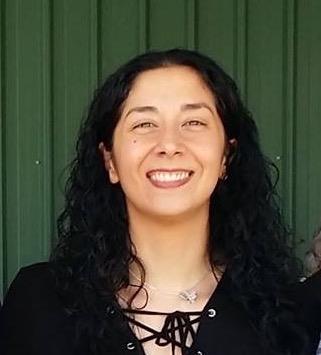
Education Focused Lecturer, Faculty of Design and Society
This project was supported by a 2024 UTS Social Impact Grant.
Applications are now open for the 2026 round of Social Impact Grants! Find out more.
Amplifying queer perspectives on mass atrocity crimes
UTS researcher Dr Jess Gifkins is leading a body of work to recognise queer persecution in the face of mass atrocity crimes.
Building a research legacy inside elite sport
Since 2017, the University of Technology Sydney (UTS) and the Oklahoma City Thunder, of the NBA, have worked together to better understand what drives...
What is it like to be an industry partner in a BCII School?
The program coordinator from Heart on My Sleeve gives her perspective on what it's like to be an industry partner.
Measuring human value in the workplace with Future Friendly
Products and services impact people's wellbeing, regardless if they’re designed to or not. Future Friendly tasked a small team of Bachelor of Creative...
Amplifying queer perspectives on mass atrocity crimes
UTS researcher Dr Jess Gifkins is leading a body of work to recognise queer persecution in the face of mass atrocity crimes.
Building a research legacy inside elite sport
Since 2017, the University of Technology Sydney (UTS) and the Oklahoma City Thunder, of the NBA, have worked together to better understand what drives...
What is it like to be an industry partner in a BCII School?
The program coordinator from Heart on My Sleeve gives her perspective on what it's like to be an industry partner.
Measuring human value in the workplace with Future Friendly
Products and services impact people's wellbeing, regardless if they’re designed to or not. Future Friendly tasked a small team of Bachelor of Creative...