


- Posted on 4 Aug 2025
- 5 minutes read
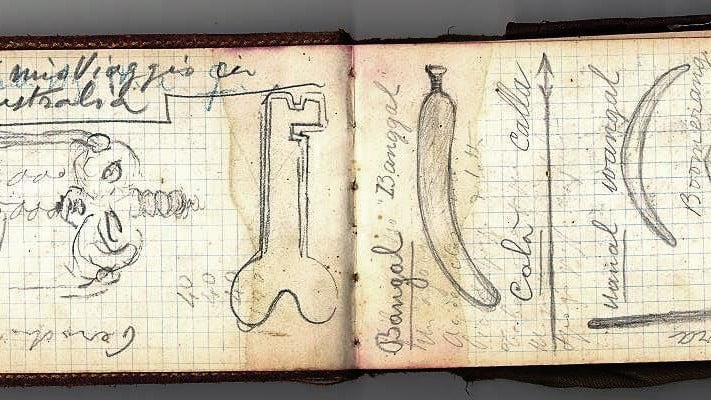
In a quiet museum in La Spezia, Italy, a handwritten diary from the late 1800s tells stories of the land we now call Australia.
Its author, Giovanni Podenzana, recorded his travels, describing Aboriginal cultures, languages, and people through his own eyes. Thousands of kilometres away, in Sydney, Dr Monica Galassi is helping bring these stories home.
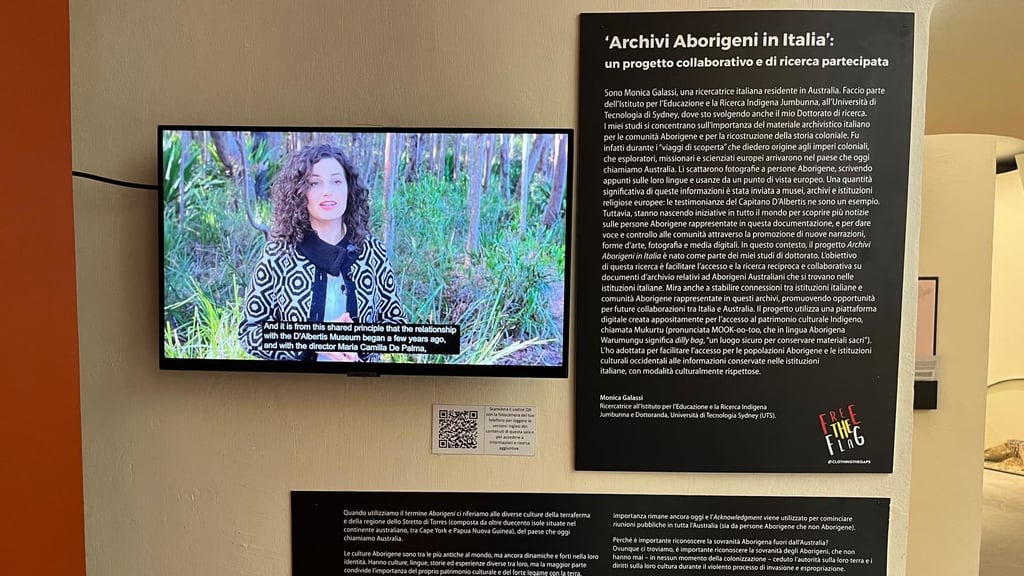
Her project, Aboriginal archives in Italy: A project to create spaces for reciprocal collaboration, supported by a UTS Social Impact Grant, is opening digital doors to long-hidden records of Aboriginal and Torres Strait Islander peoples held in Italian institutions. It’s a story of connection, collaboration, and the right to know.
A hidden history
Colonial archives are scattered across the globe. Explorers, missionaries, anthropologists and officials took photographs, wrote journals, and collected cultural objects. Many of these materials ended up in European museums and archives – often in countries not directly involved in Australia’s colonial history.
'These records are mostly unknown but can be vital for research and truth-telling,' says Dr Galassi, a researcher at the Jumbunna Institute for Indigenous Education and Research. 'They can help Aboriginal and Torres Strait Islander peoples reconnect with family histories, culture, and language. But they’re incredibly hard to access – physically, digitally, and linguistically.'
Italy is one such example. Museums and other collecting institutions across Italy hold photographs, writings and artefacts related to Aboriginal peoples.
But the records are often uncatalogued, untranslated, or misattributed. 'Even when they’re online,' Dr Galassi explains, 'the names of communities are often wrong, and institutions often don’t have the means to reach out to those communities.'
Creating a digital bridge
Dr Galassi’s project set out to change that. Building on her PhD research, the first digital archive focused on Italian collections related to Aboriginal and Torres Strait Islander peoples, she partnered with Italian anthropologist Valentina Scazzola to transcribe and translate archival materials from 3 museums: Museum of World Cultures, Giovanni Podenzana Ethnographic Museum, and Museo delle Civiltà in Rome.
Thanks to this work the archive includes translated diaries, photographs, and museum records – all made accessible to communities, researchers and archivists.
But the project was about more than digitisation. It was about dialogue.
'We didn’t just translate words,' says Dr Galassi. 'We had deep conversations about how to do this work respectfully. How do you translate terms that carry racist connotations? How do you design a user experience that’s meaningful for communities, not just researchers?'
Every decision was documented in the archive, inviting future users to continue the conversation.
Collaboration across cultures
Working across time zones and cultures wasn’t easy. The project involved remote collaboration with museums and researchers in Italy, navigating different archival traditions and ethical frameworks.
Valentina Scazzola played a key role. Having previously volunteered on the project, she was formally engaged as a Research Assistant through the Social Impact Grant. Her work not only supported the museums, which lacked staff to manage these records, but also transformed her own academic journey.
'There are numerous aspects concerning the impact of this project on my academic life,' Scazzola reflects. 'It’s changed how I think, how I photograph, how I teach. I now incorporate Indigenous Cultural and Intellectual Property rights into my work and advocate for democratic knowledge sharing.'
Her seminar at the University Ca’ Foscari in Venice sparked interest among anthropology students, many of whom expressed a desire to learn more and engage with the project.
A model for future collaborations
The project’s impact has rippled outward. Italian students have joined the conversation. Australian researchers have reached out for access. Museums have begun reviewing and correcting their records.
'This work has laid the foundation for future international partnerships,' says Dr Galassi. 'It established a blueprint for how other countries can respectfully engage with Indigenous knowledge held overseas.'
While policy change is still evolving, the project has influenced institutional practices, encouraging more community-led and culturally sensitive approaches to archival work.
From access to self-determination
For Dr Galassi, accessibility is just the beginning. The ultimate goal is for Aboriginal and Torres Strait Islander communities to gain decision-making control over these records.
'To move forward meaningfully, we need to inform communities that this material exists,' she says. 'Then we need to create pathways for them to set cultural protocols and priorities.'
She’s now applying for postdoctoral funding to establish an Aboriginal Advisory Board and continue the work. 'This project is a small but meaningful contribution to a much larger issue – the rights surrounding cultural materials.'
A lasting footprint
Thanks to the UTS Social Impact Grant, the project didn’t end with a thesis. It grew into a living archive, a transnational dialogue, and a shared commitment to justice.
'It gave me the push and satisfaction to keep going,' Dr Galassi says. 'Without it, we might have lost sight of the archive and the relationships we’ve built.'
The digital archive is now live, offering a glimpse into the past — and a pathway to a more equitable future.
The problem
Colonial records related to Aboriginal and Torres Strait Islander peoples are scattered across global institutions, including Italian museums. These records are often uncatalogued, untranslated, and inaccessible to communities who have a right to know about their cultural heritage. The lack of access is not just logistical – it reflects deeper issues of social inequality and archival sovereignty.
The response
Dr Monica Galassi partnered with Italian anthropologist Valentina Scazzola to transcribe, translate, and digitise archival materials from three Italian museums. The project created the first digital archive focused on Italian collections related to Aboriginal and Torres Strait Islander peoples, fostering transnational collaboration and ethical archival practices.
What helped accomplish this?
The Social Impact Grant enabled the formal engagement of Scazzola, whose prior voluntary work and museum relationships were instrumental. Regular cross-cultural dialogue ensured respectful translation and documentation of archival decisions. The project built on Dr Galassi’s PhD research and was supported by the museums’ willingness to collaborate despite time zone and staffing challenges.
What has changed as a result?
The project increased accessibility to previously hidden records and sparked academic interest in both Italy and Australia. It influenced museum practices, encouraged culturally sensitive archival work, and laid the groundwork for future community-led initiatives. Scazzola’s transformation as a researcher exemplifies the project’s long-term impact, and plans are underway to establish an Aboriginal Advisory Board to guide next steps.
Project lead/s
Research Fellow, Deputy Vice-Chancellor (Education and Students)
This project was supported by a 2024 UTS Social Impact Grant.
Webpage
Water efficiency program outlines for Melbourne water businesses
The implementation of a wide range of water efficiency programs can make a significant difference to water demand, not only in the residential sector, but also...
Webpage
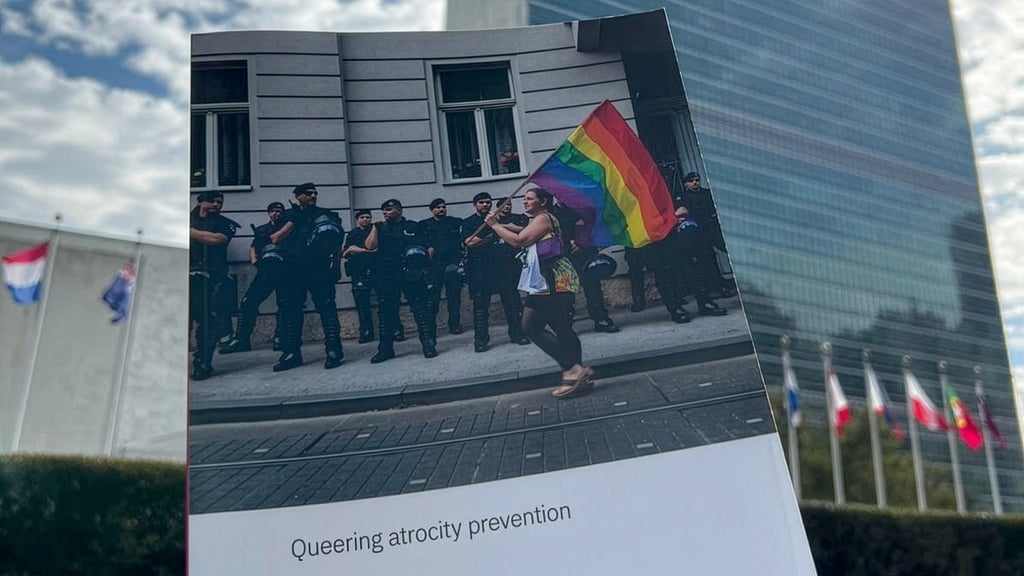
Amplifying queer perspectives on mass atrocity crimes
UTS researcher Dr Jess Gifkins is leading a body of work to recognise queer persecution in the face of mass atrocity crimes.
Webpage
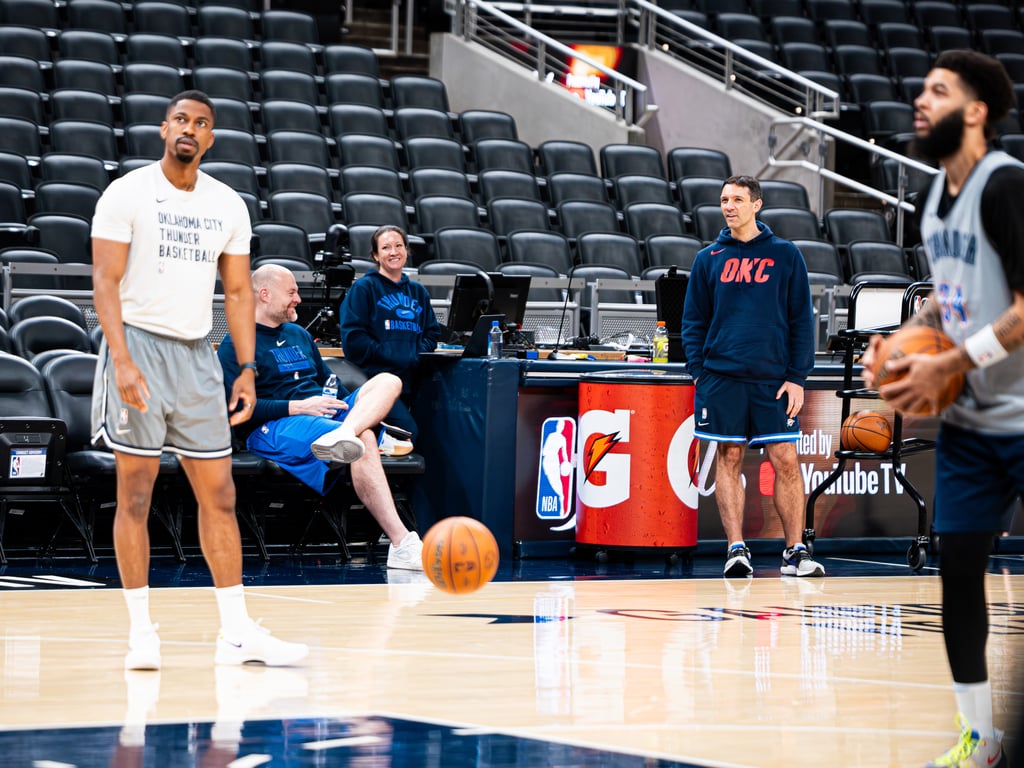
Building a research legacy inside elite sport
Since 2017, the University of Technology Sydney (UTS) and the Oklahoma City Thunder, of the NBA, have worked together to better understand what drives...
Webpage
What is it like to be an industry partner in a BCII School?
The program coordinator from Heart on My Sleeve gives her perspective on what it's like to be an industry partner.
Webpage
Water efficiency program outlines for Melbourne water businesses
The implementation of a wide range of water efficiency programs can make a significant difference to water demand, not only in the residential sector, but also...
Webpage
Amplifying queer perspectives on mass atrocity crimes
UTS researcher Dr Jess Gifkins is leading a body of work to recognise queer persecution in the face of mass atrocity crimes.
Webpage
Building a research legacy inside elite sport
Since 2017, the University of Technology Sydney (UTS) and the Oklahoma City Thunder, of the NBA, have worked together to better understand what drives...
Webpage
What is it like to be an industry partner in a BCII School?
The program coordinator from Heart on My Sleeve gives her perspective on what it's like to be an industry partner.