


- Posted on 21 Jul 2025
This article appeared in The Australian Financial Review on July 21 2025.
Prime Minister Anthony Albanese’s choice to emphasise trade and economic links during last week’s extended visit to China earned the ire of several prominent national security commentators.
Justin Bassi of the Australian Strategic Policy Institute grumbled that it was ‘impossible for any government to successfully separate a trading relationship with China from the security threat it poses’.
Strategic Analysis Australia’s Michael Shoebridge lamented that ‘our pursuit of growing trade dependence on China is making us increasingly vulnerable to Beijing and its coercion toolkit’. Instead of doing the hard work of diversification, ‘government and Australian businesses prefer the easy path’.
In similar vein, while describing Germany’s record of energy dependence on Russia as ‘complacency’ and ‘troubling’, the ANU National Security College’s Rory Medcalf has previously declared that ‘when it comes to geopolitical risk exposure and a lack of a plan B, the Australian iron ore industry still takes the prize’.
But it is this analysis that doesn’t stack up, rather than the Albanese government’s approach to China and the nous of Australian businesses.
Treasurer Jim Chalmers and Foreign Minister Penny Wong have repeatedly made clear that in a world of intensifying strategic competition between great powers, economics and security cannot be neatly separated.
And the idea that miners like BHP and Rio are naive to geopolitics, despite having billions of dollars of capital deployed far and wide, is galling.
The big mistake made by critics of the government and businesses is that they only see risks from the economic relationship with China when, in fact, one of the big benefits is enhanced security.
Good luck buying eye-wateringly expensive nuclear-powered Virginia-class submarines from the US minus the company tax revenue generated by more than $200 billion in annual sales to China, and with the Australian dollar trading at less than 50 US cents.
Ditto gaining the approval of the Australian public when a stagnant economy means more defence spending demands cuts to health and education.
Earlier this month in Malaysia, Wong acknowledged that economic interdependence can create vulnerabilities. But her bigger point was that it ‘provides a critical incentive for peace’.
Wong’s is not a naive belief that trade makes military conflict impossible or grey zone coercion unlikely. It’s a hard-headed assessment that economic connections raise the costs.
Critics also draw a straight line between exposure and risk. That last year one-quarter of our total trade was with China is seen as evidence enough that Australia is ‘too dependent’.
But this ignores the incentive and ability that businesses have to identify and manage risks.
Surveys of businesses operating in the Australia-China economic corridor show a vivid appreciation of the potential costs from geopolitical fallout. Still, most rate other, more mundane risks as even more pressing, like changes in regulations.
The key takeaway from Beijing targeting Australia with economic coercion from 2020-24 is that businesses are far savvier than many national security commentators seem to realise.
Beijing left big-ticket items like iron ore, LNG, lithium and wool untouched because Chinese importers are as reliant on Australia as a supplier as Australian exporters are to China as a market.
Not wanting to crimp the sales of their own companies and threaten local jobs, Beijing also proved unwilling to disrupt Australian supply chains.
Most of the industries that were hit with disruption proved readily able to mitigate the impact. If China did not want Australian coal and barley, plenty of other countries did. Blocks on timber logs didn’t prevent Australian producers from turning their product into wood chips and selling to China anyway.
Wine and live rock lobster exporters were hard hit.
The former industry worked day and night at diversification, but the results were limited by the reality that the domestic market, as well as the second- and third-largest international markets, the US and the UK, were shrinking.
Meanwhile, China accounted for more than 90 percent of global live rock lobster imports. Likewise, how Australian iron ore exporters might develop a ‘plan B’ when China accounts for more than 80 percent of global seaborne imports is a mystery.
The China-Australia FTA also means that the average tariff Beijing applies to Australian goods is just 1 percent. Meanwhile, Washington has walked away from the Australia-US FTA and jacked up the average US tariff to 10 percent.
Among Australia’s national security commentators, calling out Chinese ‘economic coercion’ comes naturally. But US tariffs, as well as diplomatic moves like leaking threats to the AUKUS partnership if Canberra does not pre-commit to fighting a war with the US against China just as Albanese landed in Shanghai, fails to earn the label.
On geopolitics and China, it turns out that the government and businesses are the most clear-eyed.
AUTHOR

Director, Australia-China Relations Institute And Professor, DVC (International & Development)
News
Australia-China Weekly Brief: October 2026 issues
The Australia-China Weekly Brief by the Australia-China Relations Institute at the University of Technology Sydney (UTS:ACRI) tracks key developments in...
News
The struggle over what China wants
China expertise is itself a field of epistemic struggle, shaped by competing convictions, dispositions and geopolitical perspectives. Doshi’s critique of Kang,...
News
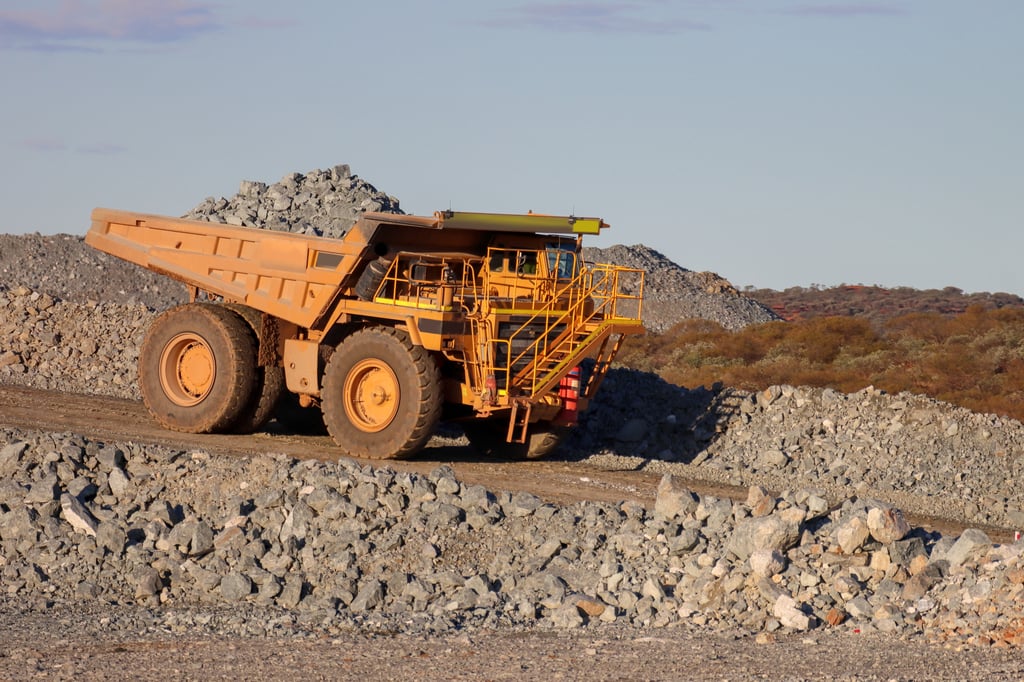
Australia should turn critical minerals leverage into industrial capability
Australia’s Syerston Scandium Project is a test of whether critical minerals cooperation can make Australia not merely a supplier, but a critical capability...

News
PERSPECTIVES | Can Australia and China talk sensibly about AI Safety?
Australia will attend the APEC Economic Leaders’ Meeting in Shenzhen on November 18-19 2026 amid questions about the extent to which the two countries can, or...
News
Australia-China Weekly Brief: October 2026 issues
The Australia-China Weekly Brief by the Australia-China Relations Institute at the University of Technology Sydney (UTS:ACRI) tracks key developments in...
News
The struggle over what China wants
China expertise is itself a field of epistemic struggle, shaped by competing convictions, dispositions and geopolitical perspectives. Doshi’s critique of Kang,...
News
Australia should turn critical minerals leverage into industrial capability
Australia’s Syerston Scandium Project is a test of whether critical minerals cooperation can make Australia not merely a supplier, but a critical capability...
News
PERSPECTIVES | Can Australia and China talk sensibly about AI Safety?
Australia will attend the APEC Economic Leaders’ Meeting in Shenzhen on November 18-19 2026 amid questions about the extent to which the two countries can, or...