


- Posted on 26 Apr 2025
By Xunpeng Shi, Xiujian Peng and Janine Dixon
This book chapter was published in Han Phoumin, Xunpeng Shi and Fukunari Kimura (eds.), Navigating the Complexities of Energy Transitions in East Asia, Singapore: Springer Nature, pp. 171–192. https://doi.org/10.1007/978-981-96-1754-8_8.
Abstract
The transition to carbon neutrality requires phasing out coal-fired power, a key contributor to global warming. This study quantifies the economic impacts of this shift in China, Japan, and South Korea using the GTAP-E model, focusing on East Asian and ASEAN economies. In cost-neutral scenarios where renewable energy (RE) costs are equal to coal, the phase-out results in slight GDP growth for these countries. However, if RE is 50 percent more expensive than coal, economic downturns are projected, impacting various regions except India and the EU. Globally, the transition is expected to reduce greenhouse gas emissions by 12–13 percent, depending on the cost scenario. Countries reliant on coal exports, like Mongolia, Australia, and Indonesia, face significant economic challenges and must diversify their economies to mitigate impacts. Key policy recommendations include developing frameworks to manage the economic effects of RE transitions, fostering international cooperation on RE innovation, and providing targeted support to coal-dependent regions. Carbon pricing mechanisms are essential to prevent carbon leakage and ensure a sustainable energy transition.
share_windows Read the book chapter online here. (Access may require purchase or subscription).
AUTHOR

Research Principal, DVC (International & Development)
Xiujian Peng
Senior Research Fellow, Centre of Policy Studies, Victoria University
Janine Dixon
Senior Research Fellow, Centre of Policy Studies, Victoria University

News
PESPECTIVES | Getting the balance right on Australia’s research security
This article appeared in UTS:ACRI's Perspectives on October 26 2026. Perspectives is the commentary series of the Australia-China Relations Institute at the...
News
Australia-China Weekly Brief: October 2026 issues
The Australia-China Weekly Brief by the Australia-China Relations Institute at the University of Technology Sydney (UTS:ACRI) tracks key developments in...

News
The struggle over what China wants
China expertise is itself a field of epistemic struggle, shaped by competing convictions, dispositions and geopolitical perspectives. Doshi’s critique of Kang,...
News
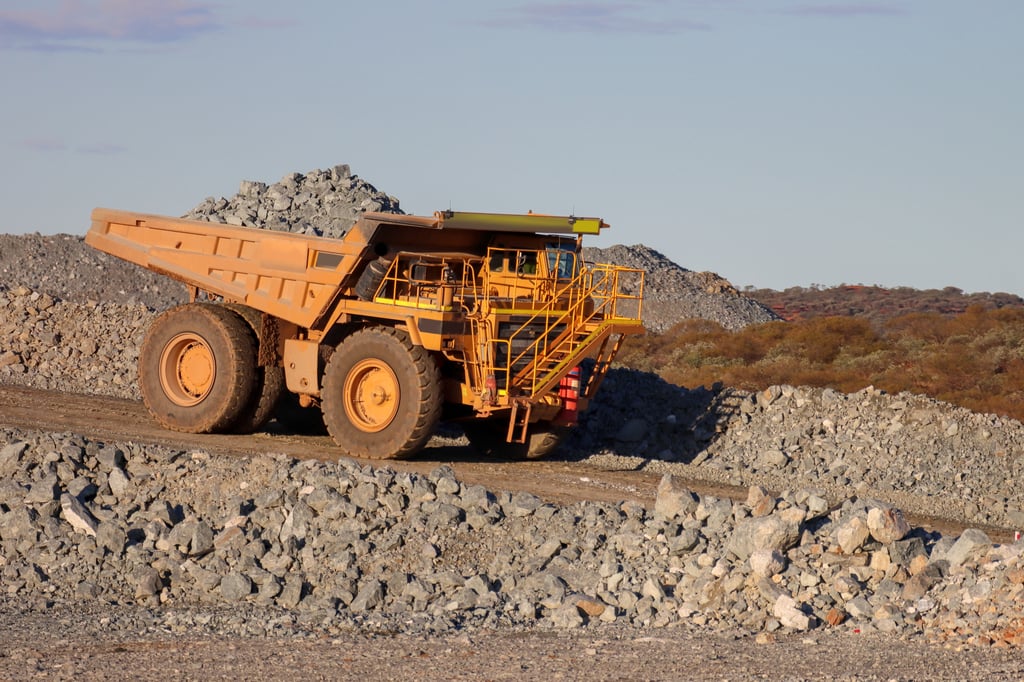
Australia should turn critical minerals leverage into industrial capability
Australia’s Syerston Scandium Project is a test of whether critical minerals cooperation can make Australia not merely a supplier, but a critical capability...
News
PESPECTIVES | Getting the balance right on Australia’s research security
This article appeared in UTS:ACRI's Perspectives on October 26 2026. Perspectives is the commentary series of the Australia-China Relations Institute at the...
News
Australia-China Weekly Brief: October 2026 issues
The Australia-China Weekly Brief by the Australia-China Relations Institute at the University of Technology Sydney (UTS:ACRI) tracks key developments in...
News
The struggle over what China wants
China expertise is itself a field of epistemic struggle, shaped by competing convictions, dispositions and geopolitical perspectives. Doshi’s critique of Kang,...
News
Australia should turn critical minerals leverage into industrial capability
Australia’s Syerston Scandium Project is a test of whether critical minerals cooperation can make Australia not merely a supplier, but a critical capability...